



Venkovský dům malíře Františka Skály House
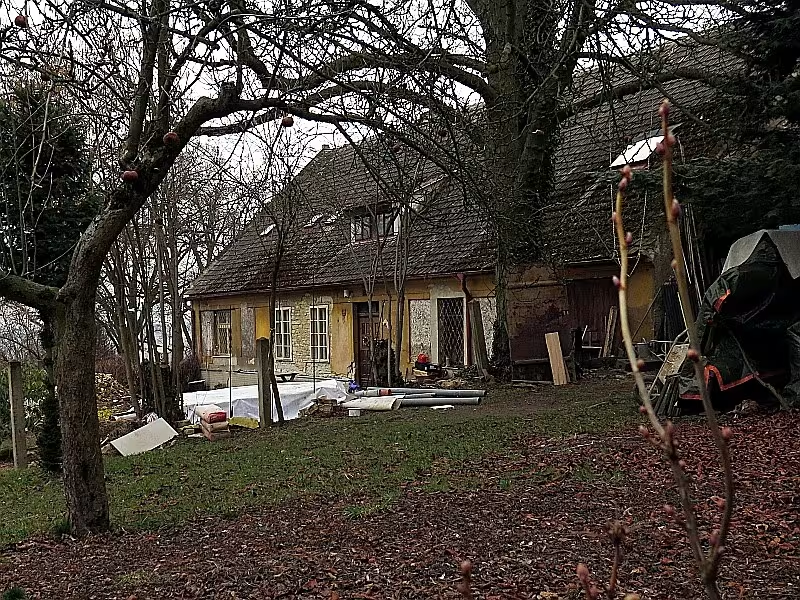
The Venkovský dům malíře Františka Skály in Nové Strašecí is a residential house of significant historical importance. Situated on the windward side of Mackova Hora, it stands where a once-prominent windmill complex existed. Originally built by Václav Josífek in 1832 as part of the milling industry, it was later transformed into a guesthouse in the late 19th century due to industrial advancements and high maintenance costs associated with traditional windmills. Recognized for its Secessionist architectural features, this house has been protected as a cultural monument since 2011.
The origins of Venkovský dům malíře Františka Skály are deeply rooted in the industrial era of Bohemia during the early to mid-19th century. Václav Josífek constructed the windmill on his property in 1832, a time when milling was essential. However, by the late 19th century, technological advancements and economic pressures led to the decline of traditional windmills. The mill ceased operations due to high maintenance costs and competition from steam-powered mills, prompting its conversion into a guesthouse in the 1880s. This transformation reflects broader societal shifts as Bohemia experienced industrialization and modernization.
Architecturally, Venkovský dům malíře Františka Skály showcases Secessionist style elements, evident in its simplified facades with vertical recessed frames and textured plasterwork. The building features a sedlo-shaped roof covered with shingles, nearly square windows equipped with grilles on the ground floor, and a loft built over an existing barn structure, accessible via a wooden staircase from within the barn. This integration of new and old elements highlights the adaptive reuse of historical structures during this era.
Throughout its history, Venkovský dům malíře Františka Skála has undergone several transformations. Initially part of a windmill complex, it was repurposed as a guesthouse in the 1880s after the original mill structure was demolished in 1889 due to obsolescence and economic impracticality. The building's evolution from an industrial site to a residential space reflects broader changes in technology and society during this period.
Today, Venkovský dům malíře Františka Skály stands as a testament to the region's rich history and architectural heritage. As a protected cultural monument since 2011, it offers visitors insights into the past through its preserved Secessionist elements and historical significance. The house is located near streets Nad Větrákem, Pod Větrákem, and Nádražní in Nové Strašecí, making it accessible for those interested in exploring Czech history and architecture. Its transformation from a windmill to a guesthouse and eventually into an artist's residence adds layers of historical intrigue, inviting visitors to appreciate its unique story.
Venkovský dům malíře Františka Skály is not just a building but a narrative woven through time, reflecting dynamic changes in industry and society. Its preservation as a cultural monument underscores its importance in understanding regional history. Visitors are encouraged to explore this site to experience firsthand the architectural beauty and historical depth it offers, making it a worthwhile destination for anyone interested in Czech heritage.
Then and now
Drag the slider to compare how the landmark may have looked when it was built with the view today.
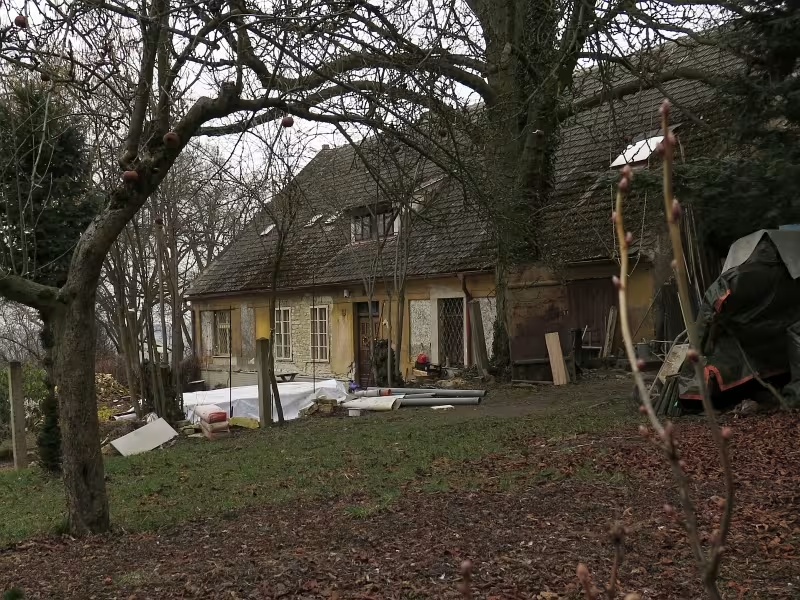
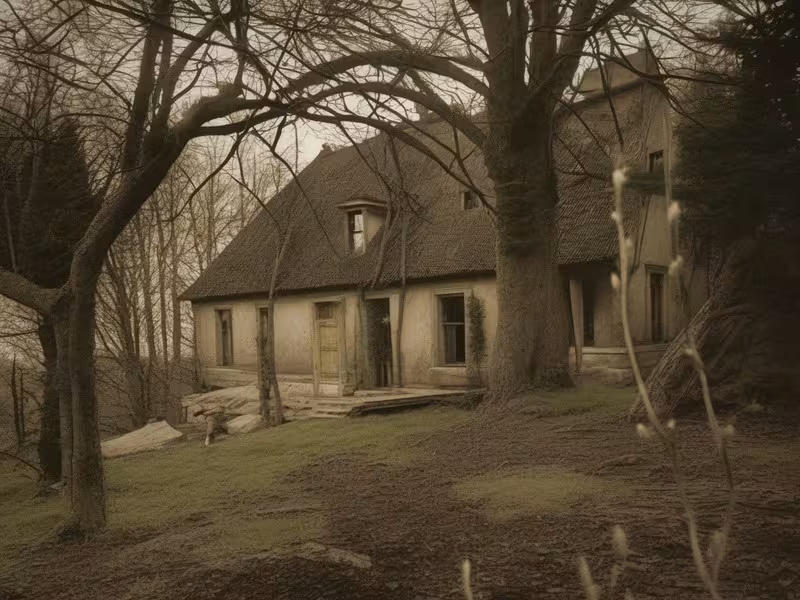
The historical appearance on the left is an AI-generated visualisation and serves as inspiration only.
Historical milestones
- 1832
- Václav Josífek constructed the windmill as part of the milling industry.
- 1880s
- The mill was transformed into a guesthouse due to industrial advancements and high maintenance costs.
- 1889
- Original mill structure demolished due to obsolescence and economic impracticality.
- 2011
- The house was recognized as a protected cultural monument.
Architectural development
The building began as part of a windmill complex, which was later transformed into a guesthouse in the late 19th century. It features Secessionist architectural elements such as simplified facades with vertical recessed frames and textured plasterwork. The interior includes a loft built over an existing barn structure, accessible via a wooden staircase.
Historical events
1832: Václav Josífek built the windmill on his property.
1880s: The windmill was converted into a guesthouse after ceasing operations.
1889: The original mill structure was demolished.
Points of interest
- The Venkovský dům malíře Františka Skály was originally part of a larger windmill complex, which played a crucial role in the milling industry during its time. This highlights how essential such structures were to daily life and local economies in 19th-century Bohemia.
- In an interesting twist of fate, the building transformed from a functional industrial site into a guesthouse due to technological advancements that rendered traditional windmills obsolete. This reflects broader societal shifts towards modernization during the late 19th century.
- The house's architectural evolution is marked by its Secessionist style features, which were added later as part of its transformation. These elements include vertical recessed frames and textured plasterwork, showcasing how historical buildings can be adapted while preserving their heritage.
- Despite being demolished in 1889 due to economic impracticality, the original windmill structure's legacy lives on through this adaptive reuse. It stands as a testament to the changing technological landscape of its time.
- The building was eventually named after František Skála, a local artist who resided there, adding an artistic layer to its historical narrative and further enriching its cultural significance in Nové Strašecí.
Guide
This guide is narrated by a synthetic voice generated by artificial intelligence.
Show guide text
This text was created by artificial intelligence and has not been editorially reviewed. It may contain inaccuracies.
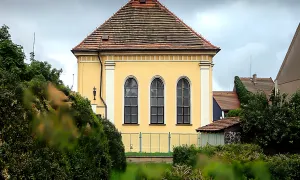
The country house of painter František Skála stands in the western part of Nového Strašecí, on the windward side of Macková hora, between the streets Nad Větrákem, Pod Větrákem and Nádražní. It was precisely on this spot where a windmill once stood. Since 2011, the house has been protected as an immovable cultural monument.
A Dutch-type mill was built in 1832 by Václav Josífek on his field. It was made of brick and its shell was of opaline stone. The upper part consisted of wooden frames with shutters and an all-wooden roof. The entire upper structure rotated when a certain number of shutters opened. It drove a vertical shaft, at the bottom end of which a millstone was attached.
After 1870, the mill began to deteriorate. Maintenance was expensive and it could no longer compete with the local steam mill. In the eighties of the nineteenth century it was shut down and the married couple Stříbrzk transformed it by building modifications and extensions into an inn. The mill itself was torn down in 1889. Today's house corresponds to its original adjacent building. In the twenties of the twentieth century it underwent reconstruction.
It is a single-storey building on a rectangular floor plan with a gable roof covered with beaver tiles. The southern façade has five window axes. From the left there are two double-winged windows, an entrance door and another double-winged window, in the far eastern axis is then a drive into the barn. The façade has a simplified Art Nouveau expression. It is divided by vertical recessed frames with smooth plaster, the infills between them are of rough textured plaster. The windows on the ground floor are almost square and are protected by grilles. The double-winged entrance doors have solid infills and a glazed fanlight.
Inside, the house has a three-part layout with a central corridor. The living rooms have flat ceilings. The exception is only a room in the rear part, which is covered by a flat barrel segmental vault with a stencilled pattern. The rooms have wooden plank floors, the corridor is covered with tiles laid diagonally.
The attic was created subsequently and light is brought to it by two wooden pent roof dormers. Access to it is from the barn by an inserted wooden staircase. Upstairs there is a habitable attic and the former studio of painter František Skála, who lived from 1923 to 2011. In the attic there are built-in structures and building elements from various vanished buildings.
Tips for visitors
The best time to visit the Venkovský dům malíře Františka Skály is during late spring or early autumn when the weather is mild, and the natural surroundings are particularly beautiful. During these seasons, you can enjoy pleasant temperatures that make exploring both the house and its surrounding landscapes comfortable. Additionally, visiting in these months allows for vibrant greenery and blooming flowers, enhancing the picturesque setting of Mackova Hora.
The house’s location near streets like Nad Větrákem and Pod Větrákem makes it relatively easy to reach.
When visiting the Venkovský dům malíře Františka Skály, it's advisable to bring comfortable walking shoes as you may want to explore the surrounding natural landscapes. A camera is recommended for capturing the scenic views and architectural details of the house. Since lighting can vary throughout the day, early morning or late afternoon visits are ideal for photography, offering softer light that enhances the beauty of both the structure and its environment.
Nearby attractions within a 30-minute drive include other historical sites in Nové Strašecí, such as remnants of the old windmill complex. These areas provide additional context to the history of František Skála’s residence and are worth exploring for those interested in regional heritage. Families with children can enjoy these nearby spots as they often offer open spaces suitable for leisurely walks or picnics.
For families visiting with children, the Venkovský dům malíře Františka Skály offers a peaceful environment to explore both indoors and outdoors. The natural surroundings provide opportunities for outdoor activities such as hiking or simply enjoying nature. While there are no specific child-focused attractions at the site itself, the nearby landscapes can be engaging for children who enjoy exploring new environments.
Frequently asked questions
Can the monument be visited?
This is a residential or farm building, not a museum with opening hours. Please view it from public space and respect the owners' privacy. We have no information about access to the interior.
Where is the monument?
Location: Nové Strašecí, Středočeský kraj. The map on this page shows the exact spot.
Why is the monument protected?
It is listed in the Central List of Cultural Monuments of the Czech Republic as a cultural monument (register no. 1936811996).
Businesses nearby
Do you run a restaurant, accommodation, shop, museum, rental, wellness or other visitor service near this monument? Show yourself directly to the people heading to it — this is how they will see you in the app and on the web:
Events nearby
Zdroj akcí: otevřená data měst a obcí ČR (Národní katalog otevřených dat) a kalendář akcí Národního památkového ústavu.
Nearby
Located on the windward side of Mackova Hora in Nové Strašecí, the house is near streets Nad Větrákem, Pod Větrákem, and Nádražní. The area features a mix of natural landscapes and historical sites.
Accommodation nearby
Themed route
Trasa: Nové Strašecí
1. Venkovský dům malíře Františka Skály (hlavní cíl) Tento venkovský dům je významnou památkou, protože byl domovem malíře Františka Skály, který se proslavil svými krajinářskými malbami. Dům nabízí příležitost prohlédnout si interiéry a vnímat atmosféru, která inspirovala umělce.
2. Nad Větrákem (ulice) Tato ulice nabízí pěkný výhled na okolní krajinu a je ideálním místem pro chvilku odpočinku a prohlídku okolí. Poblíž této ulice se nachází dům malíře Františka Skály.
3. Nádražní (ulice) Tady najdete nádraží, které je vstupní bránou do obce. Můžete se zde seznámit s místní dopravou a pochutnat si na místních občerstveních.
4. Pod Větrákem (ulice) Toto místo nabízí další příležitost k prohlídce okolí a objevování místních detailů.
Seasonal recommendations
Jaro
In the spring season, the house is surrounded by blooming trees and flowers, creating a pleasant atmosphere. The lighting also makes use of natural light. We recommend arriving earlier to ensure you can explore the house without waiting.
Summer
Summer is the peak season for visitors to the house. The house is full of vibrant energy and bustling with guests. The lighting also makes use of daylight. We recommend arriving as early as possible so that you can explore the house without waiting.
Fall
In the autumn season, the house is surrounded by the rich colors of falling leaves. The lighting also creates a pleasant atmosphere. We recommend arriving later to ensure you can explore the house without crowds.
Winter
Winter is a quieter season for visitors to the house. The house is open only during limited hours, so we recommend visiting before Advent if you want to explore the house without waiting. We suggest wearing warm clothing as the house may be cold.
Visualizations and artistic views


The visualisations are generated by artificial intelligence and serve as inspiration.
Photos from the area
Real photos taken near the monument

Zdroj a licence jsou uvedeny u každého snímku.
Tips from visitors
No tips yet. Be the first!
Log in and add your tip.
Sources and literature
Photos: Sovicka169 / CC BY-SA 4.0 — Wikimedia Commons. The author and licence also appear when you hover over the image.
Faktickým podkladem tohoto textu byl článek na Wikipedii, jehož autory jsou přispěvatelé Wikipedie. Článek je dostupný pod licencí CC BY-SA 4.0.
Location on the map





Příběhy a pověsti
Legendy, pověsti a příběhy spjaté s touto památkou
Fotografie návštěvníků
Zatím žádné fotografie. Buďte první, kdo přidá fotografii z návštěvy!
Log in a přidejte svou fotografii nebo hodnoťte.
Za ověřenou návštěvu v aplikaci získáte víc bodů — poznáme podle GPS, že jste na místě.
Reviews and comments