



větrný mlýn v Janově Windmill
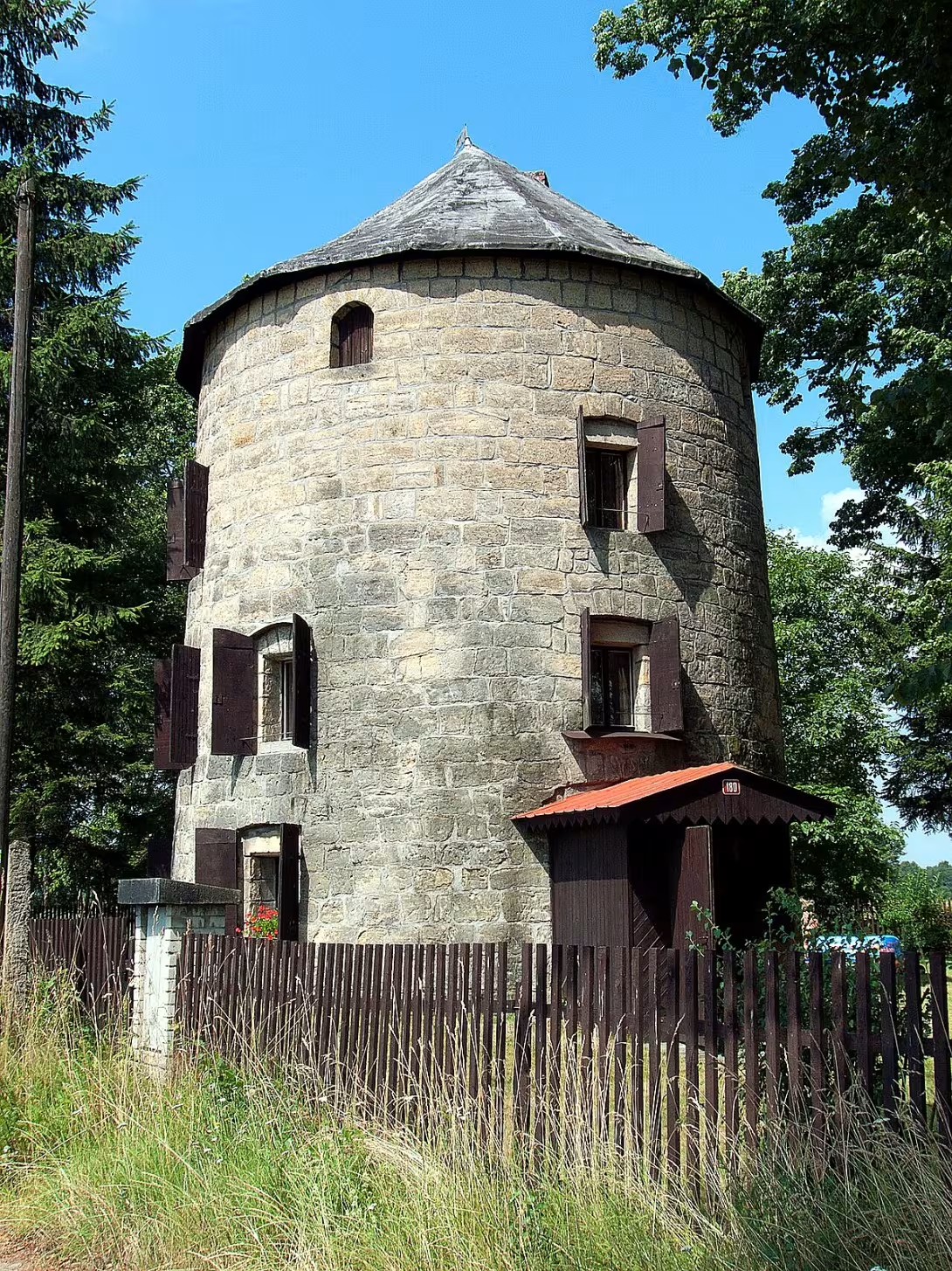
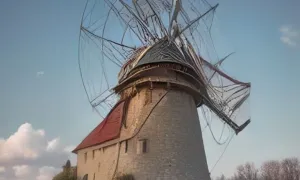
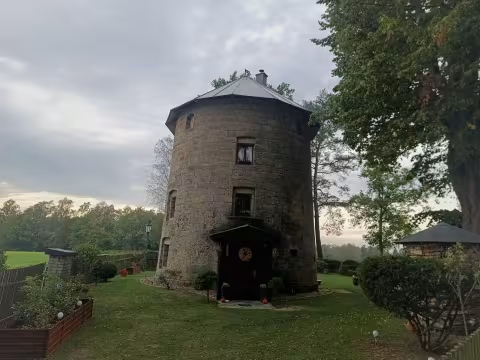
The wind mill in Genoa is one of the few preserved examples of Dutch type wind mill in the Czech Republic. It was built in 1844 as an agricultural and commercial facility which served for grinding grain and serving local traders. His original function was related to the development of agriculture in Děčín.
Today the mill is not only a historical monument, but also an example of preserved interior with original millstones and staircase.
The development of the mill in 1844 was linked to industrialization and development of agricultural techniques. In the Czech Republic they became an important part of rural life, often serving as trade stalls. In Genoa it was built from sandstone masonry, typical of mills in this area. The construction has a circular plan and a three-storey structure.
The architecture of the mill is typical of Dutch style. The building is walled, unveiled and covered with a conical roof. The windows are unsymmetrical with wooden shutters. The original stone staircase and mill stones were preserved in the interior.
The mill has undergone several changes in ownership. After the completion of the operation in the 20th years of the 20th century it was converted into a residential space. In the 1960s it was reconstructed and served as a recreational facility. This process preserved the original character of the construction, adapted it to new needs.
There are other similar mills in Arnold and Pink, 2 to 3 km away. Today the mill in Genoa is open to the public - about 300 metres from the village, a yellow tourist mark leads to it. It is a unique example of the preserved mill, which keeps both the exterior and the interior with original elements. Visitors can explore the history of the region and enjoy a quiet rural environment.
Then and now
Drag the slider to compare how the landmark may have looked when it was built with the view today.
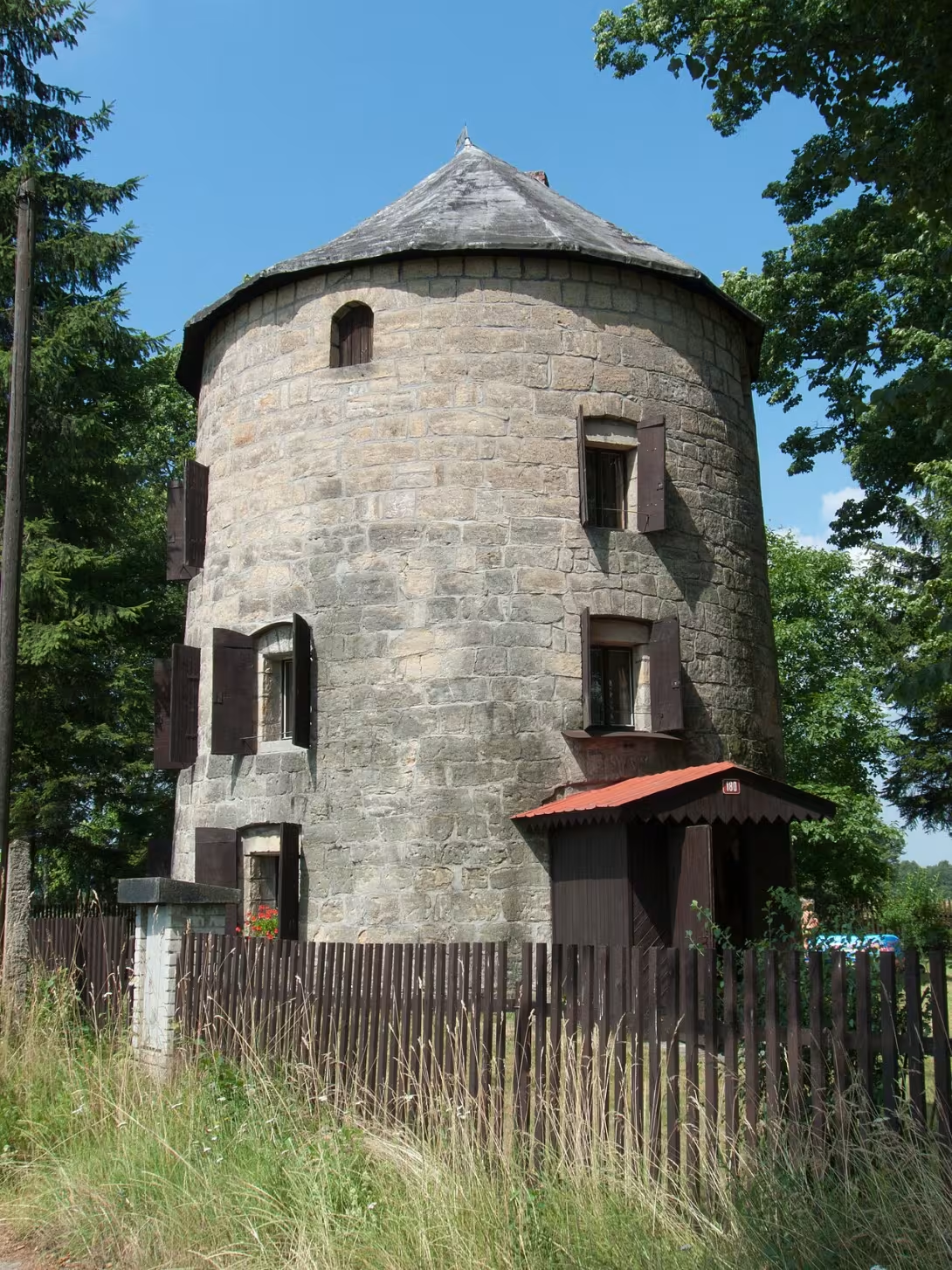
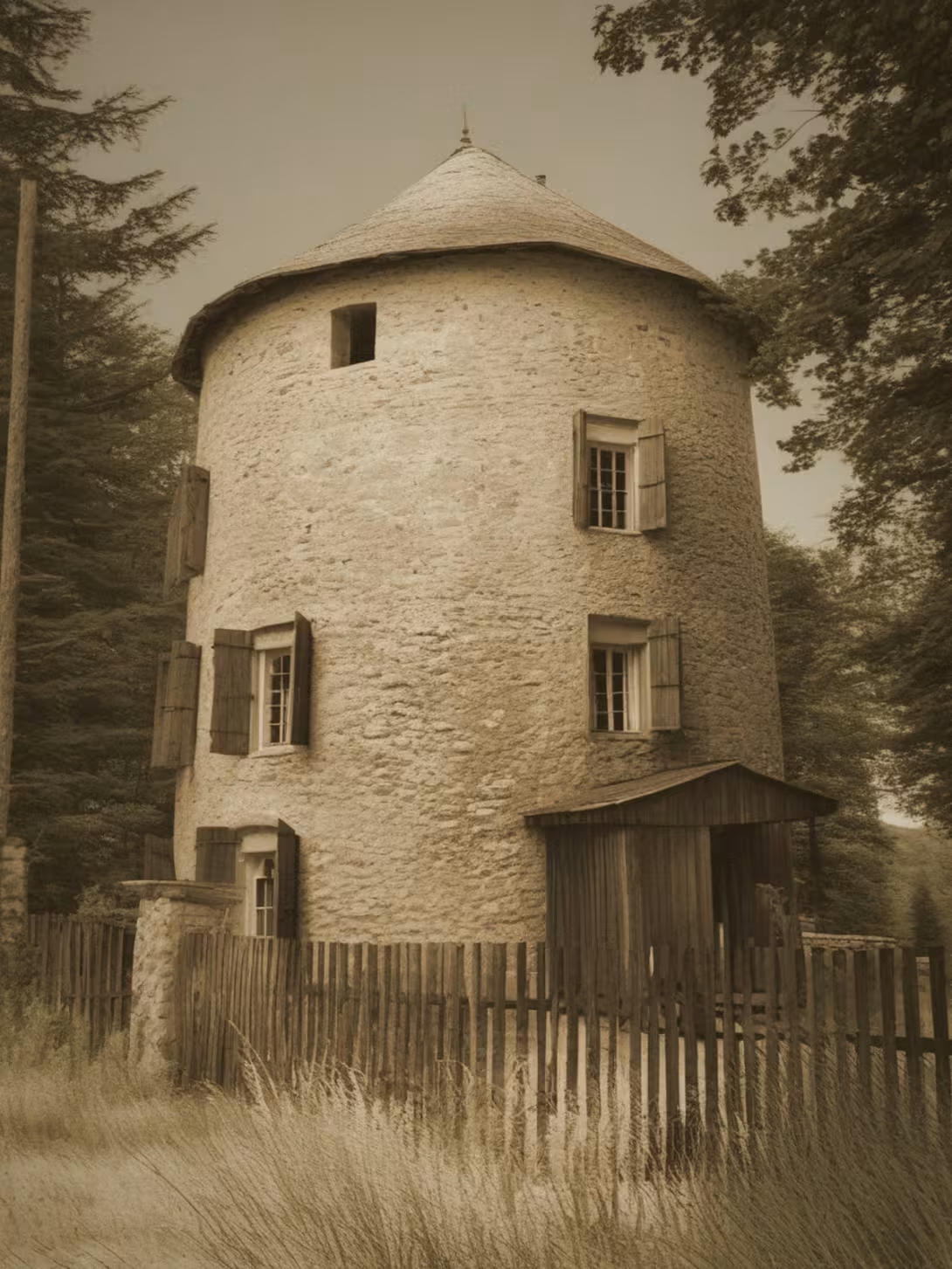
The historical appearance on the left is an AI-generated visualisation and serves as inspiration only.
Historical milestones
- 1844
- Built as an agricultural and commercial facility for grinding grain and serving local traders, associated with industrialization and development of agricultural techniques in Děčín
- first half of the 19th century
- The creation of a typical Dutch windmill in Czech countries, characterized by rural life and commercial use
- around 1800-1850
- Development of agriculture in Děčín and expansion of windmills as important economic objects
- first half of the 19th century
- Using windmills as trade stands in Czech rural municipalities
- first half of the 19th century
- The creation of typical sandstone masonry for mills in the area of Děčinsko
- around 1850-1920
- Use of windmills as mill facilities with circular plan and three-storey construction
Architectural development
The construction was built from sandstone wall and originally had a tapered roof covered with shale. The interior preserved the original millstones and stone stairs. In the 20th century it underwent several reconstruction, while the original character of the building was preserved.
Historical events
- 1844
- Built as a Dutch-type windmill
- 1920
- Start of the mill operation
- 1946
- The removal of the last inhabitants and the beginning of the gradual decay of the building
- 1960
- Reconstruction and conversion into a recreational object
Points of interest
- The wind mill in Genoa is one of the few preserved examples of mills of typical Dutch type in Czech countries.
- The mill was built in 1844 as an agricultural and commercial facility which served for grinding grain and serving local traders.
- The building has a circular plan and three-storey structure, built from sandstone wall typical of mills in this area.
- In the interior, the original stone stairs and mill stones were preserved, which preserve the original character of the building.
- The mill is accessible to the public, about 300 metres from the village, and is an example of a preserved mill with original elements.
Guide
Show guide text
This text was created by artificial intelligence and has not been editorially reviewed. It may contain inaccuracies.
Welcome to a unique landmark - a windmill in Genoa! You're standing in front of a massive construction that reminds you of how long ago the windmills dominated the landscape and the lives of people. This mill, built in the year eighteen hundred forty four, is a rare example of the Dutch type, which has not been preserved in large numbers in our countries. Take a look at its circular shape, decorated with disproportionately spaced windows with arches and wooden shutters. The sandstone masonry, which is without plaster, reveals the ancient craftsmanship and resistance of the material that has resisted time.
Let's move back to the nineteenth century when mills became important economic objects. In the first half of this century, buildings like this have expanded in Czech countries - not only for grinding grain, but also as trade places for local farmers and craftsmen. In Děčín, where the mill is located, the development of agriculture and industry was closely linked to the need for effective techniques. This mill was built precisely to help local people process crops and ensure business connections. Now pay attention to its architecture - a three-storey construction with a conical roof, originally covered by slate, was typical of Dutch mills. Note how the windows dissipated unsymmetrically over the facade, which gives the construction a characteristic look.
In the interior, which is unfortunately not freely accessible, the original stone stairs and mill stones were preserved, which were embedded in the floor. These elements remind us of how the mill worked - the grain was brought here, it was ground and then it was unloaded. Note that the masonry is made from sandstone, which was common in this area and supplied the building strength.
Who was behind his construction? Unfortunately, the names of architects and historical personalities associated with this mill have not been preserved. Yet there is a sense of the atmosphere of times when people relied on the power of the wind and on their own hands. This mill was not only a technical facility but also a symbol of independence and cooperation in the municipality.
And now notice something interesting: větrný mlýn v Janově is one of the few preserved examples of the Dutch type in our countries. Its circular plan and three-storey structure are typical of this area, but it is here that it has preserved almost in its original form. This makes him a rare testament to the past, when windmills were an indispensable part of rural life.
Before leaving, look again at the facade and imagine how people worked here centuries ago, how the wind powered the millstones and how trade agreements were made here. This mill reminds us of the important role such buildings played in the development of our country and the development of modern techniques.
Thank you for taking the time to visit this memory. If you are interested in learning more about the history of windmills or life in Děčín in the nineteenth century, you can look at local museums or libraries. May the visit inspire you to further explore our beautiful historical monuments. Goodbye!
Tips for visitors
The Windy Mill in Genoa is interesting both in summer, when it is warm and pleasant for walks and in winter, when the atmosphere is calm and you can enjoy the view of the surrounding countryside. We recommend visiting between May and September, when the weather is most stable. The period before and after the holidays when there are fewer tourists is also suitable.
The location is available by car from around Děčinska. If you arrive by public transport, it is advisable to check the current connection of buses or trams to the nearest stop, which is approximately 2 to 3 kilometres away. It is recommended to use local transport or rent a car.
Don't forget about comfortable shoes because there are many terrain and possibilities for walking around. In summer it is good to have light clothes, sunglasses and protective cream. In winter, prepare warm clothes and maybe even snow shoes. It is also advisable to take a water bottle, because there are forests and natural areas around where you can taste fresh nature.
The windmill offers interesting photographic possibilities, especially on its three-storey building with a circular plan. The best light for photography is in the morning or in the evening when the light is softer and creates pleasant shadows. It is also interesting to photograph window arches and details of the wall structure. It is also appropriate to capture the surrounding countryside with forests and villages that are part of the region of Děčinska.
In Arnold and Pink, which are approximately 2 to 3 kilometres away, there are two other windmills. These buildings are interesting not only for their architecture but also for the history of the region. You can look at their design and understand how they worked in the past.
The surrounding area is large forests and picturesque villages. Walking on forest trails are ideal for families with children because they offer a quiet environment and the opportunity to observe nature. Some villages are also known for their traditional crafts and local specialities, which you can taste during your visit.
The windmill and surrounding natural landscape are a great opportunity for families with children. Children can see interesting architectural details of the mill and learn about the history of windmills. Walking through the woods are ideal for active relaxation and discovery of nature. We recommend playing a small game in the vicinity during the visit or going on a short trip for bird watching. There is also a possibility to visit small villages where children can see traditional houses and meet the locals.
Frequently asked questions
Can the monument be visited?
This is a technical monument. Some are open as exhibitions, others are out of use or on private land. We have not verified whether this one is accessible.
What are the opening hours and admission?
We have not verified the opening hours or admission. Current information is published by the operator.
Where is the monument?
Location: Ústecký kraj. The map on this page shows the exact spot.
Why is the monument protected?
It is listed in the Central List of Cultural Monuments of the Czech Republic as a cultural monument (register no. 1000124455).
Businesses nearby
Do you run a restaurant, accommodation, shop, museum, rental, wellness or other visitor service near this monument? Show yourself directly to the people heading to it — this is how they will see you in the app and on the web:
Events nearby

Zdroj akcí: otevřená data měst a obcí ČR (Národní katalog otevřených dat) a kalendář akcí Národního památkového ústavu.
Nearby
V okolí se nachází další dvě větrné mlýny v Arnolticích a Růžové, vzdálené 2 až 3 km. V okolí se nachází také přírodní krajina s lesy a malými vesnicemi, které jsou součástí regionu Děčínska.
Accommodation nearby
Trips and activities nearby
Guided tours, tickets and activities nearby from GetYourGuide
Affiliate link: if you buy from the partner, we may receive a commission. The price for you does not change.
Search tours and activities →Themed route
1. Wind mill in Genoa, type: mill. The main destination of the trip where you can admire the historical structure. 2. Wind mill in Arnold, type: mill. Another interesting mill approximately 2 to 3 kilometers away. 3. Wind Mill in Pink, type: mill. Third stop within a few kilometers, which complements the picture of local mills. 4. Natural landscape of Děčinska, type: nature. The road between the mills leads forests and small villages, which offers peace and beautiful views.
Seasonal recommendations
Spring During the spring season, větrný mlýn v Janově offers a unique combination of light and variable atmosphere. The sun rises up at this time, but at the same time it often hides behind clouds, which creates a change of bright and foggy moments. The surrounding landscape is awakening to life - meadows are green, trees are blooming and the air is full of the smell of wet earth. The ideal time for visiting is at the beginning of May, when the crowds do not accumulate and the mill is lit with pleasant but not too strong sunlight. I suggest you put on light, but wind-resistant clothes, because the wind in this area can be strong and unpredictable. Come early in the morning to enjoy your peace and watch as the mill wings begin to rotate with new strength.
Summer In the summer months, the windmill will turn into a magnet for tourists, but it is in the main summer season (July and August) that great interest must be expected. The warm sun illuminates the memory from each side, but the shadows under the wings of the mill remain pleasantly cold. The surrounding area is dry, the air is light and often blows a pleasant evening breeze. The best time to visit is early morning or late afternoon when the sun is not too hot and the crowds are a little distracted. I recommend taking a hat, light clothes and plenty of water - temperatures can be high, although the wind often relieves the feeling of heat. Avoid the noon hours when the most people gather around the mill.
Autumn Autumn brings rich colors to the landscape around the windmill - yellow, orange and red tree leaves create contrast with the white walls of the mill. The light is softer, there are often morning fog that give the place a mysterious atmosphere. The wind is stronger than summer, but the air is cleaner and colder. The best time to visit is September, when it has not yet cooled too much and nature is the most beautiful. I recommend you take a warmer layer of clothing, because evenings can be cold, and comfortable shoes - forest roads leading to the mill are wet after the rains. Come in the morning when the light hits the mill most beautiful and the crowds are less.
Winter In winter, the windmill becomes a solitary figure in the snowy landscape. The snow covers the surrounding fields and trees, while the mill with white wings looks like part of the winter story. The light is short and often hides behind gray clouds, but in bright days it reflects from snow and creates a magical atmosphere. The wind may be sharp and strong, but it is in advent time (November and December) that the visit is particularly lovely. I recommend you take warm but wind-resistant clothes and firm shoes - the roads can be slippery. The best time is the afternoon when the light is reflected from snow and the mill looks like carved out of white paper.
Visualizations and artistic views


The visualisations are generated by artificial intelligence and serve as inspiration.
Photos from the area
Real photos taken near the monument


Zdroj a licence jsou uvedeny u každého snímku.
Tips from visitors
No tips yet. Be the first!
Log in and add your tip.
Sources and literature
Photos: Jitka Erbenová (cheva) / CC BY-SA 3.0 — Wikimedia Commons. The author and licence also appear when you hover over the image.
Faktickým podkladem tohoto textu byl článek na Wikipedii, jehož autory jsou přispěvatelé Wikipedie. Článek je dostupný pod licencí CC BY-SA 4.0.
Location on the map
More monuments – Ústecký kraj
Show all in the region
Příběhy a pověsti
Legendy, pověsti a příběhy spjaté s touto památkou
Za ověřenou návštěvu v aplikaci získáte víc bodů — poznáme podle GPS, že jste na místě.
Reviews and comments