



Vila Emausy Villa
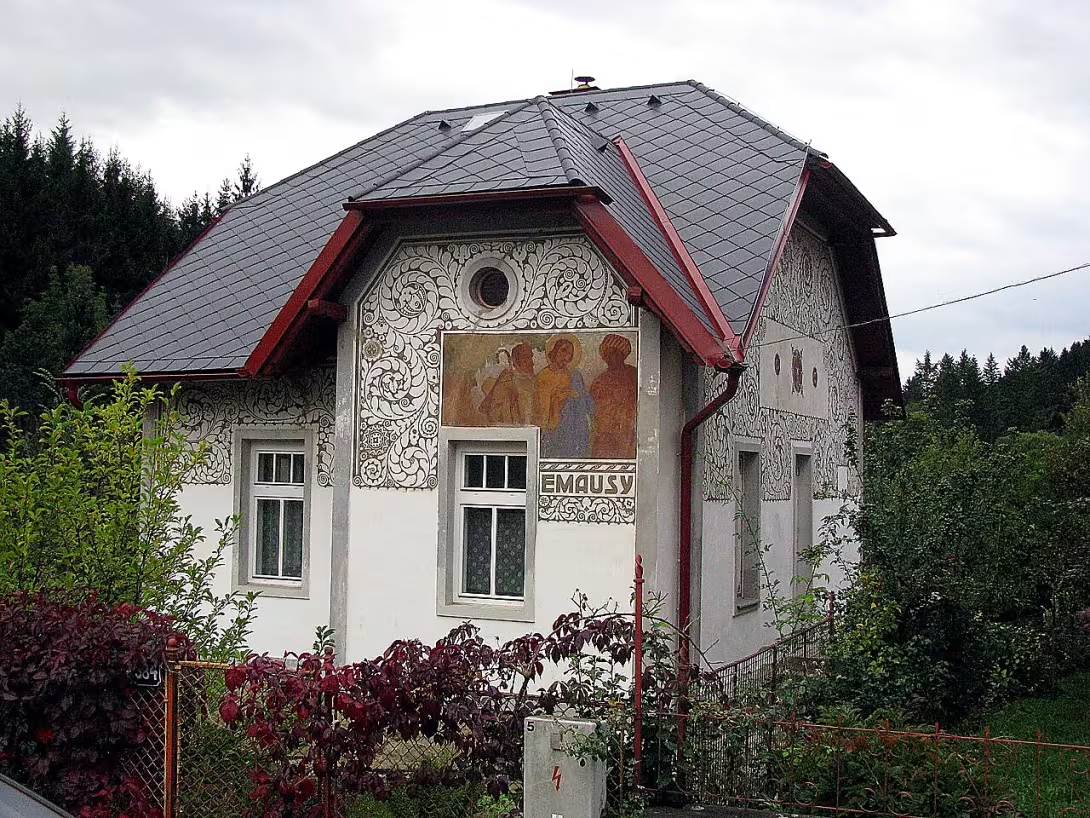
Vila Emausy stands as a testament to early 20th-century architectural innovation in Luhačovice, Czech Republic. Constructed during the vibrant cultural milieu of the 1920s, this standalone villa exemplifies functionalism—a style characterized by its practical design and modernist elements. Notably recognized for its decorative sgraffito work and frescoes, including a significant piece depicting Christ in Emmaus signed by Jan Köhler, Vila Emausy has been designated as a cultural monument from 1958 to 1987. Today, it operates as a pension, inviting visitors to explore its historical and architectural significance.
The villa's construction in the 1920s coincided with Czechoslovakia's period of significant cultural and architectural development following its establishment as an independent state in 1918. This era saw a flourishing of modernist architecture, including functionalism, which is reflected in Vila Emausy’s design. The emphasis on simplicity and utility during this time aligns with the villa's architectural style, making it a notable example of the period's aesthetic and cultural aspirations.
Architecturally, Vila Emausy features an oblong plan that includes both ground and upper floors, partially supported by a stone substructure to accommodate the terrain. The facade is adorned with sgraffito decoration and frescoes, adding artistic depth to its functional design. Notably, one of these frescoes depicts Christ in Emmaus, signed by Jan Köhler, who also appears represented within it. This blend of practical architecture and artistic expression underscores the villa's significance as a cultural artifact.
Throughout its history, Vila Emausy has undergone various phases of recognition and use. It was designated as a protected cultural monument from 1958 to 1987, highlighting its importance in the architectural heritage of the region. Today, it serves as a pension, offering visitors an opportunity to experience its historical ambiance firsthand.
Vila Emausy remains accessible to those interested in exploring early modernist architecture and Czech history. Its unique combination of functional design and artistic embellishment makes it a worthwhile destination for anyone keen on understanding the architectural trends of the 1920s in Czechoslovakia. Visitors are invited to appreciate its historical context, enjoy the serene environment, and reflect on the cultural narratives encapsulated within its walls.
Then and now
Drag the slider to compare how the landmark may have looked when it was built with the view today.
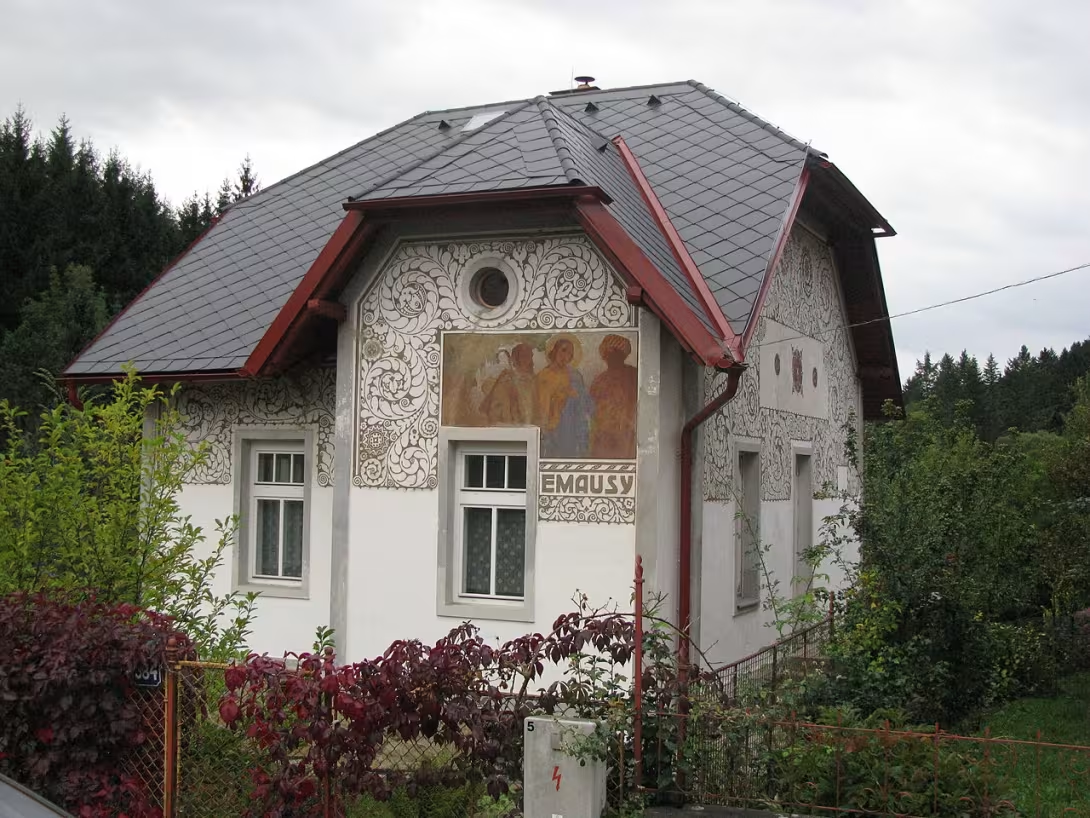
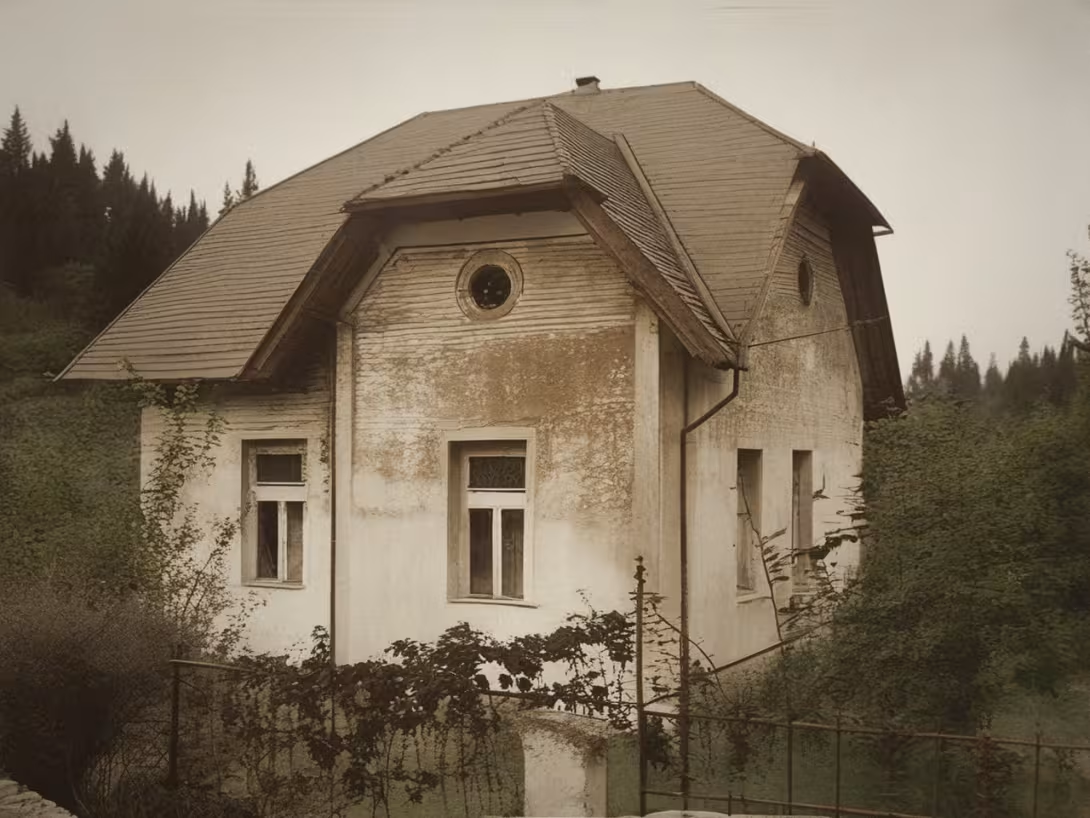
The historical appearance on the left is an AI-generated visualisation and serves as inspiration only.
Architectural development
Vila Emausy is built on an oblong plan with both ground and upper floors, partially supported by a stone substructure. The facade features sgraffito decoration and frescoes, including one by Jan Köhler. Its architectural style reflects functionalism, emphasizing simplicity and utility.
Historical events
The villa was constructed in the 1920s.
It was designated as a cultural monument from 1958 to 1987.
Points of interest
- Despite its designation as a cultural monument from 1958 to 1987, Vila Emausy's status was not permanent; it highlights the fluctuating recognition of architectural heritage in post-war Czechoslovakia.
- The fresco depicting Christ in Emmaus is unique because artist Jan Köhler included his own self-portrait within the artwork, blending personal identity with religious themes.
- Originally built as a standalone villa, Vila Emausy's design includes an oblong plan and stone substructure to adapt to the terrain, showcasing early 20th-century architectural ingenuity in harmonizing structure with landscape.
- The villa’s sgraffito decoration is not only decorative but also serves as a narrative tool, illustrating stories and themes relevant to its era, merging art with architecture in a way that was innovative for its time.
- After serving various roles throughout history, Vila Emausy now functions as a pension, allowing visitors to immerse themselves in the ambiance of early modernist design while experiencing contemporary hospitality.
Guide
This guide is narrated by a synthetic voice generated by artificial intelligence.
Show guide text
This text was created by artificial intelligence and has not been editorially reviewed. It may contain inaccuracies.
Villa Emausy in Luhačovice is a detached house from the nineteen twenties. Between nineteen fifty-eight and nineteen eighty-seven it was protected as a cultural monument. Today it functions as a pension.
The house has a rectangular floor plan and stands on a slope. It is partly single-storied and partly two-storied. The terrain slope is leveled by a stone foundation, which in the rear facade transitions into a separate story. The roof is gabled and beveled at the ends into hip roofs.
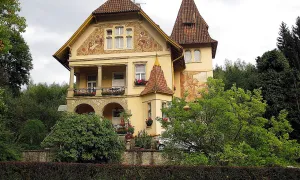
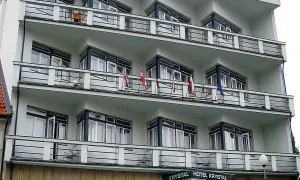
The most distinctive is the facade facing the street. In its right part, a shallow risalit protrudes slightly, that is a projection of the facade, with a circular window, which is called an oculus. The windows are surrounded by decorative frames, so-called shambrans, and the entire facade is bordered by a frame of flat vertical strips, called pilasters. The lower part of the wall is smoothly plastered white. The upper part is decorated with sgraffito with floral scrollwork.
Above the right window is a fresco depicting Christ in Emmaus with the inscription Emausy. The fresco is signed by its author Jan Köhler, who also depicted himself on it.
The main entrance is located in the northwest facade, that is on the right side when viewed from the street. It contains rectangular doors and next to them a window, which is today bricked up. The decoration follows the street facade: white plaster below, sgraffito above. Three different-sized decorative glazed tiles are set into the sgraffito.
The opposite southeastern side has two window axes. Besides two windows on the ground floor, it has two more at basement level and one in the attic. The facade facing the garden also has two window axes and from it a entrance leads to the terrace.
Tips for visitors
The best time to visit Vila Emausy is during the late spring or early autumn months, specifically from May to June or September to October. During these periods, the weather is typically mild and pleasant, making it ideal for exploring the villa's architectural features without the discomfort of extreme heat or cold. Additionally, visiting outside of peak tourist season allows you to enjoy a more serene experience with fewer crowds.
When planning your visit to Vila Emausy, consider bringing comfortable walking shoes as you may wish to explore the surrounding areas on foot. Additionally, a camera is recommended to capture the villa’s unique functionalist architecture. Sunscreen and a hat are advisable if visiting during warmer months, while layers or a light jacket might be necessary for cooler days.
Photography enthusiasts will find several spots around Vila Emausy ideal for capturing its architectural beauty. The best lighting conditions are typically in the early morning or late afternoon when the sunlight is softer and more flattering. Try to capture the villa’s façade from different angles, including any surrounding greenery that complements its design.
For those interested in exploring nearby attractions within a 30-minute drive, consider visiting other historical sites around Luhačovice. The area offers several cultural and natural landmarks that provide a broader context of the region's heritage. While specific recommendations are not listed here, local visitor centers can offer more detailed guidance on nearby points of interest.
Families with children will find Vila Emausy a pleasant destination for a day out. Although the villa itself is primarily an architectural site, the surrounding area offers opportunities for leisurely walks and exploration in nature. Ensure to bring along snacks or a packed lunch if planning to spend several hours exploring, as this can make the visit more enjoyable for younger visitors.
Frequently asked questions
Can the monument be visited?
This is a residential or farm building, not a museum with opening hours. Please view it from public space and respect the owners' privacy. We have no information about access to the interior.
Where is the monument?
Location: Luhačovice, Zlínský kraj. The map on this page shows the exact spot.
Why is the monument protected?
It is listed in the Central List of Cultural Monuments of the Czech Republic as a cultural monument (register no. 1000129142).
Businesses nearby
Do you run a restaurant, accommodation, shop, museum, rental, wellness or other visitor service near this monument? Show yourself directly to the people heading to it — this is how they will see you in the app and on the web:
Events nearby
Zdroj akcí: otevřená data měst a obcí ČR (Národní katalog otevřených dat) a kalendář akcí Národního památkového ústavu.
Accommodation nearby
Themed route
Tematická výletní trasa z Luhačovic
1. **Vila Emausy (Vila)
Proč stojí za návštěvu: Vila Emausy je krásnou příkladem architektury s bohatým historickým pozadím, nabízející pohled na klasicistní styl a jemné detaily. Je to ideální místo pro ty, kteří mají zájem o historii a design.
2. **Luhačovice (Obec)
Proč stojí za návštěvu: Luhačovice je slavné svými lázněmi, které jsou známé pro jejich léčebné vody. Místní parky a zahrady nabízejí klidnou atmosféru k odpočinku po prozkoumání vil. Je to také centrum kulturních akcí, což činí obec živou a atraktivní.
3. **Historický park Luhačovic (Park)
Proč stojí za návštěvu: Park je ideálním místem pro relaxaci s jeho rozlehlými zahradami a krásnou přírodou. Nabízí pohodlné chodníky, které vede k různorodým kvetoucím oblastem a mírně úzkým cestám pro tiché procházky.
4. **Místní muzeum Luhačovic (Muzeum)
Proč stojí za návštěvu: Muzeum nabízí fascinující pohled na historii a kulturu oblasti, s výstavami zaměřenými na místní dědictví a tradice. Je to skvělý způsob, jak se dozvědět více o bohaté minulosti Luhačovic.
5. **Luhačovická lázně (Lázeňský komplex)
Proč stojí za návštěvu: Lázně jsou známé svými léčivými vodami a terapeutickými službami. Nabízejí relaxační prostředí, kde můžete uvolnit mysl a tělo, což je dokonalé zakončení pro každou trávenou den v Luhačovicích.
Tato trasa nabízí kombinaci historie, relaxace a kulturního zážitku, ideálně vhodná pro ty, kteří chtějí plně prozkoumat Luhačovice a jejich okolí.
Seasonal recommendations
Spring: Visiting Vila Emausy during spring offers a rejuvenating experience as nature awakens with vibrant colors and fresh scents. The blooming gardens create a picturesque setting, ideal for leisurely strolls or photography enthusiasts capturing the essence of renewal. Spring brings moderate temperatures, making it comfortable to explore both indoor exhibits and outdoor spaces without overheating. However, be prepared for occasional rain showers; carrying an umbrella or wearing a light waterproof jacket is advisable. While visitor numbers start to increase as the weather improves, arriving early can help avoid larger crowds.
Summer: Summer at Vila Emausy in Luhačovice is marked by long daylight hours and warm temperatures, perfect for enjoying outdoor activities and events. The lush greenery of the gardens provides a serene backdrop for relaxation or picnics, while the nearby spa town offers additional attractions. Due to the peak tourist season, it's wise to plan your visit early in the day to avoid crowds, especially during weekends. Dressing in light, breathable clothing is recommended, and staying hydrated is essential. The lively atmosphere of summer makes this an ideal time for families or groups looking to combine cultural exploration with leisure.
Autumn: Autumn transforms Vila Emausy into a stunning tapestry of reds, oranges, and yellows as the leaves change color. This season offers a unique opportunity to experience the villa's beauty in a more tranquil setting, away from the summer crowds. The cooler temperatures are perfect for comfortable exploration without the need for heavy clothing or sunscreen. Autumn is also an excellent time for photography enthusiasts eager to capture the picturesque landscape. As the days grow shorter, planning your visit earlier in the day can help ensure you make the most of the natural light.
Winter: Winter at Vila Emausy provides a magical and serene experience with the villa often adorned with festive decorations during the holiday season. The surrounding landscapes are transformed into a winter wonderland, offering opportunities for picturesque walks amidst snow-covered scenery. Due to shorter daylight hours and colder temperatures, dressing warmly in layers is essential, along with wearing insulated footwear. While some outdoor areas may be less accessible due to weather conditions, indoor exhibits remain open, providing a cozy retreat from the chill. Visiting during weekdays can help avoid larger crowds, as winter tends to see fewer tourists compared to other seasons.
Visualizations and artistic views


The visualisations are generated by artificial intelligence and serve as inspiration.
Photos from the area
Real photos taken near the monument


Zdroj a licence jsou uvedeny u každého snímku.
Tips from visitors
No tips yet. Be the first!
Log in and add your tip.
Sources and literature
Photos: Pavel Langer / CC BY-SA 3.0 — Wikimedia Commons. The author and licence also appear when you hover over the image.
Faktickým podkladem tohoto textu byl článek na Wikipedii, jehož autory jsou přispěvatelé Wikipedie. Článek je dostupný pod licencí CC BY-SA 4.0.
Location on the map

Příběhy a pověsti
Legendy, pověsti a příběhy spjaté s touto památkou
Fotografie návštěvníků
Zatím žádné fotografie. Buďte první, kdo přidá fotografii z návštěvy!
Log in a přidejte svou fotografii nebo hodnoťte.
Za ověřenou návštěvu v aplikaci získáte víc bodů — poznáme podle GPS, že jste na místě.
Reviews and comments