



Vila Kancnýřka Villa
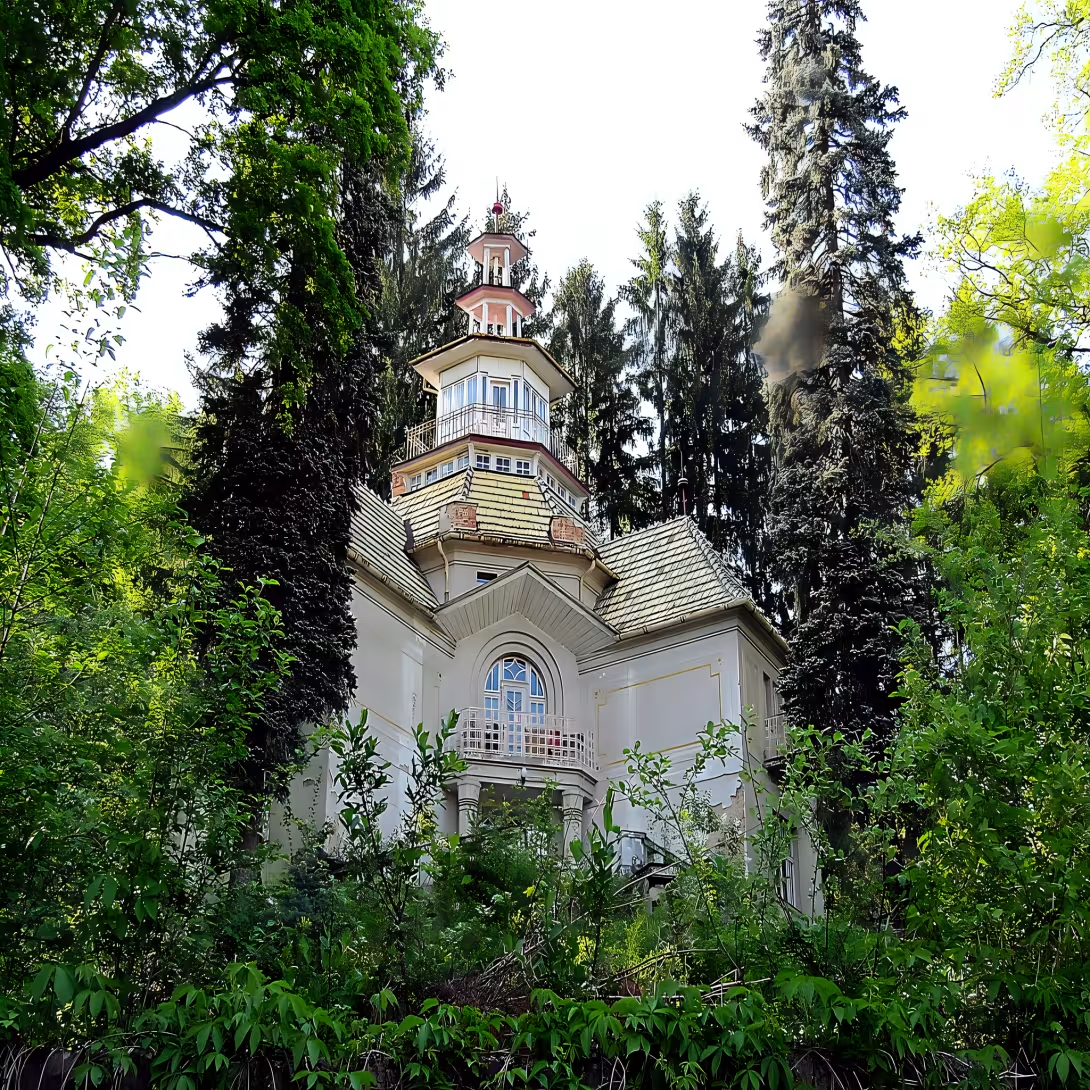
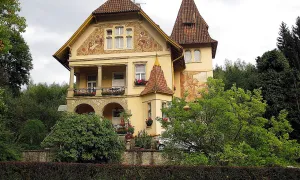
Vila Kancnýřka is a romantic villa located in Luhačovice, notable for its distinctive pagoda-like roof structure. Designed by Jan Mráček, a student of the renowned Viennese architect Otto Wagner, it was constructed between 1906 and 1908. The villa combines elements of geometric secession style with oriental influences, reflecting the eclectic tastes of its era. It served as a summer residence for Bedřich Kancnýř, a judge at the Regional Court in Brno, who frequently visited Luhačovice. Today, Vila Kancnýřka is recognized as a protected cultural monument and is currently undergoing redevelopment with plans to open it to the public.
The villa was commissioned by Bedřich Kancnýř, who envisioned it as both a personal summer retreat and a potential source of income through its rental to spa visitors. The construction period from 1906 to 1908 saw the realization of Jan Mráček's design, which skillfully blended geometric secessionist elements with oriental motifs. This architectural synthesis was indicative of broader cultural trends in early 20th-century Czech architecture, where traditional and modernist influences coalesced.
Architecturally, Vila Kancnýřka is distinguished by its unique floor plan and striking design features. The building stands on a V-shaped plot with a hexagonal central space from which three single-story wings extend. Its narrow facades are accentuated by balconies, while the most prominent feature is the pagoda-like tower that adds an exotic flair to the structure. The roof is gabled and covered in yellow glazed tiles, creating a visually striking 'golden' effect.
Ownership of Vila Kancnýřka transitioned from Bedřich Kancnýř to its current owners in the 1950s. Since then, it has experienced various phases of occupancy, including periods when tenants were housed within. In 1992, the villa was designated as a protected cultural monument, acknowledging its architectural and historical significance. The recent redevelopment efforts by the current owners aim to restore the villa while making it accessible for public enjoyment.
Vila Kancnýřka has also been part of contemporary culture; in 2024, it served as a filming location for the film fairy tale "Cukrkandl." This highlights its ongoing relevance and appeal beyond its historical roots. The villa's pagoda-like tower is an intriguing feature that remains accessible via an internal staircase, adding to its allure.
Today, Vila Kancnýřka stands in Luhačovice, a spa town celebrated for its thermal springs and picturesque landscapes. As redevelopment progresses, the villa is poised to become a significant cultural attraction, offering visitors a glimpse into early 20th-century architectural innovation and history. Its blend of secessionist style with oriental influences makes it a unique testament to the era's eclectic tastes.
Vila Kancnýřka offers more than just historical insight; it promises an experience that connects past elegance with modern accessibility. As plans for public access continue, this villa invites visitors to explore its architectural beauty and rich history, making it a must-visit destination in Luhačovice.
Then and now
Drag the slider to compare how the landmark may have looked when it was built with the view today.
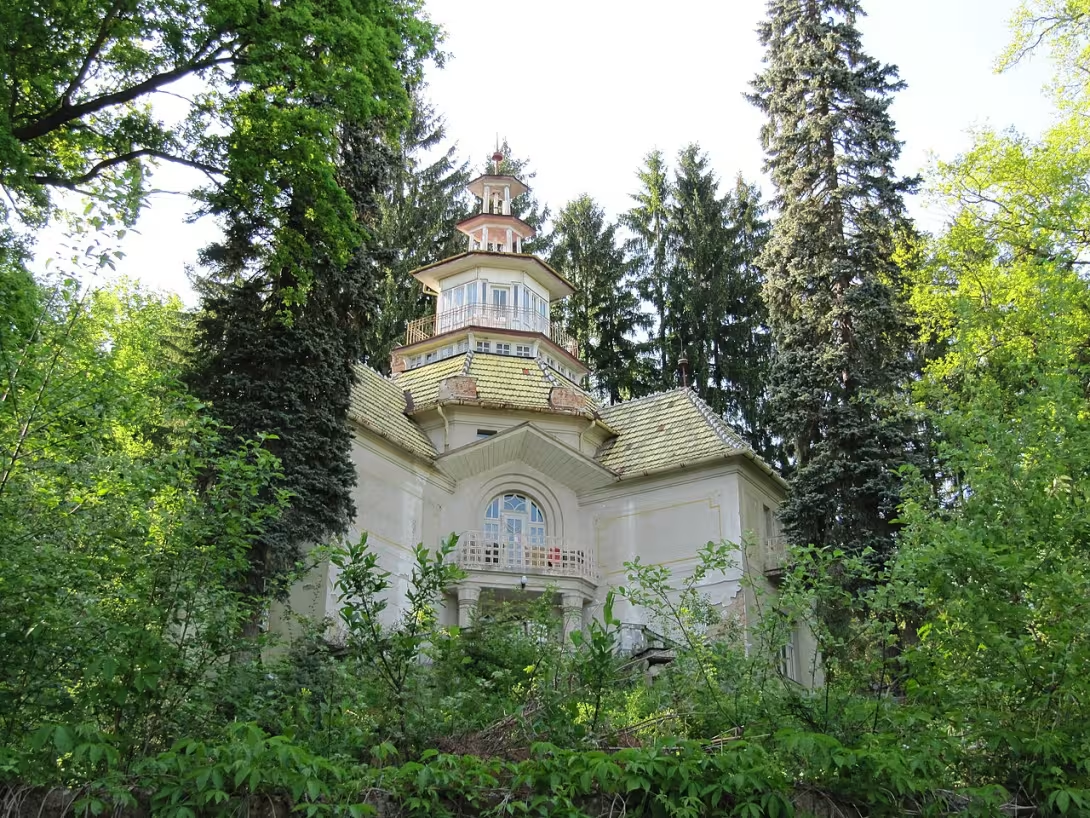

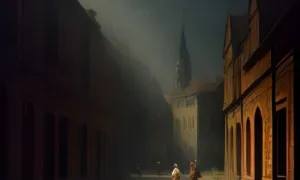
The historical appearance on the left is an AI-generated visualisation and serves as inspiration only.
Historical milestones
- 1906
- Beginning of the construction of Villa Kancnýřka.
- 1908
- Completion and opening of Villa Kancnýřka.
- 1950
- Transfer of ownership of Villa Kancnýřka to the current owners.
- 1992
- Villa Kancnýřka was declared a protected cultural monument.
- 2024
- The villa served as a filming location for the movie 'Cukrkandl'.
Architectural development
The villa was built on a V-shaped floor plan with a hexagonal central space from which three single-story wings extend. The architecture features narrow, one-axis facades with balconies and is topped by a distinctive pagoda-like tower. Its roof is gabled and covered with yellow glazed tiles that create a 'golden' effect.
Historical events
Constructed between 1906 and 2008 as a summer residence for Bedřich Kancnýř.
Became a protected cultural monument in 1992.
Owners
Originally owned by Bedřich Kancnýř, the villa was sold to its current owners in the 1950s. The current owners have been redeveloping it since 2023 with plans to open it to the public.
Points of interest
- Vila Kancnýřka was designed by Jan Mráček, a student of the famous Viennese architect Otto Wagner, which links it to broader European architectural movements and influences.
- The villa's pagoda-like roof structure is an unusual feature in Czech architecture, blending geometric secession style with oriental motifs, reflecting the eclectic tastes of its era.
- Originally envisioned as both a personal summer retreat and a potential source of income through rental to spa visitors, Vila Kancnýřka highlights how private residences were sometimes used commercially during this period.
- The villa served as a filming location for the 2024 film fairy tale "Cukrkandl," showing its continued cultural relevance and appeal in contemporary media beyond its historical significance.
- Despite being designated a protected cultural monument since 1992, Vila Kancnýřka has experienced various phases of occupancy over the years, including periods when it housed tenants, illustrating its adaptive reuse through different eras.
Guide
This guide is narrated by a synthetic voice generated by artificial intelligence.
Show guide text
This text was created by artificial intelligence and has not been editorially reviewed. It may contain inaccuracies.
Villa Kancnýrka in Luhačovice impresses primarily with its striking roof structure that resembles a pagoda. It is a romanticizing building in which geometric Art Nouveau blends with Oriental influences.
The villa was created between 1906 and 1908 according to a design by Jan Mráček, a student of Viennese architect Otto Wagner. It was built by Bedřich Kancnýř, an imperial and royal judicial councillor of the Regional Court in Brno, who frequently visited Luhačovice. The house was meant to serve as a summer residence for his family. At the same time, rooms in it were to be rented out to spa guests.
In the nineteen fifties, the family sold the villa to its present owners. However, tenants were soon assigned to the house. Since 1992, the villa has been protected as a cultural monument. In 2023, the owners began reconstructing it and the villa is expected to open to the public.
The floor plan of the building has the shape of the letter V. Its core is a hexagonal central space, from which three single-storey wings extend. The rear wing is considerably more slender than the other two. The narrow facades of the wings have a single window axis and a small balcony on the upper floor. The main entrance lies between two more massive sections. They are emphasized by pillars on which rests a balcony with a tent-like roof.
Both the ground floor and the upper floor have similar layouts. In the middle is a hall and on both sides are rooms. On the left side leads a staircase, on the right side a lift for food, which was prepared in the basement. In the attic were two more rooms for staff. From the attic also leads a staircase to an observation tower in the shape of a pagoda. The gable roof is covered with yellow glazed tiles, which give the impression of gold.
In 2024, the film fairy tale Cukrkandl was filmed in the villa.
Tips for visitors
The best time to visit Vila Kancnýřka is during the late spring or early autumn months, when the weather is pleasant, and the surrounding landscapes are lush and vibrant. This period offers a comfortable climate for exploring both the villa and its picturesque surroundings. Additionally, visiting outside of peak summer can provide a more tranquil experience, allowing you to appreciate the architectural beauty without large crowds.
Public transport also serves the region well, making it easy for visitors who prefer not to drive. For those using public transit, checking current routes and schedules online before your visit will ensure a smooth journey.
When planning your visit, consider bringing comfortable walking shoes as you'll likely want to explore both the villa and its surroundings on foot. A camera is also recommended to capture the unique pagoda-like roof structure of Vila Kancnýřka and the scenic beauty of Luhačovice. The natural light during early morning or late afternoon can create stunning photographic opportunities, highlighting the villa's architectural details.
For families with children, visiting Vila Kancnýřka offers a delightful experience. Beyond exploring the villa itself, the area around Luhačovice is rich in historical buildings and natural attractions within a 5 km radius that are perfect for family outings. These include leisurely walks through picturesque landscapes and visits to other historical sites, providing both educational value and entertainment.
Nearby attractions within a 30-minute drive from Vila Kancnýřka include other historical buildings in Luhačovice known for their architectural significance and the town's thermal springs. These natural attractions offer relaxation opportunities and are ideal for visitors looking to combine cultural exploration with wellness activities.
Frequently asked questions
Can the monument be visited?
This is a residential or farm building, not a museum with opening hours. Please view it from public space and respect the owners' privacy. We have no information about access to the interior. According to the heritage register restoration is under way, so access may be restricted.
Where is the monument?
Location: Luhačovice, Zlínský kraj. The map on this page shows the exact spot.
Why is the monument protected?
It is listed in the Central List of Cultural Monuments of the Czech Republic as a cultural monument (register no. 1000118606).
Businesses nearby
Do you run a restaurant, accommodation, shop, museum, rental, wellness or other visitor service near this monument? Show yourself directly to the people heading to it — this is how they will see you in the app and on the web:
Events nearby
Zdroj akcí: otevřená data měst a obcí ČR (Národní katalog otevřených dat) a kalendář akcí Národního památkového ústavu.
Nearby
Vila Kancnýřka is situated in Luhačovice, a spa town known for its thermal springs and picturesque landscapes. The area features other historical buildings and natural attractions within a 5 km radius.
Accommodation nearby
Themed route
Luhačovická Vodní Cesta
1. Vila Kancnýřka (hlavní cíl) - Vila Kancnýřka is a stunning example of Art Nouveau architecture and a must-visit attraction in Luhačovice. This beautiful villa features an impressive façade, intricate details, and a picturesque garden.
2. Luhačovické lázně (1,5 km) - The Luhačovické lázně are a historic spa complex that has been in operation since the 19th century. Visitors can relax in the thermal springs, enjoy the beautiful architecture, and take a stroll through the surrounding park.
3. Kostel Nanebevzetí Panny Marie (1,5 km) - This charming church is a beautiful example of Gothic architecture and features stunning stained-glass windows and intricate stone carvings.
4. Luhačovický park (1,5 km) - The Luhačovický park is a peaceful oasis in the heart of the town, featuring walking trails, benches, and beautiful gardens. It's a perfect place to relax and enjoy the scenery.
5. Luhačovický rybník (2 km) - The Luhačovický rybník is a picturesque lake that offers a peaceful atmosphere and beautiful views of the surrounding countryside. Visitors can take a leisurely walk around the lake or enjoy a boat ride.
Seasonal recommendations
Jaro
In the spring season, Vila Kancnýřka is surrounded by flowers and greenery, creating a pleasant atmosphere. The lighting during this time is also specific in that it is gentle and comfortable. Practical tips: the best time to visit the villa is in the morning or late afternoon to avoid crowds that typically gather around noon. We recommend bringing an umbrella as access to the villa is limited during spring showers.
Léto
During the main summer season, Vila Kancnýřka is very popular, so it's best to arrive early to avoid crowds. The lighting at this time is particularly bright and pleasant. The atmosphere is relaxed and calm, making it ideal for touring the villa. Practical tips: we recommend visiting the villa in the morning or late afternoon to avoid large crowds.
Podzim
In autumn, Vila Kancnýřka is surrounded by beautiful fall foliage and the air is filled with the scent of burning wood. The lighting during this time is gentle and comfortable. Practical tips: the best time to visit the villa is at noon when the sun provides excellent natural light. We recommend bringing warm clothing as the villa closes in the evening.
Zima
In winter, Vila Kancnýřka is closed and only partially accessible, so it's best to visit during the pre-Christmas period. The lighting at this time is particularly bright and pleasant. The atmosphere is calm and soothing, making it ideal for touring the villa. Practical tips: we recommend visiting in the morning or late afternoon to avoid large crowds. Don't forget to bring warm clothing as the villa can be cold.
Visualizations and artistic views


The visualisations are generated by artificial intelligence and serve as inspiration.
Photos from the area
Real photos taken near the monument


Zdroj a licence jsou uvedeny u každého snímku.
Tips from visitors
No tips yet. Be the first!
Log in and add your tip.
Sources and literature
Photos: Jana Sekyrová / CC BY-SA 4.0, rozlišení zvýšeno umělou inteligencí — Wikimedia Commons. The author and licence also appear when you hover over the image.
Faktickým podkladem tohoto textu byl článek na Wikipedii, jehož autory jsou přispěvatelé Wikipedie. Článek je dostupný pod licencí CC BY-SA 4.0.
Location on the map

Příběhy a pověsti
Legendy, pověsti a příběhy spjaté s touto památkou
Fotografie návštěvníků
Zatím žádné fotografie. Buďte první, kdo přidá fotografii z návštěvy!
Log in a přidejte svou fotografii nebo hodnoťte.
Za ověřenou návštěvu v aplikaci získáte víc bodů — poznáme podle GPS, že jste na místě.
Reviews and comments