






Tenisový pavilón Pavilion
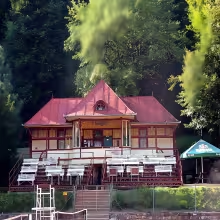
The Tenisový pavilón is a wooden historical monument situated on a slope above the tennis courts, near the spa center and the Šťavnice river in Luhačovice. Built between 1924 and 1926, the structure is notable for being preserved in its original form and for its ongoing use by tennis players.
Tennis history at this location began in 1902, when the first court was built for Count Serényi. Following the formation of the spa joint-stock company, a new court was added. The pavilion was constructed to support the expansion of the tennis area in preparation for the First International Lawn Tournament in 1926. The building was designed by architect Josef Skřivánek, a member of the Luhačovice spa board who also worked on other local structures, such as the Inhalatorium and the Gloriet nad Otovkou.
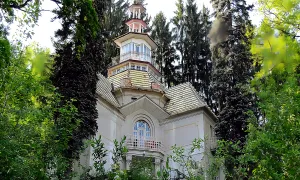
The pavilion is a small wooden building with a rectangular floor plan, set upon a high stone base. It features a tin-covered hipped roof with a segmental dormer. The stone base, facing the tennis courts, contains a cellar entrance and two circular windows. On both sides of the main facade, staircases lead to a glass veranda. This veranda provides access to the central manager's room and to symmetrical men's and women's changing rooms, which are entered through side windows. While the primary materials are stone and wood, the toilets at the rear were added later. The design follows the architectural style of Dušan Jurkovič, integrating regional elements into the landscape. An open grandstand is located in front of the pavilion, facing the courts.
The site has hosted significant tennis events, including the Davis Cup, the Gale Cup, and the ŠKOFIN TOUR series. It has also welcomed many prominent personalities, such as world tennis champion Karel Koželuh, as well as Dominika Haška, Roman Hamrlík, Jiří Dopita, Pavel Zedníček, Václav Vydra, Miloslav Šimek, Martin Dejdar, and Václav Klaus.
Declared a cultural monument in 2000, the pavilion is one of the few historical buildings in Luhačovice preserved without modernizing interventions. It continues to serve its original purpose for tennis players. Inside, the pavilion houses a small exhibition of broken tennis rackets.
This monument stands as a well-preserved example of early 20th-century architecture within the Luhačovice spa area. It offers a unique look at the region's sporting history and remains a functional part of the local tennis complex.
Historical milestones
- 1902
- The first tennis court was established for Count Serényi.
- 1924
- Construction of the tennis pavilion began.
- 1926
- The pavilion was completed in preparation for the First International Lawn Tournament.
- 2000
- The building was officially declared a cultural monument.
Architectural development
The building features a rectangular floor plan on a high stone base with a hipped tin roof and a segmental dormer. It includes a glass veranda providing access to symmetrical changing rooms for men and women, as well as a central manager's room. Toilets were added to the rear of the building at a later date.
Historical events
The pavilion has hosted significant tennis events, including the Davis Cup, the Gale Cup, and the ŠKOFIN TOUR series.
Points of interest
– The Tenisový pavilón is a well-preserved wooden structure built between 1924 and 1926.
– It was designed by architect Josef Skřivánek, who also worked on other local structures in Luhačovice.
– The building has been preserved in its original form and continues to serve its original purpose for tennis players.
– The site has hosted significant tennis events, including the Davis Cup, the Gale Cup, and the ŠKOFIN TOUR series.
– The pavilion was declared a cultural monument in 2000.
Guide
Show guide text
This text was created by artificial intelligence and has not been editorially reviewed. It may contain inaccuracies.
Welcome to the Tennis Pavilion in Luhačovice! As you stand before this historic monument, take a moment to appreciate its unique charm. The wooden structure rises above the tennis courts, its design blending seamlessly into the surrounding landscape.
As you gaze up at the pavilion, notice the intricate details that set it apart from other buildings of its time. Built between 1924 and 1926, this stunning example of architectural craftsmanship was designed by Josef Skřivánek, a local architect who imbued the structure with folk elements that reflect the region's rich cultural heritage.
As you explore the pavilion's history, you'll discover that it played a significant role in the development of tennis in Luhačovice. The first tennis court was established here as early as 1902, and the pavilion itself was built to accommodate the growing popularity of the sport. In fact, the pavilion was completed just in time for the First International Lawn Tournament in 1926.
As you walk around the pavilion, notice the way its design seems to flow seamlessly into the surrounding landscape. This is no accident – architect Josef Skřivánek deliberately incorporated elements of the local environment into his design, creating a sense of harmony between the structure and its surroundings.
The Tennis Pavilion has been home to many notable figures over the years, including Karel Koželuh, Dominika Haška, Roman Hamrlík, Jiří Dopita, Pavel Zedníček, Václav Vydra, Miloslav Šimek, Martin Dejdar, and Václav Klaus. These individuals have all left their mark on this historic site, and their stories are waiting to be uncovered.
As you stand before the pavilion, take a moment to appreciate its unique blend of history, architecture, and natural beauty. This is more than just a building – it's a window into the past, a testament to the power of human creativity and ingenuity. And as you continue your journey through this fascinating region, remember that there are many more stories waiting to be discovered.
Now, take a deep breath, and let the atmosphere wash over you. You're standing in the midst of history, surrounded by the whispers of the past. What secrets will you uncover?
Tips for visitors
The optimal time to visit the Tennis Pavilion is early in the morning during the spring or early summer, when the light is soft and the surrounding gardens are at their most vibrant. Late afternoon in autumn also offers a warm glow and fewer visitors, making it ideal for a relaxed stroll.
The site is easily reachable by car; a small parking area is situated just behind the pavilion, providing convenient access for visitors. Public transport users can take a bus to the Luhačovice spa centre and then walk a short, well‑signposted route up the slope to the pavilion. Always check the latest schedules before you travel.
Bring comfortable walking shoes, a bottle of water, and sun protection such as a hat or sunscreen. A light jacket is advisable, as the pavilion’s wooden interior can feel cool even on warm days. If you plan to stay for a while, a small picnic blanket can be useful for a break on the nearby lawn.
Photography enthusiasts will find the best shots from the elevated terrace that overlooks the tennis courts, especially during the golden hour when the sun highlights the pavilion’s wooden details. A short walk down to the Šťavnice river offers reflective water scenes, and the path along the riverbank provides a natural frame for the building.
Within a 30‑minute walk you can explore the historic Inhalatorium and the Gloriet above Otovka, both designed by Josef Skřivánek, as well as the soothing spa centre of Luhačovice. Families with children will appreciate the open green spaces for a quick game, the nearby river for safe splashing, and the easy access to the Inhalatorium, which often hosts child‑friendly exhibitions.
Businesses nearby
Do you run a restaurant, accommodation, shop, museum, rental, wellness or other visitor service near this monument? Show yourself directly to the people heading to it — this is how they will see you in the app and on the web:
Nearby
The pavilion is located near the Šťavnice river and the spa center of Luhačovice. Other nearby structures by architect Josef Skřivánek include the Inhalatorium and the Gloriet above Otovka.
Accommodation nearby
Themed route
1. Inhalatorium (Architectural structure) – A striking work by architect Josef Skřivánek that represents the healing essence of the spa.
2. Tenisový pavilón (Sports pavilion) – The primary destination of the tour, showcasing the unique architectural style of Josef Skřivánek.
3. Šťavnice (River) – A scenic walk along the riverbanks that connects the various landmarks of the spa center.
4. Gloriet (Pavilion) – Located above Otovka, this final stop is another masterpiece by Josef Skřivánek offering a beautiful vantage point.
Seasonal recommendations
Spring
As you visit the historic Tenisový pavilón in Luhačovice during the spring season, you'll be greeted by the gentle warmth of the sun and the vibrant colors of blooming flowers. The atmosphere is filled with the sweet scent of nature awakening from its winter slumber.
Practical tips: Be prepared for moderate crowds and dress comfortably in layers, as the temperature can fluctuate. Arrive early to avoid the peak hours and enjoy the serene surroundings.
Summer
During the summer months, the Tenisový pavilón is a popular destination, with warm sunshine and lush greenery surrounding the historic building. The atmosphere is lively, with children playing and families enjoying picnics.
Practical tips: Be prepared for larger crowds and arrive early to secure parking. Wear comfortable shoes and clothing suitable for the season's heat. Take advantage of the extended opening hours to make the most of your visit.
Autumn
As autumn arrives in Luhačovice, the Tenisový pavilón takes on a cozy atmosphere, with golden foliage and warm sunlight creating a picturesque backdrop. The air is crisp, carrying the scent of ripe fruits and leaves.
Practical tips: Dress warmly for the cooler temperatures, and consider visiting during the shoulder season to avoid the peak tourist crowds. Take advantage of the shorter lines and enjoy the tranquil surroundings.
Winter
During the winter months, the Tenisový pavilón takes on a serene quality, with snow-covered trees and a peaceful atmosphere. The air is crisp, carrying the scent of woodsmoke and hot chocolate.
Practical tips: Dress warmly for the cold temperatures, and consider visiting during the week or off-peak hours to avoid crowds. Take advantage of the shorter opening hours and enjoy the cozy ambiance.
Visualizations and artistic views

The visualisations are generated by artificial intelligence and serve as inspiration.
Photos from the area
Real photos taken near the monument

Zdroj a licence jsou uvedeny u každého snímku.
Tips from visitors
No tips yet. Be the first!
Log in and add your tip.
Sources and literature
Fotografie: Pavel Langer / CC BY-SA 3.0, rozlišení zvýšeno umělou inteligencí — Wikimedia Commons. The author and licence also appear when you hover over the image.
Faktickým podkladem tohoto textu byl článek na Wikipedii, jehož autory jsou přispěvatelé Wikipedie. Článek je dostupný pod licencí CC BY-SA 4.0.
Location on the map
More monuments – Luhačovice
Show all in the municipality
Příběhy a pověsti
Legendy, pověsti a příběhy spjaté s touto památkou

Fotografie návštěvníků
Zatím žádné fotografie. Buďte první, kdo přidá fotografii z návštěvy!
Přihlaste se a přidejte svou fotografii nebo hodnoťte.
Za ověřenou návštěvu v aplikaci získáte víc bodů — poznáme podle GPS, že jste na místě.
Reviews and comments