

Vila Františka Petráše Villa
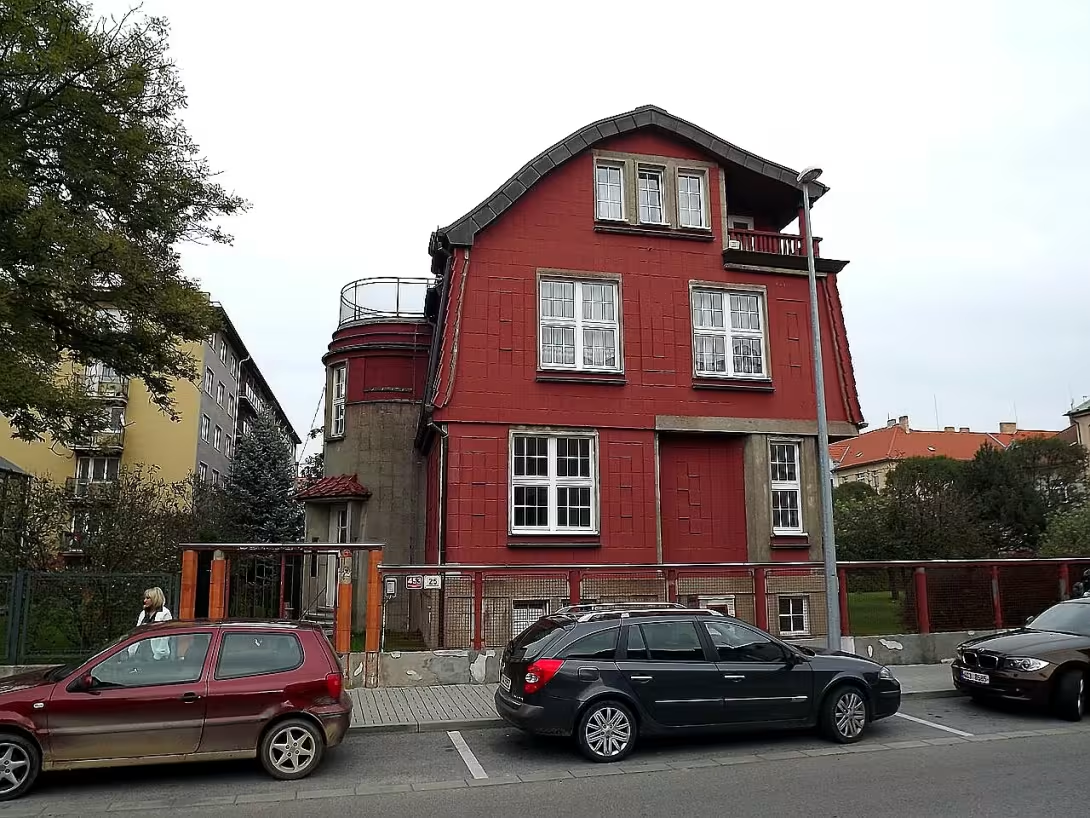
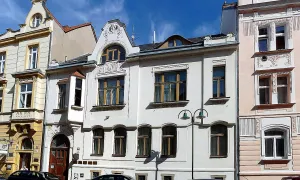
Vila Františka Petráše in České Budějovice on Dukel Street is one of the most valuable modernist houses in the city, which was established between 1914 and 1916. The construction is remarkable with its unique appearance, the use of patented materials and the influence of Dutch architecture.
The villa was built on the design of its owner and builder Franz Petráš. At the time of its creation, the First World War was taking place in Europe and new directions of modernism and experimentation with new materials, especially with iron concrete, began to dominate the architecture.
The building is built on a reinforced concrete skeleton, with a concrete shell on the roof instead of a traditional roof. Both of these technological elements were the own patent of František Petráš. The building is walled with special brick blocks called Petras, which are arranged in ornamental relief. The overall style of the construction is described as fairy-tale to bizarre, with the walls divided by geometric patterns. The facade is equipped with elements made of artificial stone, specifically tiles, moldings, sharpening, corners and plinth.
The house is bunk with attic. His shield is heading west to Dukel Street, while the entrance with a semi-circular plan is oriented north. On the ground floor there is a bay on the southwest side. The floor is slightly preset and covered with almost vertical Mansard roof. The attic has a winter garden and a small balcony facing south. The eastern part of the house has a flat roof and prism shape. The north side of the villa was subsequently extended in the 1920s.
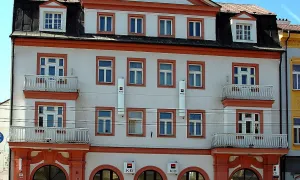
The villa remained in the possession of descendants of the builder. Over the years, it has undergone several changes and interventions; in the last third of the 20th century, it was inappropriately painted in red. In 2002, the building was damaged by a flood that destroyed the basement.
The building is protected as a cultural monument of the Czech Republic. This protection includes a garden with an economic object, which is enclosed by a ceramic fence. The importance of the villa was confirmed in 2007 by publication in the book of the famous villa of the South Bohemia Region.
Thanks to the combination of innovative technologies and unconventional aesthetic processing, the villa František Petráš represents a unique example of early modernism. It is a place worth visiting for every interested in architecture and technical progress in the early 20th century.
Then and now
Drag the slider to compare how the landmark may have looked when it was built with the view today.
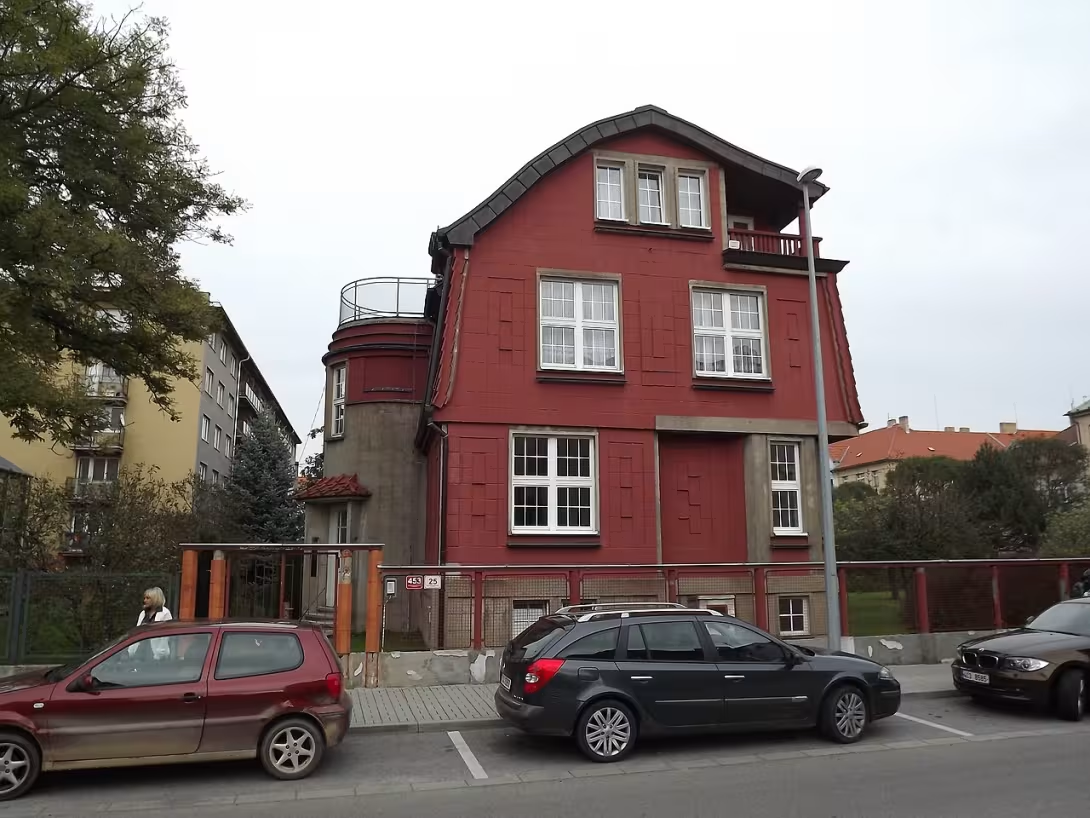
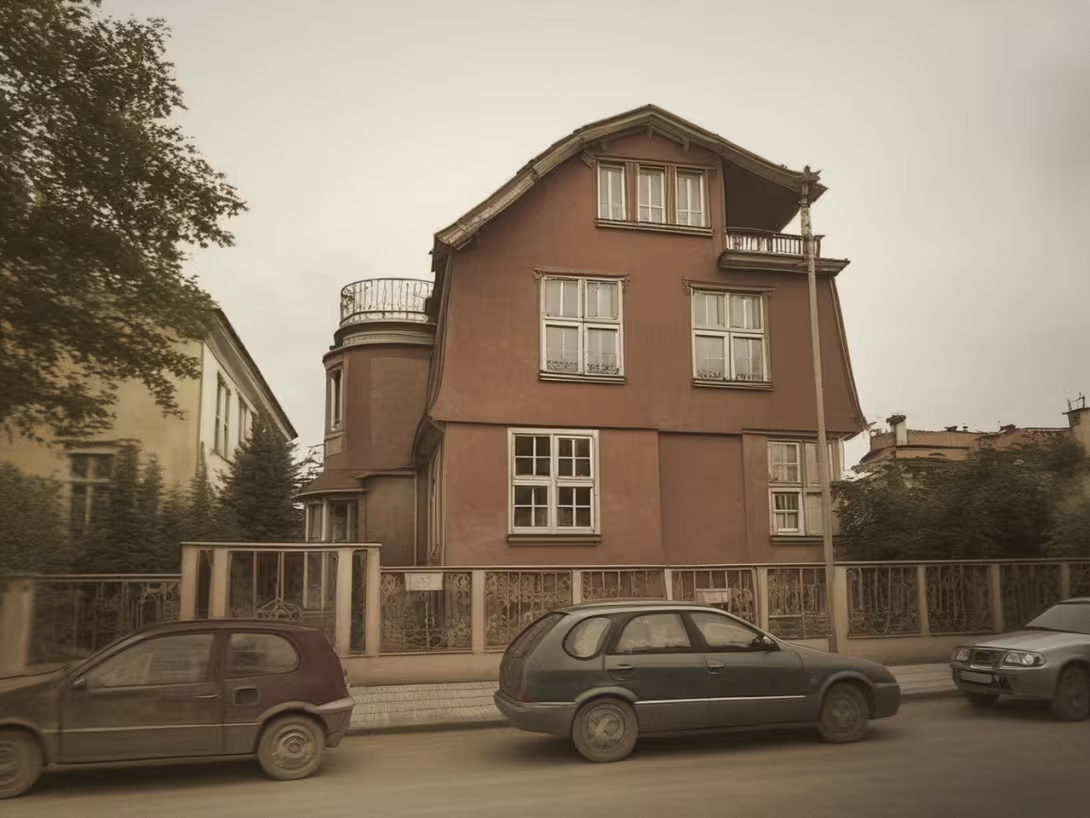
The historical appearance on the left is an AI-generated visualisation and serves as inspiration only.
Historical milestones
- 1914
- Beginning of building the villa
- 1916
- Completion of villa construction
- 2002
- Damage to the basement of the flood villa
Architectural development
The house is built on a reinforced concrete skeleton with a concrete shell instead of a roof. Special brick blocks called Petras in ornamental relief were used. The north side of the house was expanded in the 1920s.
Historical events
In 2002, the villa was damaged by a flood that primarily destroyed the basement. In 2007, the construction was listed in the book "The Famous Villages of South Bohemia Region.".
Owners
František Petráš, then descendants of builder František Petráš
Points of interest
- The house was built between 1914 and 1916 on the design of its owner František Petráš. - The construction uses a reinforced concrete skeleton and concrete shell near the roof, which were the building's patents. - The building is walled with special brick blocks called Petrášky, which form an ornamental relief. - The overall style of the house is described as fairy tale to bizarre with walls divided by geometric patterns. - In the attic there is a winter garden and a small balcony facing south.
Guide
This guide is narrated by a synthetic voice generated by artificial intelligence.
Show guide text
This text was created by artificial intelligence and has not been editorially reviewed. It may contain inaccuracies.
Welcome to Czech Budejovice. Right now, you're facing one of the most important and interesting buildings in the city. In front of you stands the villa of František Petráš, a house which, by its unusual appearance, is likely to interest you at first glance. Stop for a moment, take a breath, and just feel the overall atmosphere of this place in silence. Look at the building as a whole. You will see a house that deviates from the ordinary painting of the construction industry at the time and brings something completely new and courageous to the city space. It's a building that combines one person's ambition and then a very modern approach to what a residential house should look like.
Let us now move back more than a hundred years in time. Imagine the period before World War I, when great changes began in architecture. It was in these years, namely between the year one thousand nine hundred fourteen and one thousand nine hundred sixteen, that this villa was created. What is most fascinating about this story, however, is that the house was not created by some famous architectural bureaus, but was designed directly by its owner. František Petráš wasn't just a person who wanted to build a beautiful home, he was a visionary and an innovator. He wanted to create a space that would reflect his personality, his knowledge and his desire for progress.
Now if you look at the house again, try to notice the details that make it a unique piece of modern construction. Notice the general appearance of the building. It is tainted by Dutch architecture at the time, which means that in its form you feel a certain purity, functionality and a specific character that was very popular in North Europe at the time. But Petras didn't just stop for looks. He wanted the house to be modern even in what you can't see at first sight.
Now pay attention to the very body of the house. Even if you can see solid walls from the outside, there's a very advanced technology inside. The whole building is built on a reinforced concrete skeleton. By the time the house was built, the use of such a skeleton was a very bold step. The concrete allowed the builder to create space differently and differently from the traditional walls. And if you look up to the massive roof, know that Peter here, too, has used his patents. The roof is made as a concrete shell. It's a technical solution that was ahead of its time at the time and showed how much the owner of the villa was focused on the future.
Now, I'd like to ask you to focus on the surfaces of the house. Look carefully at the masonry. Notice those strange brick blocks that make a beautiful ornamental relief on the facade. These special bricks bear the name of their creator and are known as Petras. So it's not just a simple building material, but a copyright that gives the house depth and texture. It's fascinating when you realize that the person who designed the house had special bricks made for that purpose so that he could achieve exactly the visual effect he wanted.
When we talk about František Petráš, we talk about the personality that left a deep mark in the building. His approach to building was not just about aesthetics, but about constantly finding new ways. This villa is actually his life monument, proof of his technical wit and courage to experiment. It's a house that tells the story of ambition and desire to create something that will take generations.
However, the history of this house is not just about triumph and innovation. Every memory has its sad moments. If you look at the bottom of the house, remember the year two thousand and two. At that time, the city was hit by a devastating flood. The water invaded the basement of the villa and caused considerable damage. It was a painful reminder that even the most modern and firm buildings are prone to the power of nature. Yet the house has remained and still stands as a proud witness to history.
The interesting thing that might interest you is that protecting this place doesn't just reach into the building itself. As a cultural monument of the Czech Republic, this whole system is protected, including garden and ceramic fence. All these elements belong together and form one whole. It is the ceramic fence that is another element that complements the unique appearance of the villa and shows that Petráš was thinking about the detail up to the very borders of his property.
Now, when you look around again, you realize that you're standing in front of a house that is basically one big experiment from the early 20th century. It is a combination of Dutch style, personal genius design and then state-of-the-art technology. It's a place where art meets engineering.
Imagine what it must have been like when in a thousand and nine hundred and sixteen villas were completed and František Petráš first entered his new home. He must have been extremely proud to be able to transfer his patents and visions into reality. Today we can only admire the result of his work and think about how much our understanding of architecture has changed since then.
Vila Františka Petráše remains one of the most valuable modernist houses in our city. It is a reminder of a time when people believed in progress and were not afraid to try new materials and shapes. It's a house that teaches us that courage to innovate can create something that will be beautiful and functional for over a century.
Now I will no longer keep you at this fascinating house. I suggest you look at the facade details for a while and try to re-load the invisible concrete structures that hold this whole building. Walk around the fence, feel the silence of the garden and let the atmosphere of this place engulf you.
Thank you for accompanying me to this brief interpretation. I hope you are interested in František Petráš's villa and that you are leaving with a new look at the modern architecture of our cities. I wish you a pleasant further journey along the beautiful streets of České Budějovice and many other discoveries. Goodbye.
Tips for visitors
The best time to visit is during spring and summer months, when vegetation around the house beautifully complements clean lines of modernist architecture. We recommend arriving in the morning or late afternoon hours, where soft light hits, which best excels at the facade of this unique house from the beginning of the twentieth century.
You can reach the place by car or public transport; Check the specific connections and stopping options in the current timetables. As it is a residential house, we recommend to be discreet when moving around and respect the privacy of the people.
For photo lovers are the most interesting angles from adjacent street, from where you can capture the overall look of the building and its geometric details. The best pictures are made in clear weather, where all architectural elements of the owner's design are visible.
Families with children can use a visit to explain briefly how the style of building houses changed over time. Since this is only an outdoor tour, the journey is easy and suitable for smaller children.
Frequently asked questions
Can the monument be visited?
This is a residential or farm building, not a museum with opening hours. Please view it from public space and respect the owners' privacy. We have no information about access to the interior.
Where is the monument?
Location: České Budějovice 6. The map on this page shows the exact spot.
Why is the monument protected?
It is listed in the Central List of Cultural Monuments of the Czech Republic as a cultural monument (register no. 1000156982).
Businesses nearby
Do you run a restaurant, accommodation, shop, museum, rental, wellness or other visitor service near this monument? Show yourself directly to the people heading to it — this is how they will see you in the app and on the web:
Events nearby

Zdroj akcí: otevřená data měst a obcí ČR (Národní katalog otevřených dat) a kalendář akcí Národního památkového ústavu.
Nearby
🏰 Historic sites (121)
- Zborovský pomník 0.3 km
- Muzeum energetiky 0.4 km
- Jan Žižka z Trocnova 0.5 km
- Jihočeské muzeum 0.6 km Dukelská 242/1 391 001 531 web
- Muzeum koňspřežky 0.6 km web
- Bývalá synagoga 0.6 km
- Českým letcům RAF 0.6 km
- Vojtěch (Adalbert) Lanna 0.8 km
- Bludný kámen 0.8 km web
- JUDr. August Zátka 0.9 km
- Galerie na dvorku 0.9 km
- Přemysl Otakar Ⅱ. 1.0 km
- Sloup Svaté Trojice 1.0 km
- Alšova Jihočeská galerie – Wortnerův dům 1.0 km web
- Galerie U Schellů 1.2 km Panská 174/7
- Galerie 1 1.2 km +420 722 913 120 web
- Panna Maria Budějovická 1.2 km
- sv. Mikuláš z Myry 1.2 km
- sv. Auracián 1.2 km
- sv. Šebestián 1.2 km
🍽️ Restaurants and dining (427)
- MyMy Restaurace 0.2 km +420 775 272 585
- Sportbar 0.2 km Dukelská 638/53
- Šnyt 0.3 km
- The Gallery 0.3 km
- Černý kafe 0.4 km
- Alchymista 0.4 km web
- Pohádka 0.4 km
- Restaurace Metropol 0.5 km +420 387 311 256 web
- U Černého koníčka 0.5 km +420 386 353 716 web
- KANTÝNA by Honza Krob 0.5 km
- Dobrá čajovna 0.6 km web
- Coffee Berry 0.6 km
- Divadelní kavárna 0.6 km
- Aviatik café 0.6 km
- BEJBYcafe 0.6 km
- Bouda 0.7 km
- Bella Ciao 0.7 km
- Donut s tebou 0.7 km +420 607 907 008 web
- Hrancle s tebou 0.7 km +420 607 907 008 web
- City restaurant 0.7 km
🏨 Accommodation (85)
- Hotel Metropol 0.5 km Senovážné náměsti 2 web
- Hotel Garni 0.6 km
- Ubytovna U Nádraží 0.7 km +420972544648 web
- Pension Magdalena 0.7 km
- Dvořák 0.7 km nám. Přemysla Otakara II. 36
- Grandhotel Zvon 0.8 km nám. Přemysla Otakara II. 28 +420 381 601 601 web
- Hotel v Centru 0.8 km +420 387 311 801 web
- U Solné brány 0.9 km Radniční 138/11 web
- Penzion Lara 0.9 km web
- Fontana 0.9 km náměstí Přemysla Otakara II. 12/8 +420 608 316 929 web
- Residence U Černé věže 1.0 km +420 725 178 584 web
- Hobit 1.0 km
- Hostel Cuba 1.1 km Nová 2024/18
- Bohemia 1.1 km
- Hotel Klika 1.1 km Hroznová 25 +420387318171 web
- U Tří Hrušek 1.1 km +420 775 384 887 web
- Petra 1.1 km
- Pension Pánská 1.1 km
- Café Hostel 1.2 km Panská 177/13
- Hotel Budweis 1.2 km
🚲 Rentals and sport (68)
- Cyklocentrum Hyka 0.5 km web
- Cyklo Švec 0.5 km
- HockeyLand 0.6 km
- ALL SPORTS - Bauer Hockey Shop 0.6 km F. A. Gerstnera 6 +420 724 987 918 web
- MARC'O sport 0.6 km
- tělocvična Orel 0.7 km Lannova tř. 238/2
- Stěna Lanovka 0.7 km web
- Sport Style 0.8 km
- Scootshop 0.8 km
- Kamzík 0.8 km
- Army Street Shop 0.8 km
- Intersport 0.8 km
- Bikeshop 0.8 km +420 386 354 172 web
- Banner 0.9 km
- HUDYsport 0.9 km web
- Spectrumbike 0.9 km web
- Airborne Ranger 0.9 km web
- Sportovní hala 1.0 km web
- Husky 1.0 km web
- Budějce z Vody 1.0 km +420 608 001 181 web
🥾 Hiking and nature (112)
- park Dukelská 0.4 km
- Malý jez 0.7 km
- Park Háječek 0.8 km
- Biskupská zahrada 0.8 km
- park Sokolský ostrov 1.0 km
- Městské sady 1.0 km
- Dlouhá louka 1.0 km
- Jungmannův park 1.1 km
- Stromovka 1.5 km
- Přírodní zóna Dubičný potok 1.8 km
- Budvar návštěvnické centrum 2.9 km K. Světlé 4
- park Čtyři Dvory 3.4 km
- Park Máj V. Volfa 3.8 km
- park Miroslava Chlajna 3.9 km
- Červený vrch 4.3 km
- Srubecký kopec 4.6 km
- Dlouhý vrch 4.7 km
- (Vidovská) Hora 4.9 km
- Lomy 5.0 km
- Hůrecký kopec 5.4 km
Accommodation nearby
Trips and activities nearby
Guided tours, tickets and activities nearby from GetYourGuide
Affiliate link: if you buy from the partner, we may receive a commission. The price for you does not change.
Search tours and activities →Themed route
Since there are no other points in the area, I propose a route within the area itself:
1. Vila Františka Petráše (building) - The main destination of the trip, where you can admire the architecture and history of this building. 2. The interior of the villa (exposure) - A tour of rooms and spaces that reveal the way of life at that time. 3. Chairs (outdoor area) - A place to relax and look at the exterior details of the building.
Seasonal recommendations
In the spring the surroundings of the villa will awaken to life and the fresh greenery will highlight the details of the facade. Light is soft in this period, which is ideal for observing architecture from the street. We recommend shoes suitable for wet terrain and visit in the morning when the air is the cleanest.
Summer brings a sharp sun that creates deep shadows on the surface of the building and highlights its plastic elements. Everything around the house is in full bloom. It is advisable to choose light clothes and a sun hat. It is best to come early in the morning or in the evening to avoid the greatest heat and main flow of passengers.
Autumn, the atmosphere becomes melancholy thanks to the colorful leaves of trees in the surrounding area. The low sun hits the building at a oblique angle, revealing interesting material textures. It is practical to carry a lighter jacket or raincoat and choose days with bright skies.
In winter, the construction works more closely, especially if it is covered by snow or frost. The contrast of the white landscape and the colors of the house creates a unique view. It is necessary to choose warm clothes, gloves and fixed footwear with anti-slip soles. The ideal time for a short walk around the villa is this afternoon in the setting sun.
Visualizations and artistic views


The visualisations are generated by artificial intelligence and serve as inspiration.
Photos from the area
Real photos taken near the monument


Zdroj a licence jsou uvedeny u každého snímku.
Tips from visitors
No tips yet. Be the first!
Log in and add your tip.
Sources and literature
Photos: JAn Dudík / CC BY-SA 3.0 — Wikimedia Commons. The author and licence also appear when you hover over the image.
Faktickým podkladem tohoto textu byl článek na Wikipedii, jehož autory jsou přispěvatelé Wikipedie. Článek je dostupný pod licencí CC BY-SA 4.0.
Location on the map
More monuments – České Budějovice 6
Show all in the municipality

Příběhy a pověsti
Legendy, pověsti a příběhy spjaté s touto památkou
Fotografie návštěvníků
Přidat fotografiiZatím žádné fotografie. Buďte první, kdo přidá fotografii z návštěvy!
Máte k místu vzpomínku nebo zajímavý příběh?
Log in a přidejte svou fotografii nebo hodnoťte.
Za ověřenou návštěvu v aplikaci získáte víc bodů — poznáme podle GPS, že jste na místě.
Reviews and comments