






Vila JUDr. Eduarda Šrota Villa
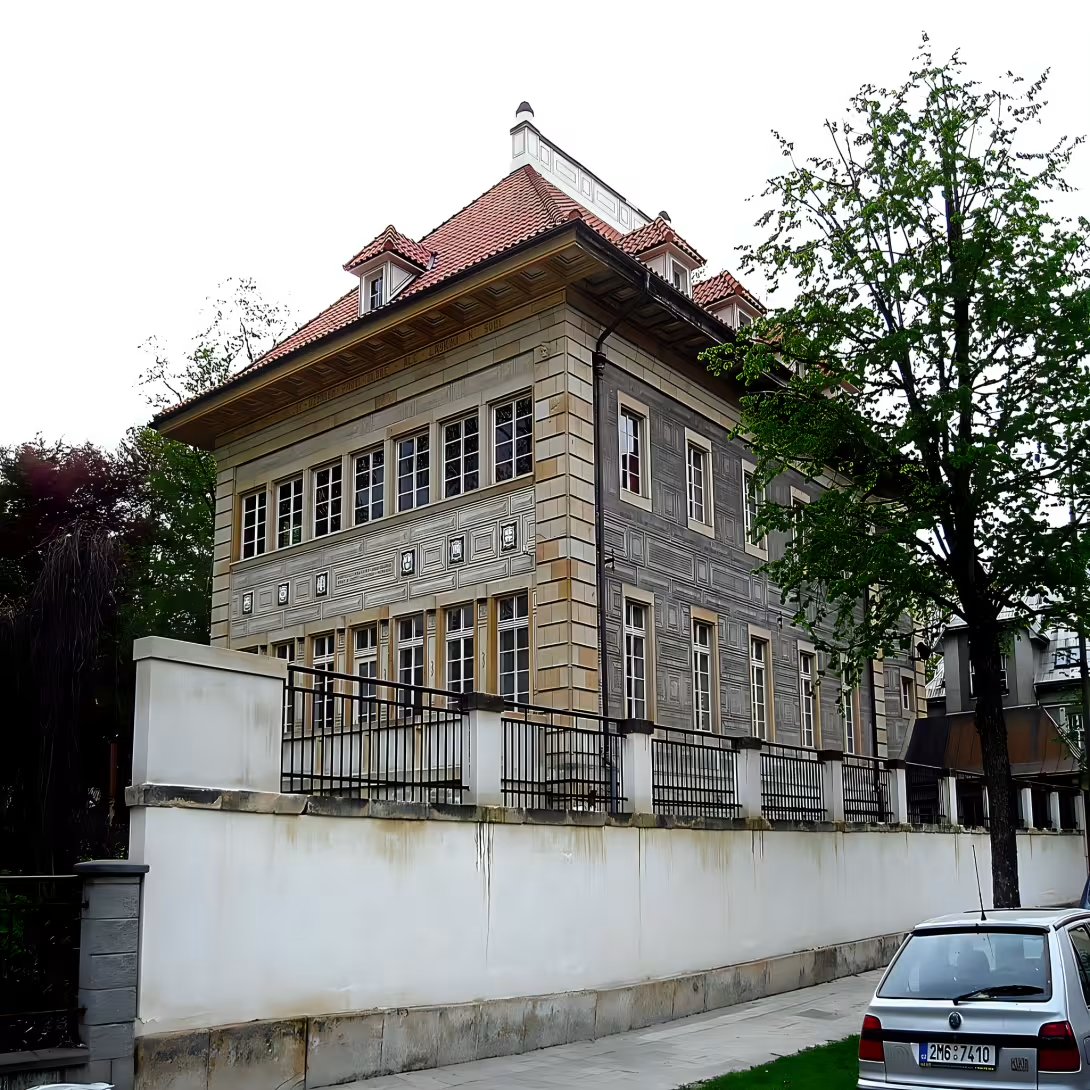
Vila JUDr. Eduarda Šrota is a Neo-Renaissance urban family villa in Olomouc. Built between 1923 and 1924, it is renowned for its rich sgraffito decorations and has been a protected cultural monument since 1981.
Lawyer JUDr. Eduard Šrot, a native of Litovle, commissioned the villa as a family residence. Prague architect Ladislav Skřivánek, who was then working on Olomouc's regulatory plan, designed the project. Olomouc builder Jan Komrska carried out the construction between 1923 and 1924.
This single-story rectangular building features a high, burnt-tile saddle roof that extends significantly beyond the floor plan. A white plastered masonry superstructure sits on the roof ridge, surrounded by dormer windows—four on the longer sides and one on each shorter side. The asymmetrical entrance consists of a hipped-roof covered corridor leading from the perimeter wall to a stair cylinder in the right corner. The facades feature two rows of rectangular windows with smooth stone chambranles; the ground-floor windows are taller. The street facade has five window axes, while the other two have seven. A masonry terrace overlooking the garden is attached to the southern side.
Sgraffito covers all facades, with stone bossage emphasizing the corners. Simple cartouches containing quotes from Neruda's *Friday Songs* and verses by Svatopluk Čech are distributed across the side and park facades. Engraved beneath the cornice are various moral inscriptions, such as "Silou proti mdlobě, vzdorem proti zlobě, ale s láskou / k sobě" and "Vydržet oheň! Zachovat odvahu ! Nepopustit v sebevíře! Věrně stát ke svobodě!". These are accompanied by details regarding the builders, designer, and contractor. The garden facade displays medallions symbolizing various professions, while a stone portrait of architect Ladislav Skřivánek sits on the corner beneath the roof cornice.
The interior comprises four levels, including a basement and an attic originally used for service. The first floor housed the parents' and children's bedrooms and once featured an open veranda facing the garden, which was later converted into a row of windows. The ground floor served as a social space, characterized by coffered ceilings and wooden paneling, with a winter garden providing access to the side terrace and the garden.
Situated on the edge of Čechovy sady on Spojenců třída, the villa originally boasted a garden with a pool, sculptural decorations, a gazebo, and park landscaping. By the end of the 1930s, the pool had been removed, and a residential building containing six rental apartments occupied part of the garden.
After 1948, owners were required to provide part of the villa to tenants occupying the modified ground floor. Descendants of the original owners continued to reside in the building until the turn of the 21st century, during which time it fell into significant disrepair.
In the early 21st century, the building's residential function transitioned to a professional space for an architectural studio. Between 2011 and 2017, the studio performed a sensitive reconstruction, and the villa now serves as its headquarters. In 2017, the association Za krásnou Olomouc awarded the project an honorable mention as part of the Rudolf Eitelberger Prize.
The villa remains a significant example of early 20th-century historicism in Olomouc. Its detailed exterior and literary inscriptions make it a noteworthy stop for anyone exploring the city's architectural heritage.
Historical milestones
- 1923–1924
- Construction of the villa.
- 1981
- Inclusion in the list of cultural monuments.
- 2011–2017
- Major reconstruction of the building.
- 2017
- The reconstruction project received honorable recognition from the Spolek Za krásnou Olomouc as part of the Rudolf Eitelberger Prize.
Architectural development
The villa is a single-story rectangular building with a high saddle roof covered in burnt tiles. The facade features sgraffito decorations, stone bossage on the corners, and stone chambranles around the windows. In the late 1930s, the original garden with a pool was partially built over with a residential building. The interior was recently renovated to serve as an architectural atelier.
Historical events
- 1923–1924
- Construction of the villa by builder Jan Komrska.
- 1981
- The villa was entered into the list of immovable cultural monuments.
- 2011–2017
- A sensitive reconstruction of the villa was carried out by an architectural studio.
Owners
JUDr. Eduard Šrot (original owner); descendants of the original owners (until the turn of the 21st century).
Points of interest
– The villa is a Neo-Renaissance urban family residence built between 1923 and 1924. It has been a protected cultural monument since 1981. – All facades are covered in sgraffito, including cartouches with quotes from Neruda's Friday Songs and verses by Svatopluk Čech. – The garden facade displays medallions symbolizing various professions, and a stone portrait of architect Ladislav Skřivánek is located on the corner beneath the roof cornice. – Various moral inscriptions are engraved beneath the cornice. – The villa's original garden featured a pool, sculptural decorations, a gazebo, and park landscaping.
Guide
Show guide text
This text was created by artificial intelligence and has not been editorially reviewed. It may contain inaccuracies.
Welcome to Olomouc. As you stand here in the heart of this historic city, take a moment to simply breathe and absorb the atmosphere around you. You are standing before a residence that is much more than just a building; it is a testament to elegance, a piece of living history that has watched the city evolve through the decades. Before you rises the Vila JUDr. Eduarda Šrota. Even before you read its name, you can likely sense its dignified presence. It possesses a certain gravity, a sense of permanence that commands respect, standing as a beautiful example of how urban living and high art can exist in perfect harmony.
As you look at the structure, let your eyes trace its lines. You are looking at a Neo-Renaissance historicist villa, a style that seeks to capture the grandeur and the balanced proportions of the Renaissance, reimagined for a modern era. This building was not born of a whim, but of a specific vision and a need for a home that reflected both status and culture. It was constructed between 1923 and 1924, a period of great transition and burgeoning identity. This was a time when the world was changing rapidly, yet there was still a profound respect for the classical traditions of the past.
The story of this villa begins with the man for whom it was built: JUDr. Eduard Šrot. As a lawyer, he required a residence that conveyed intellect, stability, and sophistication. To bring this vision to life, the project looked toward the architectural expertise of Prague. The villa was designed by the architect Ladislav Skřivánek, a man who brought the refined sensibilities of the capital to the streets of Olomouc. Through Skřivánek’s design, the villa became a bridge between the architectural trends of the great metropolitan centers and the local character of this beautiful city.
Now, I invite you to look more closely at the surfaces of the building. Do not just see walls; see a canvas. One of the most striking features of the Vila JUDr. Eduarda Šrota is the incredible detail that covers its facades. As you move your gaze across the exterior, you will notice the intricate sgraffito work. This is a remarkable decorative technique where layers of contrasting plaster are applied and then carefully scratched away to reveal patterns and designs. It gives the villa a texture and a depth that changes as the sunlight moves across the surface throughout the day. It is a meticulous, labor-intensive art form that transforms a simple wall into a masterpiece of graphic design.
As you continue to examine these facades, look for the cartouches—those ornamental frames that break up the patterns. These are not merely decorative flourishes. If you look closely, you will find that they hold something deeply personal and intellectual. Within these frames are quotes and verses that elevate the building from a mere residence to a literary monument. You will find echoes of the poetry of Neruda, specifically from his Friday Songs, alongside the verses of Svatopluk Čech. Imagine the atmosphere of this home in the 1920s, where the walls themselves spoke of the great thinkers and poets of the age. For a man like Eduard Šrot, these were not just decorations; they were reflections of a cultured life, a way to surround his family with the beauty of the written word.
The villa has lived many lives since those early years. It began as a private family sanctuary, a place of domesticity and legal professional life. However, as the decades passed, the importance of this structure became undeniable. In 1981, it was officially recognized for its historical and artistic value when it was included in the list of protected cultural monuments. This designation ensured that the craftsmanship of Ladislav Skřivánek and the legacy of the Šrot family would be preserved for future generations.
But preservation is not a passive act; it requires passion and significant effort. The villa underwent a major, transformative reconstruction between 2011 and 2017. This was a period of intense care, aimed at restoring the building to its former glory while ensuring it could function in a modern context. The success of this project was not merely a matter of technical skill, but of artistic sensitivity. In 2017, this dedication was officially honored when the reconstruction project received the Rudolf Eitelberger Prize from the Spolek Za krásnou Olomouc. This award is a testament to the fact that the villa is not just a relic of the past, but a living, breathing part of Olomouc’s architectural heritage.
Today, the villa has found a new purpose. It has transitioned from a private family home into a professional architectural studio. There is a beautiful poetic symmetry in this. A building that was once a product of great architectural vision is now a place where new architectural visions are born every day. The same walls that once sheltered a lawyer and his family now provide inspiration for the designers and creators of tomorrow.
As you prepare to move on and continue your journey through Olomouc, take one last look at the Vila JUDr. Eduarda Šrota. Notice how the sgraffito catches the light, and how the verses of the poets seem to whisper from the stone. It stands as a reminder that great architecture is not just about shelter, but about identity, culture, and the enduring power of beauty. Thank you for sharing this moment with us, and we hope you continue to find inspiration in the many hidden gems that this wonderful city has to offer. Enjoy the rest of your walk.
Businesses nearby
Do you run a restaurant, accommodation, shop, museum, rental, wellness or other visitor service near this monument? Show yourself directly to the people heading to it — this is how they will see you in the app and on the web:
Nearby
The villa is located on the edge of Čechovy sady (Czech Gardens) on Spojenců třída, surrounded by other grand villas from the early 20th century.
Accommodation nearby
Trips and activities nearby
Guided tours, tickets and activities nearby from GetYourGuide
Affiliate link: if you buy from the partner, we may receive a commission. The price for you does not change.
Search tours and activities →Themed route
1. Čechovy sady (Park) – Begin your journey with a relaxing stroll through these lush gardens. They offer a serene natural environment located right at the edge of the villa district. 2. Spojenců třída (Boulevard) – Walk along this prominent avenue to enjoy the grand urban layout. It provides a scenic path through the historic neighborhood. 3. Grand villas of the early 20th century (Architectural ensemble) – Explore the surrounding area to admire the impressive and elegant residential buildings of the era. 4. Vila JUDr. Eduarda Šrota (Villa) – Conclude your tour at this magnificent landmark. It stands as a prime example of early 20th-century architectural elegance and serves as the centerpiece of the route.
Seasonal recommendations
In spring, Vila JUDr. Eduarda Šrota is surrounded by a sense of renewal as the surrounding greenery begins to bloom. The soft, gentle sunlight of the season highlights the architectural nuances of the villa, creating a fresh and bright atmosphere. For a pleasant experience, it is wise to wear layered clothing, as the weather in Olomouc can still be quite unpredictable. Visiting in the mid-morning is ideal to enjoy the tranquil surroundings before the day warms up.
During the summer, the villa is bathed in intense, vibrant light, making the garden and its surroundings appear particularly lush. This is the peak of the tourist season, so the atmosphere is lively and energetic. To avoid both the midday heat and the largest crowds, aim to arrive early in the morning. Lightweight, breathable clothing is highly recommended to ensure comfort while exploring the site.
Autumn brings a nostalgic and calm mood to the area, characterized by golden hues and misty mornings. The changing colors of the leaves provide a stunning backdrop for the villa, especially when the low-angled sun filters through the trees. As the air turns chilly, visitors should dress warmly with jackets and scarves. An afternoon visit is best to capture the beautiful light during the golden hour.
In winter, the atmosphere around the monument becomes quiet and contemplative. The starker landscape and crisp air emphasize the elegant lines of the building, offering a peaceful experience away from the usual bustle. Because the days are shorter and the weather is colder, it is essential to wear heavy, warm clothing. It is also practical to check the visiting hours in advance, as they may be more limited during the winter months, and try to visit during the brightest part of the day.
Visualizations and artistic views


The visualisations are generated by artificial intelligence and serve as inspiration.
Photos from the area
Real photos taken near the monument

Zdroj a licence jsou uvedeny u každého snímku.
Tips from visitors
No tips yet. Be the first!
Log in and add your tip.
Sources and literature
Fotografie: Lehotsky / CC BY-SA 3.0, rozlišení zvýšeno umělou inteligencí — Wikimedia Commons. The author and licence also appear when you hover over the image.
Faktickým podkladem tohoto textu byl článek na Wikipedii, jehož autory jsou přispěvatelé Wikipedie. Článek je dostupný pod licencí CC BY-SA 4.0.
Location on the map

Příběhy a pověsti
Legendy, pověsti a příběhy spjaté s touto památkou
Fotografie návštěvníků
Zatím žádné fotografie. Buďte první, kdo přidá fotografii z návštěvy!
Přihlaste se a přidejte svou fotografii nebo hodnoťte.
Za ověřenou návštěvu v aplikaci získáte víc bodů — poznáme podle GPS, že jste na místě.
Reviews and comments