






vila Karla Kaisera Villa
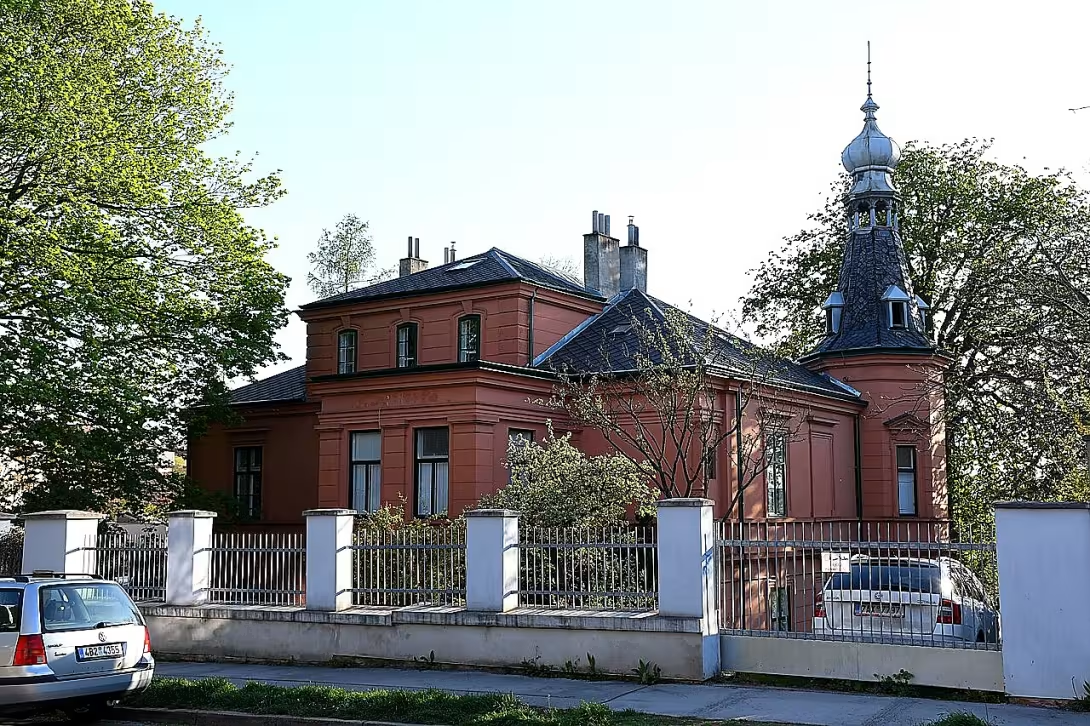
The Karel Kaiser Villa, a Neo-Renaissance residence, stands on Černopolní street in Brno-sever district. Built in 1860 by architect Josef Arnold, it was the first villa constructed in the Černé Pola neighborhood.
Designed and built by Josef Arnold in 1860, the villa served as the inaugural residence of its kind in the Černé Pola district. Later, other villas were constructed nearby, following Arnold's plans, including the Giskova and Adamčikova villas (since demolished) and his own residence.
The structure is a Neo-Renaissance villa with a small manor character and a corner turret. Situated on an artificial terrace within the Lužánky gardens, it features a symmetric facade, except for the added turret. The building consists of three wings and one floor. The ground floor contains four large rooms and a kitchen, while the upper floor houses bedrooms in all three wings, offering views of the surrounding gardens.
The staircase is located in the northeast part of the building. The ground floor's side wings feature joined windows, whereas the central wing boasts a veranda with a wooden gallery in romantic decor, providing access to the garden.
Karel Kaiser owned the house for fourteen years before it passed through various owners. Notably, Josef Jelinek, a builder and Moravian Land Diet deputy, owned the property between 1897 and 1898. During his tenure, he undertook significant expansions and reconstructions, including the addition of the staircase tower.
Located near Villa Tugendhat, this monument represents the area's architectural development during the late 19th century. It remains a significant part of the Lužánky gardens' landscape. This notable example showcases the historical residential expansion in the vicinity of Černopolní street.
Then and now
Drag the slider to compare how the landmark may have looked when it was built with the view today.
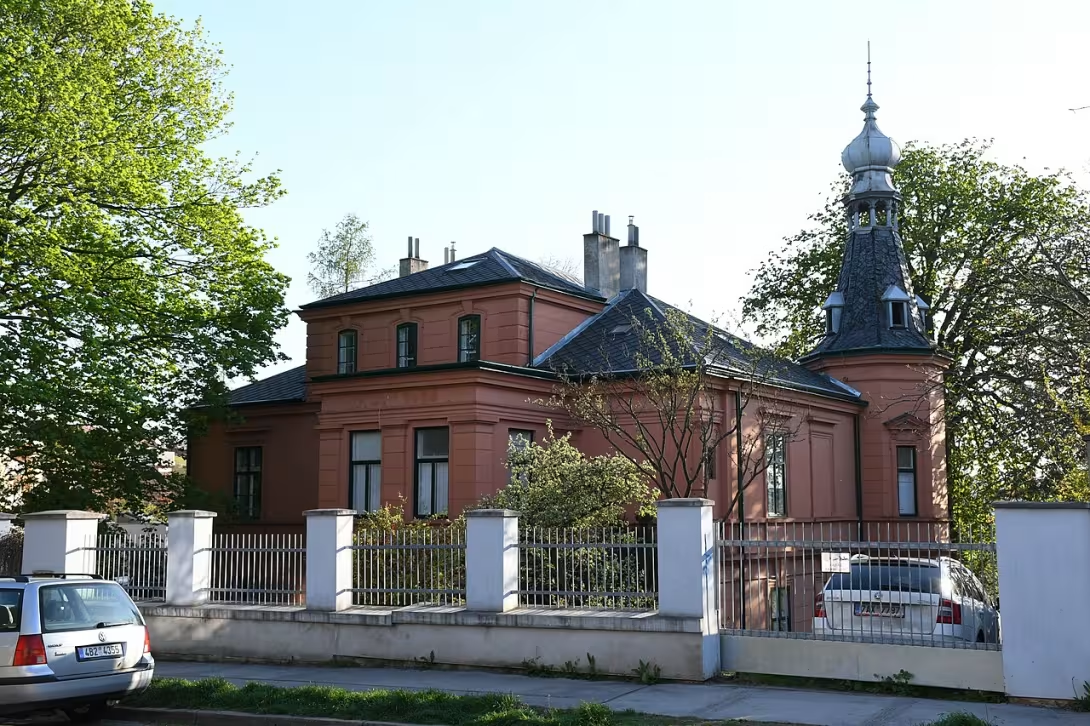
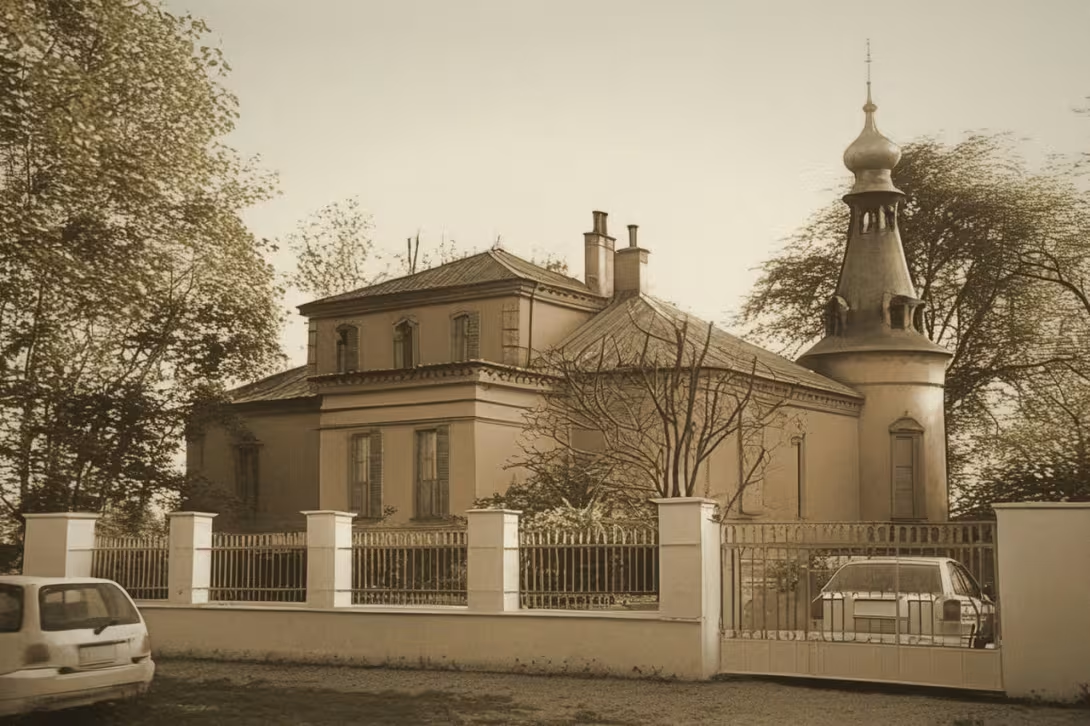
The historical appearance on the left is an AI-generated visualisation and serves as inspiration only.
Historical milestones
- 1860
- Construction of the villa by architect Josef Arnold.
- 1897
- Expansion and reconstruction of the villa by Josef Jelinek begins.
- 1898
- The villa reaches its current form with the addition of a staircase tower.
Architectural development
The villa was originally constructed in 1860 in the Neo-Renaissance style. Between 1897 and 1898, Josef Jelinek significantly expanded and rebuilt the structure. This renovation added a staircase tower and established the building's current appearance.
Historical events
In 1860, the villa was built by Josef Arnold, and between 1897 and 1898, it was significantly expanded and rebuilt by Josef Jelinek.
Owners
Karel Kaiser owned the property for fourteen years, followed by various owners, including the builder Josef Jelinek who expanded it in the late 1890s.
Points of interest
– Built in 1860 by architect Josef Arnold, it was the first villa constructed in the Černé Pola neighborhood. – The Neo-Renaissance structure is situated on an artificial terrace within the Lužánky gardens and features a corner turret. – The central wing of the building includes a veranda with a wooden gallery in romantic decor that provides access to the garden. – Between 1897 and 1898, owner Josef Jelinek performed significant reconstructions, including the addition of the staircase tower. – Other nearby residences, such as the Giskova and Adamčikova villas, were built following the plans
Guide
Show guide text
This text was created by artificial intelligence and has not been editorially reviewed. It may contain inaccuracies.
Welcome to this special moment in your journey through Brno. As you stand here in the quiet, leafy atmosphere of the Brno-sever district, you are looking at a true landmark of local history. Take a moment to simply breathe in the surroundings and let your eyes rest upon the elegant structure before you. You are standing in front of the Karel Kaiser Villa, a residence that does much more than provide shelter; it serves as a testament to the ambition and the changing face of this city during the late nineteenth century. As you look at the building, try to imagine the sounds and the sights of the era when this neighborhood was first beginning to transform from open space into a prestigious residential area.
To understand the significance of what you see, we must travel back in time to the year 1860. At that time, the Černé Pola district was not the established neighborhood it is today. It was a place of potential, a landscape waiting for its first signs of architectural elegance. It was in this very year that the construction of this villa began, commissioned as a residence for Karel Kaiser. The man responsible for bringing this vision to life was the architect Josef Arnold. When Arnold completed his work, this building became a pioneer. It was the very first villa to be constructed in the Černé Pola neighborhood, effectively setting the standard for the residential development that would follow in the decades to come. By building here, the owners were not just creating a home; they were helping to define the character of an entire district.
Now, I invite you to direct your attention to the architectural details of the facade. As you observe the building, you will notice a profound sense of balance and order. This is the hallmark of the Neo-Renaissance style, which was immensely popular during the period of the villa's creation and expansion. Notice how the facade is designed with a striking symmetry, a characteristic that evokes the classical ideals of harmony and proportion. This sense of stability and grace is what gives the Karel Kaiser Villa its commanding yet welcoming presence.
As your eyes move across the structure, look toward the corner of the building. You will see a prominent corner turret, a feature that adds a touch of romanticism and verticality to the overall composition. This turret is not merely a decorative element; it serves to break the horizontal lines of the residence and gives the villa a distinctive silhouette that can be recognized from a distance. Furthermore, take note of how the building is positioned. It does not simply sit on the ground; it is situated upon an artificial terrace that belongs to the Lužánky gardens. This clever use of landscaping creates a sense of elevation and importance, making the villa feel as though it is rising gracefully from the greenery of the gardens. The relationship between the architecture and the surrounding landscape is essential to the villa's charm, blending the man-made structure with the natural beauty of the parkland.
However, the villa you see today is not exactly the same as the one Josef Arnold built in 1860. Architecture is often a living process, a dialogue between the past and the present. As the decades passed and the needs of its inhabitants evolved, so too did the building itself. In 1897, a significant new chapter began when the expansion and reconstruction of the villa were undertaken by another notable figure, Josef Jelinek. This was a period of great prosperity and architectural enthusiasm in Brno, and Jelinek sought to elevate the existing structure to meet the grander tastes of the late nineteenth century.
This period of reconstruction was transformative. By 1898, the villa reached the form you are admiring right now. One of the most significant additions from this era was the staircase tower, which provides the building with its characteristic height and architectural complexity. This addition helped to transition the villa from a mid-century residence into a more sophisticated, late-century estate. If you look toward the central wing of the building, you can also observe the presence of a veranda. This feature was designed to bridge the gap between the interior elegance of the home and the outdoor beauty of the terrace, allowing the residents to enjoy the fresh air and the views of the Lužánky gardens while remaining within the comfort of their architectural sanctuary.
The story of this place is, in many ways, a story of two architects and the evolution of a neighborhood. While Josef Arnold provided the foundation and the initial spark of development in Černé Pola, it was Josef Jelinek who refined and expanded that vision, ensuring the villa remained a centerpiece of the area as it grew. The names Karel Kaiser and Josef Jelinek are forever etched into the history of this site, representing the intersection of private ambition and public architectural achievement.
There is something truly fascinating about the way this building serves as a chronological map of Brno's growth. It is rare to stand before a structure that so clearly shows its own evolution—from its humble beginnings as the first villa in a new district in 1860, to its grand, completed form at the close of the century. It stands as a bridge between two different eras of design, blending the early Neo-Renaissance foundations with the more elaborate tastes of the 1890s. It is a survivor of a time when the city was rapidly modernizing, yet it has managed to retain a sense of timelessness.
As you prepare to move on, I encourage you to take one last look at the way the light hits the facade and how the turret stands against the sky. The Karel Kaiser Villa is more than just a beautiful building; it is a silent witness to the history of Brno-sever and a reminder of the architectural elegance that once defined the expansion of our city. Thank you for taking this moment to explore with me. Please, continue your walk through the beautiful surroundings of the Lužánky gardens and enjoy the many other stories waiting to be discovered in this wonderful city.
Tips for visitors
To best experience the Neo-Renaissance elegance of the vila Karla Kaisera, plan your visit during daylight hours. The architectural details designed by Josef Arnold are most visible when the sun is up, with the late afternoon light offering excellent conditions for viewing the structure.
The location is accessible via car or public transport. To ensure a smooth journey to the Černé Pola district, please check a transit search engine for current schedules and connections.
Visitors are encouraged to bring a camera to document the historical facade and comfortable footwear for walking. For photography enthusiasts, the exterior of the villa provides excellent subjects, especially when the lighting highlights its specific architectural style.
Families with children may find the nearby Lužánky gardens to be an ideal place for a stroll. For those interested in further historical exploration, the Villa Tugendhat on Černopolní street is located nearby, allowing for a rich cultural experience within a short distance.
Businesses nearby
Do you run a restaurant, accommodation, shop, museum, rental, wellness or other visitor service near this monument? Show yourself directly to the people heading to it — this is how they will see you in the app and on the web:
Events nearby


Zdroj akcí: otevřená data měst a obcí ČR (Národní katalog otevřených dat) a kalendář akcí Národního památkového ústavu.
Nearby
The villa is located near the Villa Tugendhat on Černopolní street and is situated within the landscape of the Lužánky gardens.
Accommodation nearby
Trips and activities nearby
Guided tours, tickets and activities nearby from GetYourGuide
Affiliate link: if you buy from the partner, we may receive a commission. The price for you does not change.
Search tours and activities →Themed route
1. Lužánky (Gardens) A beautiful public park that serves as a relaxing starting point for the tour.
2. vila Karla Kaisera (Villa) The main destination of the trip, showcasing significant residential architecture in the Brno-sever area.
3. Villa Tugendhat (Villa) A world-famous architectural masterpiece located nearby on Černopolní street.
Seasonal recommendations
In spring, the surroundings of vila Karla Kaisera come alive as the greenery begins to bud and the light becomes softer and more delicate. The atmosphere is one of renewal, making it a peaceful time for a stroll through the area. Visitors should prepare for unpredictable weather by wearing layers, such as a light jacket or a sweater. It is best to visit during the late morning to catch the most pleasant natural light as the day warms up.
During the summer months, the villa is bathed in bright, direct sunlight, which highlights its architectural details against a backdrop of lush foliage. Because this is the peak season, crowds may be more frequent, especially during the weekends. To avoid both the midday heat and the largest groups of tourists, aim for an early morning visit. Light, breathable clothing and sun protection are highly recommended for a comfortable experience.
Autumn brings a nostalgic and serene atmosphere to Brno-sever, with the changing colors of the leaves creating a golden glow around the property. The lighting during this season is particularly beautiful for photography, especially as the sun sits lower in the sky. As temperatures can drop quickly, wearing warm layers and comfortable walking shoes is essential. Visiting in the late afternoon allows you to experience the most dramatic seasonal colors and the softest light.
In winter, the mood around vila Karla Kaisera turns quiet and contemplative. The landscape may appear starker, offering a unique, minimalist beauty that contrasts with the villa's historical character. Since daylight is limited and the weather can be quite biting, it is vital to dress in heavy, warm clothing. Be mindful that visiting during the colder months may require checking for shorter opening hours, so planning a midday visit is the best way to make the most of the limited sunlight.
Visualizations and artistic views


The visualisations are generated by artificial intelligence and serve as inspiration.
Photos from the area
Real photos taken near the monument

Zdroj a licence jsou uvedeny u každého snímku.
Tips from visitors
No tips yet. Be the first!
Log in and add your tip.
Sources and literature
Fotografie: Ben Skála, Benfoto / CC BY-SA 4.0 — Wikimedia Commons. The author and licence also appear when you hover over the image.
Faktickým podkladem tohoto textu byl článek na Wikipedii, jehož autory jsou přispěvatelé Wikipedie. Článek je dostupný pod licencí CC BY-SA 4.0.
Location on the map


Příběhy a pověsti
Legendy, pověsti a příběhy spjaté s touto památkou
Fotografie návštěvníků
Zatím žádné fotografie. Buďte první, kdo přidá fotografii z návštěvy!
Přihlaste se a přidejte svou fotografii nebo hodnoťte.
Za ověřenou návštěvu v aplikaci získáte víc bodů — poznáme podle GPS, že jste na místě.
Reviews and comments