






vila Ladislava Říhovského Villa
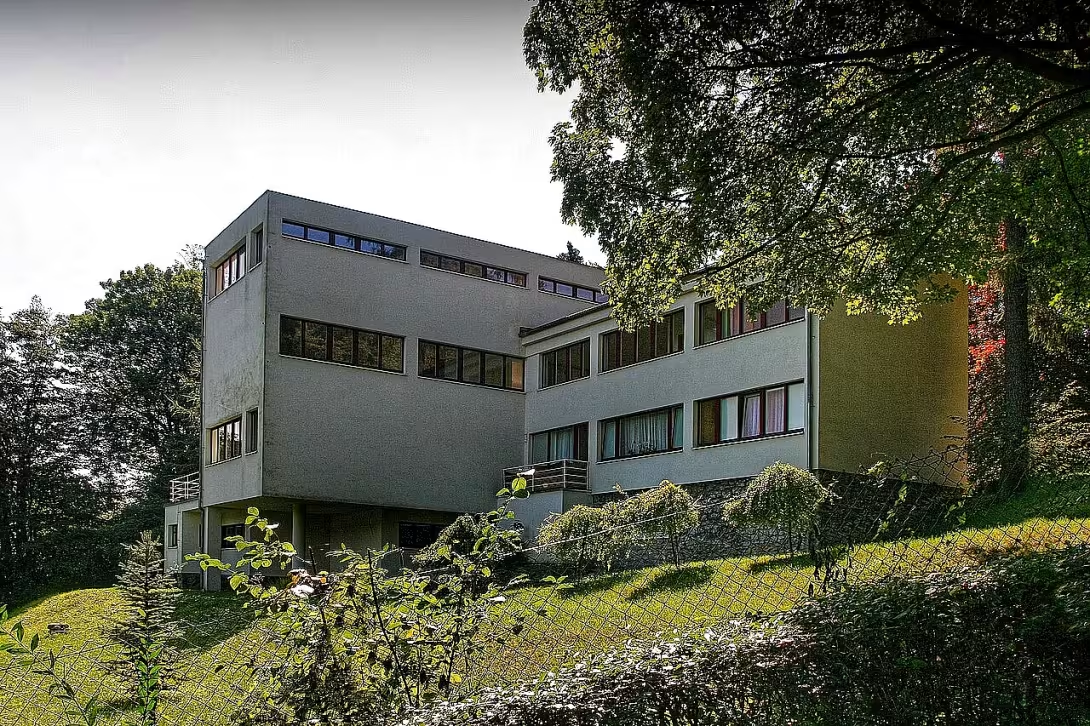
The Vila Ladislava Říhovského, a prominent functionalist villa, stands out in Teplice nad Bečvou. Built between 1933 and 1934, it exemplifies one of the purest examples of functionalist residential architecture in the Czech Republic. The building incorporates Le Corbusier's principles, featuring ribbon windows, tubular railings, and exposed pilotis. It sits on a steep slope overlooking the Bečva river valley and local spa area.
Originally designed for Ladislav Říhovský, the lessee of the local spas, the villa was initially consulted by architect Alois Jambor in 1930 before the Oehlers took over. The Oehlers' design marked a radical departure from the surrounding historicist and Art Nouveau architecture of the spa town.
The villa's architecture is characterized by its T-shaped floor plan, flat roof, and reinforced concrete skeleton. A unique composition based on horizontal and vertical lines defines the building. Ribbon windows offer distant views.
In 1959, the building was nationalized and served as the headquarters for the spa management. In 1991, it was officially declared a cultural monument of the Czech Republic. Between 2007 and 2008, a major reconstruction took place, dividing the building into seven separate apartments.
Today, the villa is open to visitors, offering stunning views of the surrounding landscape. Its unique architecture and historical significance make it a must-see destination for anyone interested in modernist design or Czech history.
Historical milestones
- 1933
- Construction began according to the design by Ella and Oskar Oehler.
- 1959
- The villa was nationalized and became the seat of the spa management.
- 1991
- The building was declared a cultural monument of the Czech Republic.
- 2007
- Reconstruction began to convert the villa into seven apartments.
Architectural development
The villa was constructed using a reinforced concrete skeleton with a T-shaped floor plan and a flat roof. In 1978, the original proportions were compromised by the addition of an entrance vestibule and the enclosure of the terrace. A major reconstruction took place between 2007 and 2008, during which the building was divided into seven separate apartments.
Historical events
In 1959, the building was nationalized and served as the headquarters for the spa management. In 1991, it was officially declared a cultural monument of the Czech Republic.
Owners
Originally owned by Ladislav Říhovský; nationalized in 1959 for the spa management; later divided into seven private apartments after 2008.
Points of interest
– The Vila Ladislava Říhovského is a prominent example of functionalist residential architecture in the Czech Republic.
– The building incorporates Le Corbusier's principles, featuring ribbon windows, tubular railings, and exposed pilotis.
– The villa was originally designed for Ladislav Říhovský, the lessee of the local spas, but its design marked a radical departure from the surrounding historicist and Art Nouveau architecture of the spa town.
– In 1959, the building was nationalized and served as the headquarters for the spa management.
– The villa was officially declared a cultural monument of the Czech Republic in 1991.
Guide
Show guide text
This text was created by artificial intelligence and has not been editorially reviewed. It may contain inaccuracies.
Welcome. You are standing in Teplice nad Bečvou, right before one of the most significant architectural treasures of the twentieth century. As you pause here, take a moment to truly absorb the presence of the Vila Ladislava Říhovského. Even before we dive into the history, just look at the structure before you. It does not demand your attention with heavy ornaments or grand, sweeping decorations like the palaces of the past. Instead, it commands respect through its clarity, its geometry, and its striking sense of purpose. It is a building that feels light, almost as if it is breathing, standing as a testament to a time when humanity looked toward the future with unbridled optimism.
To understand why this villa looks the way it does, we must travel back to the early 1930s. Imagine a world in transition, where the old ways of building were being challenged by a new philosophy of living. It was in this era, between 1933 and 1934, that the construction of this villa began. It was commissioned by Ladislav Říhovský, a man who clearly shared the progressive spirit of his time. To bring this vision to life, he turned to the architects Ella Oehler and Oskar Oehler. They were not merely builders; they were thinkers who understood that the modern age required a new kind of language for architecture. They didn't want to build a fortress; they wanted to build a machine for living, a concept that was radical at the time.
As you stand here, I invite you to look closely at the facade and notice the specific details that define this masterpiece. You are looking at one of the purest examples of functionalist residential architecture in the entire Czech Republic. If you look at the windows, you will see they are not the traditional, vertical openings you might expect in an older house. Instead, they are long, horizontal bands of glass. These are known as ribbon windows. They were a revolutionary feature, designed to flood the interior with natural light and to provide a continuous, panoramic connection to the outside world. They change the way you perceive space, making the boundaries between the inside and the outside feel almost invisible.
Now, shift your gaze toward the structural elements supporting the building. Notice the exposed pilotis, those slender columns that lift the main body of the villa. This is a direct application of the principles championed by the legendary architect Le Corbusier. By using these pilotis, the architects were able to create a sense of weightlessness, allowing the building to hover above the ground rather than being anchored heavily into it. It creates a sense of openness and flow that was entirely unprecedented for a private residence. And if you look at the railings, you will see the clean, industrial elegance of tubular metal. These are not decorative flourishes; they are functional, streamlined, and perfectly in tune with the modern, technological spirit of the 1930s. Everything you see here was chosen because it served a purpose, embodying the idea that beauty is found in efficiency and logic.
The story of this villa, however, is not just one of architectural triumph; it is also a story of survival through shifting political tides. For many years, the Vila Ladislava Říhovského was a private sanctuary, a home that reflected the personality and status of its owner. But history had other plans. In 1959, the villa underwent a profound transformation when it was nationalized. It lost its identity as a private residence and was repurposed to serve as the seat of the local spa management. For decades, the halls that once echoed with the private life of a single family were filled with the administrative rhythms of state management. It was a period of significant change, where the building had to adapt its very soul to meet the needs of a different era.
Despite these changes, the intrinsic value of the building was never lost. The architectural integrity was so profound that, in 1991, the villa was officially declared a cultural monument of the Czech Republic. This was a crucial turning point, a recognition that this structure was not just a building, but a piece of national heritage that belonged to the history of modernism itself. It ensured that the vision of Ella and Oskar Oehler would be protected for future generations.
As we move forward in time, we see another chapter of renewal. In 2007, a major reconstruction began. The goal was to bring the villa back to its original essence—to make it a place of living once again. The project aimed to convert the large structure into seven distinct apartments, blending the historic functionalist character with the requirements of modern residential life. This transition from a single-family home to a state office, and finally back to a collection of modern homes, is a remarkable journey of adaptation. It shows how architecture can endure, evolving alongside the society that surrounds it.
There is something almost mysterious about how a building can remain so relevant across so many decades. Think about the sheer boldness required to build something like this in 1933. At a time when most people were still accustomed to the heavy, decorated styles of the nineteenth century, the Oehlers were proposing something that looked like it belonged to the next century. They were betting on the idea that light, air, and function were the true pillars of a good life. Standing here now, you can see that they were right. The villa does not feel dated; it feels timeless.
As you continue your walk through Teplice nad Bečvou, I encourage you to keep this sense of modernism in mind. Look at how the lines of this villa interact with the sky and the surrounding landscape. Notice the rhythm of the windows and the strength of the pilotis. The Vila Ladislava Říhovského is more than just a landmark; it is a silent teacher, showing us how design can shape our experience of the world. Thank you for joining me on this brief journey through time. Please, take your time to explore the surroundings and continue your discovery of this beautiful area. Enjoy your visit.
Tips for visitors
The best time to visit the Vila Ladislava Říhovského is during spring or autumn when the weather is mild and sunny, making it ideal for photography and exploring the surrounding area.
Visitors can park their vehicles near the villa or use public transportation. The local spa complex offers a range of amenities, including restaurants and shops.
When visiting the villa, be sure to bring comfortable walking shoes and clothing suitable for the season. A camera is also recommended to capture the stunning views of the Bečva river valley.
The best spots for photography are around the villa itself, with its unique functionalist architecture, as well as along the nearby riverbank, which offers breathtaking views of the surrounding landscape.
For families with children, there are plenty of activities to enjoy in the area. The local spa complex has a playground and other amenities suitable for young visitors.
Businesses nearby
Do you run a restaurant, accommodation, shop, museum, rental, wellness or other visitor service near this monument? Show yourself directly to the people heading to it — this is how they will see you in the app and on the web:
Nearby
The villa is located in Teplice nad Bečvou, positioned high above the Bečva river valley and integrated into the local spa complex.
Accommodation nearby
Themed route
Teplice nad Bečvou Villa Route
1. Ladislav Říhovský's Villa: This stunning villa is our main destination, offering breathtaking views of the Bečva river valley and integrated into the local spa complex. 2. Villa Park: Take a stroll through the beautiful park surrounding the villa, featuring lush greenery and scenic walking paths. 3. Bečva River Valley Viewpoint: Enjoy panoramic views of the valley from a designated viewpoint, perfect for taking in the natural beauty of the area.
This route takes you on a leisurely journey through the charming surroundings of Teplice nad Bečvou, with its picturesque villa as the centerpiece.
Seasonal recommendations
In spring, the surroundings of vila Ladislava Říhovského come alive as the gardens begin to bloom, offering a fresh and revitalizing atmosphere. The soft, gentle sunlight of the season highlights the architectural details of the villa beautifully against the budding greenery. Visitors should prepare for unpredictable weather by wearing layers and perhaps carrying a light waterproof jacket. Aim for a mid-morning visit to enjoy the clarity of the light after the morning dew has evaporated.
Summer brings a vibrant energy to the site, with lush foliage providing deep green backdrops and intense, bright sunlight. This is the peak season, so you may encounter larger groups of tourists exploring the grounds. To ensure a more peaceful experience and to avoid the midday heat, it is best to arrive as early as possible. Light, breathable clothing and sun protection are highly recommended for a comfortable visit.
As autumn arrives, the landscape transforms into a palette of gold and amber, creating a nostalgic and serene mood around the villa. The misty mornings and crisp air add a unique, quiet character to the site. Since the weather can become damp and cool, wearing sturdy, water-resistant footwear is a practical choice for walking around the property. The late afternoon light is particularly stunning for photography, capturing the changing colors of the trees.
During the winter months, vila Ladislava Říhovského takes on a quiet, contemplative character. The starker landscape and shorter days create a peaceful, almost hushed atmosphere that is perfect for those seeking solitude. Because of the colder temperatures and potentially shorter opening hours, it is essential to dress warmly and plan your visit around the midday period when natural light is at its peak.
Visualizations and artistic views

The visualisations are generated by artificial intelligence and serve as inspiration.
Photos from the area
Real photos taken near the monument


Zdroj a licence jsou uvedeny u každého snímku.
Tips from visitors
No tips yet. Be the first!
Log in and add your tip.
Sources and literature
Fotografie: Kankovaa / CC BY-SA 4.0 — Wikimedia Commons. The author and licence also appear when you hover over the image.
Faktickým podkladem tohoto textu byl článek na Wikipedii, jehož autory jsou přispěvatelé Wikipedie. Článek je dostupný pod licencí CC BY-SA 4.0.
Location on the map
Příběhy a pověsti
Legendy, pověsti a příběhy spjaté s touto památkou
Fotografie návštěvníků
Zatím žádné fotografie. Buďte první, kdo přidá fotografii z návštěvy!
Přihlaste se a přidejte svou fotografii nebo hodnoťte.
Za ověřenou návštěvu v aplikaci získáte víc bodů — poznáme podle GPS, že jste na místě.
Reviews and comments