



Vodní mlýn s pilou (Trhonice) Water mill
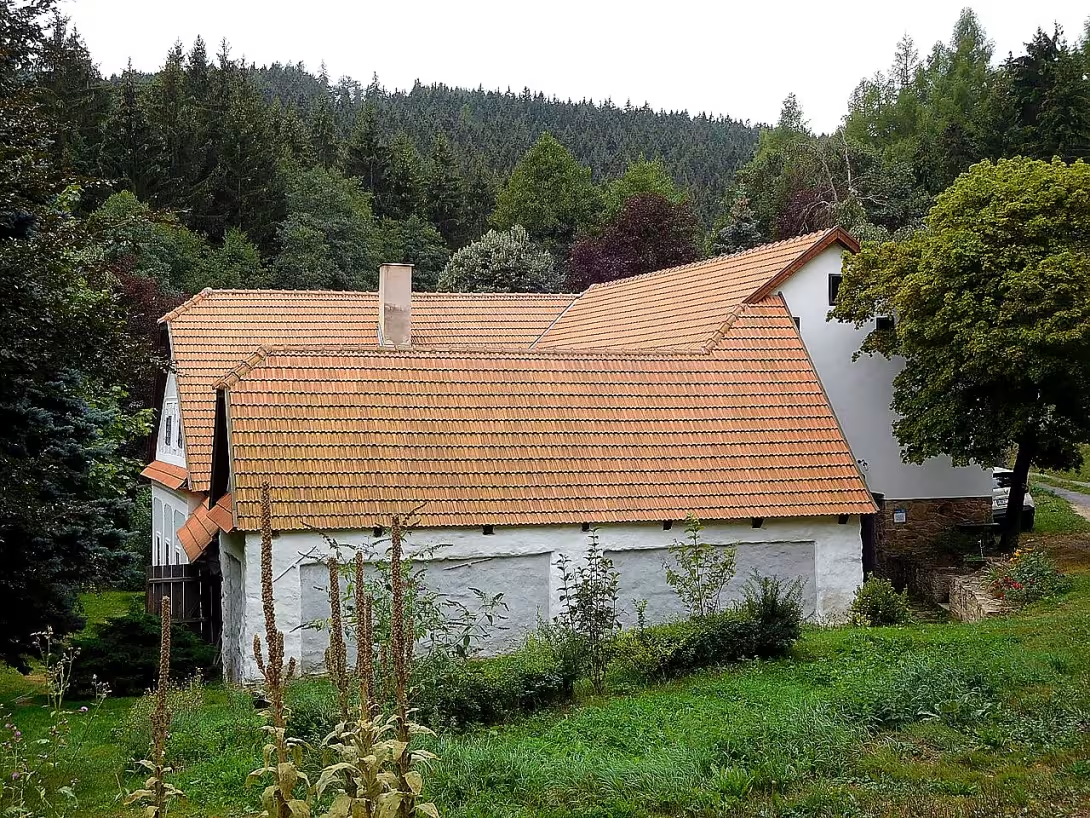
The water mill with saw and oil in Trhonice near Jimramova in Zdár nad Sázavou district is a protected cultural monument. Its existence is documented from the mid-16th century. The object is remarkable with its complex function; over the centuries there was milling of grain, sawmill and pressing of linseed oil.
The first references from the mid-16th century describe a wooden structure with one water wheel. After the 30-year war, the building burned down and remained desolate. In the 18th century the mill area was expanded with a single saw and a mill of linseed oil.
The area consists of four wings enclosed around the yard. The main mill with the residential house is grafted. The eastern shield facade of the residential building and granary unifies plastic decoration; the two parts link the economic tract. A single leaf saw stands on the slope. Its lower part is made of stone, the upper part is boarded and partially open. The entire building is covered by a saddle roof with a fracture.
In 1843 the mill was partially nicknamed and in 1908 the first diesel engine was installed. According to Filip's inventory of mills, he ceased his activities on November 23, 1941.
The technical background used the drive from the lake. Water fell on wooden ventroks and then on the shovels of the water wheel, then flowed back into the stream with the drain rod. In 1930 there were two wheels for upper water with a flow rate of 0.122 m ³ / s, a drop of 4.5 m and a power of 4.75 k. The complex has preserved a torso of ordinary and artistic composition, as well as traces of dessert, mill border or pocket conveyor heel.
The building was also used to produce electricity and drive agricultural machinery. The saw was originally powered by its own water wheel. However, this was replaced by a special transfer from the mill transmission when modernising the mill. The unique element is a fully preserved oil with a machine press.
Around 2020, the owner of the mill did a reconstruction. He restored part of the drive, fixed the fridge, and made the stable engine work.
A rare example of multi-purpose water management is a monument in Skhonice. Her visit offers insight into the technical history of the rural region.
Historical milestones
- 1843
- There was a partial nickname.
- 1908
- Installation of the first diesel engine.
- 1941
- The mill finished grinding.
Architectural development
The original wooden structure was extended by saw and oil after 30 years of war. In 1843 there was a partial nickname, in 1908 a diesel engine was installed. After reconstruction around 2020, key elements such as saw and oil were preserved.
Historical events
- 1843
- There was a partial nickname for the mill.
- 1908
- The first diesel engine was installed here.
- 1941
- The mill finished grinding.
Points of interest
- The water mill with saw and oil in Trhonice is a protected cultural monument. - It exists from the middle of the 16th century and had a complex function such as grinding grain, sawmill and pressing linseed oil. - After the 30-year war, the building was burned down and later expanded with a single saw and a mill of flax oil in the 18th century. - The mill had a technical background that used a drive from a water-wheel drive with a flow of 0,122 m ³ / s and a drop of 4,5 m - The object has a fully preserved oil with a machine press, which is a unique element.
Guide
Show guide text
This text was created by artificial intelligence and has not been editorially reviewed. It may contain inaccuracies.
Welcome to the water mill in Trhonice. You are standing in a place where the power of flowing water meets the long history of human labour and efforts to exploit natural resources. In front of your eyes is a building that is much more than just a simple building piece. It is a living monument that has survived centuries, fires and changes of time. Now, feel the atmosphere of peace that prevails here, and listen to the silent whisper of the Trhonic stream, which is the source of life for this place. This stream, flowing south of the village, has been the driving force of everything that happened here for centuries.
Let's go back deep into the past together to understand how this whole thing came about. The entire history of this place begins in the mid-sixteenth century. But then you won't see the structure you see today. Originally, this building was just a simple wooden building. Her heart was the only water wheel that gained the energy needed to grind through the flow of water. Imagine that period wooden structure that was connected to nature, but at the same time fragile against the elements. And it was the elements that brought the first big test. After a devastating 30-year war that had passed through the whole countries, this original mill was hit by a fatal fire. The building burned down, and the original wooden piece was just ashes.
However, instead of destroying this place, it became a place of new diversity and expansion. After recovery, the mill began to change and expand. It wasn't just a grain mill anymore. Over time a complex economic entity was created here, which served the whole surrounding area. The mill was joined by a saw and an oil mill. This means that three different worlds of crafts met in this space. Here the grain was ground for people's needs, there was cut wood for building houses and there was pressed linseed oil, which was absolutely necessary for food and light in households at that time.
Now pay attention to the architecture itself and to what you can perceive when you look at the building. Although time was changing, the construction kept its solid nature. Note the details that reveal the gradual growth and reconstruction. One of the important moments was the period of 1843 when the walls were partially nicknamed. This is why the building has acquired its resistance today and the strength you feel in it. This work with stone and material has allowed the mill to withstand another decade.
When you look at the building, you realize that you don't see just one structure, but a sum of different functions. Even if these activities are stopped today, you can in your mind imagine the constant movement. Imagine the sound of a saw carried by the air, or the rhythmic movement of the presses while processing the flax. This space was the place where the people met, where the newspapers were being exchanged, and where they were working from dawn to dusk.
The history of this place is also a story of technological progress. One of the most important events took place here in 1908. His first diesel engine was installed in the mill, the engine that brought the new era. This change meant that people no longer had to be so 100% dependent only on the power of flowing water at every moment when the level of the stream was rising or falling. The engine has brought stability and a new level of work. Yet there was a time when the world began to change too quickly. In 1941 the mill had to end its long tradition of grinding. It hasn't changed here since, but the building remained almost like the old days.
You may be interested in the fact that this historical entity has not been abandoned and forgotten. On the contrary, he has been very cared for in recent years. In 2020, a thorough reconstruction was carried out to preserve this rare object for future generations. During this renewal it was possible not only to repair the building but also to restore the drive, i.e. the way the water flows to the mill. A stable engine has also been installed to ensure correct operation of the whole system. Thanks to this work, this cultural monument is once again in the state in which we can view it in peace.
The interesting thing is that this mill with saw and oil in Trhonice is not just an ordinary bouquet, but is recognised as a protected cultural monument. That means his value for our history is huge. It is one of the few surviving examples of such a complex operation, where several key pillars of life were combined in one place.
Now I beg you to continue your search and observe the surrounding countryside. See how the building fits into the environment of the Tronic creek. Feel the atmosphere of this place, which used to roar with machines and human voices, and which now offers peace and the opportunity to stop and think about how the world was changing around us. Don't forget to look at the details that allow you to perceive the rotation of old wood and solid stone.
Thank you for spending this moment with us and for being interested in the history of this place. We hope that this view of the past of Trhonic and this mill has brought you new insights and attractions. We wish you a beautiful continuing journey around and many more experiences in discovering our historical treasures. Goodbye.
Tips for visitors
The best time to visit is late spring or summer, when the surrounding nature of the Trhonice creek is the most blooming and the mill works in the green most picturesque. Due to ongoing reconstruction, we recommend monitoring of official communication on the accessibility of the premises.
You can easily get to the memory by your own car, which can be disabled near the village Jimramov. By public transport you can reach Jimramova, where you must reach the mill on foot on local roads; Find the exact connection in the current timetables.
Due to the nature of the monument and the terrain near the creek, wear solid footwear suitable for nature. If you are planning a longer stay in the area, do not forget the repellent and plenty of fluids, because there is no need to provide refreshments in the immediate vicinity of the mill.
For photographers, the most interesting exterior of the mill with water element, the best light is in the morning when the sun illuminates the facade of the buildings. Due to ongoing repairs, be sure to take care of safety and respect the marked bans of entry to the construction site.
For families with children, the location is suitable as a destination for easy walks through nature. Children may observe the water flow and technical elements of the mill, but due to the reconstruction, continuous supervision of adults is necessary to avoid injury at the construction site.
Frequently asked questions
Can the monument be visited?
This is a technical monument. Some are open as exhibitions, others are out of use or on private land. We have not verified whether this one is accessible. According to the heritage register restoration is under way, so access may be restricted.
What are the opening hours and admission?
We have not verified the opening hours or admission. Current information is published by the operator. Official website: http://mlyntrhonice.cz/
Where is the monument?
Location: Jimramov, Kraj Vysočina. The map on this page shows the exact spot.
Why is the monument protected?
It is listed in the Central List of Cultural Monuments of the Czech Republic as a cultural monument (register no. 1000157596).
Businesses nearby
Do you run a restaurant, accommodation, shop, museum, rental, wellness or other visitor service near this monument? Show yourself directly to the people heading to it — this is how they will see you in the app and on the web:
Nearby
🏰 Historic sites (79)
- René Retek Tijo 1.1 km
- Vápenice Chládkova lomu 1.3 km web
- Matěj Josef Sychra 1.8 km
- Památník Josefa Mrštíka 1.8 km
- sv. Jan Nepomucký 1.8 km web
- Christianeum 1.8 km
- Památce židovských občanů a obětí nacistické rasistické persekuce v letech 1939 - 1945 v Jimramově 1.8 km
- Výstavní síň u sv. Jana - Síň rodáků Jimramova 1.8 km
- Dr. Jiří Guth-Jarkovský 1.8 km
- rodný dům Karla Slavíčka 1.8 km
- Rodný dům Jana Karafiáta 1.8 km
- Mons. ThDr. Josef Laštovica 1.9 km
- Václav Dobiáš 1.9 km
- Rodný dům bratří Mrštíků 2.0 km
- Zvon u Josefů 3.0 km
- Belcrediho zeď 3.8 km
- Dalečín 4.2 km
- partyzánský památník (Míša Šianov) 4.5 km
- Zřícenina hradu Štarkov 5.6 km
- Skály 5.6 km
🍽️ Restaurants and dining (104)
- Bistro K+C 1.8 km +420 566 562 509
- Kovářova kobyla 1.8 km
- Just 1.8 km web
- COOP café 1.9 km
- Horácko 2.5 km
- Hostinec Koh-I-Noor 4.2 km +420605150240
- Pod Kostelem 4.6 km
- Na Čechách 5.4 km
- u Kunstů 5.5 km
- Hospůdka U Trakaře 5.8 km +420 564 407 297 web
- u Marušky 6.0 km
- Motorest Zlatý potok 6.2 km
- Bowling Bar na Rychtě 6.7 km +420 733 565 842 web
- Hostinec u Hanusů 6.7 km
- Hotel Bystré 7.0 km nám. Na podkově 84 +420 461741108 web
- Vomočil 7.1 km +420 604 879 417 web
- Občerstvení Na Růžku 7.1 km
- U Lišáka 7.1 km
- U Dufků 7.3 km
- Hostinec u Novotných 7.7 km +420 773 039 496
🏨 Accommodation (63)
- Penzion Just 1.8 km web
- Agroekofarma Kadeřávek 6.0 km +420566562839 web
- Cykloubytovna 6.6 km +420 733 565 842 web
- Líšenský Dvůr 8.0 km web
- Rekreační středisko FSi Vříšť 8.2 km
- Topinka 8.3 km
- Dětský tábor 8.5 km
- Hotel Skalský dvůr 8.7 km +420 566 591 511 web
- Forest Resort 9.2 km
- Penzion na Vysočině 9.3 km
- Hotel Sněžné 9.3 km +420 778 770 270 web
- Lesní zátiší 9.3 km Vojtěchov 11 +420 566 551 450 web
- Penzion 9.4 km
- OPUS 9.5 km
- THT 9.5 km
- Resort Sněžné 9.5 km +420 721 981 929 web
- Penzion pod Lipami 9.7 km +420 602 723 727 web
- U Klujů 9.7 km
- Wellness penzion Na Kuklíku 9.8 km
- Rekreační středisko Domanínský rybník 10.0 km web
🚲 Rentals and sport (22)
- Kuda cykloservis 1.9 km +420 603 289 021
- Písečská zmole 6.2 km
- Cyklo sport Stejskal 7.0 km +420 605 455 827
- Ruina plaveckého bazénu 8.2 km
- Ledová stěna Adrex 9.0 km
- Adrex 9.2 km web
- Prima sport 9.4 km web
- Zimni stadion 9.9 km
- sokolovna 11.9 km
- Sportovní hala 11.9 km
- Cyklo Kalina 11.9 km Pod Kaštany 39 603830197
- Stadion SK Bystřice 12.0 km
- rekreační bazén 12.1 km
- Bazén pro děti 12.1 km
- Atletický stadion Tomáše Dvořáka 12.3 km
- Sporten 13.2 km
- Lázně NMNM 14.2 km Hornická 1495
- Nízký lanový park Borová 14.4 km
- Sportovní hala 14.4 km web
- Cyklo Procházka 14.5 km Jánská 1280 +420 777 011 415
🥾 Hiking and nature (145)
- U korýtka 0.3 km
- Nad výletištěm 0.3 km
- Jezírko 0.6 km
- Horka 0.9 km
- Pavlovský vrch 0.9 km
- Ruská studánka 1.5 km
- Kabačka 1.8 km
- Bludník 1.9 km
- kostel sv. Matouše 2.0 km
- Dendrofon 2.7 km
- Hraběcí Studánka 3.1 km
- lesní studánka 3.8 km
- Přírodní památka Prosička 4.0 km
- Prosička 4.0 km
- Prosíčka 4.0 km
- Kočího kopec 5.2 km
- Kočího kopec 5.3 km
- Holotín 5.3 km
- Štarkov 5.6 km
- Štarkov 5.6 km
Accommodation nearby
Themed route
Thematic cruise route from the village Jimramov
1. Vodní mlýn s pilou (Trhonice) - Main Target, Water Mill This historic water mill is not only a technical monument, but also a witness to the history of the region. Visit him to see the ancient machines and understand the former life of the population.
2. Forest pavements nearby - Natural path Shortly from the mill there are forest trails offering an opportunity for a short walk. Their peaceful atmosphere and green nature are ideal for relaxing after visiting the mill.
3. Ambient field roads - Exploring the rural region In the vicinity there are various field paths that lead to local agricultural life. These paths are ideal for those who wish to understand the rural character of the area and its landscape.
4. Old road around Jimramova - Historical route Explore the old road routes that linked Jimramov to the surrounding municipalities. These roads are full of history and offer a look at past life in this part of Bohemia.
5. Municipal courtyard in Jimramov - Local culture Visit the municipal courtyard where various cultural events and public meetings can take place. It is a place that offers insight into today's life in Jimramov.
This route will guide you through history, nature and the current life of the area around Jimramova and Water Mill with saw.
Seasonal recommendations
Spring: Life wakes up around the mill in the spring. The trees start to green and the light is very fine, which beautifully highlights the face of the building. However, due to the ongoing repair, wet soil may be present in the surrounding area. I recommend choosing firmer shoes and come rather in the morning when the air is freshest.
Summer: In the summer months there is the most life and the sun strongly illuminates both water flows and saw. Nature around is densely green and air smells of herbs. Since there are the most visitors in the main summer season, it is best to arrive immediately after opening to enjoy peace. Dress lightly and don't forget to protect yourself from heat.
Autumn: Autumn brings golden colors and foggy mornings to the landscape that give the mill a mysterious mood. The sun is low and creates long shadows between trees. It's good to have a waterproof jacket and firmer shoes, because the leaves can be slippery on the road. The perfect time to visit is an early afternoon.
Winter: The winter here is quiet and the landscape often sleeps under the snow. The light is weak and the colors are muted, which creates a calm atmosphere. Because of the cold and the short day I recommend you come in at the earliest possible time after opening and put on really warm layers. Watch out for ice by the water.
Visualizations and artistic views


The visualisations are generated by artificial intelligence and serve as inspiration.
Photos from the area
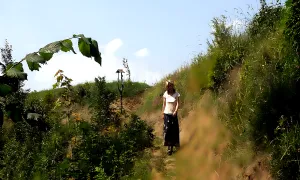
Real photos taken near the monument

Zdroj a licence jsou uvedeny u každého snímku.
Tips from visitors
No tips yet. Be the first!
Log in and add your tip.
Sources and literature
Photos: JiriMatejicek / CC BY-SA 3.0 — Wikimedia Commons. The author and licence also appear when you hover over the image.
Faktickým podkladem tohoto textu byl článek na Wikipedii, jehož autory jsou přispěvatelé Wikipedie. Článek je dostupný pod licencí CC BY-SA 4.0.
Location on the map


Příběhy a pověsti
Legendy, pověsti a příběhy spjaté s touto památkou
Fotografie návštěvníků
Zatím žádné fotografie. Buďte první, kdo přidá fotografii z návštěvy!
Log in a přidejte svou fotografii nebo hodnoťte.
Za ověřenou návštěvu v aplikaci získáte víc bodů — poznáme podle GPS, že jste na místě.
Reviews and comments