



Vodní mlýn (Staňkovice) Umgebinde house
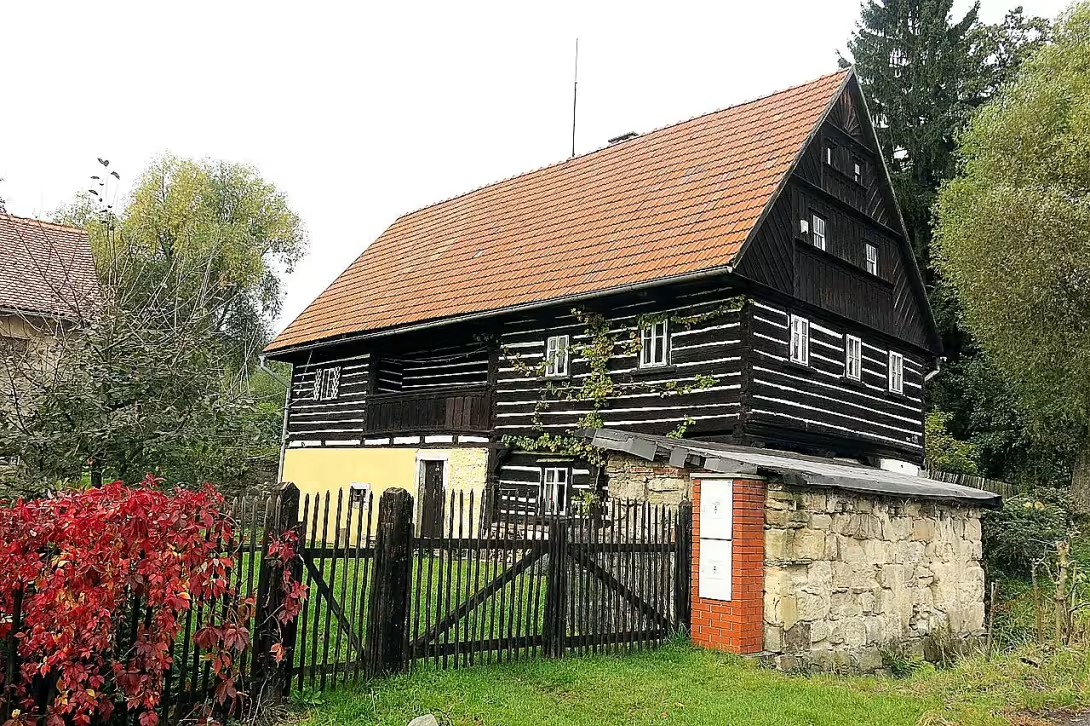
The water mill in Staňkovice in Litoměřická is a classic technical monument situated on the Ploskovice stream. An object whose history dates back to the 18th century is today protected as a real-estate cultural monument of the Czech Republic and represents a valuable example of folk architecture.
The first written mention of the mill in the village dates back to the 18th century. In 1830, the building underwent a major reconstruction, which gave it its present form. This period took place in Czech countries in the spirit of maturing classicism and national revival. In a broader European context, there was an industrial revolution, which gradually changed traditional ways of farming even in agricultural areas.
The plastered floor structure uses typical richly cut pegs and a folded shield. A refrigerator built of quarry stone was added to the building. The area is complementary to the economic housing closed by the west side of the court. The water needed to drive the mill wheel was brought directly from the pond.
The mill is characterised by its construction with richly decorated pedestals, which are typical of the folk construction of the region. The current monument protection underlines the importance of the object as a proof of historical management.
The village of Staňkovice is located near the Ploskovice stream and near the castle Ploskovice. Visiting this place offers the opportunity to see a preserved demonstration of folk construction, which documents the transformation of rural architecture in the 19th century. The object is a valuable testament to the technical maturity and craftsmanship of our ancestors.
Historical milestones
- Around 1750
- The first one is a renunciation of a mill in the village.
- 1830
- Place the reconstruction of the building in the contemporary classical form.
- 20. stoleti
- Registration of the object in the list of real estate cultural memories.
Architectural development
The original construction from the 18th century was rebuilt in 1830 into a grafted storey house. The construction uses a pedestal with cut bars and a folded shield. The building was equipped with a refrigerator made of quarry stone and economic background.
Historical events
The first written mention of the mill in the village dates back to the 18th century. In 1830, the building underwent a major reconstruction which imprinted its present form.
Points of interest
- The water mill in Staňkovice is a classic technical monument, located on the Ploskovice stream. - The history of the building dates back to the eighteenth century and the building is protected as a real cultural monument. - In the year eighteen hundred and thirty, the mill went through a major reconstruction, which gave it its present form. - The floor grafted building has richly cut pegs of the pedestal, a folded shield and a refrigerator made of quarry stone. - Water for the mill wheel drive was brought directly from the pond.
Guide
Show guide text
This text was created by artificial intelligence and has not been editorially reviewed. It may contain inaccuracies.
Welcome to the water mill in Staňkovice. You are standing in front of a place that is a living witness to ancient times and human work. Before we begin the tour, let yourself stand for a moment and listen. Do you hear the constant, soothing sound of water? It is a Ploskovický stream that flows through the close proximity of this place and gives the whole neighborhood constant movement and life. Feel this atmosphere where the force of nature is combined with the silent duration of the historic building. There's a building in front of you that looks very harmonious and natural, like it's always been there. It is a grafted building that perfectly fits the landscape of this district with its construction and material.
Now let's look deeper into the past together to understand how this place came to be. Although it may seem to us that the mill has always stood here, its written history dates back to the eighteenth century. The first written mention of this mill in the village appeared around seven hundred and fifty. Imagine that time when communication between people was slower and everything depended on the rhythm of nature and what they could provide local flows and ponds. The mill served here as an important point for the whole community, a place where people's needs and the power of water met.
Over time, however, the needs and tastes of people changed, and this was reflected in the form of the building itself. A big break in the history of this object occurred in the year one thousand eight hundred thirty. It was at that time that the mill passed through a major reconstruction that gave him the form that you now see right in front of them. This reconstruction gave him a classical character. If you look at the overall balance of the building now, you can feel the effort for order and elegance that this style brings. It was no longer just a simple utility building, but a building that had its own aesthetic value. This change was so significant that thanks to it, the mill is still considered a rare technical monument.
Now pay attention to the details that are right in front of your eyes. Look at the structure of the building itself. It's a storey, grafted building, which is very typical of our folk architecture. Note how the wooden beams are connected and how they form a solid and stable whole. But if you look closer, especially at the lower part of the structure, the so-called pedestal, you see something really special. There are richly cut bars. These details are not just for decoration, but are proof of the high craft and care that people have given to building their home and jobs. Every cut, every curve on these bars tells a story about the patience of the carver.
Raise your eyes and look at the building's shield. It is composed and has its specific shape, which gives the whole mill its characteristic appearance. This upper part of the building is a very important element which gives the construction height and dignity. But this whole object is not just a separate building in the fields. Notice how the site is organized. The mill is part of a larger whole, which includes economic housing. These buildings are designed to close the yard together with the mill, creating a continuous and protected space. This closed court was probably the heart of everyday life, a place where animals moved, where tools were stored, and where people met at work.
If you look at the surrounding buildings in the area, you will find another interesting element. It's a fridge that was built from solid quarry stone. It is fascinating to see this contrast between the wooden gradient of the main mill and this massive stone object. This refrigerator was an essential part of food storage at the time of its creation, and its existence shows us how much people in the past were dependent on the ability to adapt their environment to ensure essential needs.
But now we must return to what is most important for the mill - water. Notice how the entire building is situated near the Ploskovický creek. But the water didn't flow into the mill by accident. In order for a miller to do his job, the water had to be guided exactly where it was needed. To do this was the drive, i.e. a special water channel, which brought water directly from the pond. This system of catches and ponds in the past was absolutely crucial for the operation of the entire mill operation. Without this sophisticated technical system, the mill could not have done its job. It is this ability to use the power of water and bring it into the building that makes this place a technical monument.
It's very interesting to think about how this object has lasted centuries. In the twentieth century, the mill was included in the list of real cultural monuments. This means that its value was recognised not only as technical but also as cultural. It is a protection that ensures that this piece of history will not be forgotten and that its beauty and importance will be preserved for future generations. When you look at those old wooden beams and stone walls, you realize you're looking at something that was carefully protected from disintegration.
Perhaps you are now told what has happened in this mill. Even if we don't know the names of all the people who lived here, we can imagine them. Imagine a miller who would watch the water level in the drive every morning to see if the power of the water was sufficient to work. Imagine the sound of the grain grinding that carried all over the neighborhood, and the rhythm that made that sound. The mill was not just a building, it was a living organism that breathed along with flowing water and changing seasons.
Now we will not prevent you from further examination. We recommend that you take a walk around the entire area, take a look at the cutting on the wood in detail and feel the calm that this place offers. Walk around the yard, look at the stone fridge and try to imagine what this place looked like hundreds of years ago. Let yourself drift through the atmosphere of this place and enjoy every moment you spend near this beautiful historical monument. Thank you for taking this journey and for taking the time to understand the history of this mill. We wish you a nice walk around.
Tips for visitors
The best time to visit is late spring or summer, when the surroundings of the creek are green and the mill building stands out in contrast to nature. In this period is also the best light for observing details of folk architecture.
The easiest way to remember is by car. Search in the adjacent streets of the village of Staňkovice. If you choose public transport, check the current connection to the village in the Internet connection search engine.
We recommend fixed shoes suitable for movement near the water flow and terrain around the mill. Don't forget about the camera because the storey building offers interesting compositions, especially in morning or evening soft light.
In the immediate vicinity there is a picturesque castle Ploskovice, which is an ideal goal to complete the trip. The whole area around the Ploskovický creek offers pleasant walks in a quiet landscape.
For families with children, the place is suitable as a stop when exploring rural architecture. Children can observe the flow of the stream and explore where the original drive led, which is a great opportunity for an interpretation of the history of miller farming.
Frequently asked questions
Can the monument be visited?
This is a residential or farm building, not a museum with opening hours. Please view it from public space and respect the owners' privacy. We have no information about access to the interior.
Where is the monument?
Location: Ústecký kraj. The map on this page shows the exact spot.
Why is the monument protected?
It is listed in the Central List of Cultural Monuments of the Czech Republic as a cultural monument (register no. 1000154707).
Businesses nearby
Do you run a restaurant, accommodation, shop, museum, rental, wellness or other visitor service near this monument? Show yourself directly to the people heading to it — this is how they will see you in the app and on the web:
Events nearby


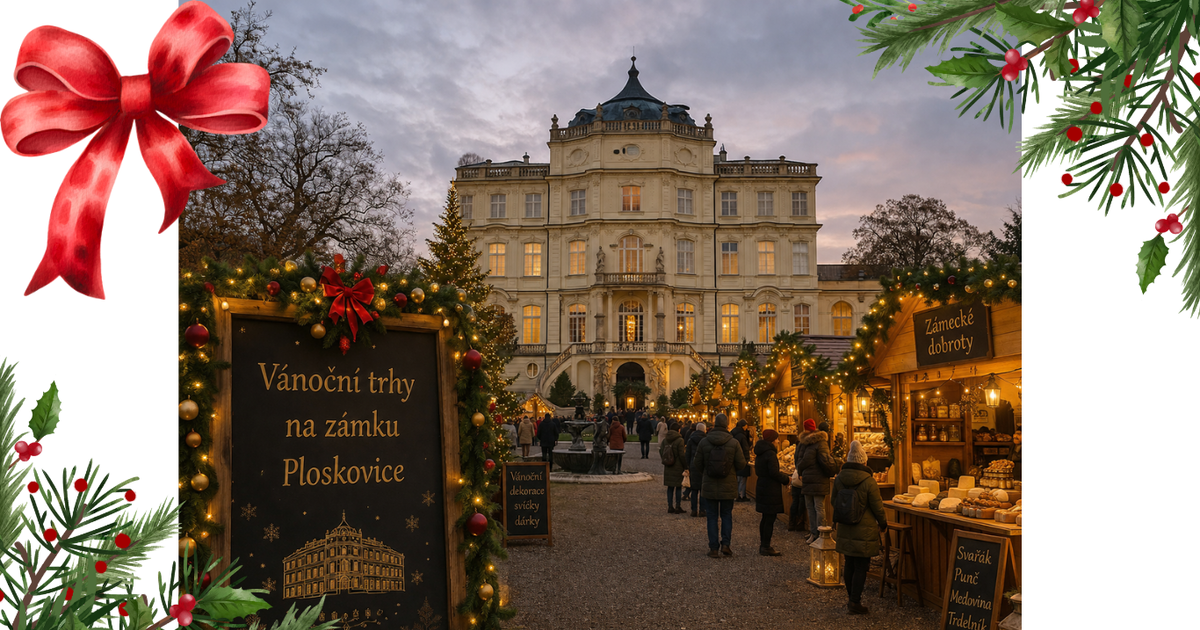
Zdroj akcí: otevřená data měst a obcí ČR (Národní katalog otevřených dat) a kalendář akcí Národního památkového ústavu.
Nearby
Obec Staňkovice se nachází v okrese Litoměřice, v blízkosti Ploskovického potoka a nedaleko zámku Ploskovice.
Accommodation nearby
Trips and activities nearby
Guided tours, tickets and activities nearby from GetYourGuide
Affiliate link: if you buy from the partner, we may receive a commission. The price for you does not change.
Search tours and activities →Themed route
Vodní mlýn (Staňkovice) Type: Cultural monument, technical construction Why is it worth a visit: This historic building illustrates the traditional way of processing grain and using water energy in the region. Visitors can imagine living in the past and admire the design solution of the mill.
Ploskovicks Type: Natural water flow Why is worth a visit: The stream forms a natural axis of the landscape and its shores offer a quiet environment for a short walk. The water gives the landscape a living character and connects individual parts of the village.
Castle Ploskovice Type: Historical building, castle construction Why is it worth a visit: Near the mill there is this important architectural object that will enrich the trip by looking into the noble life. Its presence provides historical depth and aesthetic value.
Community Staňkovice Type: village core, settlement Why is worth a visit: Walking through the streets of the village allows you to know the local atmosphere and typical rural development. It is an ideal place to relax and get to know the everyday environment of the people.
The route starts at the water mill, where you can see the technical details of the construction. You will then go along the Ploskovice creek, which will naturally lead you towards the castle Ploskovice. After visiting the castle you can finish your trip by walking around the village of Staňkovice to enjoy a quiet rural environment. The whole circle is short and suitable for families and individuals who want to combine history with nature.
Seasonal recommendations
In spring the mill comes alive with the arrival of t of water and awakening nature. The first trees bloom around the building and the air smells of wet ground, which underlines the fresh atmosphere of the whole place. It's an ideal time to watch the power of the current driving the wheel. I recommend a shoe that can withstand mud, and a visit in the morning when the sights are the most quiet.
The summer season brings bright light and a rich green landscape. The sound of flowing water gives a refreshing impression on hot days and the shade of old trees offers relief from heat. Because of the high season and more visitors, it's best to come first thing in the morning. Don't forget light clothes and plenty of fluids to go.
In autumn, the surroundings of the mill turn into gold and red tones. The morning mist above the water creates a mysterious and melancholy atmosphere that encourages thought. Layer clothing is suitable because temperatures near water can drop sharply. The best time to visit is the late afternoon when light gently hits the historic wall.
In winter, the monument is quiet, often in white snow clothes. The contrast of dark wood and freezing white landscape gives the place raw but beautiful aesthetics. It is necessary to have very warm shoes and gloves to keep you from walking.
Visualizations and artistic views


The visualisations are generated by artificial intelligence and serve as inspiration.
Tips from visitors
No tips yet. Be the first!
Log in and add your tip.
Sources and literature
Photos: Barocco7 / CC BY-SA 4.0 — Wikimedia Commons. The author and licence also appear when you hover over the image.
Faktickým podkladem tohoto textu byl článek na Wikipedii, jehož autory jsou přispěvatelé Wikipedie. Článek je dostupný pod licencí CC BY-SA 4.0.
Location on the map
More monuments – Ústecký kraj
Show all in the region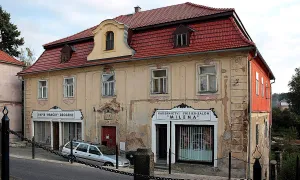

Příběhy a pověsti
Legendy, pověsti a příběhy spjaté s touto památkou
Fotografie návštěvníků
Zatím žádné fotografie. Buďte první, kdo přidá fotografii z návštěvy!
Log in a přidejte svou fotografii nebo hodnoťte.
Za ověřenou návštěvu v aplikaci získáte víc bodů — poznáme podle GPS, že jste na místě.
Reviews and comments