



vodní mlýn v Pařížově Water mill
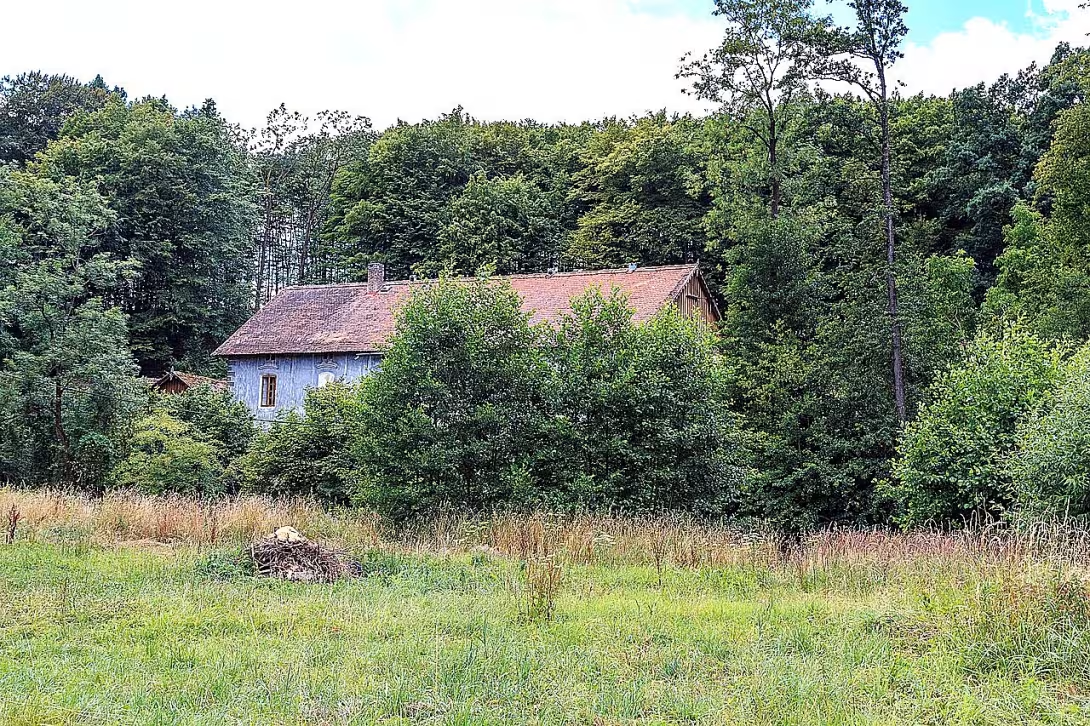
The squirrel's mill in Pařížov, located on the Doubrava River, is a water mill with a rich history that probably dates back to the Middle Ages. This monument has been protected as a real-estate cultural monument of the Czech Republic since 2016, highlighting its historical and cultural value. The mill underwent several stages of development, starting with wooden economic buildings and ending with modernization with Francis turbine.
The original building of the mill probably comes from the Middle Ages when water was the main source of energy for various needs. At that time, cities and markets developed in Central Europe, contributing to the construction of such structures. Originally, the mill was located further south and connected with wooden economic buildings around a small yard.
Architecturally, it consisted of three composition driven wheels on top water. After the fire in 1876, the current complex was built with new economic buildings, the oldest of which, the barn, has a roaring 1877 in the shield. At that time, the drive was extended and allowed the use of more water. The mill had three wheels with a diameter of five metres and a width of 170 cm.
In 1881 there were changes in the composition of the mill when the ordinary composition was replaced by an artistic composition. Later, a cylindrical stool and a peel were installed, while the remaining ordinary composition was grinding with a pair of French stones. Since 1928, the drive of the Francis turbine has been driven by transmissions to drive economic machines in a barn, such as a beater and a cutter.
The last miller used the mill until 1941, after which the operation was continued until nationalisation. A small hydroelectric power plant with a power output of 0,007 MW was set up here in 1968, which represents another stage in the history of this building.
Today, the Squirrel Mill is not only a monument to the past, but also a witness to technological progress. Its protected status underlines the importance of preserving historical structures and adapting them to modern needs. It offers visitors the opportunity to explore not only the technology of the past but also to understand the development of industrial energy processing.
The Squirrel Mill is an example of how a historical monument can serve as a bridge between the past and the present. His visit offers a unique opportunity to explore the region's rich history and appreciate efforts to preserve its cultural heritage.
Historical milestones
- 2016
- Protected as a real-estate cultural monument of the Czech Republic.
Architectural development
The mill originally had wooden farm buildings and three wheels for the top water. After the fire, new buildings with the first year of 1877 were built in the barn shield. In 1881 there were changes in composition and later installation of Francis's turbine.
Historical events
- 1876
- After the fire, the current mill was built.
- 1881
- Replacement of ordinary composition by artistic composition.
- 1968
- Establishment of a small hydropower plant with a power output of 0,007 MW.
Points of interest
- The squirrel mill is protected as a real-estate cultural monument of the Czech Republic since 2016. - The mill has undergone several stages of development, starting with wooden economic buildings and ending with modernization with Francis turbine. - After the fire in 1876, the current complex was built with new economic buildings, the oldest of which has a roar of 1877 in the shield. - Since 1928, the Francis turbine was powered, which was powered by transmissions by economic machines in the barn. - In 1968 a small hydropower plant with a power output of 0,007 MW was set up here.
Guide
Show guide text
This text was created by artificial intelligence and has not been editorially reviewed. It may contain inaccuracies.
Welcome to Pařížov, where time seems to be stopped and where nature with human history forms one harmonious whole. Right now, you're standing in front of the Squirrel Mill, which is a silent witness to many generations and transformations of this region. Stop for a moment, close your eyes and listen. You hear that noise of water? It is the Doubrava River that gives life and energy to this place with its constant flow. She was the main reason why the mill was built here. If you open your eyes again, look at the buildings in front of you. Feel their atmosphere and imagine what this place looked like hundreds of years ago, when the mill was at the center of social and economic events around it.
Let us now look together deeper into the past. We don't know the exact date of the first stone, but it all points to the fact that the squirrel's mill dates back to the Middle Ages. So imagine the time of knights, castles and simple life in accordance with nature. At that time, water was not only a source of drinking water, but, above all, the most powerful engine known to man. The mill was a key element of the landscape at the time. Without it, it would not be possible to effectively grind grain on flour, which was the basis of the survival of the entire village. The Miller was a person respected, sometimes feared, because in his hands was power over food. Although the names of particular builders or the first owners in the Middle Ages faded and remained forgotten, their work in the form of this mill survived centuries.
Now pay attention to the architecture itself and the appearance of the complex that you see before you. If you look closely, you realize that what you see today is not a single state from one period, but rather a layered story. The mill has undergone several stages of development. At the very beginning, wooden economic buildings were probably dominated, which were typical of their simplicity and functionality. The wood was available and easy to process, but there was one big risk that unfortunately turned out to be tragic in the history of this place.
Notice the current appearance of the complex. What you're seeing today is the result of a big test that the mill had to pass. In 1876, a devastating fire erupted that engulfed the original buildings. Imagine the chaos, the flames rising to the sky and the despair the owners felt at that moment. But it was from the ashes that the current complex was born. After this fire, the mill was rebuilt and new economic buildings were created that form the basis of today's appearance. Check the facade and the overall availability of buildings. They feel the practical approach of the nineteenth century, where emphasis was placed on the effectiveness of work and the resilience of materials to prevent similar disasters in the future.
When we think about the people who worked here, we have to acknowledge that the history of the mill is a story of unknown heroes rather than famous personalities. We don't know the names of the architects who designed the reconstruction after the fire, or the details of each individual windmill. But that's where the magic lies. It's a monument to everyday work, sweat and endurance. Every stone and every plank in this complex tells the story of the people who stood up before dawn to in the rhythm of the water wheel grinding crop for their neighbors. Feel this invisible presence of people who have lived here, worked and nursed their possessions for generations.
Now invite you to one interesting thing that connects the old craft to technical progress. The squirrel's mill was not just a static structure that remained in the past. He was evolving. One of the most important modernization was the installation of Francis's turbine. You may have heard of different types of water wheels in history, but the turbine was a huge leap forward. Instead of a large wheel slowly spinning on the surface of the water, a machine came in that could use the power of water much more efficiently and with greater intensity. Francis's turbine allowed the mill to be modern and competitive even when the first industrial machines started to appear. It's a fascinating contrast when you imagine medieval foundations and the technology added to them, which at that time meant the peak of engineering.
This combination of history, a tragedy in the form of fire and technical expansion of the latter from the Squirrel Mill place with unique value. That is why it was officially declared a cultural monument of the Czech Republic in the year two thousand and sixteen. This recognition is not just a formal registration. It is a promise that this place will be taken care of so that future generations can stand in the same place as you and feel the same peace and respect for history. Protection as a cultural monument means that the mill is no longer just a set of buildings, but it becomes part of a national heritage that reminds us of how we lived and how we worked.
Now if you look around you, try to connect all these pieces of the puzzle. Medieval origins, the noise of the Doubrava River, the wooden buildings that once stood, the devastating fire of the year a thousand eight hundred seventy-six, the new construction and finally the modern turbine. It all together creates the identity of the Squirrel Mill. It's a place that refused to give up, which, after each blow, rose and adapted to new times.
Imagine how the mill worked in full operation. The air was probably filled with the smell of ground flour, there was a noise of machinery in the premises and there were people in the area with wagons full of grain. It's much quieter here today, but the energy from the past still smells. It's silence that tells stories.
Now I'm leaving you to explore this place at your own pace. Walk around the buildings, perceive the texture of the walls and observe how the Doubrava River still faithfully runs around the mill as if it wanted to keep its history in motion. Take a moment to reflect on how powerful a simple building can be in us if so much human effort and time are stored in it.
Thank you for accompanying me on this short journey through the Squirrel Mill. I hope you felt the same fascination I did. Now you can continue to discover the beauty of Pařížova and its surroundings. I wish you a pleasant walk and many other unforgettable experiences. Goodbye.
Frequently asked questions
Can the monument be visited?
This is a technical monument. Some are open as exhibitions, others are out of use or on private land. We have not verified whether this one is accessible.
What are the opening hours and admission?
We have not verified the opening hours or admission. Current information is published by the operator.
Where is the monument?
Location: Pařížov, Pardubický kraj. The map on this page shows the exact spot.
Why is the monument protected?
It is listed in the Central List of Cultural Monuments of the Czech Republic as a cultural monument (register no. 1000025560).
Businesses nearby
Do you run a restaurant, accommodation, shop, museum, rental, wellness or other visitor service near this monument? Show yourself directly to the people heading to it — this is how they will see you in the app and on the web:
Events nearby
Zdroj akcí: otevřená data měst a obcí ČR (Národní katalog otevřených dat) a kalendář akcí Národního památkového ústavu.
Nearby
🏰 Historic sites (79)
- Zámek Úhrov 2.8 km
- padlým v 1. sv. válce 3.0 km
- Vilémov 3.8 km
- Ruiny hájovny 3.9 km
- obětem I. a II. sv. války 4.2 km
- obětem 1. světové války 4.2 km
- Červenice 4.5 km web
- Přepravník štěrku 4.7 km
- Zemědělské muzeum 4.7 km
- Muzeum vápenictví 4.7 km
- Hradní muzeum Lichnice 5.2 km
- +1878 5.5 km
- obětem světové války 1914 - 1918 5.7 km
- padlým v I. a II. válce 5.8 km
- Oheb 6.3 km
- Vildštejn 6.3 km
- Památník obětem světových válek 6.6 km
- Střed ČR 6.6 km
- Mariánský sloup 6.6 km
- Dr. Tyrš 6.7 km
🍽️ Restaurants and dining (107)
- Hostinec Na Křížovce 2.1 km +420 469 662 181
- Staročeská restaurace Kolovna 2.9 km +420 603288336
- Restaurace U mnicha 3.5 km web
- Bar, fotbalový stadion 3.6 km
- Restaurace Club hotel Třemošnice 3.6 km
- SRC Lihovar Třemošnice 3.8 km
- Na Špici 4.0 km
- Na špici 4.0 km
- Pizza a kebab 4.0 km
- Kavárna a cukrárna na terase 4.1 km 1. máje
- Rotunda 4.1 km
- Hospůdka ve mlýně 4.2 km
- Restaurace Kotelna 4.3 km Brigádnická 544 +420 777 547 833 web
- Pivovar Hančar 4.4 km web
- Hospůdka Peklo 5.1 km +420 602 945 652
- Cyklostanice 5.1 km Starý Dvůr - Peklo 64 +420603506280 web
- Posilovna u Jirky Vydry 5.2 km Podhradí
- Penzion VIS 5.2 km +420 775 916 405 web
- Zahrádka v podhradí 5.4 km
- Hostinec Na Rychtě 5.8 km
🏨 Accommodation (36)
- Penzion Slávka 2.0 km
- Penzion U Mnicha 3.5 km
- Club hotel Třemošnice 3.6 km
- Turistická ubytovna města Třemošnice 3.6 km
- Lichnice 4.0 km
- EA Hotel Kraskov 5.0 km
- Rekreační zařízení Kraskov 5.1 km
- Autokemp Kraskov 5.6 km web
- AK Seč Pláž, recepce 6.0 km Čs. pionýrů 384
- Hájenka 6.2 km
- Hotel Kapitán 6.4 km
- Yachtclub Pardubice 6.6 km +420 737 434 626 web
- Pension Lanete 6.6 km
- Rekreační středisko Tramo 6.8 km +420 606157574
- Jezerka 6.9 km web
- U Letadla 7.0 km K Přehradě 325
- Autokemp U Letadla - recepce 7.1 km
- Penzion Žlebská Lhotka 7.1 km
- Dětský tábor Jiskra 7.5 km Na Bělidle +420732159000 web
- Penzion U čtyřlístku 8.1 km
🚲 Rentals and sport (13)
- Bývalé koupaliště 3.6 km
- Paddleboardy Seč 5.6 km +420777799372 web
- Půjčovna rekreačních plavidel 5.9 km
- Sokolovna 6.7 km
- Junák - český skaut, středisko Doubrava, Ronov nad Doubravou 6.9 km
- Velocentrála Hostovlice 7.7 km
- Střelnice 8.0 km
- Sportovní areál Kámen 13.8 km
- Sportisimo 13.8 km
- Bikefrodl.cz 13.9 km +420327315049 web
- Prospektiva 14.5 km +420 608 500 608
- Sportovní hala Heřmanův Městec 14.8 km +420 776 748 685 web
- Lyžařský areál Svatá Anna 14.9 km
🥾 Hiking and nature (76)
- Přírodní park Doubrava 1.2 km
- Žabník 1.4 km web
- Na hradci 2.4 km
- Homole 3.6 km
- Zámecký park Klášter 3.8 km
- Hedvikov, NPP Kaňkovy hory 4.1 km
- Suchý poldr Dvorce 4.5 km
- Borecká skalka 4.7 km
- Berlova vápenka 4.7 km
- Hráz rybníku Dolní Peklo 4.8 km
- Chuchelská stráň 5.2 km
- Biskupice 5.3 km
- Rozhledna Milada na Lichnici 5.3 km
- Bučina 5.4 km
- Dívčí kámen 5.5 km
- Šibenice 5.5 km
- Dřevěné potrubí elektrárenského přivaděče 5.9 km
- Malý Oheb 6.1 km
- Havířské jámy 6.1 km
- Olšina 6.2 km
Accommodation nearby
Trips and activities nearby
Guided tours, tickets and activities nearby from GetYourGuide
Affiliate link: if you buy from the partner, we may receive a commission. The price for you does not change.
Search tours and activities →Themed route
Travel Route in Municipality Pařížov
1. Water Mill in Pařížov
Type: Historical monument
Why is worth a visit: This ancient mill is not only a technical monument, but also a witness to the history of the village Pařížov. It offers a view of traditional ways of using hydroenergy and has a history dating back to the 19th century.
2. Old rectory
Type: Religious object
Why is it worth a visit: This parish is an architectural pearl village whose history is devoted to Christian tradition and the spiritual life of the locals. It's a place of quiet rest and beautiful organ sounds.
3. Municipal Office Pařížova
Type: Administrative building
Why it is worth a visit: An interesting thing is to explore the history of the local administration and to see how the village evolved. The building itself represents modern architecture with respect for traditions.
4. Traditional pub
Type: Restaurant
Why is it worth a visit: Here you can try traditional Czech food and beer, which is a great way to enrich yourself with cultural adventure. The pub also serves as a meeting place for local residents.
5. Small stop
Type: Rest place
Why is it worth a visit: This place is ideal for a short rest and a look at yourself. It is a quiet corner where you can enjoy the natural environment of the village Pařížova.
The route offers a view of cultural and historical aspects of the village and is suitable for those who want to know local traditions and life.
Seasonal recommendations
Spring: In the spring season vodní mlýn v Pařížově is oddly beautiful when the leaves on the trees start to develop and bring live colour to the surroundings. The sun's rays illuminate the mill walls in warm light, giving the place something magical. When visiting, it is advisable to come early in the morning or late in the afternoon to avoid shadows and too large crowds trying to enjoy the beauty of spring. The good idea is to wear clothes suitable for mild weather, because temperatures can change quickly.
Summer: For years, vodní mlýn v Pařížově is a popular destination for visitors seeking shelter from urban life. The sun illuminates every corner and increases the attractiveness of natural landscapes that surround the memory. In summer time it is recommended to visit the mill early in the morning or late in the afternoon to avoid heat and crowds coming in the high season. Hot clothes are suitable for the day, but also bring an umbrella or a parasol to protect the sun.
Autumn: In autumn the vodní mlýn v Pařížově becomes melancholic beauty when tree leaves colour light and fall to the ground. The atmosphere is calm and resembles orphan views, which can be very attractive for visitors. When planning a visit, it is advisable to consider the mild weather and come during a period when the least probability of rain is because they can affect comfort. It's a good idea to wear top clothes to protect against the cold wind.
Winter: Winter Pařížov offers a unique atmosphere around the water mill where the surrounding nature is covered with snow and trees lose their leaves. Sun rays falling on white fields can create impressive images that are a real gift for photo lovers. When visiting it it is advisable to take into account the short daylight and come to the mill at the time when it is opened. Warm clothes are necessary because winter temperatures can be very low, and it is recommended to also wear protective items for the head and legs.
Visualizations and artistic views


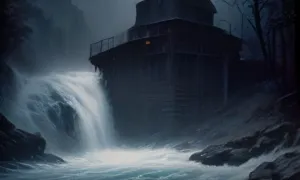
The visualisations are generated by artificial intelligence and serve as inspiration.
Photos from the area
Real photos taken near the monument


Zdroj a licence jsou uvedeny u každého snímku.
Tips from visitors
No tips yet. Be the first!
Log in and add your tip.
Sources and literature
Photos: Petr1888 / CC BY-SA 4.0 — Wikimedia Commons. The author and licence also appear when you hover over the image.
Faktickým podkladem tohoto textu byl článek na Wikipedii, jehož autory jsou přispěvatelé Wikipedie. Článek je dostupný pod licencí CC BY-SA 4.0.
Location on the map
Příběhy a pověsti
Legendy, pověsti a příběhy spjaté s touto památkou
Fotografie návštěvníků
Zatím žádné fotografie. Buďte první, kdo přidá fotografii z návštěvy!
Log in a přidejte svou fotografii nebo hodnoťte.
Za ověřenou návštěvu v aplikaci získáte víc bodů — poznáme podle GPS, že jste na místě.
Reviews and comments