






Vodní mlýn z Homole u Panny Umgebinde house
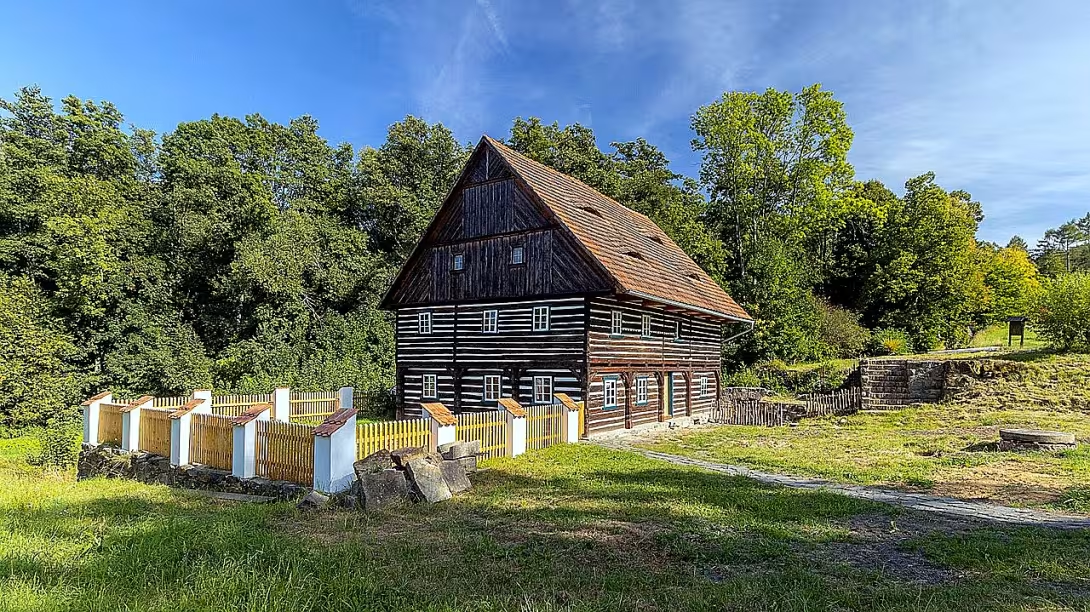
The water mill in Týniště near Zubrnic is a technical monument in the Lučí creek in Ústí nad Labem district. The building has been protected as a real-estate cultural monument of the Czech Republic since 2002. It represents a unique example of a small artistic composition and is part of the Skanzen Zubrnice.
The first written mention of the mill dates back to 1628, the early phase of the 30-year war. In 1710 the existence of saws and oil mills, which formed the economic whole with the mill, was documented in the sources. The operation of the mill ended at the turn of the 19th and 20th centuries. The mill stopped serving its purpose during the First World War and the saw ceased its operation in the late 1940s.
The architecture of the current building combines grafted and walled structures. The building was transferred from Homola near the Virgin and mounted on the original basement wall. The interior complements the technology transferred from the mill in Hamry near Hlinska. Part of the complex is a drive with a fixed wooden course and a system of slugs that regulate the flow of water from the Lučí and Týništský streams. The water originally powered three wheels on top of the water. For the saw, a 3 HP bike is shown in 1930.
The original premises were demolished in 1968, resulting in a subsequent transfer of the building and technology. Thanks to this, it was possible to maintain the example of traditional rural farming. Today, the object is made available to the public as part of the scan. Visitors can see here the technical solution of the water drive, including underground channel with translation quarry stones, through which water flows from the refrigerator mill and saw.
This object represents valuable evidence of historical technical skills and development of rural economy in the Zubrnice region. The visit offers a unique opportunity to become acquainted with the functioning of water works and to see the preserved technology in an authentic environment.
Historical milestones
- 1628
- First written mention of the mill.
- 1710
- Reminded of the existence of saws and oil mills.
- 1968
- Demolition of the original site and subsequent transfer of the building.
- 2002
- Declaration for a real estate cultural monument of the Czech Republic.
Architectural development
The building consists of a combination of grafted and walled structures that stand on the original basement wall. Part of the complex is a drive with wooden slope and a system of sluice objects for water regulation. The water was originally used for three-wheel drive on top of the water.
Historical events
The first written mention dates back to 1628. In 1968 the original site was demolished and then the transfer of the building and technology took place. Since 2002 the building has been protected as a real-estate cultural monument.
Points of interest
- The building has been protected as a real-estate cultural monument of the Czech Republic since 2002. - The first written mention of the mill dates back to 1628, the early phase of the Thirty Years War. - The building was transferred from Homola near the Virgin and mounted on the original basement wall. - The water originally powered three wheels on top of the water. - The original site was demolished in 1968, resulting in a subsequent relocation of the building and technology.
Guide
Show guide text
This text was created by artificial intelligence and has not been editorially reviewed. It may contain inaccuracies.
Welcome to Týniste. Stop for a moment, take a breath and feel the atmosphere of this place. Right now, you're standing in front of the Water Mill of Homole near the Virgin, which is one of the most important technical monuments in this area. Look at this building in front of you, which rises over the shore of the Lukebrook. It may seem like an ordinary old house to you at first glance, but it's actually a fascinating puzzle of history, technology, and human efforts to preserve traditions. The water that continues to flow here has been the main source of energy and the life nerve of the entire environment for centuries. It was she who determined why the mill was built here and what his fate was.
Let us now return together in time much deeper, until 1628. Imagine the world almost four years ago. It was the early phase of the Thirty Years' War, the period of uncertainty, fear and great social change. It is in this troubled time that a mention of the mill in this place first appears in the written records. At that time the mill was not only a place where the ground grain was ground on flour, but it was a key point for the survival of the entire community. No flour, no bread, no bread, no life. The mill was therefore a symbol of stability and a fundamental pillar of the local economy.
But as time passed, people's needs changed and the mill developed. If we look at 1710, we find that the site was no longer just grinding grains. The site became the real industrial center of its time. There was a saw and oil mill next to the mill. Try to imagine the noise that must have been here. The sound of sawing wood from the saw, the rhythmic beating of the mill, which pushed out precious oil from the fruit, and on top of that, the constant noise of water driving the wheels. It was a space full of work, sweat and craftsmanship. People came here with tree trunks, grain sacks and fruits from which oil was pressed, and they left with products that were necessary for every household in the area.
Now pay attention to the very building you're facing. If you look at her carefully, you might feel something unusual in her. And that's true, because the building you see is not the original building from 1628. The history of this place has a very unexpected twist. The original site was demolished in 1968. History may seem to have disappeared with him, but something very interesting has happened. A mill from Homole near the Virgin was brought and built to the site. Yes, you heard right, the whole building was transferred, so it was moved from another location.
Notice how the building is installed. It was placed on the original basement wall, which remained here from the original mill. So it's a real connection between two different places and two different stories. A building from Homole near the Virgin found a new home in Týniste, and that makes it possible to admire its architecture today. Look at the facade and see the overall composition of the construction. It is proof that monuments may not only be static objects, but may also be the result of active rescue.
When we think about the inside of the mill, we find that this journey to preserve history continued within. The interior was supplemented by technology that was transferred from the mill in Hamry near Hlinska. This made this place a real museum of techniques, where elements from different locations meet to share a great story about how water mills worked. Introduce yourself as the windmill worker who worked here. He must have had a perfectly sensed rhythm of water, understood the mechanics of wooden wheels and gears, and kept the machines from overheating or getting stuck. It was a difficult job, but full of pride in nature control.
And now I'm going to lead you to one of the most interesting things that has to do with this place. Look towards the creek. The water that flows here has been much more powerful in the past than you might see now. Originally, the water was powered by three wheels. Imagine three giant water wheels, which were synchronized to spin and transfer the power of water into the interior of the building, where it was powered by mill stones, saw boilers and presses. Three rounds meant huge capacity and efficiency. It was a technological victory over the landscape that allowed the entire region to develop.
This fascinating combination of transferred building, collected technology and original basement was recognised as a real-estate cultural monument of the Czech Republic in 2002. This means that the state has acknowledged that this place is of irreplaceable value. It's not just an old house, it's a monument to human wit and technical progress. It is a place that reminds us that we used to be much more dependent on the rhythm of nature and the power of water than we are used to today.
If you're looking at this mill today, you might be wondering why it was so important to bring the building from Homola near the Virgin here. The answer lies in the desire to preserve the craft and architecture that would otherwise cease to exist. Every beam and every stone in this building carries a trace of the hands of the people who have worked them. He's a silent witness to centuries who survived wars, regime changes, and technological revolutions. From the early phase of the Thirty Years' War to today, when you come here as visitors, the mill remains a symbol of man's connection to water.
Now I invite you to take a closer look at this object. Walk around him, feel the texture of the walls and listen to the noise of the Lukewater. Try to imagine what Týniště would look like if the mill wasn't here. Probably the history of this place would be much poorer. It is precisely because we are here today that we can appreciate the efforts of the people of 1968 who have decided to rescue and relocate the building.
Imagine that moment when the building from Homola near the Virgin was first set up on the basement wall in Týníště. It must have been precise work, requiring patience and knowledge of old construction techniques. It's basically an architectural transplant that went well and today allows us to touch history.
Thank you for coming with me from 1628 until today. I hope you're interested in Vodní mlýn z Homole u Panny and that you see more than just an old building in it. It's where water, wood, stone and human history meet. It's up to you now. Explore the surroundings, feel the calm of this place and let yourself be carried away by the imagination of how the work was once boiling. I wish you a pleasant continuation in your discovery of the beauty of this region. Goodbye.
Tips for visitors
To visit the mill we recommend sunny days from spring to autumn, when the surrounding nature is the most lively at the Lučí creek and the technical elements of the building stand out in natural light. In winter months, access is limited due to weather. Take with you fixed shoes suitable for the field and for movement around the streams, remember enough fluids and snacks, because there may not be a permanent dining area in the immediate vicinity. We recommend to the photographers the morning hours when the sun lights up the facade of the mill and the level of the stream, which creates ideal conditions for pictures of technical details and surrounding greenery. For families with children, the place is a great destination for a sightseeing trip where they can observe the power of the water and the history of the mill, while nearby you can also visit Skanzen Zubrnice, which offers another insight into the life of our ancestors.
Frequently asked questions
Can the monument be visited?
Some buildings of this kind are open for guided tours, others serve another purpose or are privately owned. We have not verified whether and when this monument is open – please ask the operator.
What are the opening hours and admission?
We have not verified the opening hours or admission. Current information is published by the operator.
Where is the monument?
Location: Týniště, Ústecký kraj. The map on this page shows the exact spot.
Why is the monument protected?
It is listed in the Central List of Cultural Monuments of the Czech Republic as a cultural monument (register no. 1000453604).
Businesses nearby
Do you run a restaurant, accommodation, shop, museum, rental, wellness or other visitor service near this monument? Show yourself directly to the people heading to it — this is how they will see you in the app and on the web:
Events nearby






Zdroj akcí: otevřená data měst a obcí ČR (Národní katalog otevřených dat) a kalendář akcí Národního památkového ústavu.
Nearby
Skanzen Zubrnice, Luční potok, Týnišťský potok.
Accommodation nearby
Trips and activities nearby
Guided tours, tickets and activities nearby from GetYourGuide
Affiliate link: if you buy from the partner, we may receive a commission. The price for you does not change.
Search tours and activities →Themed route
Thematic cruise route from Týniste
1. Vodní mlýn z Homole u Panny (mill) The main objective of our route is this historic water mill, which represents an important part of the local industrial heritage. The mill was once an essential part of the life of the villagers and still fascinates its architecture and technology. Visit the mill to learn more about its history and how it works.
2. Luke (river) After visiting the mill you can go to the Lučice brook, which is just a few minutes walk from the main destination. This stream offers a quiet and pleasant surroundings for a short walk or picnic. It is an ideal place to relax and enjoy natural sounds.
3. Continue your journey towards the Týništský stream, which is close to the Lučí stream and offers similar natural beauty. This stream is suitable for those who enjoy walking on a free leg or enjoy watching wild animals in its surroundings.
4. Skanzen Zubrnice (museum) We introduce you into the Skanzen Zubrnice route where you can explore the life and traditions of people from the region through reconstructed homes and objects. This museum will immerse you in the history and culture of the area, which is a great conclusion for your journey.
This route offers a combination of historical and natural attractions and allows you to enjoy the beauty of the village Týniště.
Seasonal recommendations
In spring, the mill surrounds the fresh green and the water in the stream flows more strongly due to the melting of snow. The atmosphere is full of hope and awakening nature. We recommend shoes that withstand moisture because the surrounding roads can be muddy. The best place to visit is in the morning when the air is the cleanest.
The summer season brings bright sun and dense shade of trees that provide a pleasant cool by the water. Expect more visitors in the main season, so choose an earlier arrival to view the state of the building in peace. Dress light, airy substances and remember to protect against the sun.
In autumn, the surroundings of the mill turn into gold and red tones, creating a romantic and melancholy mood. Fog above water gives the memory a mysterious look. Layer clothes are suitable to protect you from the cold wind. The ideal time for visiting is late afternoon, when light gently hits the facade.
In winter, the mill works calmly and calmly, especially when white snow covers the landscape. Freezing air and silence create a unique sense of isolation from the world. Don't forget the very warm shoes and gloves. The opening time is shorter in this period, so we recommend planning the journey until noon.
Visualizations and artistic views


The visualisations are generated by artificial intelligence and serve as inspiration.
Photos from the area
Real photos taken near the monument


Zdroj a licence jsou uvedeny u každého snímku.
Atmosphere of the place
This atmospheric visualisation of the place and period was generated by artificial intelligence. It is not real footage of the location.
Tips from visitors
No tips yet. Be the first!
Log in and add your tip.
Sources and literature
Photos: VitVit / CC BY-SA 4.0 — Wikimedia Commons. The author and licence also appear when you hover over the image.
Faktickým podkladem tohoto textu byl článek na Wikipedii, jehož autory jsou přispěvatelé Wikipedie. Článek je dostupný pod licencí CC BY-SA 4.0.
Location on the map

Příběhy a pověsti
Legendy, pověsti a příběhy spjaté s touto památkou

Fotografie návštěvníků
Zatím žádné fotografie. Buďte první, kdo přidá fotografii z návštěvy!
Log in a přidejte svou fotografii nebo hodnoťte.
Za ověřenou návštěvu v aplikaci získáte víc bodů — poznáme podle GPS, že jste na místě.
Reviews and comments