



Vodojemy Žlutý kopec Water
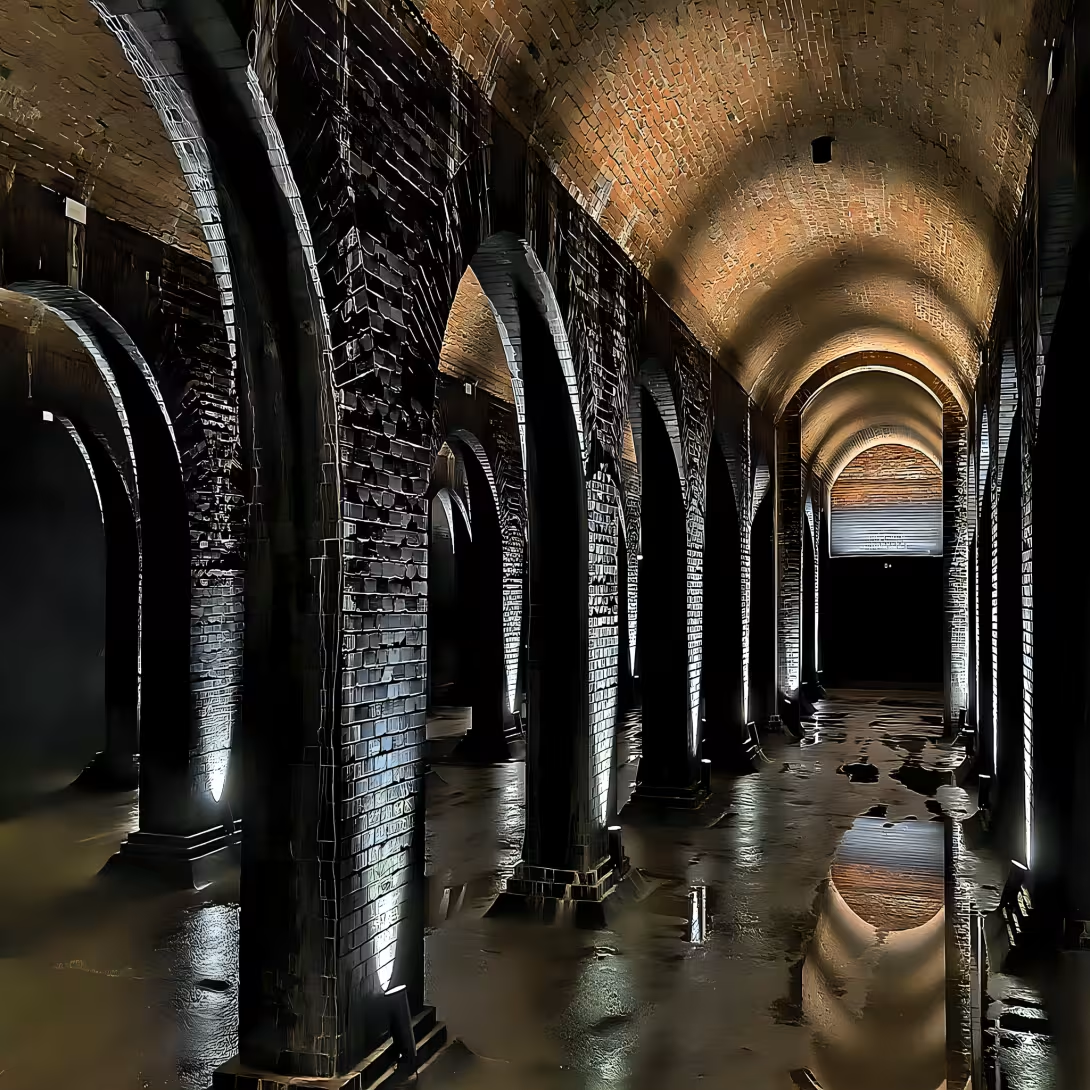
Vodojemy Žlutý kopec are a set of three underground tanks in Brno. They are located on the side of the Yellow Hill in the location Staré Brno and were formed between the 1960s and the second decade of the 20th century. This water work served as a water supply for the lower pressure zone of the urban water supply. It has been declared a cultural monument since 2019.
The project of the new Brno water pipeline was adopted in 1869. The construction was carried out according to the design of the English builder Thomas Docwry. Within the framework of this system, a water treatment plant was created in Pisárky in 1869-1872, which took raw water from the Svratka River above the horse's horse in the Stone Mill. The modified water was then pumped into two pressure zones, the lower one being on the Yellow Hill.
The file consists of three water jams with different structures. The first one was built in 1869-1872. It is an underground tank with inside dimensions of 45 × 45 meters and a depth of 6 meters. The second watercourse from 1896-1900 has a similar construction with dimensions of 45 × 70 metres. Both objects are embossed from red-burned bricks. In order to ensure impermeability, clay-tight packaging was used. The third watercourse from the second decade of the 20th century varies with material. It consists of two concrete tanks with dimensions of approximately 30 × 35 metres and 30 × 45 metres with a depth of over 5 metres. There is also a former technical house between the first and second waterjones.
The waters were disabled on 18 March 1997, which was due to their low position. The building manager is the city organization TIC Brno. In order to make the space available to the public, a multi-annual reconstruction took place in several stages. In 2019, a surface entrance to brick watercourses was built, which were only accessible by ladder until then. The second stage, completed in October 2022, included building the inputs into both brick tanks and installation of electrical installations. The final third stage focused on surface treatment and access to corridors and concrete water tower.
The public had temporary access to the first brick water tower from 2020 to March 2022. On completion of the second stage, both brick watercourses were opened in October 2022. The entire reconstructed area including the third concrete building was fully accessible on 22 March 2024.
The object represents a unique technical space. It documents the development of urban infrastructure and hygiene during the period of massive urbanisation of Europe. Visiting this water works offers the possibility of viewing the underground structures of the Brno water pipeline from various periods.
Then and now
Drag the slider to compare how the landmark may have looked when it was built with the view today.
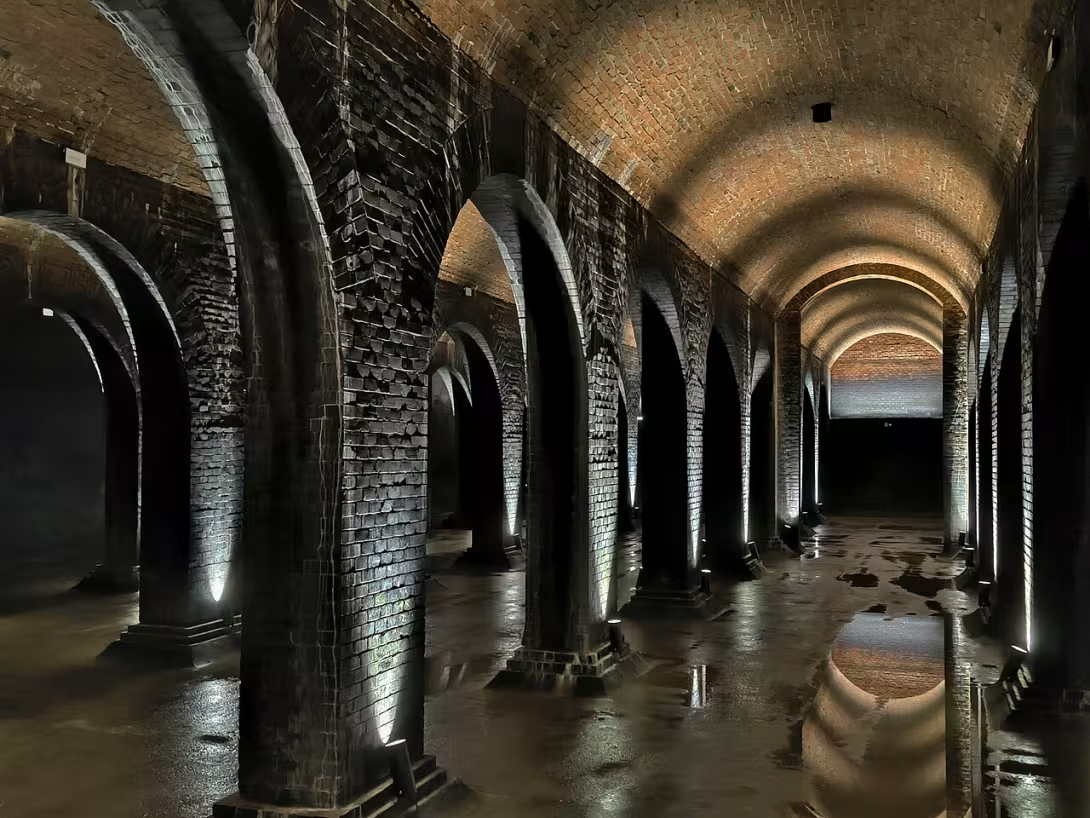
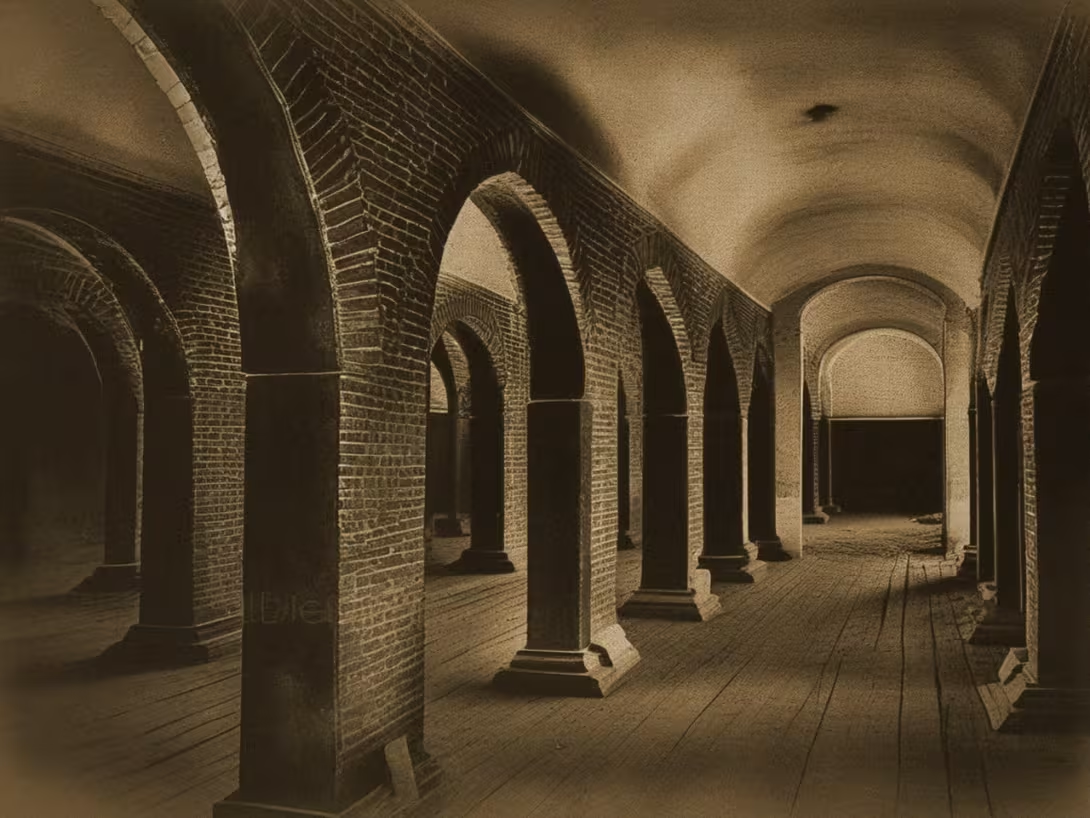
The historical appearance on the left is an AI-generated visualisation and serves as inspiration only.
Historical milestones
- 1869
- Adopted project to build a new water pipeline in Brno.
- 1872
- Finishing the first brick water tower.
- 1997
- The waters have been shut down.
- 2024
- The entire reconstructed area, including the third water tower, has been made available to the public.
Architectural development
The first two waterjams are equipped with burnt red bricks with a clay-tight cover. The third, the latest watercourse, is made up of two concrete tanks. There is also a former technical house.
Historical events
1869: acceptance of the project of the new water pipeline in Brno; 18 March 1997: low-position decommissioning; 2019: Declaration for cultural heritage.
Owners
TIC Brno (Administrator)
Points of interest
- It's a collection of three underground tanks that originated between the 1960s and the second decade of the twentieth century. - The first two waterholes are made of red-burned bricks with a clay-tight cover, while the third is made up of two concrete tanks. - The water works served as a water supply for the lower pressure zone of the city's water pipeline. - Since 2019, the building has been declared a cultural monument. - The entire reconstructed area was fully accessible to the public on 22 March 2024.
Guide
Show guide text
This text was created by artificial intelligence and has not been editorially reviewed. It may contain inaccuracies.
Welcome to the historical part of Old Brno. You are standing right in front of a place that may appear at first glance, but beneath your feet is a fascinating world of technology and history. In front of you, the Yellow Hill is spread out. It is a place where the need for basic human survival, i.e. access to clean water, meets the ambitions of a growing 19th-century city. Stop for a moment, take a breath and perceive the atmosphere of this space which has been hidden from the eyes of ordinary bystanders for decades and which now welcomes each of you.
Let us now look together at how this mutually originated and why this place is so important. Everything started in the year of the thousand eight hundred sixty-nine, when the project for the construction of the new water pipeline in Brno was officially accepted. The city was growing sharply at the time, becoming an industrial centre, and the need for reliable water supply was critical. The first major milestone was the completion of the first brick water tower in the year one thousand eight hundred and twenty-two. This project was named architect Thomas Docwry, who proposed a solution corresponding to technical progress at the time.
This set of three underground tanks was not created at once. It was a process that lasted several decades and reflected the development of building materials and the needs of the city. While the first tank was created in the second half of the nineteenth century, the second was built at the turn of the nineteenth and twentieth centuries. The third, the last of the three, came in the second decade of the twentieth century. All these buildings had one common purpose. They served as a huge water supply for a lower pressure zone in the city. Think of it as a giant tank that maintained constant pressure and ensured that water flows into the people's houses without interruption, even if there were fluctuations in the supply from the main sources.
Now that you're standing in this area, pay attention to what surrounds you. Even when you're on the surface, it's important to realize that the most interesting lies deep underground. If you are able to enter space, notice the fascinating difference in materials used at different times. The first two waterjams are a masterpiece of the brick trade. They are decorated with red-burned bricks, which are supplemented with a special clay-tight cover. This detail was crucial at the time, so that the water would not escape into the surrounding terrain and that impurities would not penetrate the tanks from the outside. It's a fascinating example of how the watertight areas were dealt with before the concrete.
However, if you move to the third water tower, you will see a completely different approach to construction. Here, they no longer dominate red bricks, but concrete. The third watercourse consists of two concrete tanks. This transition from brick to concrete is essentially a materialised history of construction. You can see the development here in one location from traditional masonry to modern materials of the twentieth century. It's a technical record of how engineers' thinking changed and how the boundaries of possible water management shifted.
Whoever worked in these exact areas and who checked the water levels every day remains a secret in many ways. Historical figures that would be directly linked to the operation of these tanks are not listed in the records as well as large politicians or generals. And that's where the beauty of this place lies. It is a monument to thousands of unknown hands, workers, theatricians and technicians who have made sure that Brno could prosper and grow. Without these silent heroes and their precise work with bricks and concrete, the city could not function as we know it.
Here we come to the part that may interest you the most. Imagine that these vast underground spaces have been fully operational for nearly a hundred and thirty years. It was the heart of the city's water duct, quiet and cold places where millions of gallons of water accumulated. Everything changed in the year one thousand nine hundred ninety-seven, when the watercourses were finally shut down. Newer technologies and more modern water distribution have made these tanks redundant. But after many years of silence and oblivion, their rebirth began.
In the year two thousand and nineteen, waterholes were officially declared a cultural monument. This was a crucial step because it was recognised that it was not just the old water tanks, but the unique technical space that had its historical value. The highlight of this revived history is the year two thousand twenty-four. It was this year that the entire reconstructed area was made available to the public, including the third water tower that was previously less accessible. It is an incredible feeling to know that today we can enter into premises that have been closed for decades and have served only technical personnel.
Now try to imagine the contrast. On one side the noise and bustle of modern Brno, on the other side the silence and cold underground vaults of red bricks. It's a place that teaches us humility before the techniques of the past. We often forget that every modern city is based on an infrastructure that is invisible but absolutely necessary. Vodojemy Žlutý kopec is such a reminder.
We now invite you to further explore. Go through the area in peace, feel the space around you, and if you have the chance, step into the depths of these underground spaces. Follow the details of the brick wall, look for traces of old pipes and feel the cold of concrete in the latest part. Let yourself be consumed by the atmosphere of the place that once fed the city water, and today it feeds us the knowledge of our ancestors and their ability to create things that have lasted centuries.
Thank you for coming through the short history of the Yellow Hill Falls. We hope that you are interested in this trip to the underground of Brno and that you are leaving with a new look at what lies beneath the surface of the streets we walk on every day. We wish you a pleasant rest of the day in our beautiful city and enjoy every moment you spend in this unique technical space. Goodbye.
Tips for visitors
The best time to visit is spring or autumn, when the surrounding area is pleasant temperature and nature on the slopes of the hill is beautifully coloured. Transport to Old Brno is possible by car and public connections; Check the specific routes and connections in the maps. It is recommended to take warmer clothes into underground tanks, because it is cold underground regardless of outdoor temperature. We also recommend fixed shoes suitable for humid environments. For photo lovers, the most interesting details are the construction of tanks and the game of light in underground corridors. From the outside we recommend to take pictures of the surroundings in the morning or evening, when the sun gently illuminates the landscape. In addition to the water jams themselves, we recommend to go through the Yellow Hill side and explore the surroundings of Old Brno. For families with children it is ideal to combine a tour of technical facilities with a walk in the surrounding nature.
Frequently asked questions
Can the monument be visited?
We have not verified whether this monument is accessible. Please ask the owner or operator, or the local municipal office.
Where is the monument?
Location: Staré Brno. The map on this page shows the exact spot.
Why is the monument protected?
It is listed in the Central List of Cultural Monuments of the Czech Republic as a cultural monument (register no. 1999991453).
Businesses nearby
Do you run a restaurant, accommodation, shop, museum, rental, wellness or other visitor service near this monument? Show yourself directly to the people heading to it — this is how they will see you in the app and on the web:
Events nearby


Zdroj akcí: otevřená data měst a obcí ČR (Národní katalog otevřených dat) a kalendář akcí Národního památkového ústavu.
Nearby
Úbočí Žlutého kopce, Staré Brno.
Accommodation nearby
Trips and activities nearby
Guided tours, tickets and activities nearby from GetYourGuide
Affiliate link: if you buy from the partner, we may receive a commission. The price for you does not change.
Search tours and activities →Themed route
Here is the design of the cruise route:
1. Staré Brno (municipality) - Starting point. Walk this part of the city offers an atmosphere of historic suburb.
2. The turn of the Yellow Hill (natural area) - Way up the slope. The site is suitable for building mood before visiting the main target.
3. Vodojemy Žlutý kopec (Water Works) - The main destination of the trip. Unique water structure that serves to supply the city with water.
Seasonal recommendations
In spring, the surroundings of the water works awaken to life and green grass contrasts with the historical stone. The light is soft and pleasant, which helps to observe the details of the construction. We recommend moisture-resistant shoes because the terrain can be wet after melting snow. It's best to visit the place in the morning.
In the summer months, the intense sun and hot air dominate the space. Nature is in full bloom and surrounding trees provide the desired shade. It is advisable to choose light, breathable clothes and take plenty of water with you. Due to the strong heat we recommend planning a trip to early morning or late evening hours.
Autumn brings golden leaves to Old Brno and a foggy atmosphere that underlines the mystery of the monument. The lighting is rich and warm, which creates a melancholy charge. It's practical to carry a waterproof coat or a lighter jacket for colder days. The ideal time to visit is in the afternoon, when the sun falls to the horizon.
Zimą works strictly and minimistically, especially if the landscape is covered with snow. The atmosphere is quiet and calm, with a short day and a cool light. Hot clothing, clothing layering and solid winter shoes with anti-slip soles are essential. We recommend to come right after sunrise to make use of maximum daylight.
Visualizations and artistic views


The visualisations are generated by artificial intelligence and serve as inspiration.
Photos from the area
Real photos taken near the monument


Zdroj a licence jsou uvedeny u každého snímku.
Tips from visitors
No tips yet. Be the first!
Log in and add your tip.
Sources and literature
Photos: Roman Mifek / CC BY-SA 4.0, rozlišení zvýšeno umělou inteligencí — Wikimedia Commons. The author and licence also appear when you hover over the image.
Faktickým podkladem tohoto textu byl článek na Wikipedii, jehož autory jsou přispěvatelé Wikipedie. Článek je dostupný pod licencí CC BY-SA 4.0.
Location on the map


Příběhy a pověsti
Legendy, pověsti a příběhy spjaté s touto památkou

Fotografie návštěvníků
Zatím žádné fotografie. Buďte první, kdo přidá fotografii z návštěvy!
Log in a přidejte svou fotografii nebo hodnoťte.
Za ověřenou návštěvu v aplikaci získáte víc bodů — poznáme podle GPS, že jste na místě.
Reviews and comments