






Žabínek Settlement
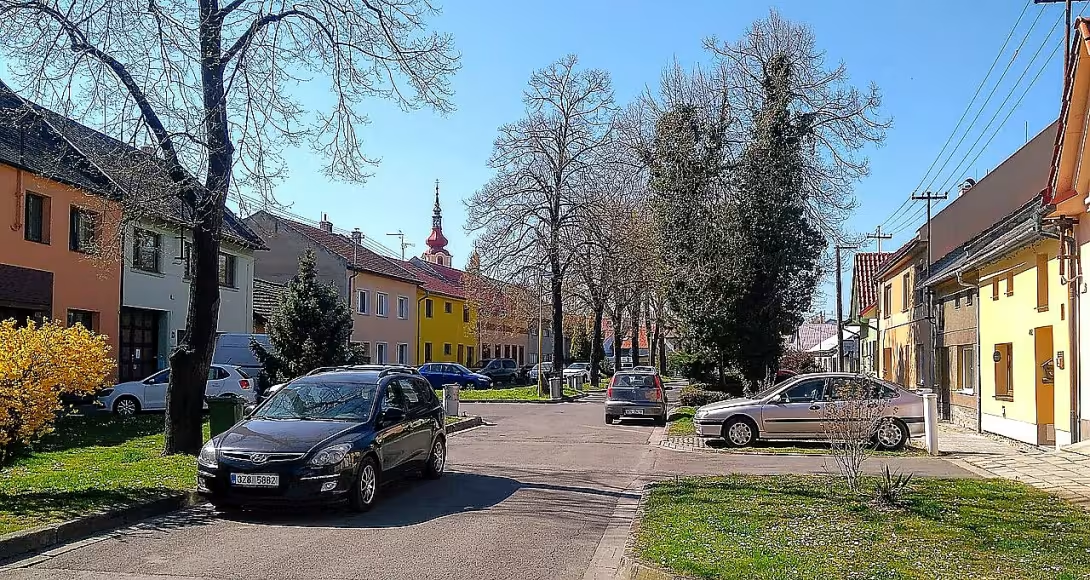
Žabínek (the German Killer) was a former suburb of Hulína in the Kroměříž district and formed a separate cadastral territory until 1900. The suburb was formed on the left bank of the river Rusava where the river Žabínek (formerly also called Žabinec) flows into it. The Hulín itself spread out on the right bank of Rusava, or on the island that created the confusion of the river and its shoulders.
The original road leading the town in the north-south direction (today's Postal and Zahlská street) was probably originally passed by the church of St. Wenceslas and continued south via Žabínek, where Havlíčkov Street later settled. The suburban development was very modest. In the first third of the 19th century, Havlíčkov Street, the later Kostelní Street and several houses on the west side of Zahlín Street between Rusava and the southern intersection with Havlíčková were mainly located here. The boundary of the cadastral territory was clearly defined: the road to Zahlinic (today Zahlská street) in the east was formed by the river Rusava.
Industrial development came during the 19th century. In 1863, the first sugar factory was founded here, which was connected by a train to the Hulín railway station. Half a century later, in 1910, a second sugar factory was built, which lay significantly south and also had its own train to the railway.
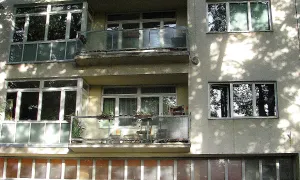
A town cemetery was established south of Žabínek, around which a panel settlement was built in the second half of the 20th century. The suburb itself ceased to exist as a separate whole in 1900 when its cadastral territory was abolished and attached to Hulín. Nowadays Havlíčkov, Kostelní and Zahlorská are part of Hulína.
Historical milestones
- 1863
- The establishment of the first sugar factory and the beginning of industrial development of Žabínek.
- 1900
- Cancellation of the separate cadastral territory Žabínek.
- 1910
- The foundation of the second sugar factory.
Architectural development
Originally it was a small settlement with several houses along Havlickova and Kostelní street. In the 19th century it developed as an industrial place thanks to sugar makers. In the second half of the 20th century it disappeared as a separate residence and its territory was converted into a panel estate.
Historical events
- 1863
- The establishment of the first sugar factory in Frog, which was connected by a train to the Hula station.
- 1900
- Cancellation of the separate cadastral territory Žabínek and its integration into Hulína.
- 1910
- The foundation of the second sugar factory in Frog.
Points of interest
- Žabínek was a separate cadastral territory until 1900 when it was merged with Hulín.
- The original road led by Hulín originally passed through Žabínek, where Havlicka Street later settled.
- In the first third of the 19th century there was only a modest development - Havlíček Street, the germ of Kostelní Street and several houses near Zahlská Street.
- In 1863, the first sugar factory was founded here, connected by a train to the Hulín railway station.
- In 1910 a second sugar factory was built south of Žabínek, also with its own train to the railway.
Guide
This guide is narrated by a synthetic voice generated by artificial intelligence.
Show guide text
This text was created by artificial intelligence and has not been editorially reviewed. It may contain inaccuracies.
Welcome to Frog, the small but significant suburb of Hulín.
You are standing in a place where more than a hundred years ago water, work and history met. In front of you is the area that once belonged to a separate Frog - a small residential unit on the left bank of the river Rusava, where the river Žabínek flows. Notice how the natural and human footprint intertwine here: where rivers meet, a place has emerged that has become an important centre of industrial life. Even though there are only traces of him today, his history is alive and full of stories.
Let's see how Žabínek became a place that affected the entire Hulín. In 1863 the first sugar factory was built here - it was the beginning. The sugar factories, which have subsequently grown here, have been linked by tugs to the Hulín railway station, which enabled the transport of raw materials and finished goods. Thanks to this, Žabínek became a living place where people from all around met. In 1910 a second sugar factory was built, which further strengthened its economic importance. Notice how these places, even though they no longer exist, left a mark in Hulína's memory - for example, in the streets that bear the names associated with this place.
Now pay attention to what's left of the Frog. Although there are no more sugar factories themselves, their influence can be seen in the surrounding buildings. The original road that led Hulín originally passed through Žabínek. That's where Havlíčkov Street was settled later - one of the first streets that was established here. In the first third of the nineteenth century there was only a modest development, but over time Žabínek developed. In 1900, Žabínek was merged with Hulín, so it became just a part of the city we know today.
Žabínek was a separate cadastral territory until 1900 when it was merged with Hulín. That means the people here had their own governance, their own rules, and their own lives. Imagine what it must have been like - a small suburb with its own people, its own businesses and its own traditions. Although Žabínek no longer exists as a separate place, its history is an integral part of Hulína's history.
Now look around you and try to perceive the atmosphere of this place. Although there are no more remnants of the original buildings, you can imagine how people used to work here, how sugar-beet trains rolled in here and how sugar was produced here, which was being distributed across the country. Žabínek was a place where human efforts and natural beauty met - and that's what made it so special.
One of the most interesting things about Frog is that it was a separate place for only a short time - only 40 years. And yet during this time he became an important center. How could it be? How did a small settlement become a place that affected the entire region? These questions remind us of how fast history changes and what traces people who live and work here leave.
Let's look at one of the key events that took place here. In 1863 the first sugar factory was built - it was the beginning of industrial development of Žabínek. The sugar factories were connected to the station in Hulín, which enabled the transport of raw materials and finished goods. Thanks to this, Žabínek became a living place where people from all around met. Imagine what it must have been like - the trains that brought the beets here, and then they took the sugar. That was the life that was once here.
Now think about what it was like to have your own cadastral territory. Žabínek was a separate place with its own people, its own businesses and its own traditions. Although it no longer exists today, its history is an integral part of Hulína's history. And that's what reminds us that every place has a story, and this story is important.
The last thing we want to show ourselves is how Žabínek changed over time. In the first third of the nineteenth century, there was only a modest development - Havlickova Street, Kostelní Street germ and other small houses. But over time, Žabínek developed until it became an important centre of industry. And when he was merged with Hulín in 1900, his history became part of the history of the entire city.
Although Žabínek is no longer a separate place, its history is still alive. You can see them in the streets of Hulína, which bear the names associated with this very place. You can imagine how people used to work here, how trains rolled in and how sugar was made here. And that's what makes Žabínek so special.
Before we say goodbye, I want to tell you that the history of Frog is a story of human work, effort and innovation. It was a place where people met, where important things were made and traditions were created. And even though there are only traces of him today, his history is an integral part of Hulína's history.
If you like the stories that have taken place here and you want to learn more about the history of this place, I suggest you visit other interesting places in Hulín. History here is full of surprises, and every corner has a story. Wherever you look, you will meet the people who lived and worked here - and their stories are what make this area so unique.
Thank you for stopping by the Frog. I hope his history has given you a new perspective and that you will want to learn more about the history of this place. Whether you walk Hulín or look at other interesting places, remember that every corner has a story - and this story is unique.
Tips for visitors
{'paragraph': 'The best time to visit Frog is in spring or autumn when nature is around the most beautiful and the traffic is lower. In summer there is a pleasant environment due to the proximity of the river Rusava, but on weekends the place can be busier. In spring you can see the blooming surroundings and in autumn green tones of nature that create picturesque scenery. In winter Žabínek is calm, but some parts may be inaccessible due to snow or ice.', 'reason': 'This time is ideal for a peaceful walk and observing nature without crowds of tourists.'}
{'paragraph': 'Parking is possible in the vicinity of Žabínek, a specific place it is advisable to find out in advance on the official site of the monument. Transportation here is possible by car on local roads that lead from Hulína. If you arrive by public transport, it is recommended to use the bus connection to Hulína and continue from there on foot or by local means of transport. Find out the current connection and routes in the traffic search engine.', 'reason': 'Žabínek is not directly connected to public transport, therefore it is better to arrive by car or agree on a common transport.'}
{'paragraph': 'When visiting, wear a comfortable shoe because most of the site is accessible only by walking on natural roads. It is also appropriate to take a map or navigation because some paths may be less marked. In spring and autumn, pack warmer clothes, while in summer and winter, prepare protection against the sun or cool wind. Don't forget also enough water and perhaps a picnic basket if you want to take advantage of a quiet place near the river.', 'reason': 'Nature and historical sites require preparation for various weather conditions.'}
{'paragraph': 'Photography is very pleasant on Frog, especially in sunny weather in the morning or afternoon when light creates soft shadows. The best places for photos are around the confluence with the Žabínek stream and the banks of the river Rusava, where there is a picturesque scenery. If you want to capture the history of the site, focus on older houses and natural formations that are typical of this location. Always check in advance whether photography is allowed in specific places.', 'reason': 'Natural light and historical elements create unique compositions.'}
{'paragraph': 'The town of Hulín with the church of St. Wenceslas is worth visiting around five kilometers from the place. Another interesting thing is the town of Záhlinice, which is connected with the historic road Záhalinic street. Here you can see old houses and historical monuments. If you have time, go to the river Rusava, which forms a natural boundary and offers beautiful views and opportunities to relax.', 'reason': 'These places are easily accessible and offer other historic and natural attractions.'}
{'paragraph': 'For families with children, Žabínek is a great choice thanks to natural paths and possibilities of exploring the surroundings. Children can play here by the river Rusava or discover natural formations around the confluence with the river Žabínek. In Hulín, which is nearby, you will also find children's playground and other activities. It is recommended to take with you games or small tools for the trip so that children have something to do. Always make sure the children are safe and don't go far away from you.', 'reason': 'The natural environment and the proximity of other activities make the visit Frog fun for the whole family.'}
Frequently asked questions
Is Žabínek open to the public?
Yes, Žabínek is open to the public. The tour is possible during weekdays from 9: 00 to 5: 00.
How do I get to the place by car / public transport?
Žabínek is located in the centre of Hulína, so it is available by car or by city transport (public transport). You can park in front of a monument or nearby.
How much is the entrance fee and is it paid on the spot?
Payment is only possible in cash.
Is the tour suitable for children and seniors?
Yes, a tour of Frog is suitable for all age groups. The monument has accessible premises and exhibition exhibitions are also suitable for families with children or seniors.
How long does the tour take?
The Frog Tour takes about 1 hour. However, you can also see exhibition exhibitions and other parts of the monument that are accessible throughout the opening hours.
What are the opening times and booking is required?
The Žabínek is open daily from 9: 00 a.m. to 5: 00 p.m. Reservation is not necessary, but prior contact with the monument is recommended when visiting larger groups or organized tours.
What's interesting in the immediate vicinity?
In the immediate vicinity of Žabínek there are other historical monuments such as St. Nicholas church or Hulín castle. You can also see the local parks and squares.
For kids
Imagine going back to when Žabínek was a small suburb in Hulín. It was like a game where you were the lead hero and you had the opportunity to discover the secrets of the past.
Žabínek used to be a place where people lived and worked in fields and forests. They were mostly peasants and craftsmen trying to make a living. The room was full of life and energy, as if there were some big festivities.
Businesses nearby
Do you run a restaurant, accommodation, shop, museum, rental, wellness or other visitor service near this monument? Show yourself directly to the people heading to it — this is how they will see you in the app and on the web:
Events nearby

Zdroj akcí: otevřená data měst a obcí ČR (Národní katalog otevřených dat) a kalendář akcí Národního památkového ústavu.
Nearby
In the vicinity of Žabínek is the river Rusava, which forms a natural border with Hulín. The town of Zahlinika is also nearby, which is connected to the historic road of Zahlinic Street. There are other historical and natural sites within a 5 km radius such as Hulín with St. Wenceslas church and surrounding forests and fields.
Accommodation nearby
Trips and activities nearby
Guided tours, tickets and activities nearby from GetYourGuide
Affiliate link: if you buy from the partner, we may receive a commission. The price for you does not change.
Search tours and activities →Themed route
Thematic cruise route Žabínek - Hulín
1. Žabínek (seat unit) * Type: * History and folk architecture * Why? * A unique example of a desolate village settlement with preserved remains of the estate and tradition. The visit offers a view of preserved folk culture and nature in historical context.
2. Church of St. Wenceslas in Hulín * Type: * Baroque sacral monument Why? Around 1 km from Žabínek is this picturesque church with richly decorated interior. It is a symbol of local history and an ideal place for a short rest while walking.
3. Natural surroundings of the river Rusava * Type: * Natural walk * Why? * The river forms a natural boundary between Frog and Hulín. The local surroundings offer peaceful paths along the water, ideal for relaxation and nature observation.
4. Záhinická street (historic road) * Type: * Cultural trail * Why? * Connects Hulín with Záhalinii and represents part of historical communication. A walk across it reveals the remains of old roads and connections with surrounding villages.
The route is designed to combine history, nature and local culture in logical order.
Seasonal recommendations
Spring In the spring months, Žabínek awakens to life after winter calm, when the surrounding meadows and fields begin to green and the air fills with the delicate aroma of flowery trees. The particular attraction is the local nature, where old fruit orchards and picturesque gardens are spread among historic buildings, which flourish in May. The light of the sun is still mild but sufficient to give the monument warm, golden shades, especially in the morning and afternoon. It is recommended to visit in March or April when there are fewer tourists than in the summer months, and nature offers a calm atmosphere. The clothes are suitable layered - the morning and evening are cold, while the noon can be pleasantly warm. The best time is early in the morning when the monument avoids the hustle and bustle and it is possible to explore detailed architectural elements without disturbing crowds.
Summer The summer visit to Frog brings sunny but often hot days, when the historical residential unit turns into a lively area full of life. The surrounding landscape is green and fertile, with field crops and flowering meadows that create contrast with stone walls of monuments. The light is intense and therefore it is preferable to look at detailed sculptures and building elements in the morning when the sun is not yet too hot. In the main summer season it is recommended to come early in the morning to avoid crowds that often gather in the afternoon. Clothes should be light, airy and protect from the sun, ideally with a hat and sunglasses. Water and protective cream are essential, especially for longer stays outside.
Autumn Autumn brings a unique atmosphere to Frog, where the surrounding nature turns into a palette of orange, red and yellow shades. Forests and fields are colored in warm tones that are reflected in historic buildings that gain a touching, nostalgic mood. The light is softer than in summer, but still clear enough to see the details of the monument. In September and October there is a calmer time when tourists avoid heat and crowds. It is recommended to visit in the morning when the air is fresh and the temperature is pleasant. Clothes should be warm but not too heavy because autumn weather can be variable - from sunny days to rainy moments. In November, especially in advent time, the monument can become a resting place where local and visitors prepare for winter.
Winter Winter Žabínek offers a unique, quiet atmosphere, where the historic residential unit turns into a picturesque scenery covered with snow and ice. The surrounding landscape is white and quiet, with bare trees that create contrast with stone walls and roofs. The light is weaker, but the winter sun gives the memory a fine silver shine, especially in the morning. In December and January there is a minimum number of visitors, which allows for a tour without rush. It is recommended to visit in the morning when the light is the most beautiful and the temperature is still tolerable. Clothes should be warm, laminated and protected from wind and snow - solid shoes and gloves are also recommended. The opening hours of the monument are usually limited in winter, so it is advisable to inform yourself about specific hours in advance.
Visualizations and artistic views


The visualisations are generated by artificial intelligence and serve as inspiration.
Photos from the area
Real photos taken near the monument


Zdroj a licence jsou uvedeny u každého snímku.
Atmosphere of the place
This atmospheric visualisation of the place and period was generated by artificial intelligence. It is not real footage of the location.
Tips from visitors
No tips yet. Be the first!
Log in and add your tip.
Sources and literature
Fotografie: Patka / CC BY-SA 4.0 — Wikimedia Commons. The author and licence also appear when you hover over the image.
Faktickým podkladem tohoto textu byl článek na Wikipedii, jehož autory jsou přispěvatelé Wikipedie. Článek je dostupný pod licencí CC BY-SA 4.0.
Location on the map

Příběhy a pověsti
Legendy, pověsti a příběhy spjaté s touto památkou

Fotografie návštěvníků
Zatím žádné fotografie. Buďte první, kdo přidá fotografii z návštěvy!
Přihlaste se a přidejte svou fotografii nebo hodnoťte.
Za ověřenou návštěvu v aplikaci získáte víc bodů — poznáme podle GPS, že jste na místě.
Reviews and comments