






Dům House
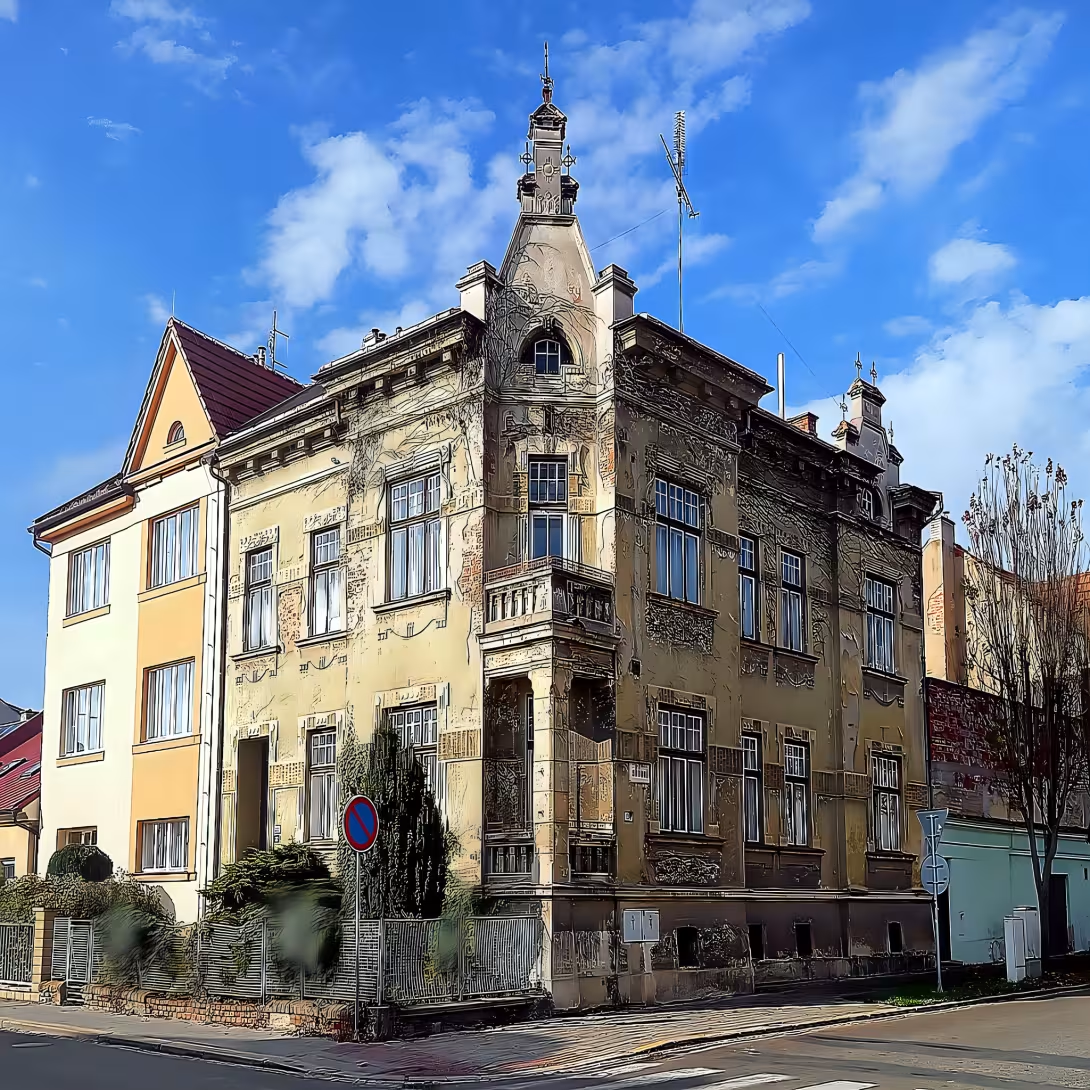
Dům is one of the most basic human needs and is a construction designed primarily for housing. Although it may also serve various other purposes - from production and storage to administrative functions - its primary purpose remains to provide housing. Dům and the apartment strongly influence domestic life and reflect the customs and demands of a certain time and society.
The word house has deep roots in Indonesian languages. The Czech and Slavic word relates to the Greek domos, the Latin domus and the ancient Indian lady - all derived from the Indo-European root dem- which means to build. The development of houses throughout history was closely linked to climate, landscape and available materials. In warm climates, traditional dwellings were built from clay and often had a round plan, covered with leaves. On the other hand, rectangular or square buildings of wood, stone or brick were typical in colder regions. Many of these northern houses were deliberately embedded partly into the country - the so-called grounder or semi-grounder - which ensured better thermal insulation.
The building of the house traditionally consists of several basic elements. On the foundations are the perimeter walls and roof, which together protect the interior of the building. One of the most visible elements is the facade - the wall facing the street, which is decorated differently. Free-standing houses, especially in the countryside, often stand alone in the garden or form rows (row houses). The city houses come together and creatively long queues along the streets and squares, they have several floors separated by ceilings as well as cellars underground. The interior is divided into individual apartments and rooms for different purposes.
The selection of building materials depends on local conditions and climate. In the warm regions, dirt and bricks prevail, in the northern regions wood, stone or bricks are used. In a newer history, concrete and new matter have spread like poroconcrete. The materials are often combined - traditionally it was a wooden construction with a covered or brick filling, so-called paved houses; today is commonly used concrete or steel skeleton with brick lining. The roofs have traditionally been covered with straw, wood shingles, ceramic bags or stone shale; Metal was also used. Modern houses have flat roofs without a roof, made up of concrete prefabricates with a hydroinsulating layer. Home bases are concrete these days, and they have to reach deep into the ground that doesn't freeze. Bigger buildings are underground, while tower houses and skyscrapers have very deep foundations with steel or concrete pilots.
In modern times, building houses is governed by special laws and regulations aimed at ensuring safety, hygiene and privacy. The present house includes complex installations and wiring - electricity, water, gas, sewerage, central heating and air conditioning - which can account for a significant part of the total construction costs. The emphasis also increases on insulation, both against moisture at bases and in cellars, and on thermal insulation of perimeter walls, soils and roofs, which is essential for energy saving. Isolation properties also play an important role in windows and doors.
The type of house and its appearance vary strongly according to culture and its customs, according to climate and landscape as well as according to available building materials and technologies. In colder climate zones, the house is significantly more important for human comfort and survival than in warm regions, where it is mainly outdoors. Where people spend more time inside houses, their demands for quality and care of the building are significantly higher. Dům thus retains its fundamental purpose throughout history - to provide shelter and reflect what needs and values it admits to the times and society.
Then and now
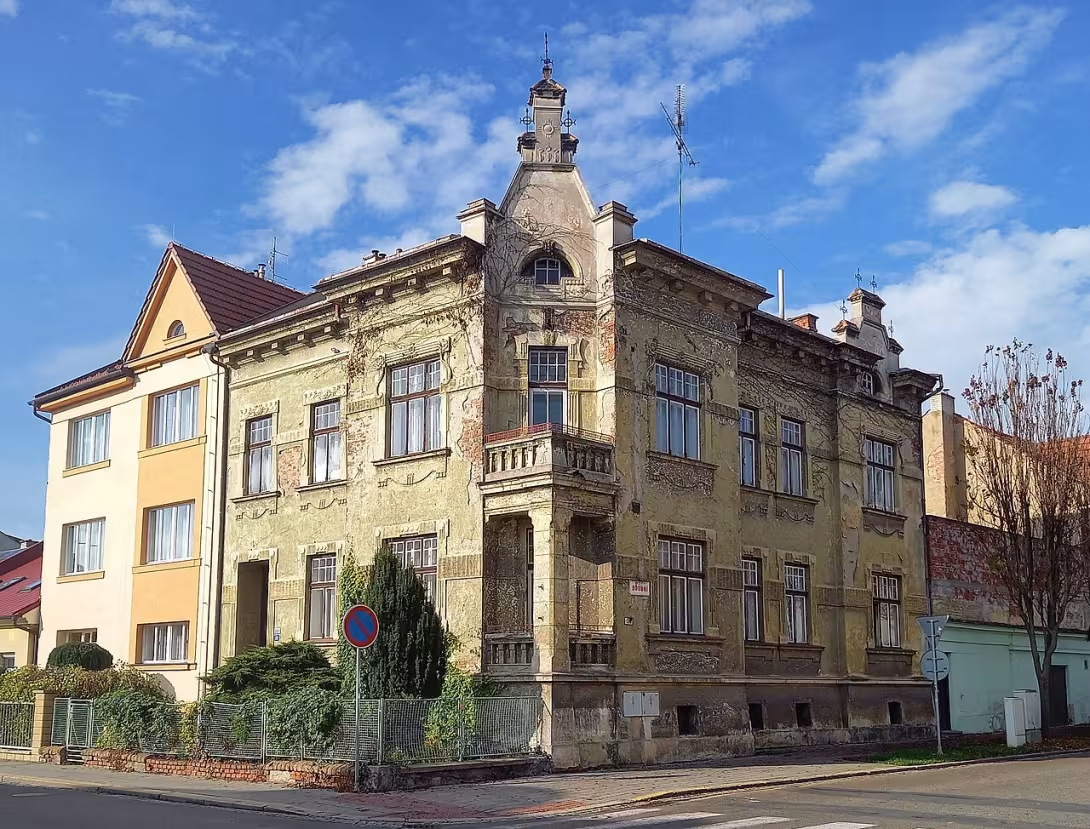
Drag the slider to compare how the landmark may have looked when it was built with the view today.
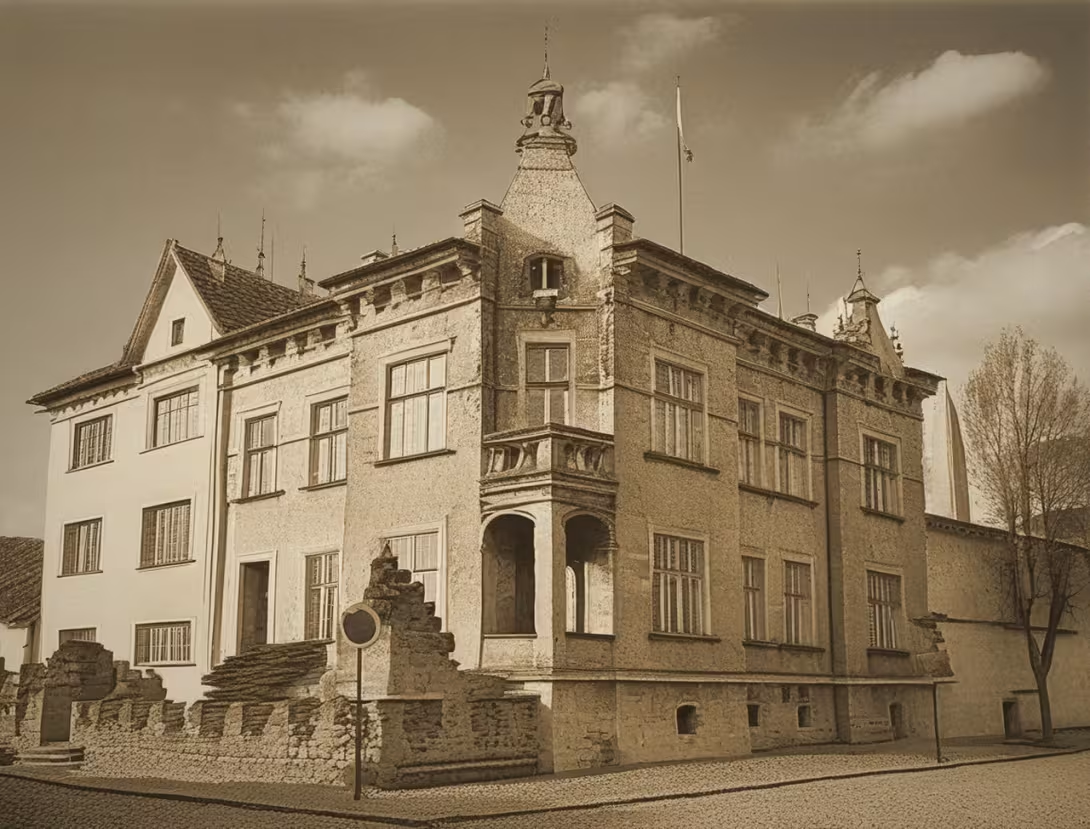
The historical appearance on the left is an AI-generated visualisation and serves as inspiration only.
Historical milestones
- historicke zalozeni
- The creation of a house as a sidelni building; the specific date will be found on the specific object.
- 17.-18th century
- Baroque or Classicist right on the facade; characteristic of the ornament of the time.
- 19th century
- History or Art Nouveau; upgrading the interior; pripojeni k novym siti (water supply, electricity).
- 20th century
- Promenades of usivani; often rebuilding on more apartments or commercial sites.
- 1945-1989
- Marked buildings; the communist administration often left buildings without repairs.
- po 1989
- Privatization; recovery; the registration as cultural mother; possible grant for reconstruction.
Architectural development
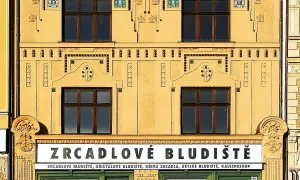
Dům was built in the spirit of a playful Wagner Art Nouveau, a style known for its ornamental and decorative approach. This architectural direction appeared at the end of the 19th century as a response to academia and stressed the individuality and artistic use of materials.
Owners
The sequence of owners with years if available, otherwise zero.
Points of interest
- Dům is one of the most basic human needs and is a construction designed primarily for housing. - The word house has deep roots in the Indo-European languages, related to the Greek domes, the Latin domus and the ancient Indian lady - derived from the Indo-European root dem- which means to build. - The development of houses throughout history was closely linked to climate, landscape and available materials. On the other hand, rectangular or square buildings of wood, stone or brick were typical in colder regions. - In modern times, building houses is governed by special laws and regulations aimed at ensuring safety, hygiene and privacy. The contemporary house includes complex installations and wiring - electricity, water, gas, sewage, central heating and air conditioning. - The emphasis also increases on insulation, both against moisture at bases and in cellars, and on thermal insulation of perimeter walls, soils and roofs.
Guide
This guide is narrated by a synthetic voice generated by artificial intelligence.
Show guide text
This text was created by artificial intelligence and has not been editorially reviewed. It may contain inaccuracies.
Welcome! You are faced with a unique example of the playful Wagner Art Nouveau, house No. 1251 in the beautiful city of Kroměříži. Let's move on to its historical context. Dům is located on the corner of Havlickova and Judicial, and its architectural style reflects cultural influences in the late 19th century.
Notice his aesthetics and design, which is characteristic of this style. Dům served as a residential building but also contributes to the historical and architectural character of the city of Kroměříže.
Let's move on to interesting details. Dům is one of the most basic human needs and is a construction designed primarily for housing. The word house has deep roots in Indo-European languages, related to the Greek domos, the Latin domus and the ancient Indian lady - derived from the Indo-European root dem- which means to build.
Dům No. 1251 is only one of hundreds of houses in Kroměříži, but its unique architectural solution makes it exceptional. Look at the facade and feel the atmosphere that comes out of it.
Dům No. 1251 is just one of many historical houses in Kroměříži, but its unique style and design makes it special. You stand before him and you can see how his architecture blends with the history of the city.
I take the invitation to explore again and say goodbye.
Tips for visitors
The best time to visit a house on Havlickova Street in Kroměříži is a spring or autumn season when the weather is pleasant and sunny. These months offer ideal lighting conditions for a photograph that captures the unique aesthetic of the Wagner Art Nouveau.
For those who prefer public transport, Kroměříž is well connected to the surrounding areas; current connection and options can be found in the online search engine. Dům is easily accessible by foot, which is ideal for a short walk around the city.
When visiting, remember the camera or mobile phone with a good camera. The best places for photography are the gardens and streets around the house, especially at noon, when the light is fine and sunny shadows deliver depth to the images.
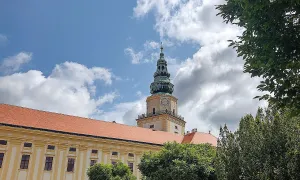
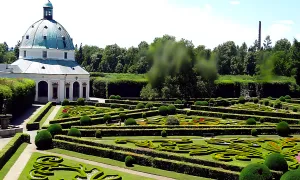
In the vicinity of the house you can visit the historical memory of Kroměříž Castle, located in a five-minute walk. The castle offers a rich history and a beautiful garden is an ideal place to relax after exploring the architectural details of the house.
For families with children, Kroměříž is a friendly goal where they can enjoy not only history and architecture, but also parks and amusement parks nearby. Dům on Havlíčkov Street is safe for children and offers an opportunity for parents and children to become familiar with the architectural history of the village.
Frequently asked questions
Can the monument be visited?
This is a residential or farm building, not a museum with opening hours. Please view it from public space and respect the owners' privacy. We have no information about access to the interior.
Where is the monument?
Location: Havlíčkova 1251/22, Kroměříž, Zlínský kraj. The map on this page shows the exact spot.
Why is the monument protected?
It is listed in the Central List of Cultural Monuments of the Czech Republic as a cultural monument (register no. 106967).
For kids
Businesses nearby
Do you run a restaurant, accommodation, shop, museum, rental, wellness or other visitor service near this monument? Show yourself directly to the people heading to it — this is how they will see you in the app and on the web:
Events nearby
Zdroj akcí: otevřená data měst a obcí ČR (Národní katalog otevřených dat) a kalendář akcí Národního památkového ústavu.
Nearby
Ambient landscape, other monuments, natural elements up to 5 km or zero.
Accommodation nearby
Trips and activities nearby
Guided tours, tickets and activities nearby from GetYourGuide
Affiliate link: if you buy from the partner, we may receive a commission. The price for you does not change.
Search tours and activities →Themed route
Route: Kroměříž - Baroque city
1. Dům - baroque house, which is part of the Baroque garden complex and there is an exhibition about the history of the city Kroměříže. 2. Kroměříž Garden - Baroque Garden, which is part of the Baroque Garden complex and offers beautiful views of the city of Kroměříž. 3. Kroměříž - Church of St. Morice - Baroque church, which dominates the city of Kroměříže and is worth visiting for its beautiful architecture and artistic values. 4. Kroměříž - castle - Baroque castle, which is the seat of the district office and offers visitors the opportunity to visit the interior and courtyard. 5. Kroměříž - park - park, which is part of the Baroque garden complex and offers peaceful walks and beautiful views of the city Kroměříž.
Seasonal recommendations
Spring
Spring is the perfect time to visit Dům (house) in Kroměříži because nature is in full bloom. Around the house is a beautiful park, which is full of different kinds of flowers and trees. The atmosphere is relaxed and peaceful this time of year, allowing visitors to fully enjoy the beauty of the historic house and its surroundings. We recommend visiting the house in early spring weather, when relatively few people are still open, so you can see the interiors without large crowds.
Summer
The main summer season is in the city of Kroměříži in great bloom and therefore it is necessary to visit Dům (house) before too many people get here. We recommend visiting the house in the early morning or late afternoon, when relatively few people are open and you can see the interiors and the park without large crowds.
Autumn
In autumn is Dům (house) in Kroměříži surrounded by beautiful color falling leaves of trees. The atmosphere is calm and relaxed this time of year, allowing visitors to fully enjoy the beauty of the historic house and its surroundings. We recommend visiting the house in late autumn, when the opening time is shorter, so you can see the interiors and surroundings without large crowds.
Winter
Winter is the best time to visit Dům (house) in Kroměříži if you like quiet and quiet environment. In winter the house is open limited time, but the tours are less disturbed than in other seasons. We recommend visiting the house in the early morning or late afternoon, when relatively few people are open and you can see the interiors and the park without large crowds. Do not build up your warm clothes because it is quite cold in winter.
Visualizations and artistic views


The visualisations are generated by artificial intelligence and serve as inspiration.
Photos from the area
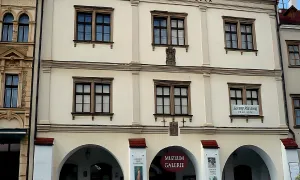
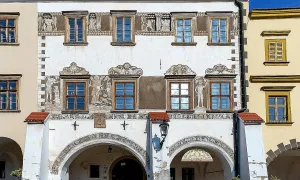
Real photos taken near the monument


Zdroj a licence jsou uvedeny u každého snímku.
View from the area
This animation was generated by artificial intelligence from a real photograph of the surroundings. The motion and details are not real footage of the location.
Atmosphere of the place
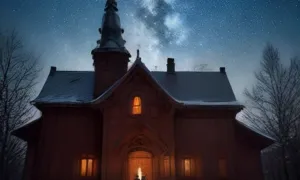
This atmospheric visualisation of the place and period was generated by artificial intelligence. It is not real footage of the location.
Tips from visitors
No tips yet. Be the first!
Log in and add your tip.
Sources and literature
Photos: Patka / CC BY-SA 4.0, rozlišení zvýšeno umělou inteligencí — Wikimedia Commons. The author and licence also appear when you hover over the image.
Location on the map
Příběhy a pověsti
Legendy, pověsti a příběhy spjaté s touto památkou
Fotografie návštěvníků
Zatím žádné fotografie. Buďte první, kdo přidá fotografii z návštěvy!
Log in a přidejte svou fotografii nebo hodnoťte.
Za ověřenou návštěvu v aplikaci získáte víc bodů — poznáme podle GPS, že jste na místě.
Reviews and comments