






Muzeum Kroměřížska Museum
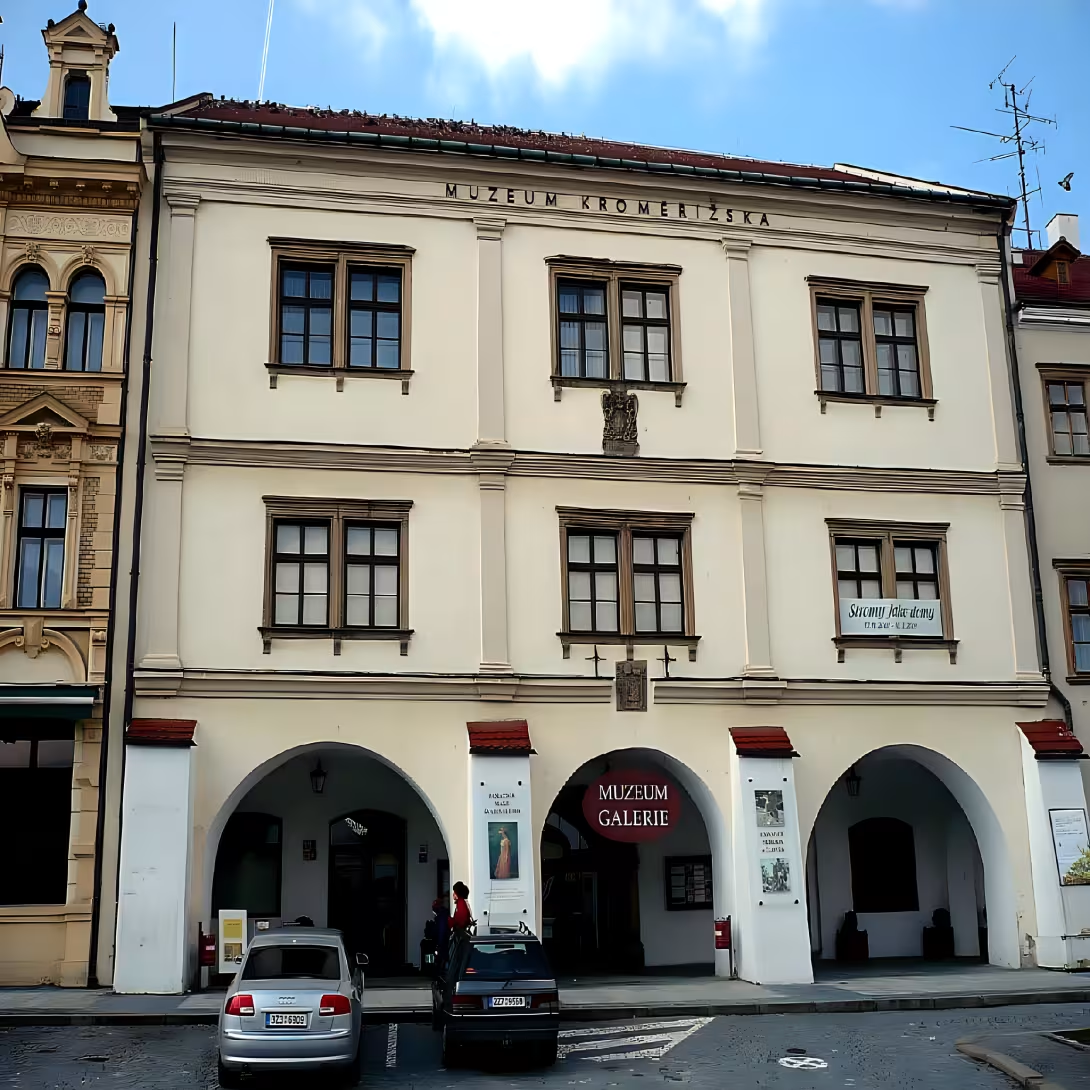
Muzeum Kroměřížska is a direct successor to the City Museum in Kroměříži, founded in 1933. It has its current name since 1976 and has been a museum of district with management of several locations. In addition to the Kroměříž expositions, he manages the Museum in nature in Rymice with local fortress, economic court and two windmills. The museum collections cover the fields of archeology, history, letters, history of art and natural sciences.
The road to the museum was long and full of failures. The first attempts to establish a museum institution appeared in the 1960s, but they were not fulfilled. Even in 1886, when local collector Hampl donated thousands of coins to the museum in the Austrian Linz, the situation was not marked. Similarly, the experiment of college students from 1889 ended. The breakthrough comes only in the 1990s, when the lawyer Josef Dozal is active. In September 1894 he organizes a national exhibition in Kroměříž, a year later he participates in the Hanáš department of the Národodopisné exhibition in Czechoslovak Prague. From these events, he keeps collected items - from costumes and embroidery to nature.
In December 1896 Museums and library unity arise, but it works properly in the library section. Since 1921, the castle librarian Antonín Breitenbacher has been collecting items for the Diocesan Museum in Kroměříž Castle; After his death, a part of the collection will get to the City Museum later. The real impetus for the museum is the purchase of mainly archeological collection of the book printer Jindli Slovák, which takes place in the late 1920s. The Slovak Republic shall ensure the proper storage of its articles by a financial reference. The teacher and writer Jindřich Pošil will move to Kroměříže, who together with his co-workers will be able to convince the city council of the need to establish the museum.
Kuratoriuo "City Museum in Kroměříži" is established on 5 February 1933 under the leadership of Kroměříž Mayor Josef Jedliček. Collection items are installed in the exhibition house on Rieger Square no. 144. The museum is open on March 4, 1934. In December 1935, the museum is described as a facility facing financial constraints and public indifference - only about a tenth of the citizens of Kroměříž have visited it since its foundation. In the 1930s, collections are enriched mainly thanks to the gifts of museum and city friends.
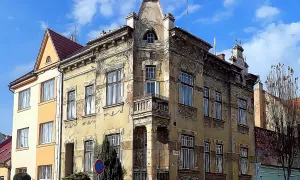
World War II has significantly disrupted the museum. In 1940, the Gestapo confiscated the "World War and National Liberation" department with Legionnaire monuments. Although the activity was limited, the museum continued to operate and held exhibitions. It is closed in November 1943 and the objects are stored in an archbishop's granary near the Flower Garden. After the war, the collections are further enriched, especially by the confiscates from the equipment of the Kroměříž locks. The museum moves several times at the time, its management eventually settles in a house on the corner of Rieger Square and Shafaríková Street, the former building of auxiliary schooling.
Muzeum Kroměřížska thus presents a lively testimony about the history and culture of the region, whose visit allows you to explore not only diverse collections, but also an authentic environment in the Museum of Nature in Rymice.
Then and now
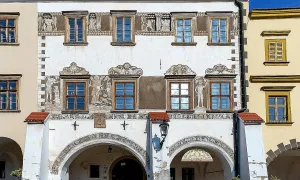
Drag the slider to compare how the landmark may have looked when it was built with the view today.
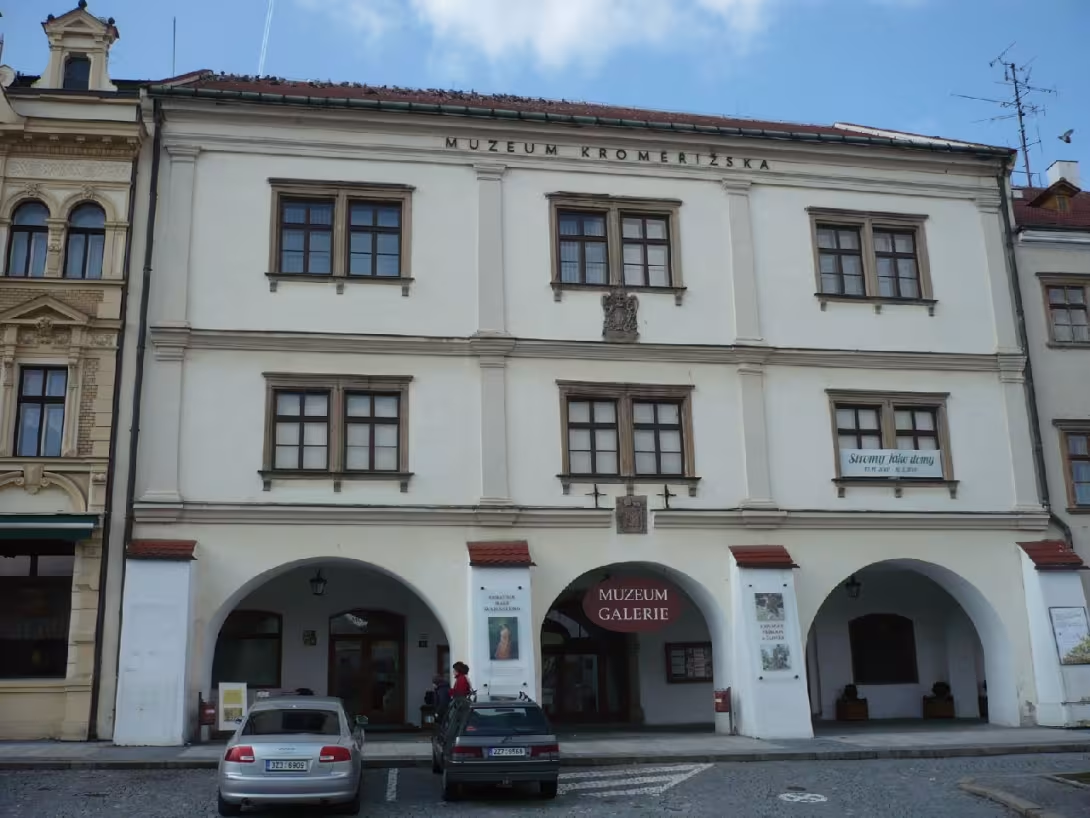
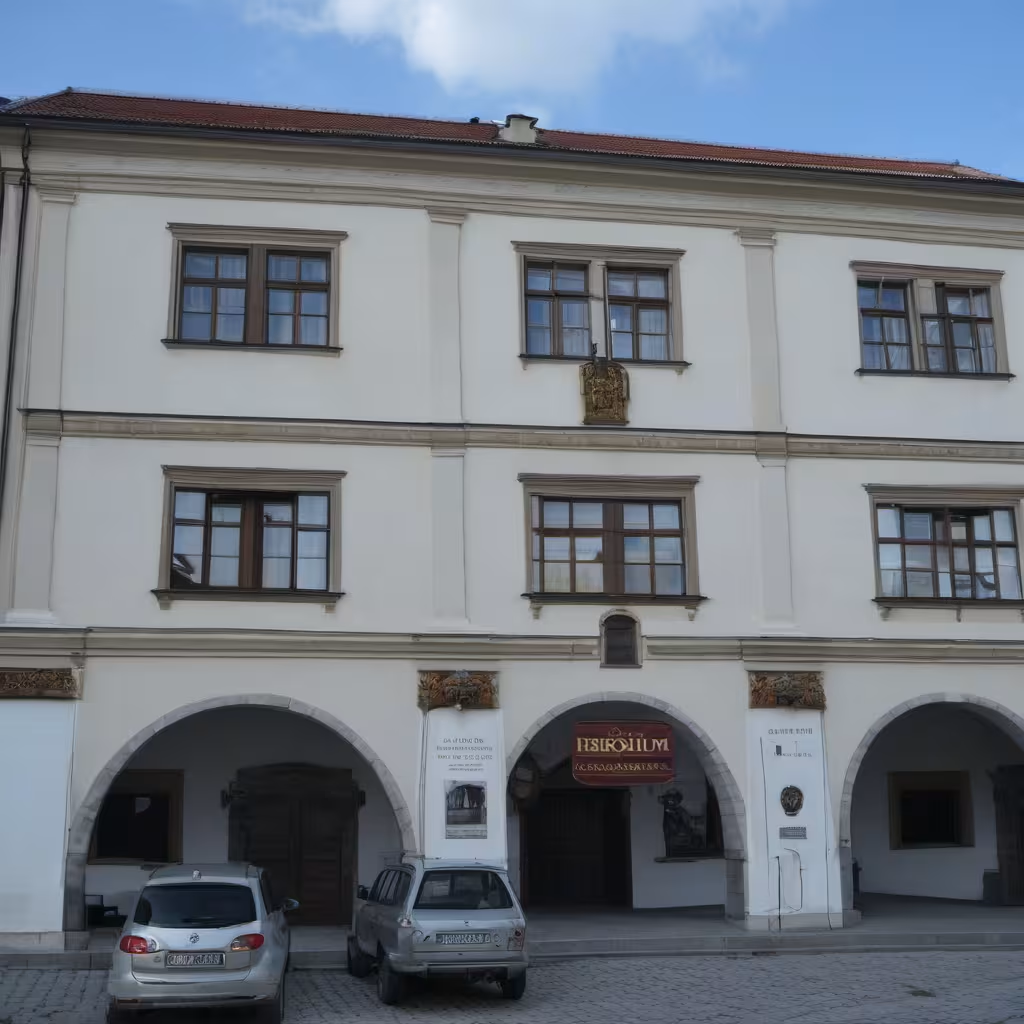
The historical appearance on the left is an AI-generated visualisation and serves as inspiration only.
Historical milestones
- 1934
- Opening the Museum in a house on Rieger Square.
- 1940
- The Gestapo is confiscating the Department of World War II and National Liberation.
Historical events
- 1933
- Establishment of the City Museum in Kroměříži.
- 1976
- The museum is named Muzeum Kroměřížska and becomes a district museum.
Owners
Muzeum Kroměřížska
Points of interest
- Muzeum Kroměřížska is a direct successor to the City Museum in Kroměříži, founded in 1933.
- It has its current name since 1976 and works as a museum of district with management of several locations.
- In addition to the Kroměříž expositions, he manages the Museum in nature in Rymice with a local fortress, an economic court and two windmills.
The road to the museum was long and full of failures. The first attempts to establish a museum institution appeared in the 1960s, but they were not fulfilled.
Guide
This guide is narrated by a synthetic voice generated by artificial intelligence.
Show guide text
This text was created by artificial intelligence and has not been editorially reviewed. It may contain inaccuracies.
Welcome to Kroměříži, a city full of history and beauty, which is brilliantly reflected in its institutions. You are facing an important cultural monument, the Museum of Kroměřížska, where every stone and every detail speaks of the rich past of the region. Look up at the facade of the building that assures you of its long-term activities as a roof for memory and knowledge.
Let's move on to the past. Muzeum Kroměřížska has roots dating back to the 19th century, but it was officially established as the City Museum in 1933. These efforts to preserve cultural memory have become a solid part of the local community and today Muzeum Kroměřížska is an institution that manages extensive collections in the fields of archaeology, history, letters and art. In 1934, the first museum opened at Rieger Square, which was the beginning of a long journey full of development and significant events.
Now pay attention to the architecture of the building. Although not known by its architects, it is clear that it was built with regard to functionality and aesthetics. Note the harmonious arrangement of facade and input elements that contribute to the overall impression of the museum as a place where the past meets the present.
The key personalities associated with this institution are Josef Jedlička and Jindřich Spáčil. Their work and influence helped shape the museum as we know it today. In 1940, there was a dramatic interruption of their efforts when the Gestapo forces seized the Department of the World War and National Liberation. This historic moment is a constant memory of the courage and determination that characterized many people associated with this institution.
The interesting thing about this monument is that Muzeum Kroměřížska is not just a museum in the traditional sense. Since 1976 it bears its current name and acts as a district museum with a vast administrative area which includes more sites. In addition to the Kroměříž exhibitions, the Museum also manages the nature of Rymice along with the medieval fortress and the economic court, providing visitors with a wide range of possibilities to explore the diversity of regional history.
The invitation for further examination is that Muzeum Kroměřížska is a direct successor to the Municipal Museum founded in 1933. This historical commitment adds a deep layered dimension to each exposure and every step of its pavement.
Allow me to invite you to explore this fascinating place again. Every exhibition, every object and every story waiting to open the door to the rich history of Kroměříže. I hope your visit will be full of revelations and inspiration. When you return home, you may be intrigued by the idea of how every step of these pavements contributes to preserving the memory of the region for future generations. Thank you for your visit and don't forget to note every detail that can present the history of Kroměříže before you.
Tips for visitors
The best time to visit the Kroměřížska Museum is the autumn and spring season when the weather is quiet and pleasant. This time of year offers ideal lighting conditions for viewing exhibitions and shooting interiors with a rich historical atmosphere.
Parking can be found near the museum, but we recommend the use of public transport or parking lots outside the center for a more comfortable access. You can find current information about parking possibilities and connections with public transport on the museum's official website.
When visiting, remember to bring your purse or laptop if you plan to record your impressions or use the interactive museum offers. It is also important to wear comfortable shoes and a suitable suit because walking around the museum can be challenging.
Photography in Museum Kroměřížska offers many opportunities. The best lighting conditions can be found in the exhibition halls during the noon hours when the sun's rays break through the windows and illuminate the artifacts. When photographing, also notice the details of the architecture of the building.
In the vicinity of the museum you can visit the castle Kroměříž, located just a few minutes walk from the center. It is an ideal place for families with children to enjoy parks and natural environments.
For kids
Imagine going back 93 years to when our cities looked completely different. When you haven't started school yet and your dad wasn't as old as he is today.
This is Kroměříž, a city full of history and secrets. And right here is a museum that tells you a lot of interesting things about what our city looked like thousands of years ago.
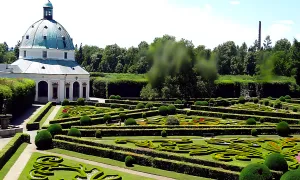
Kroměříž was once the royal city where King Ferdinand I lived, which was very rich and powerful. This king had a beautiful garden that was filled with water canals and fountains. And these channels were so wide that ships could sail in them.
Businesses nearby
Do you run a restaurant, accommodation, shop, museum, rental, wellness or other visitor service near this monument? Show yourself directly to the people heading to it — this is how they will see you in the app and on the web:
Nearby
Kroměříž, around castle and castle
Accommodation nearby
Trips and activities nearby
Guided tours, tickets and activities nearby from GetYourGuide
Affiliate link: if you buy from the partner, we may receive a commission. The price for you does not change.
Search tours and activities →Themed route
Thematic cruise route from Museum Kroměřížska
1. Main objective: Muzeum Kroměřížska
- Type: Historical museum and cultural monument - Why is it worth a visit: Muzeum Kroměřížska is the largest museum in the Moravian Museum, located in the famous palace complex. It is known for its rich historical exposure, which represents the life and culture of Kroměříže from the Middle Ages to the present. Visit its important courtyard with a Renaissance garden park, which is a beautiful opportunity for relaxation and outdoor use.
2. Archbishop's Palace
- Type: Historical landmark - Why is worth a visit: Located in the same area as Muzeum Kroměřížska and is one of the most important architectural works in the region. The palace served as the seat of the Archbishops of Olomouc and its Baroque architecture attracts many visitors. Its interiors, especially former residential spaces with rich decorations, are the real treasure of history and art.
3. St. Nicholas Cathedral
- Type: Religious monument - Why is it worth a visit: This Baroque Cathedral is one of the most famous sacral buildings in Kroměříži. It is famous for its rich interior, which contains works of renowned artists and craftsmen. Visit her for the use of her peaceful space and see the important religious artifacts that are stored here.
4. Freedom Square
- Type: Public space - Why it is worth a visit: Central Square in Kroměříži, which is an ideal place for relaxation and sightseeing. It is surrounded by historical buildings and offers a view of the typical architecture of the city. The square is also a place of various cultural events and markets that bring life to the centre of Kroměříže.
5. Museum in the park
- Type: Historical park - Why is worth a visit: The park is part of the palace complex and offers a beautiful opportunity to walk between garden elements that are designed in the spirit of Renaissance architecture. It is an ideal place for relaxing and using nature, especially during the summer period.
This route offers a comprehensive view of the history and culture of Kroměříže through his most important monuments.
Seasonal recommendations
In spring, a visit to the museum is accompanied by awakening nature and fresh air. The flower trees around the monument create an optimistic atmosphere and the fine spring light highlights the details of architecture. We recommend to dress in layered clothes because the weather is usually variable. The best time to visit is in the morning, when the rooms are quiet.
The summer season brings intense sun and rich green landscape. The city is vibrating with energy and the atmosphere is very lively. Due to the main summer season, expect a larger number of visitors, so it is advisable to come as soon as opening. Choose light, breathable clothes and don't forget enough fluids.
Autumn is characterized by golden leaves and temperate temperatures. The light is softer in this period and creates a cosy, slightly nostalgic pattern in the museum. Moisture-resistant shoes and waterproof jackets are practical. It is ideal to plan a visit until late afternoon when the mood is quietest.
The winter is dominated by freezing air and sometimes snowy landscape, which gives the place a quiet and mysterious character. The inner spaces offer a pleasant shelter from the cold. Don't forget the warm thermal clothing and watch the shortened opening hours. A visit in advent time will give the whole experience a special charm.
Visualizations and artistic views


The visualisations are generated by artificial intelligence and serve as inspiration.
Photos from the area
Real photos taken near the monument


Zdroj a licence jsou uvedeny u každého snímku.
Atmosphere of the place
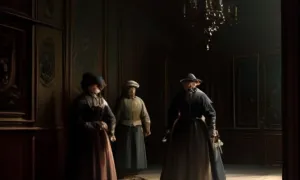
This atmospheric visualisation of the place and period was generated by artificial intelligence. It is not real footage of the location.
Tips from visitors
No tips yet. Be the first!
Log in and add your tip.
Sources and literature
Fotografie: Czech Wikipedia user Marzper / CC BY-SA 4.0, rozlišení zvýšeno umělou inteligencí — Wikimedia Commons. The author and licence also appear when you hover over the image.
Faktickým podkladem tohoto textu byl článek na Wikipedii, jehož autory jsou přispěvatelé Wikipedie. Článek je dostupný pod licencí CC BY-SA 4.0.
Location on the map
Příběhy a pověsti
Legendy, pověsti a příběhy spjaté s touto památkou
Fotografie návštěvníků
Zatím žádné fotografie. Buďte první, kdo přidá fotografii z návštěvy!
Přihlaste se a přidejte svou fotografii nebo hodnoťte.
Za ověřenou návštěvu v aplikaci získáte víc bodů — poznáme podle GPS, že jste na místě.
Reviews and comments