






Arcibiskupský zámek Kroměříž Chateau
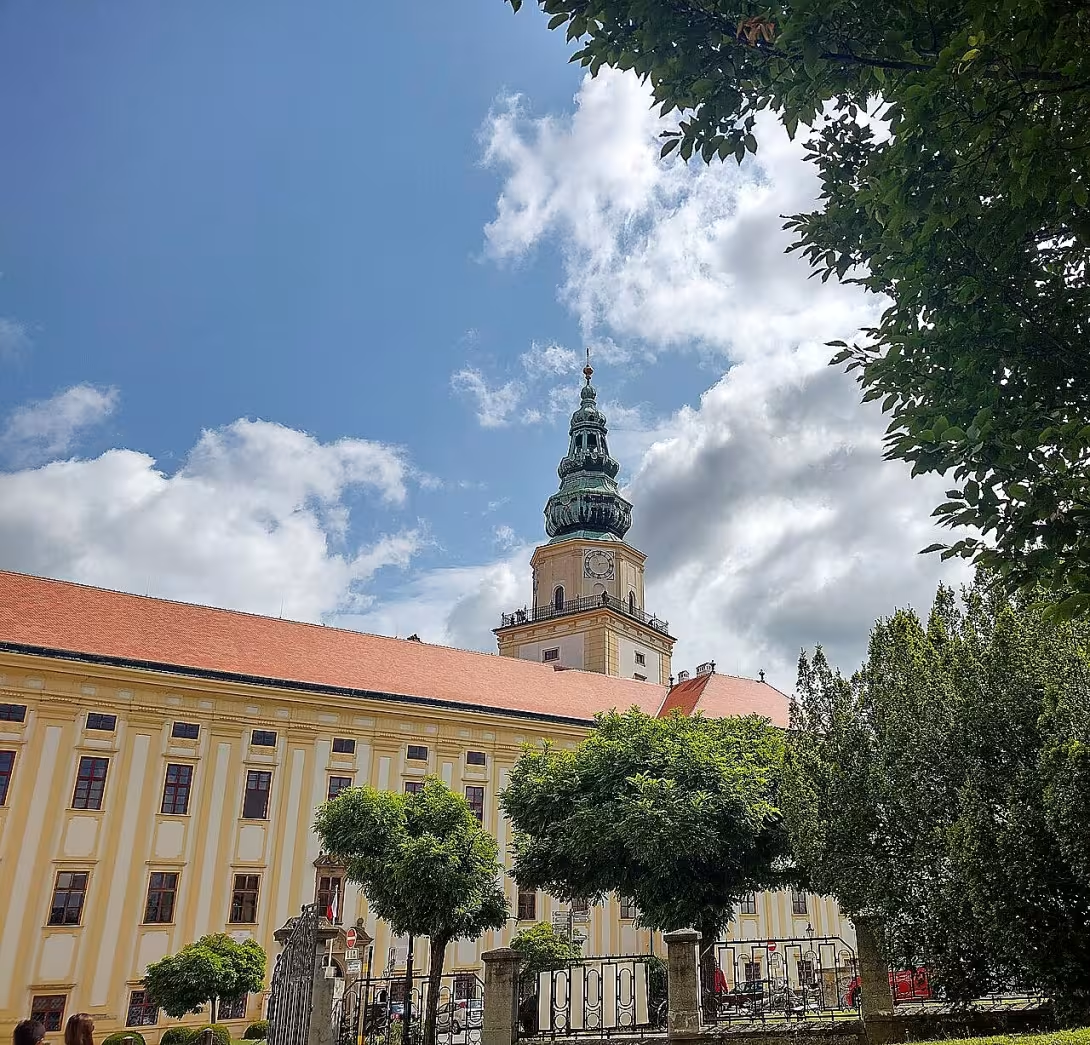
Archbishop's Chateau in Kroměříži is one of the most important sights of the Moravian region. Together with the adjoining Podzámecká Garden and nearby Flower Gardens, they form a unique cultural complex, which since 1995 bears the status of national cultural monument and has since 1998 been registered as the UNESCO Charter of Natural and Cultural Heritage. Today, the National Monument Institute is located there and its collections are managed by the Archdiocese Museum Olomouc.
The history of the chateau goes far back. In 1110, Olomouc Bishop Jan II bought the market settlement Kroměříž, which thus became part of the property of Olomouc Bishop. When Bishop Bruno of Schauenburg Kroměříž promoted the city at the end of the 13th century and established the administration of the bishop's affairs, he put a Gothic chateau in place of today's chateau. During the Renaissance for Bishop Stanislav I. Thurzy (1496- 1554), this chateau was converted into a Renaissance chateau.
But the Thirty Years' War brought destruction and destruction. In 1643, Kroměříž was conquered and destroyed by the Swedish forces of General Lennart Torstenson. The restoration came only under the direction of Bishop Karl II of Lichtensteinu-Castelcorn (1665- 1694), which had the chateau built today according to the projects of imperial court architects Filibert Lucchese and Giovanni Pietro Tencalla. Катастrof brought back fires: in 1752, a massive fire broke out in the city, destroying dozens of houses and severely damaging the second floor and chateau interiors. The reconstruction took 20 years and was completed for Bishop Hamilton. In 1848-1849 there was a meeting of the Constitutional Reich Assembly of the Austrian Nations, which added political weight to the chateau.
The 20th century brought further trials. In the last days of World War II, the tower was set on fire by retreating German troops, but the Kroměříž citizens put out the fire and the tower was reconstructed in 1947-1948. Most recently, in 2024, a major reconstruction for nearly CZK 250 million was completed after five years, during which a new safety and fire-fighting equipment was restored, and selected interiors including the House Hall were restored.
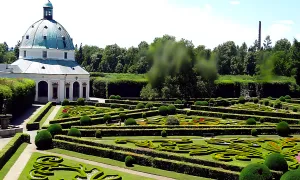
The chateau is an example of an extraordinary Baroque building. Its dominance is 84 metres tall tower with four-sided prism defensive tower - the rest of the original bishop's chateau. In the summer of 1768, the tower was finally repaired and covered with copper. 206 stairs lead to its top. The inner spaces are hierarchized: the ground floor was dedicated to economic purposes, the second floor served representation, the third floor highlighted the bishop's secular and official power. The romantic Podzámecká Garden is attached to the chateau and the Baroque Flower Garden with geometric construction is situated nearby, both created under Bishop Charles II.
Today both floors of the chateau, tower and sala terrena are open to the public. The chateau hides rich collections of paintings, books and music with roots in a long collecting tradition. It is not only a unique historical object, but also a living research centre and an indispensable part of Moravian cultural heritage.
Then and now
Drag the slider to compare how the landmark may have looked when it was built with the view today.
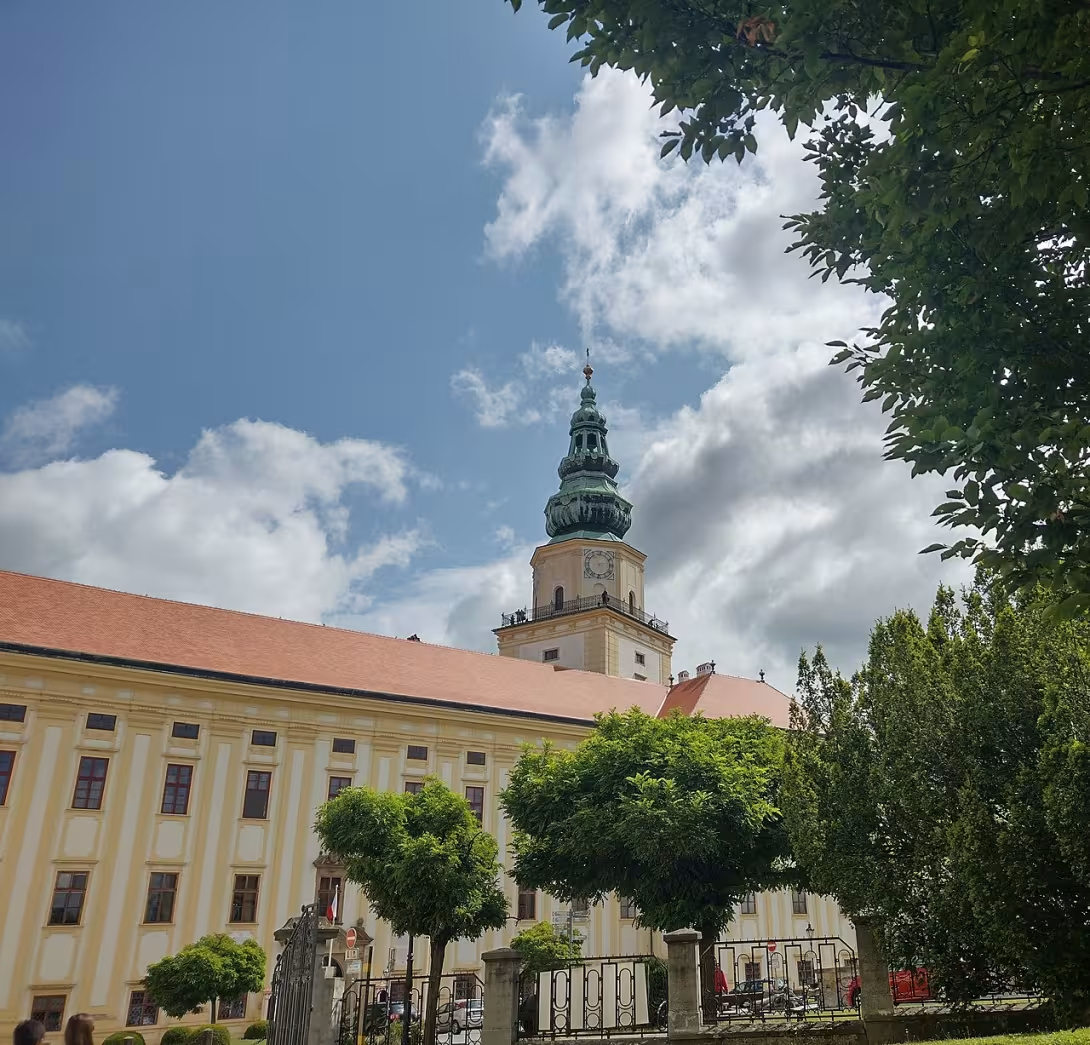
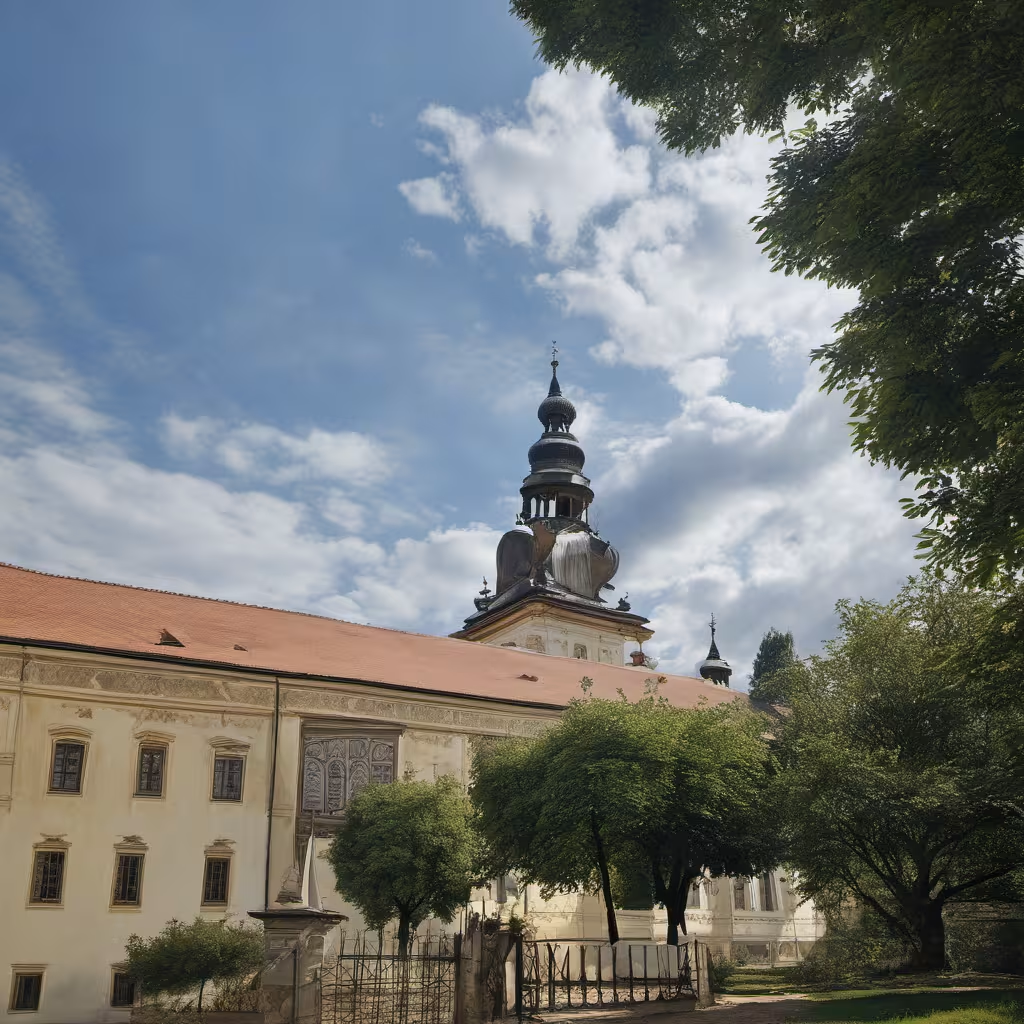
The historical appearance on the left is an AI-generated visualisation and serves as inspiration only.
Historical milestones
- 1110
- Olomouc Bishop Jan II bought Kroměříž.
- End of 13th Century
- Bishop Bruno of Schauenburg promoted Kroměříž to the city and built a Gothic chateau.
- 1643
- The destruction of the city and chateau by Swedish troops during the Thirty Years War.
- 1665-1694
- Restoring the chateau to today's Baroque form under the leadership of Bishop Charles II.
- 1752
- A massive fire that damaged the chateau and its interiors.
- 1848-1849
Architectural development
Originally, a Gothic chateau was built on the site of the chateau, which in the middle of the 17th century was rebuilt into a baroque style. After the fire in 1752, it was restored for 20 years. The tower was reconstructed in 1947-1948, destroyed by World War II, and recently, in 2024, a large reconstruction of the chateau and the Podzámecké Garden took place.
Historical events
- 1261
- Bruno of Schauenburg promoted Kroměříž to the city and built a Gothic chateau.
- 1643
- Kroměříž was captured and destroyed by the Swedish forces of General Lennart Torstenson.
- 1848-1849
- The chateau became the venue of the Constitutional Reich Assembly of the Austrian Nations.
Owners
- 1110
- 1665- 1694
- today
Points of interest
- Arcibiskupský zámek Kroměříž and the surrounding areas form a cultural complex with the status of national cultural monument since 1995 and have been on the UNESCO World Heritage Charter since 1998. - The history of the chateau dates back to 1110, when Kroměříž was bought by Olomouc Bishop John II, and became part of the property of the Olomouc Bishop. - After the Thirty Years' War, the chateau was restored under the leadership of Bishop Karl II of Lichtenstein- Castelcorn, who rebuilt it today according to the design of the architects Filibert Lucchese and Giovanni Pietro Tencalla. - In
Guide
This guide is narrated by a synthetic voice generated by artificial intelligence.
Show guide text
This text was created by artificial intelligence and has not been editorially reviewed. It may contain inaccuracies.
Welcome to one of the most important settlements on the country of Moravia. You are standing right in front of the Archbishop's chateau in Kroměříži, which immediately affects you with its monumental and nobility. Feel the atmosphere of a place where power, art and history are bound. Before your eyes, there is a building that is considered the ultimate work of Baroque architecture in all of Moravia. Even though you are now looking at a harmonious and integrated whole, know that under this beautiful face lies centuries of ups and downs and incredible endurance. Feel the weight of the time that radiates from this place, and prepare to travel through the ages.
To understand why this place looks like this and why it's so important to us, we need to go back deep into the past, to the very beginning of this mansion. The whole history of this place dates back to the year one thousand hundred ten, when the Bishop of Olomouc Jan the Second bought Kroměříž. This was the first crucial step that this place had grafted into the sphere of church power. Later, in the second half of the 13th century, Bishop Bruno of Schauenburg not only promoted Kroměříž to the city, but also had a Gothic chateau built here. Imagine this original form - it was a solid, medieval building, which was intended primarily for defence and as the seat of the bishop. At that time there was not the baroque calm that you now perceive, but rather the raw power of Gothic architecture.
But history has not always been about building and growth. We must prepare for a chapter full of pain and destruction. Imagine the dark time when in the year one thousand six hundred forty-three this area was hit by the destructive force of the Thirty Years' War. The Swedish troops, which were passing through our region at the time, did not leave the chateau or the city empty. This tragic event, which left nothing but debris and dust, was a huge test for this place. The chateau was destroyed and everything that had been built for centuries became dust. Although it seemed that the history of this place might end, it was this destruction that became a catalyst for the future grand transformation that you are now able to admire.
Now pay attention to the architecture itself that you are currently watching. What you are now seeing is the result of a stunning redevelopment that took place in the second half of the seventeenth century. Thanks to the visionary projects of imperial court architects called Filibert Lucchese and Giovanni Pietro Tencalla, the chateau turned into a Baroque palace. Feel the harmony and balance that the baroque brings. This style was not only about beauty, but about expression of nobility and stability. When looking at the facade and the overall structure of the chateau, remember how important it was for the then bishops to create an environment that reflects their power and spiritual importance. This reconstruction was carried out under the direction of Bishop Charles the Second, who in the years one thousand six hundred and sixty-five to one thousand six hundred and ninety-four led this fundamental renewal into today's Baroque form. Without his will and investment, the chateau may never have reached that level of artistic expression.
Even after this magnificent restoration, the chateau had to deal with unexpected obstacles. In the year one thousand seven hundred fifty, the chateau and its interiors hit a massive fire. It was another moment when this place had to face restoration and repair again to preserve its glory. Although the chateau had to be repaired at different times, its architecture remained a symbol of stability.
The chateau was not only a beautiful residence for spiritual preClosing, but also an important political centre that affected the fate of entire nations. You can imagine the tension and weight of the decisions that took place here in the years one thousand eight hundred forty eight to one thousand eight hundred forty-nine. In these critical years, the Constitutional Reich Assembly of the Austrian Nations was sitting here. The Kroměříž Chateau thus witnessed events that had a major impact on the political map of the then empire. This shows us that this place is not only a private residence, but a historic pillar on which history formed.
You may be interested in the fact that this place is not just a local monument that is admired by the people around it. Arcibiskupský zámek Kroměříž and its adjacent areas form a unique cultural complex that has the status of national cultural monument. But that's just the beginning. Since the year one thousand nine hundred ninety-eight, this whole has been registered on the UNESCO World Heritage Charter. This means that the value of this place, its architecture and history is recognised by the world as something indispensable to humanity. It is proof that the baroque architecture and history you feel here have universal meaning that goes beyond state and language boundaries.
We now invite you to further explore. Let yourself drift through the atmosphere of this place and continue your journey through historic spaces and surroundings. Every corner of this complex has its own story waiting to be discovered. Take a closer look at the architecture, see the details and let the beauty of this Baroque work consume you. We wish you a nice tour and hope that this journey will fit in with your memory.
Tips for visitors
The best time to visit is spring and autumn months, when the gardens are in full bloom or in Jesene colors. For the best photos we recommend morning or late afternoon light that will highlight the baroque details of the facade and the geometry of the gardens.
The monument is easily accessible by car and public transport; current connections and parking possibilities in the vicinity of the centre XZ0 Check ZXe in the current search engine or information boards in the city.
We recommend to wear comfortable shoes because the tour of the complex includes longer walks along the road. Families with children will appreciate the open space in gardens where children can safely walk between historical statues and architectural elements accompanied by parents.
In the immediate vicinity of the chateau, do not miss the Podzamecká garden, which is a valuable example of landscape style, and the Flower Garden, which captures its Baroque geometrical concept.
Frequently asked questions
Why is the Archbishop's Chateau in Kroměříži on the UNESCO list?
The chateau, together with May and Podzamecká Garden, was listed on the UNESCO World Heritage List in 1998 as an extremely preserved set of Baroque residential architecture and garden art.
What is the most valuable painting in the chateau gallery?
The gallery is the second most important painting gallery in the Czech Republic after the collection of Prague Chateau and its greatest gem is Titian's picture of Apollo and Marsyas.
Who had the chateau rebuilt into baroque form?
The Baroque reconstruction and the establishment of the Flower Garden was initiated after the 30-year war by Bishop Charles II of Liechtenstein-Castelkorn according to the designs of Italian architects Filibert Lucches and Giovanni Pietro Tencally.
For kids
Welcome to the Archbishop's Chateau in Kroměříži. It's a huge and beautiful chateau where bishops and archbishops once lived. These were very important church masters who were often as rich as princes. The chateau is so special that, along with its gardens, the whole world protects it as a treasure called UNESCO.
Businesses nearby
Do you run a restaurant, accommodation, shop, museum, rental, wellness or other visitor service near this monument? Show yourself directly to the people heading to it — this is how they will see you in the app and on the web:
Natáčelo se zde
- Marie Terezie (2017) seriál
Zdroj: Wikidata (vlastnost „místo natáčení“) · Všechna filmová místa
Nearby
The Castle Garden, a valuable example of landscape style.
Flower garden, baroque geometrically designed.
Accommodation nearby
Trips and activities nearby
Guided tours, tickets and activities nearby from GetYourGuide
Affiliate link: if you buy from the partner, we may receive a commission. The price for you does not change.
Search tours and activities →Themed route
Thematic cruise route: Arcibiskupský zámek Kroměříž and its surroundings
1. Arcibiskupský zámek Kroměříž (lock) Type: Historical monument Why is it worth visiting: The Archbishop's chateau in Kroměříži is one of the most important architectural works of the Baroque in Central Europe. The chateau boasts a rich history, beautiful interiors and a distinguished collection of art items. Visit his famous library with a unique catalogue which is recognized as a world cultural monument of UNESCO.
2. The Castle Garden Type: Landscape garden Why is worth a visit: Podlamecká Garden is a valuable example of landscape style created by František Maximilián Kaňka. The garden offers a peaceful walk between beautifully maintained plants and an escape to nature, an ideal place to relax after visiting the chateau.
3. Flower Garden Type: Baroque Geometric Garden Why is worth a visit: The flower garden is an example of baroque garden art, with its characteristic geometrically designed modifications. The garden offers a beautiful perspective and harmony of colors, which creates an ideal environment for relaxing and enjoying nature.
This route allows a deep understanding of the Baroque heritage of Kroměříže and its surroundings, offering visitors the opportunity to explore both the architectural beauty of the chateau and the fine landscape of the creation of podlock gardens.
Seasonal recommendations
Spring in Kroměříži brings awakening gardens and lush greenery, which in combination with fine spring light create an idyllic atmosphere. It's the perfect time to observe the first flowers in the aristocratic park. We recommend wearing layered clothes because the weather can be variable. The best thing is to visit the chateau in the morning when the air is the cleanest and the garden is the most lively.
The summer season is characterized by intense sun and full bloom of the whole landscape, which gives the monument a bright look. The atmosphere is alive and full of life, especially in large gardens. Due to the increased traffic and heat, it is advisable to come immediately after opening to avoid the biggest crowds and burning midday heat. Don't forget the headgear and plenty of fluids while walking through the outdoor area.
Autumn in the chateau offers a fascinating color spectrum, when leaves in gardens change colour to gold and red. The morning fog gives the place a Tajemeni and peaceful touch, which is ideal for photography. For a comfortable visit, prepare a waterproof jacket and warmer clothing. There are fewer people in this period, so you can enjoy a quiet tour in the afternoon when the light is softest.
Winter moons bring a quiet and noble atmosphere where frost and snow create contrast to rich interiors. Due to the shorter time of the day and the cold, it is recommended to focus mainly on the tour of historical halls inside the building. It is necessary to choose very warm clothes and to check in advance possible shortened opening times. Winter is the best choice for those who seek peace without the arms of visitors.
Visualizations and artistic views


The visualisations are generated by artificial intelligence and serve as inspiration.
Photos from the area
Real photos taken near the monument

Zdroj a licence jsou uvedeny u každého snímku.
View from the area
This animation was generated by artificial intelligence from a real photograph of the surroundings. The motion and details are not real footage of the location.
Atmosphere of the place
This atmospheric visualisation of the place and period was generated by artificial intelligence. It is not real footage of the location.
Tips from visitors
No tips yet. Be the first!
Log in and add your tip.
Sources and literature
Fotografie: Christof Halbe / CC BY-SA 3.0 — Wikimedia Commons. The author and licence also appear when you hover over the image.
Faktickým podkladem tohoto textu byl článek na Wikipedii, jehož autory jsou přispěvatelé Wikipedie. Článek je dostupný pod licencí CC BY-SA 4.0.
Location on the map
Příběhy a pověsti
Legendy, pověsti a příběhy spjaté s touto památkou
Fotografie návštěvníků
Zatím žádné fotografie. Buďte první, kdo přidá fotografii z návštěvy!
Přihlaste se a přidejte svou fotografii nebo hodnoťte.
Za ověřenou návštěvu v aplikaci získáte víc bodů — poznáme podle GPS, že jste na místě.
Reviews and comments