



zájezdní hostinec U slovanské lípy Restaurant
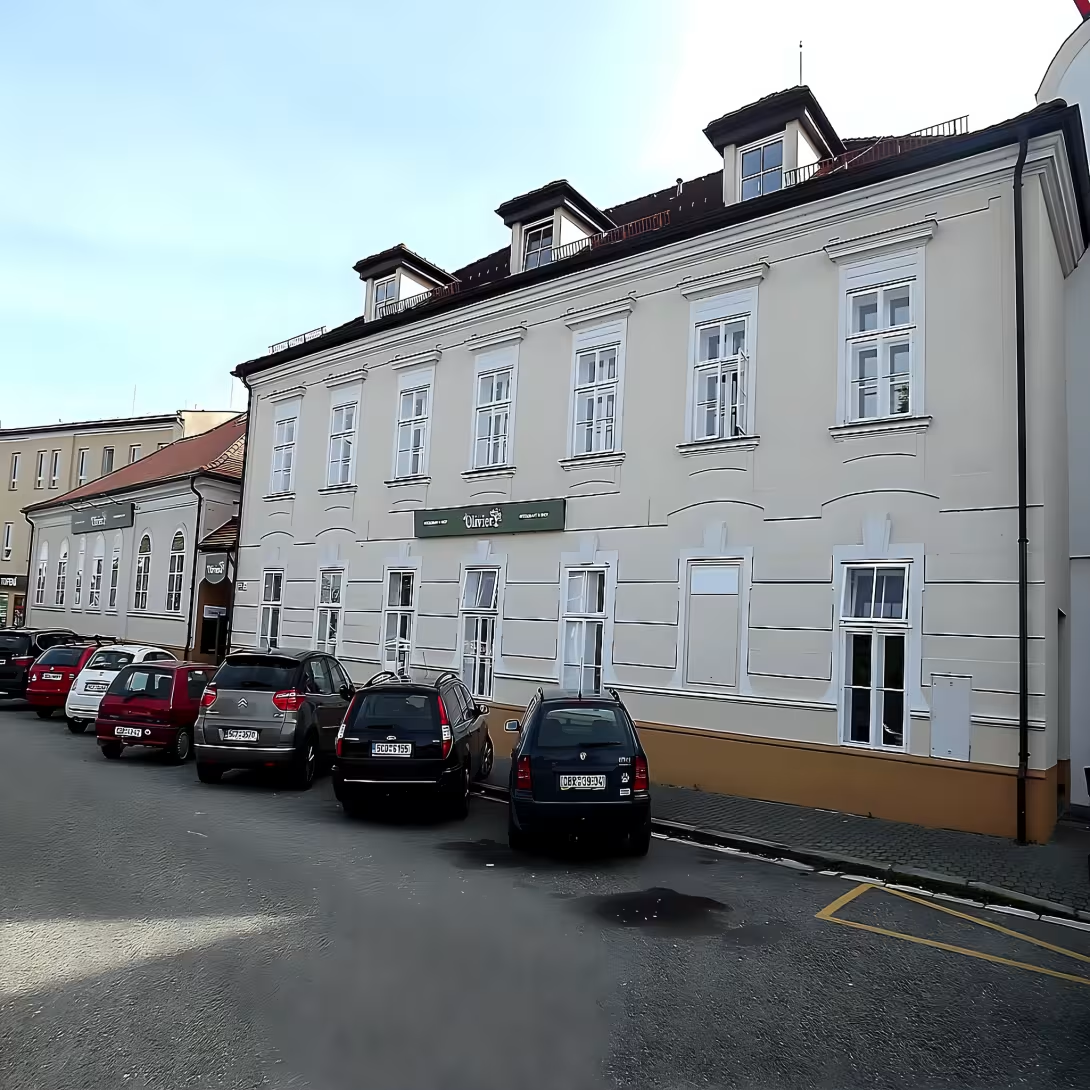
Ticket inn In Slavic lípa there is an empirical building in the Budějovice part of the Four Dvory. The building is listed in the list of cultural monuments of the Czech Republic. It is particularly important as a historical venue for Slavic patriots meetings.
The building stood in a separate village of Four Dvory on the left bank of Vltava behind the Long Bridge near the former highway. In the 19th century, she was held by the Becher pharmaceutical family. It was later owned by Mr. Drill, according to which the inn carried the name of the Drill.
Architecturally, it is a single-storey walled object in a late classical style with a ground plan in the shape of the letter L. The front facing the road has seven axes. The ground floor is decorated with windows in shambrans with barefoot, while windows on the first floor are decorated with horizontal frontons. The south facade is composed of a porticus with six smooth Dorian columns with heels.
The history of the inn is closely linked to Slavic Lip, who planted a symbolic tree in the garden in 1848. The Clave held secret meetings here, which resembles a memorial record at the entrance. In 1891, the building and the adjacent ancient barn filled with straw were destroyed by a devastating fire. The original lime tree was disproved by the Nazis in 1943. Subsequently, on 18 July 1948, a new Lime of Liberty was planted on the scene.
The construction was renovated in 2012 and currently houses Olivier. The object represents a historical element near the Vltava and the Long Bridge.
Historical importance and architectural details make the building an interesting destination for visitors. It is advisable to stop in the vicinity of the Long Bridge and examine this monument.
Historical milestones
- 1848
- Lamp planting by Slavic Lepa.
- 1891
- Big fire at the inn and nearby barns.
- 1948
- The introduction of the new Lime of Liberty on 18 July.
- 2012
- Reconstruction and opening of Olivier Restaurant.
Architectural development
One-storey walled building in late classical style. The ground floor shows window booting in the shambles and the first floor shows horizontal frontons. In 2012 the construction went through a comprehensive reconstruction.
Historical events
In 1848 the Slavic Lip Society was founded here. On 4 April 1891, the inn caught a devastating fire. In 1943, the original Slavic Lip was destroyed by the Nazis.
Owners
In the 19th century, the construction was held by the Becher pharmaceutical family, later by the owner named Drill.
Points of interest
- The building is listed in the list of cultural monuments of the Czech Republic and served as a venue for Slavic patriots meetings. - In the nineteenth century, it was owned by Becher's pharmaceutical family and later by Mr. Drill. - The building has L-shaped and its south side contains six smooth Dorian columns. - In 1848, a symbolic tree was planted in the garden and the association held secret meetings. - The original building and barn were destroyed in 1891 by fire and the original linden was disproved by the Nazis in 1943.
Guide
Show guide text
This text was created by artificial intelligence and has not been editorially reviewed. It may contain inaccuracies.
Welcome to Budejovice. Right now, you're standing in front of a building that radiates in its appearance peace, dignity and deep history. In front of you is zájezdní hostinec U slovanské lípy, a place that resembles the famous buildings of ancient Rome in its form, but also carries the spirit of Czech national renewal. The first impression of this building is very strong, because right from the outside, its balance and elegance will welcome you. It's a place where the practical purpose of an old travel stand meets high artistic taste. Stop for a moment, take a breath and let yourself pass through time to the time when carriages and horses passed by, and the inn served as an important port for travelers who sought rest and a good meal.
Now let's look at how this building came into being and what its original meaning was. The building was built in the spirit of the Empire, which was a style that emphasized the purity of lines and nobility. Originally there was a tourist inn, which at the time meant much more than just a simple restaurant. It was an accommodation for people on the move, instead of meeting merchants and passengers. The history of this place is closely linked to a sense of belonging and love for its own roots. This is where Slavic patriots gathered, people who believed in the unity and bloom of Slavic nations. It was a space for discussion, planning and building a common identity at a time when it was important to know where we were coming from and where we were going. So this building was not just an ordinary house, but a symbol of national confidence.
Now pay attention to the architecture itself, because there are some interesting details in it that you might miss when you move quickly. Look at the overall shape of the building. If you see it from a bird's-eye perspective, you'll notice it's built on the ground plan of the letter L. This shape was very practical because it allowed efficient layout of space and created a natural courtyard. But now pay attention to the southern facade that stands right in front of you. Notice the beautiful portics, the roofed entrance section, carried by six Dorian columns. These columns are smooth, without grooves, and end with simple headers. It is this element that gives the whole house the unmistakable character of ancient elegance. It is a detail that should have perceived visitors at the time of their arrival a sense of stability and meaning. Thanks to its value, the whole building is listed in the list of cultural monuments of the Czech Republic, which is the recognition that this house is an invaluable part of our common heritage.
If we think more about who worked in these walls, we get to the stories of the people who left their mark. In the nineteenth century, this inn belonged to the Becher pharmaceutical family. Imagine the atmosphere that was there when the pharmacist's care and order met with the noise of the tourist inn. Later, the building got into Mr. Drill's hands. Each of these owners brought their own energy into the house, but the common denominator remained a place for people. Let us not forget those Slavic patriots. Imagine a quiet whisper in the corners of the rooms, a passionate debate about the future of nations and the sense of belonging that ruled here. It was a place where differences were wiped and a common way forward was sought.
Now I'm going to lead you to one of the most interesting parts of this place, which is encoded in its name. It's about the lime. Lip is a symbol of home and freedom for us. In 1848, in the year of the great European storms and efforts for freedom, Slavic Lip planted the first tree here. It was an act of deep symbolism. Unfortunately, history isn't always kind. In 1891, a large fire engulfed the inn and the adjacent barn. The fire destroyed many material things, but the spirit of this place remained alive. The building has been restored and its importance has only been confirmed. Another important event occurred in 1948, when a new Lípa of Liberty was set up on 18 July, which today resembles the continuity of the values represented by this place. It is fascinating to think that even though the building survived fire and changes in modes, its basic character remained preserved.
If you look at the construction today, you will see the result of modern care. In 2012 the building underwent a thorough reconstruction in order to preserve its historical core and at the same time to be used in modern times. That's why Olivier's restaurant is here today. It's a beautiful example of how a historical monument can integrate into the present life of the city. Today, the place where passengers in cochars used to meet welcomes modern guests who can enjoy food in areas that remember centuries of history.
Now, if you look again at the six Dorian columns and the overall harmony of the building, you will realize that you are standing in front of a witness of many times. From the romantic nationalism of the nineteenth century, to the tragedy of the fire, to today's quiet atmosphere of the restaurant. This house tells us the story of endurance and that real values such as freedom and belonging will survive the greatest trials.
Thank you for stopping by this beautiful place. I hope you enjoyed this short trip to the depths of time. Now I betray you that Budejovice has many other hidden corners and stories waiting to be discovered. You can now slowly walk around the building, revisit its L-shaped shape and perhaps stop by the linden, which is the silent guardian of this house. I wish you a pleasant further walk through the city and many new experiences. Goodbye.
Tips for visitors
The best time to visit is late spring or summer, when the surrounding green is in full bloom and the building in the part of the Four Courses acts most naturally. Transport to this place is possible by car and public connections; Check specific routes and connections in maps or search engines.
When visiting we recommend to wear comfortable shoes for a walk along the Vltava. Since it is a building in operation, we recommend to be discreet when shooting and respect people who work or study in the building.
For the best photos we recommend to come in the morning or afternoon hours when soft light hits the southern facade of the Empire building. An interesting angle is the view of the L-shaped building, which highlights its architecture.
In the vicinity, within a short walk, you can visit the Vltava and the Long Bridge, which complement the atmosphere of this part of the city. For families with children it is ideal to combine an outside tour with a walk to the river, which is a pleasant way to show the children historical architecture in the natural environment.
Frequently asked questions
Can the monument be visited?
The building is in use (offices, a school, shops and the like). The interior is generally accessible only during operating hours and tours are not usually offered; we have not verified the details. You can see the exterior from the street.
Where is the monument?
Location: České Budějovice 2. The map on this page shows the exact spot.
Why is the monument protected?
It is listed in the Central List of Cultural Monuments of the Czech Republic as a cultural monument (register no. 1000141725).
Businesses nearby
Do you run a restaurant, accommodation, shop, museum, rental, wellness or other visitor service near this monument? Show yourself directly to the people heading to it — this is how they will see you in the app and on the web:
Events nearby
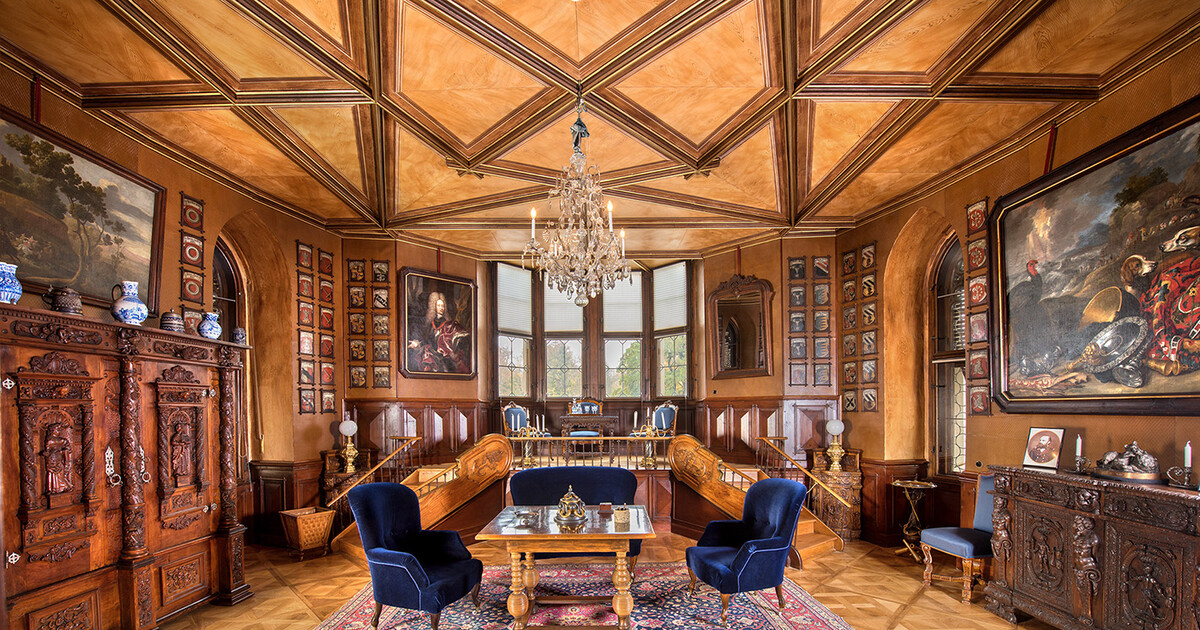

Zdroj akcí: otevřená data měst a obcí ČR (Národní katalog otevřených dat) a kalendář akcí Národního památkového ústavu.
Nearby
Památka se nachází v části Čtyry Dvory, v blízkosti Vltavy a Dlouhého mostu.
Accommodation nearby
Trips and activities nearby
Guided tours, tickets and activities nearby from GetYourGuide
Affiliate link: if you buy from the partner, we may receive a commission. The price for you does not change.
Search tours and activities →Themed route
Here is the design of the cruise route:
1. Long bridge (construction) - The starting point of the road, which offers a beautiful view of the surroundings. 2. Vltava (river) - Walk along the shore will allow you to relax in nature. 3. The Slavic Lepa (tour inn) - The main destination of the trip, where you can relax and visit the memory.
Seasonal recommendations
In spring, the surrounding area of the building awakens to life and the young greenery underlines the appearance of the building. The light is delicate and pleasant to observe the facade details. We recommend light but laminated clothing and a visit in the morning when the air is the cleanest.
In the summer months, space dominates the dense crown of trees and bright sun that creates deep shadows. The atmosphere is hot and alive. It is advisable to choose breathtaking springs and travel to memory in early morning or late evening to avoid the greatest heat.
Autumn brings golden colors and a nostalgic mood to the landscape that matches the historical character of the place. The lighting is full and warm. Practical is shoes suitable for wet terrain and waterproof jacket, the best time to visit is October.
Zimą works in contrast with grey sky or white snow, which gives it a strict and noble look. The air is freezing and quiet. Hot winter clothes, hats and gloves are essential, and we recommend arriving around noon when the most daylight is.
Visualizations and artistic views

The visualisations are generated by artificial intelligence and serve as inspiration.
Photos from the area
Real photos taken near the monument


Zdroj a licence jsou uvedeny u každého snímku.
Tips from visitors
No tips yet. Be the first!
Log in and add your tip.
Sources and literature
Photos: JAn Dudík / CC BY-SA 3.0, rozlišení zvýšeno umělou inteligencí — Wikimedia Commons. The author and licence also appear when you hover over the image.
Faktickým podkladem tohoto textu byl článek na Wikipedii, jehož autory jsou přispěvatelé Wikipedie. Článek je dostupný pod licencí CC BY-SA 4.0.
Location on the map
More monuments – České Budějovice 2
Show all in the municipality
Příběhy a pověsti
Legendy, pověsti a příběhy spjaté s touto památkou
Fotografie návštěvníků
Zatím žádné fotografie. Buďte první, kdo přidá fotografii z návštěvy!
Log in a přidejte svou fotografii nebo hodnoťte.
Za ověřenou návštěvu v aplikaci získáte víc bodů — poznáme podle GPS, že jste na místě.
Reviews and comments