



Kostel svatého Vojtěcha (České Budějovice 2) Church
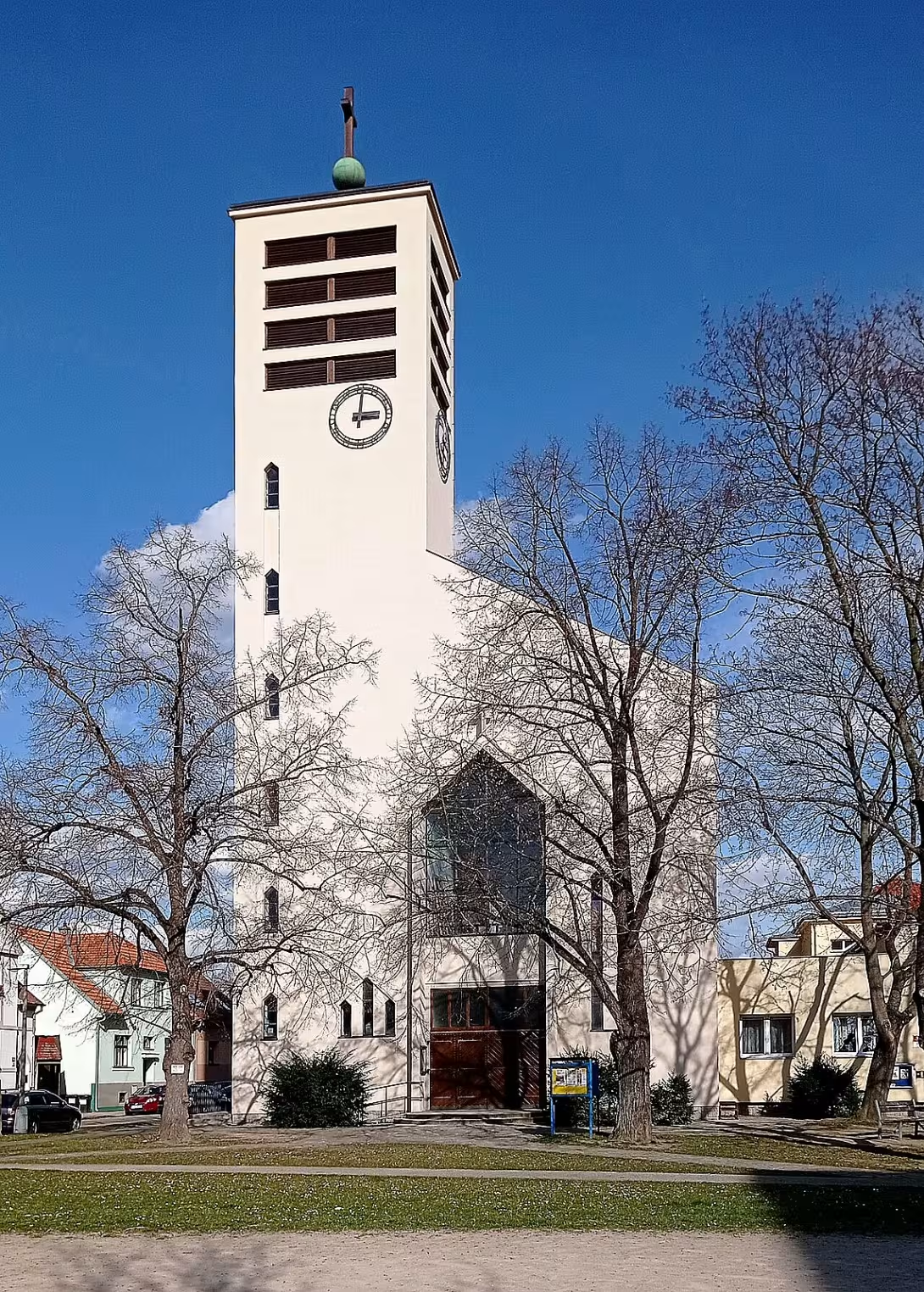
The Church of Saint Adalbert in České Budějovice is a modern ecclesiastical structure completed in 1939. Situated in the urban area of Čtyři Dvory near South Bohemian University and Czech Academy of Sciences institutes, it stands out for its architectural design and historical significance. Architect Jaroslav Čermák designed it, with František Stašek overseeing construction. The church features an asymmetrical tower and a monolithic concrete roof beam over the nave. Its façade is adorned with a large wooden cross and wood-carved statues of Saint Adalbert and Prussian warriors by sculptor Josef Vítka. As the center for the parish of Saint Adalbert, established in 1990, it serves as an essential spiritual hub.
The church's origins trace back to September 1, 1937, when a construction request was submitted. Despite political tensions leading up to World War II, the project progressed and concluded between 1938 and 1939. This completion reflects both the designers' architectural vision and the community's resilience during uncertain times.
Architecturally, the Church of Saint Adalbert is noted for its longitudinal layout with an asymmetrical tower. The monolithic concrete roof beam over the nave showcases modern construction techniques from that era. Combined with the wooden cross and statues on the façade, these elements highlight a blend of traditional craftsmanship and contemporary design.
Since 1990, when the parish of Saint Adalbert was established, the church has been under Salesian administration. It serves as a center for spiritual activities in the area, including daily masses, and houses the Salesiánské středisko mládeže (Salesian Youth Center). This dual role underscores its importance as both a place of worship and a community gathering point.
A key curiosity about this church is its façade, featuring wood-carved statues by Josef Vítka. These include depictions of Saint Adalbert and Prussian warriors, adding historical depth to the building's artistic elements. The monolithic concrete roof beam over the nave remains an architectural curiosity, reflecting innovative design choices ahead of their time.
Today, the Church of Saint Adalbert continues as a vital part of České Budějovice's local community. Its accessibility and ongoing religious services make it significant for both locals and visitors. The church offers a unique glimpse into the region's cultural and spiritual life through its blend of modern architecture and historical significance.
Visitors are invited to explore this remarkable monument, which stands as a testament to architectural innovation and community resilience. Its rich history and distinctive design make it a worthwhile destination for those interested in religious heritage and modern architecture.
Then and now
Drag the slider to compare how the landmark may have looked when it was built with the view today.
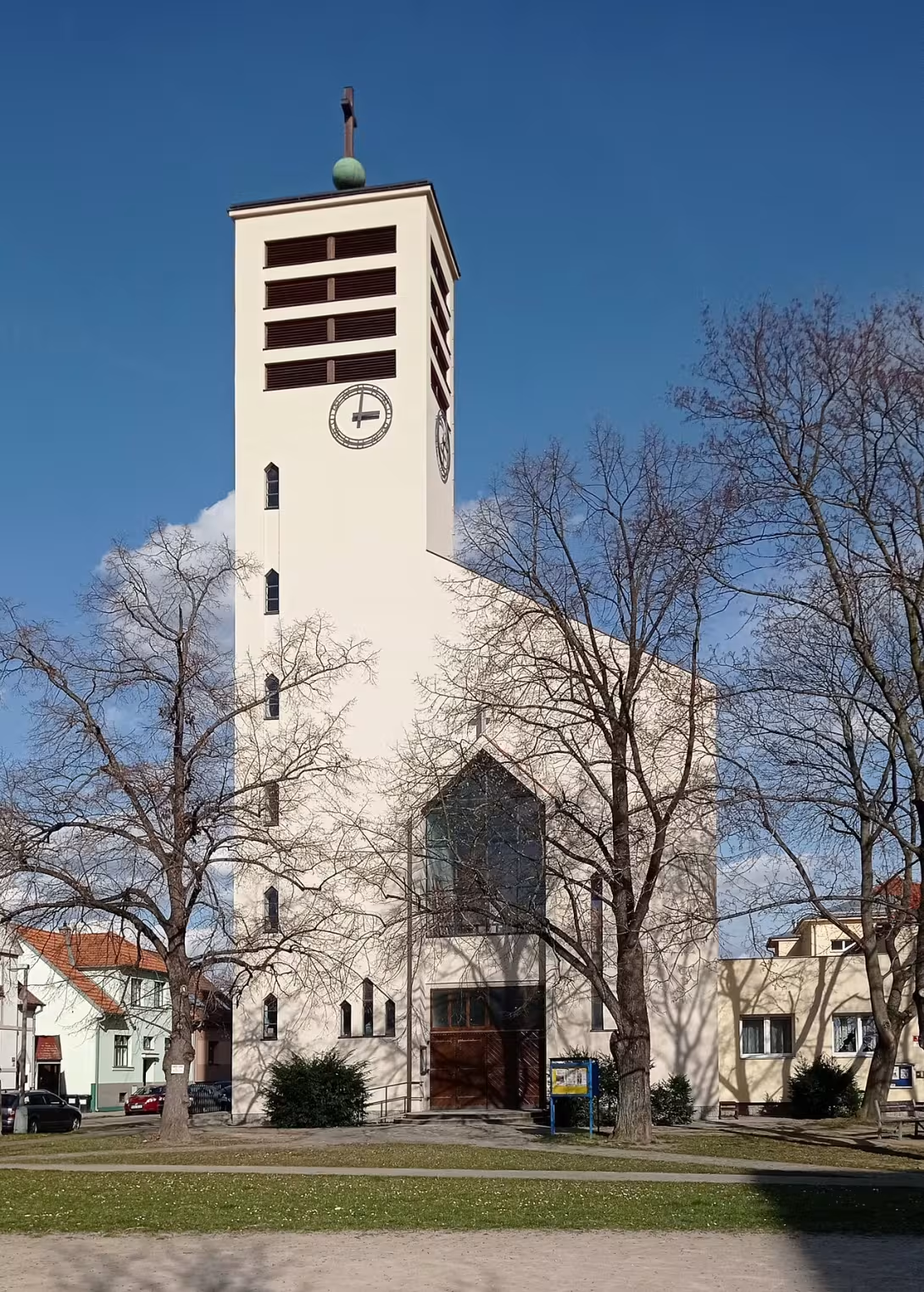

The historical appearance on the left is an AI-generated visualisation and serves as inspiration only.
Historical milestones
- 1937
- A request for construction was submitted on September 1st.
- 1990
- The parish of Saint Adalbert was established.
Architectural development
Constructed between 1938 and 1939, the church features a longitudinal layout with an asymmetrical tower. Its design includes a monolithic concrete roof beam over the nave, showcasing modern architectural techniques.
Historical events
- 1937
- A request for construction was submitted on September 1st.
- 1990
- The parish of Saint Adalbert was established.
Points of interest
- Despite the political tensions leading up to World War II, construction of the Church of Saint Adalbert continued without interruption, reflecting a remarkable determination by the community and builders to complete the project amidst uncertainty.
- The asymmetrical tower of the church is not just an architectural choice but also symbolizes the balance between tradition and modernity, representing the innovative spirit of its time while maintaining ecclesiastical heritage.
- Architect Jaroslav Čermák's design for the Church of Saint Adalbert was influenced by his exposure to contemporary European architectural movements, which is evident in the church’s unconventional use of concrete and asymmetrical features.
- The statues on the façade, carved by Josef Vítka, are not only artistic expressions but also serve as historical narratives; they depict Saint Adalbert alongside Prussian warriors, symbolizing the saint's missionary journey to Prussia.
- Since its establishment in 1990, the parish of Saint Adalbert has been under Salesian administration, which is notable for integrating educational and spiritual development through initiatives like the Salesiánské středisko mládeže (Salesian Youth Center), reflecting a broader mission beyond traditional religious services.
Guide
This guide is narrated by a synthetic voice generated by artificial intelligence.
Show guide text
This text was created by artificial intelligence and has not been editorially reviewed. It may contain inaccuracies.
Welcome to the Church of Saint Adalbert in České Budějovice, a remarkable modern ecclesiastical structure that stands as a testament to both architectural innovation and community resilience. As you stand here, take a moment to absorb your surroundings. The church's façade is adorned with a large wooden cross, immediately drawing the eye upward. Nearby, wood-carved statues of Saint Adalbert and Prussian warriors by Josef Vítka add depth and historical narrative to this sacred site.
The conception of this church dates back to 1937 when a request for its construction was submitted on September 1st. Designed by architect Jaroslav Čermák and supervised by František Stašek, the building process began amidst political tensions leading up to World War II. Despite these challenges, the community's determination saw the church completed in 1939, a reflection of their unwavering commitment to faith and heritage.
As you explore further, take note of the asymmetrical tower—a distinctive feature that sets this church apart from traditional ecclesiastical architecture. The monolithic concrete roof beam over the nave is another architectural highlight, showcasing modern materials and techniques. These elements come together to create a unique aesthetic that speaks both to innovation and tradition.
The history of this place is not just about its construction but also about the community it served. In 1990, the parish of Saint Adalbert was established here, marking a new chapter in its storied existence. While specific historical figures connected to the church remain unnamed, their collective efforts have left an indelible mark on this site.
One intriguing aspect of the Church of Saint Adalbert is its completion during such uncertain times. Despite the political upheaval leading up to World War II, construction continued without interruption—a remarkable feat that underscores the community's resolve and dedication.
As you conclude your visit, take a moment to reflect on the rich history and architectural beauty surrounding you. This church is not just a building; it's a narrative woven into the fabric of České Budějovice. We invite you to continue exploring its stories and perhaps discover more about the people who have walked these grounds before you. Thank you for joining us on this journey through time and architecture, and we hope your visit has been both enlightening and inspiring.
Tips for visitors
The best time to visit the Church of Saint Adalbert is during late spring or early autumn when the weather is mild, and the surrounding parks are lush with greenery. This period offers a pleasant atmosphere for exploring both the church's modern architecture and its serene environment near the South Bohemian University campus. Additionally, visiting outside peak tourist seasons can provide a more tranquil experience, allowing you to appreciate the architectural details without large crowds.
It's advisable to check current routes and schedules via a local transportation app or website before your visit to ensure smooth travel plans.
When visiting the Church of Saint Adalbert, consider bringing comfortable walking shoes as you may want to explore the surrounding areas on foot. A camera is also recommended to capture the unique architectural features of the church, especially its asymmetrical design by Jaroslav Čermák. If planning a longer stay, packing a light jacket or sweater can be helpful due to variable weather conditions.
Photography enthusiasts will find several spots around the Church of Saint Adalbert ideal for capturing stunning images. The best light is typically during early morning or late afternoon when the sunlight enhances the church's modern design elements. Consider taking photos from different angles, including shots that incorporate the surrounding greenery and urban landscape to provide context.
For families with children, there are several nearby attractions within a 30-minute drive from České Budějovice 2. The area around Čtyři Dvory offers family-friendly parks and recreational spaces where kids can play and explore. Additionally, the proximity to South Bohemian University provides opportunities for educational experiences, such as visiting science exhibits or participating in workshops if available.
Frequently asked questions
Can the monument be visited?
Religious buildings are usually open mainly during services; at other times a visit is normally arranged with the parish or the operator. We have not verified specific times.
Where is the monument?
Location: Emy Destinové/1, České Budějovice 2, České Budějovice, Jihočeský kraj. The map on this page shows the exact spot.
Why is the monument protected?
It is listed in the Central List of Cultural Monuments of the Czech Republic as a cultural monument (register no. 106401).
Businesses nearby
Do you run a restaurant, accommodation, shop, museum, rental, wellness or other visitor service near this monument? Show yourself directly to the people heading to it — this is how they will see you in the app and on the web:
Events nearby
Zdroj akcí: otevřená data měst a obcí ČR (Národní katalog otevřených dat) a kalendář akcí Národního památkového ústavu.
Nearby
Located near the campus of South Bohemian University and institutes of the Czech Academy of Sciences in České Budějovice. The area includes urban parts like Čtyři Dvory.
Accommodation nearby
Trips and activities nearby
Guided tours, tickets and activities nearby from GetYourGuide
Affiliate link: if you buy from the partner, we may receive a commission. The price for you does not change.
Search tours and activities →Themed route
Thematic Vltava River Trail: Exploring České Budějovice 2
1. Kostel svatého Vojtěcha (Church of Saint Adalbert)
Type: Historical Church
Begin your journey at the iconic Kostel svatého Vojtěcha, a stunning example of Gothic architecture in České Budějovice. This church is not only an architectural marvel but also holds significant historical value, having been rebuilt after World War II. Its serene atmosphere and beautiful interior make it a must-visit for anyone interested in history and art.
2. South Bohemian University Campus
Type: Educational Institution
A short walk from the church will take you to the vibrant campus of the South Bohemian University. This modern educational hub is nestled amidst lush greenery, offering a peaceful contrast to the urban surroundings. The campus is not only an excellent place for students but also provides visitors with insight into contemporary Czech academia and culture.
3. Czech Academy of Sciences Institutes
Type: Research Institution
Continue your exploration by visiting the nearby institutes of the Czech Academy of Sciences. These facilities are at the forefront of scientific research in various fields, contributing significantly to both national and international knowledge bases. While access might be limited for general tours, observing these institutions from outside offers a glimpse into cutting-edge scientific endeavors.
4. Čtyři Dvory (Four Courts)
Type: Urban Area
Conclude your thematic trail in the urban area of Čtyři Dvory. This district is known for its lively atmosphere and cultural significance, with numerous cafes, shops, and local art galleries. It's an ideal spot to relax after a day of exploration, offering a taste of contemporary Czech life amidst historical settings.
This route provides a comprehensive experience of the rich history, academic excellence, and vibrant urban culture in České Budějovice 2.
Seasonal recommendations
Spring: Visiting the Church of St. Vitus during spring offers a unique experience as nature begins to bloom around České Budějovice, providing a picturesque backdrop for this historic site. The soft light filtering through budding trees creates an ethereal atmosphere that enhances the church's architectural beauty. While the weather can be unpredictable with occasional rain showers, it is generally mild, making it a pleasant time to explore. Visitors should consider wearing layers and carrying an umbrella or raincoat just in case. Early mornings are ideal for avoiding larger crowds as locals often take advantage of the pleasant weather for outdoor activities.
Summer: Summer at the Church of St. Vitus brings vibrant energy with longer daylight hours, allowing visitors to fully appreciate the intricate details of the church's architecture under bright sunlight. The warm weather encourages more tourists and locals alike to explore, so it is advisable to arrive early in the morning or later in the afternoon to avoid crowds. Comfortable walking shoes and light clothing are recommended due to the heat, and carrying water is essential for staying hydrated. This season offers a lively atmosphere with outdoor cafes nearby, perfect for enjoying a refreshing drink after your visit.
Autumn: Autumn transforms České Budějovice into a tapestry of warm colors as leaves turn shades of red, orange, and yellow, creating a stunning contrast against the historic church. The cooler temperatures make it an ideal time to explore without the summer crowds, offering a more tranquil experience. Visitors should dress in layers to accommodate fluctuating weather conditions, which can range from crisp mornings to chilly evenings. This season is perfect for photography enthusiasts looking to capture the church amidst its autumnal setting.
Winter: Winter at the Church of St. Vitus offers a serene and almost magical atmosphere as snow blankets České Budějovice, enhancing the historical charm of the area. The shorter days mean that visitors should plan their visit during daylight hours for better visibility, and it's essential to dress warmly in layers with insulated outerwear due to cold temperatures. While some outdoor areas may be less accessible if there is heavy snowfall, the church itself remains open, providing a cozy refuge from the winter chill. Despite fewer tourists, it’s wise to check opening times as they can vary during this season.
Visualizations and artistic views


The visualisations are generated by artificial intelligence and serve as inspiration.
Photos from the area
Real photos taken near the monument


Zdroj a licence jsou uvedeny u každého snímku.
Tips from visitors
No tips yet. Be the first!
Log in and add your tip.
Sources and literature
Photos: Czeva / CC BY-SA 4.0 — Wikimedia Commons. The author and licence also appear when you hover over the image.
Faktickým podkladem tohoto textu byl článek na Wikipedii, jehož autory jsou přispěvatelé Wikipedie. Článek je dostupný pod licencí CC BY-SA 4.0.
Location on the map





Příběhy a pověsti
Legendy, pověsti a příběhy spjaté s touto památkou
Fotografie návštěvníků
Zatím žádné fotografie. Buďte první, kdo přidá fotografii z návštěvy!
Log in a přidejte svou fotografii nebo hodnoťte.
Za ověřenou návštěvu v aplikaci získáte víc bodů — poznáme podle GPS, že jste na místě.
Reviews and comments