



Základní škola Zálabí School building
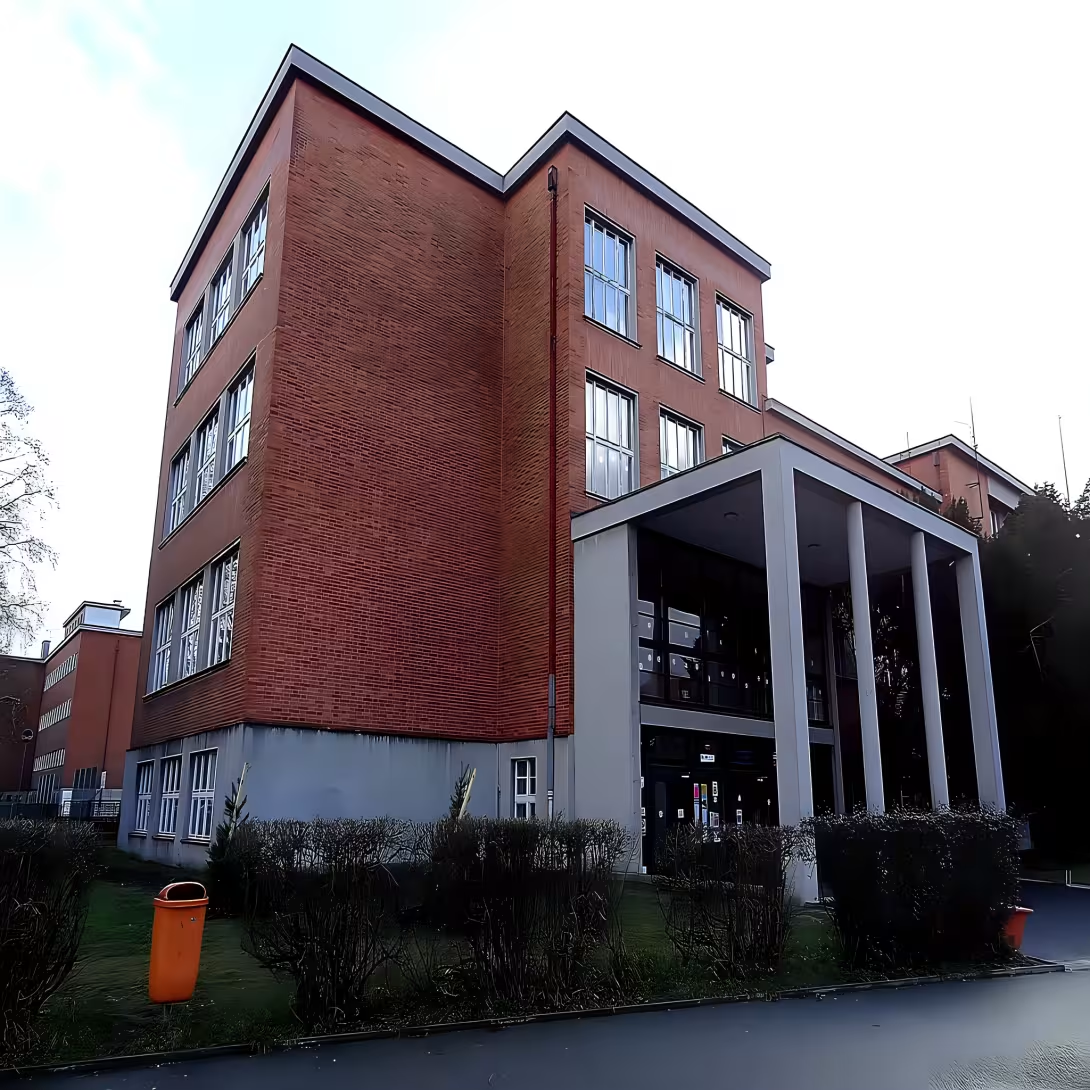
Základní škola Zálabí, also known as Primary School Tyl's waterfront is a functionalist school building in Hradec Králové built in the years 1956-1959. The object is significant by the fact that architects Jan Rejchl and Václav Rohlíček made a sensitive connection to the urban concept of Josef Gočár. So they created an extraordinary example of postwar respect for first-publication architecture. In 2019, the building was declared a cultural monument.
The need to increase school capacities in Hradec Králové was raised in the early 1930s. At that time he was approached by Josef Gočár to close a block of boys' school, built on Tyla's waterfront in 1926-1928, with his proposal for a girls' general and urban school. However, due to the economic crisis, the city was unable to finance the project. The project was realized only in the 1950s, when the project was created in the royal Hradec Stavoprojek under the direction of Jan Rejchl. The author of a specific proposal of 28 June 1955 was Václav Rohlíček.
The architectural solution of the building is based on the older Gočár building, but it is different from the basement layout. The building has two underground floors; In the second one there is a boiler room background and two military shelters. The first basement served as a warehouse of coal, gym and dressing rooms. The upper floor contained classrooms, cabinet rooms, staff room, principal's office, offices and toilets. A two-storey gym was located in the central wing. Roof superstructures were equipped with an expansion tank, observable and civil defence storage. Unlike the neighbouring Gočár building, the facade is lined with non-glazed couches which imitate bricks.
The construction was created in a period when Czechoslovak architecture was strongly influenced by the ideology of socialist realism promoting monumentality and decoration. Yet the creators managed to preserve functionalist expression and continuity with a good interwar tradition.
Building Primary schools It is now valued as a testament to architectural humility and ability to link to urbanist units created before World War II. For those interested in modern architecture, this building in Hradec Králové represents a valuable example of how a high level of building culture can be maintained even in an ideologically challenging period. Visiting the school area on Tyl's waterfront offers the opportunity to see this monument in the context of the historic city centre.
Then and now
Drag the slider to compare how the landmark may have looked when it was built with the view today.
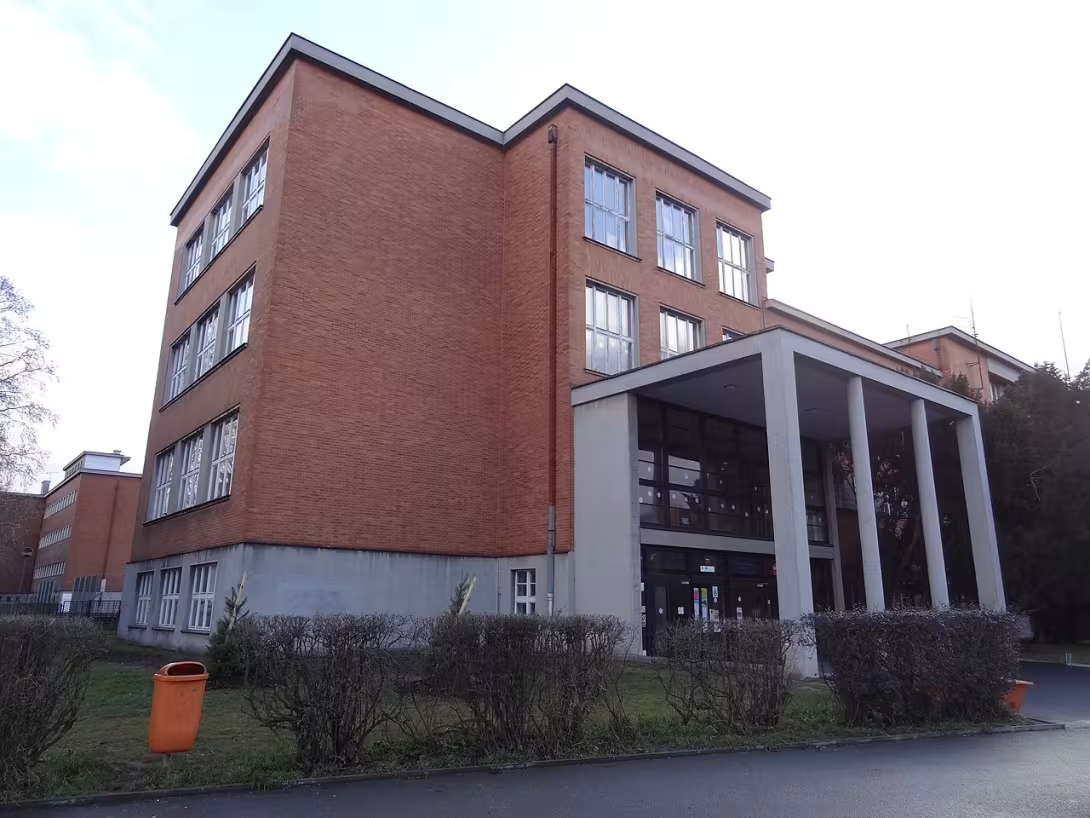
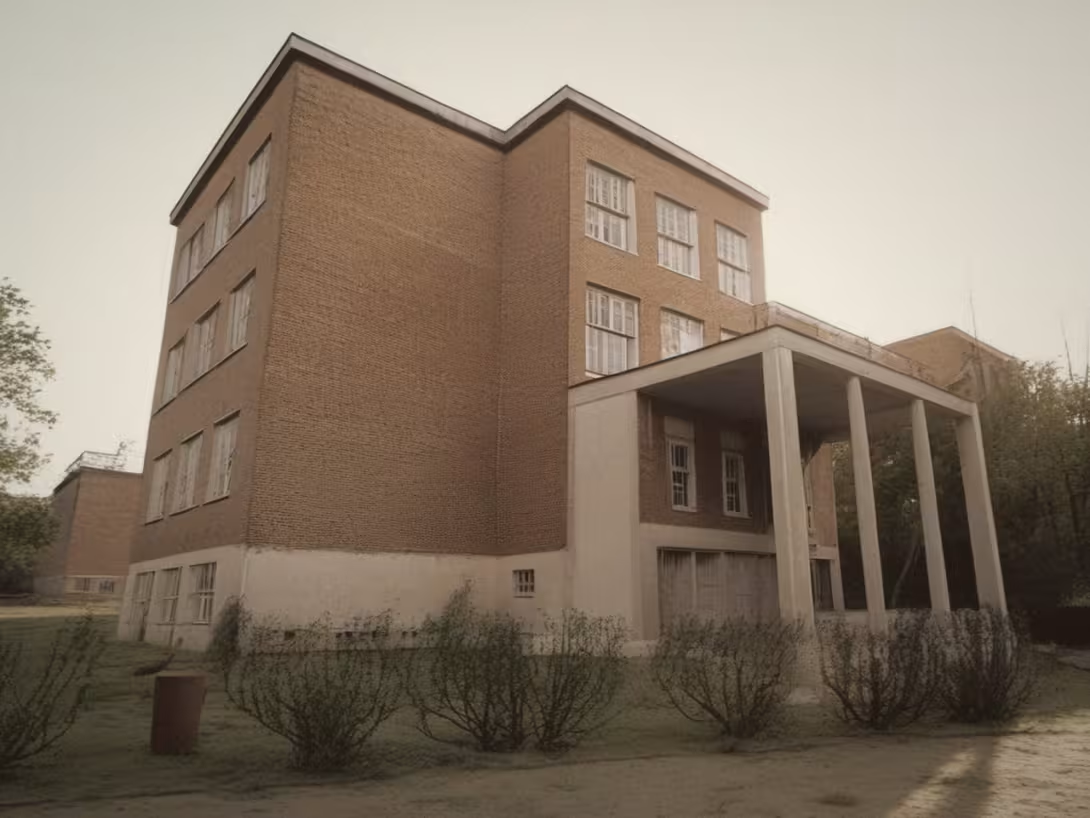
The historical appearance on the left is an AI-generated visualisation and serves as inspiration only.
Historical milestones
- 1955
- Drawing up the Václav Rohíček project.
- 1956-1959
- Realization of school construction.
- 2019
- The building is declared a cultural monument.
Architectural development
The building is available from Gočár's older building, but it has two basements for technical facilities and covers. The facade is covered with non-glazed couches which imitate the real wall used on the adjacent building. The inner spaces include classrooms, cabinet rooms and two-story gym in the central wing.
Historical events
1955: Drawing up of the project Václav Rhěček. 1956-1959: Implementation of school construction. 2019: Declaration of the building a cultural monument.
Points of interest
- The building was built in 1956- 1959 and was declared a cultural monument in 2019. - Architects Jan Rejchl and Václav Rohlíček followed the urban concept of Josef Gočár. - The building has two underground floors, the second has a boiler room and two military shelters. - The facade of the building is covered with unglazed couches that imitate a real wall. - Roof superstructures have been equipped with an expansion tank, observable and civil defence storage.
Guide
Show guide text
This text was created by artificial intelligence and has not been editorially reviewed. It may contain inaccuracies.
Welcome to Hradec Kralove. You just stopped by one of the most important construction sites in this city. You are standing right in front of the Zalabí Elementary School building, which is also known in the vicinity and among experts as Tyl's waterfront. Feel the atmosphere of peace and order that this building brings to its surroundings. In front of your eyes is a monumental, yet very clean and harmonious building that dominates the whole place with its presence. It is a place where the need for education combines with high artistic intent and architectural precision. Feel the strength of the lines and the purity of the space that is now addressing you.
Let us now return together in time and understand how this object came into being and why it is so important for the city. This school wasn't built randomly. Its history is firmly linked to the period between 1956 and 1959. This was the time when architecture tried to find its new direction while expressing stability and order. The project of this school was developed by Václav Rohlíček and led by Jan Rejchl. Their work, however, was not only about masonry and concrete. It was a task that required a deep understanding of the history of this city.
Now pay attention to the architecture itself and to what you are watching. The building is an excellent example of functionalism. If you look at its overall form, you will notice that there is no unnecessary decorative element that has no clear purpose. Everything you see serves a function. Architects Jan Rejchl and Václav Rohlíček did not act here in isolation. Their greatest success was how they were able to build sensitively on the urban concept that one of the largest Czech architects of all time, Josef Gočár, prepared for this complex. Gočár designed this plan before World War II, and his vision was so strong and thoughtful that even several decades later the school building perfectly complements it. Now, when you look at the facade or the way the building sticks into the surrounding space, you actually see a dialogue between two generations of architects. You see the connection between the prewar vision and the postwar realization.
This connection is the key to understanding the whole place. The architects weren't just builders, they were city hall guards. Jan Rejchl and Václav Rohlíček understand that their task is to fulfill the dream of Josef Gočár and create a space that will not only be functional for children who will teach here, but which will also be aesthetically appropriate to the whole city. This continuity of thinking is what makes this school something much bigger than just an ordinary school object. It's living proof of how architecture can link the past to the present.
You may now wonder what's in this large building. Although at first sight we focus on what is visible above the ground, this school also has an invisible, technical face. Did you know that under your feet, two entire underground floors extend? While the upper parts of the building are full of light and space for learning, the second, deepest underground floor, serves as the technical heart of the entire building. There is, for example, the background of the boiler room, which provides heat and life for the whole school. It is a fascinating contrast between the education world and the technical support world, which takes place in silence beneath the ground.
This exceptional and high quality construction eventually led to the building being officially declared a cultural monument in 2019. This is an important recognition that tells us that this object is no longer just part of the everyday life of the people, but is part of our common heritage that we must protect for future generations.
I hope that this brief view of the history and architecture of the Zalabi School has helped you better understand its meaning and beauty. Now that you know what happened in this building and what role the great architects played in it, I suggest you continue your walk along the waterfront. Feel the beauty of this city and be inspired by its architectural wealth. Thank you for your journey and we will wait you out at the next monument.
Tips for visitors
The ideal time for visiting school exteriors is during weekends or afternoon hours when the school area is quieter and traffic around minimal. Due to functionalist architecture, the building excels best in the morning or afternoon sun, which highlights the clean line of construction.
The building is located in the availability of public transport, whose current connection is checked in the official search engine.
Take comfortable shoes for a tour of the exteriors for a walk along the waterfront. If you are planning photography, the best pictures of functionalist architecture are taken from the opposite bank of the river, from where the building is visible in all its architectural context.
In the immediate vicinity there is a school resort on Tyla's waterfront, which directly follows the historical centre of Hradec Králové. A walk along the river to the center offers a pleasant connection of modern architecture with the historical heart of the city.
For families with children, the location is suitable thanks to the proximity of the waterfront, which offers space for easy walking. We recommend connecting a tour of the school with a visit to the historical centre, which is easily accessible on foot from the building.
Frequently asked questions
Can the monument be visited?
The building is in use (offices, a school, shops and the like). The interior is generally accessible only during operating hours and tours are not usually offered; we have not verified the details. You can see the exterior from the street.
Where is the monument?
Location: Hradec Králové, Královéhradecký kraj. The map on this page shows the exact spot.
Why is the monument protected?
It is listed in the Central List of Cultural Monuments of the Czech Republic as a cultural monument (register no. 1999993771).
Businesses nearby
Do you run a restaurant, accommodation, shop, museum, rental, wellness or other visitor service near this monument? Show yourself directly to the people heading to it — this is how they will see you in the app and on the web:
Nearby
School resort on Tyl's waterfront, historical center Hradec Králové.
Accommodation nearby
Themed route
1.Základní škola Zálabí Type: Educational institutions Why is it worth visiting: It serves as the main destination and starting point of the entire route.
2. School campus on Tyl's waterfront Type: Area Why is worth a visit: Provides a pleasant space for a short rest in close proximity to the school.
3. Historical Centre Hradec Kralove Type: City Why is it worth a visit: It offers an opportunity to explore the old architecture and unique city atmosphere.
Seasonal recommendations
Spring brings new strength and fine, scattered light to the surroundings, which beautifully highlights the details of the building. Nature begins to bloom again, which creates a joyful and fresh mood. For visiting it is best to choose the morning hours when the air is the cleanest. We recommend to prepare layered clothes because the weather can still be variable in this period.
During the summer, space is filled with strong sunlight and the surrounding green is in full bloom. The mood is very lively and sunny days are ideal for long observation. Due to higher temperatures and more people, we recommend that you come as early as possible in the morning to avoid the greatest heat and crowds. Don't forget the protective headgear and plenty of water.
Autumn turns the surroundings into a colorful world full of gold and brown shades, often accompanied by morning fog, which give the place a quiet and mysterious mood. The lighting is low during this period and very suitable for capturing images. It is advisable to wear comfortable and waterproof shoes because wet leaves can make the roads slippery. The best time for a tour is in the afternoon when the sun creates beautiful shadows.
Winter covers the memory of silence and peace, which creates a very sober and serious mood. The days are short and the light is weak, which can affect the visibility of the details. It is necessary to take very warm and wind-resistant clothes to make the visit pleasant. In advent time or during freezing days we recommend planning a visit around noon when the lights are the most.
Visualizations and artistic views


The visualisations are generated by artificial intelligence and serve as inspiration.
Photos from the area
Real photos taken near the monument


Zdroj a licence jsou uvedeny u každého snímku.
Tips from visitors
No tips yet. Be the first!
Log in and add your tip.
Sources and literature
Faktickým podkladem tohoto textu byl článek na Wikipedii, jehož autory jsou přispěvatelé Wikipedie. Článek je dostupný pod licencí CC BY-SA 4.0.
Location on the map
More monuments – Hradec Králové
Show all in the municipality
Příběhy a pověsti
Legendy, pověsti a příběhy spjaté s touto památkou
Fotografie návštěvníků
Zatím žádné fotografie. Buďte první, kdo přidá fotografii z návštěvy!
Log in a přidejte svou fotografii nebo hodnoťte.
Za ověřenou návštěvu v aplikaci získáte víc bodů — poznáme podle GPS, že jste na místě.
Reviews and comments