






Zámeček Srbeč Castle
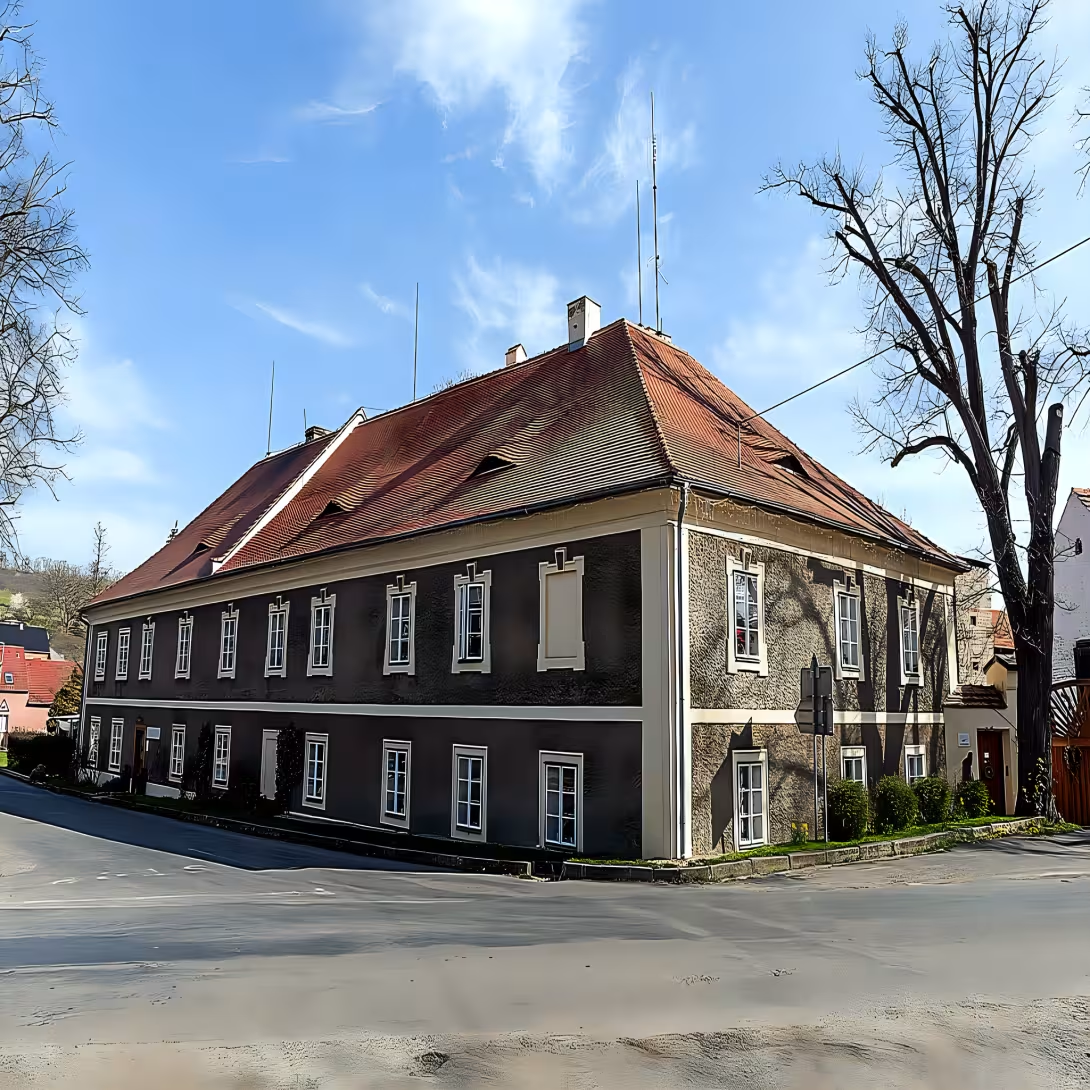
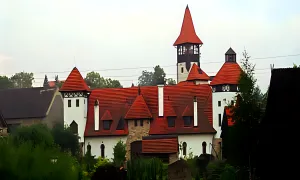
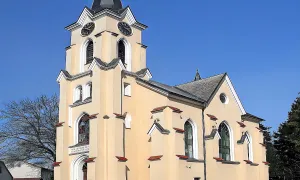
Zámeček Srbeč is a cultural monument located in the village of Srbeč, within Středočeský kraj, Czech Republic. Originally a fortress serving as a manorial seat from the fifteenth to sixteenth centuries, it evolved into a small Baroque castle by the eighteenth century. Its historical significance is enhanced by its role in regional history and current use for cultural and social services.
The origins of Zámeček Srbeč date back to when it served as a fortress, first documented during a 1475 dispute between Jindřich Míčan z Klinštejna and Zbyněk z Kolovrat na Kornhauzu. This early mention highlights its importance as a manorial seat for a minor estate. The site underwent significant transformations under Matyáš Štampach in the late sixteenth century, when it was fortified and renovated in the Renaissance style. By the eighteenth century, the construction of a Baroque castle marked another phase of development, reflecting broader architectural trends.
Architecturally, Zámeček Srbeč showcases elements from different eras. The original fortress underwent Renaissance renovations under Matyáš Štampach, who integrated it into the larger Mšec estate in 1584. The eighteenth-century addition of a Baroque castle introduced new stylistic features, though irregularities in its masonry suggest a complex construction history. Today, the site includes a protected area with structures such as a deputátnický domkem and chlév, although modern interventions have altered parts of the original layout.
Ownership of Zámeček Srbeč has seen several notable figures throughout its history. Dětřich Reichl z Reichu acquired the estate in 1535, followed by Eva Hrušková z Března and her husband Adam Hruška z Března in the late sixteenth century. Matyáš Štampach later took ownership in 1584, integrating it into his Mšec holdings. The estate faced confiscation during the Bohemian Revolt when Jan Jindřich Štampach was involved, leading to its acquisition by Vratislav z Fürstenbergu in 1623.
Key events at Zámeček Srbeč include its initial documentation as a fortress and subsequent integration into the Mšec estate. The confiscation of the estate from Jan Jindřich Štampach due to his involvement in the Bohemian Revolt is another significant historical moment, reflecting broader socio-political changes occurring in Bohemia during these periods.
Today, Zámeček Srbeč serves as a cultural and social hub under the stewardship of the non-profit organization Společenství Dobromysl. The site hosts services related to therapeutic and educational activities, including a Týdenní stacionář and an Informační a kulturní centrum. Despite modern alterations, such as a concrete storage building incorporating parts of older structures, the estate remains a valuable cultural monument.
Zámeček Srbeč offers visitors a unique glimpse into the region's historical evolution from a medieval fortress to a Baroque castle, reflecting broader architectural and social changes over centuries. Its current role in providing community services adds contemporary relevance to its rich history. Visitors are invited to explore this site to appreciate both its historical significance and its ongoing contribution to cultural life.
Then and now
Drag the slider to compare how the landmark may have looked when it was built with the view today.
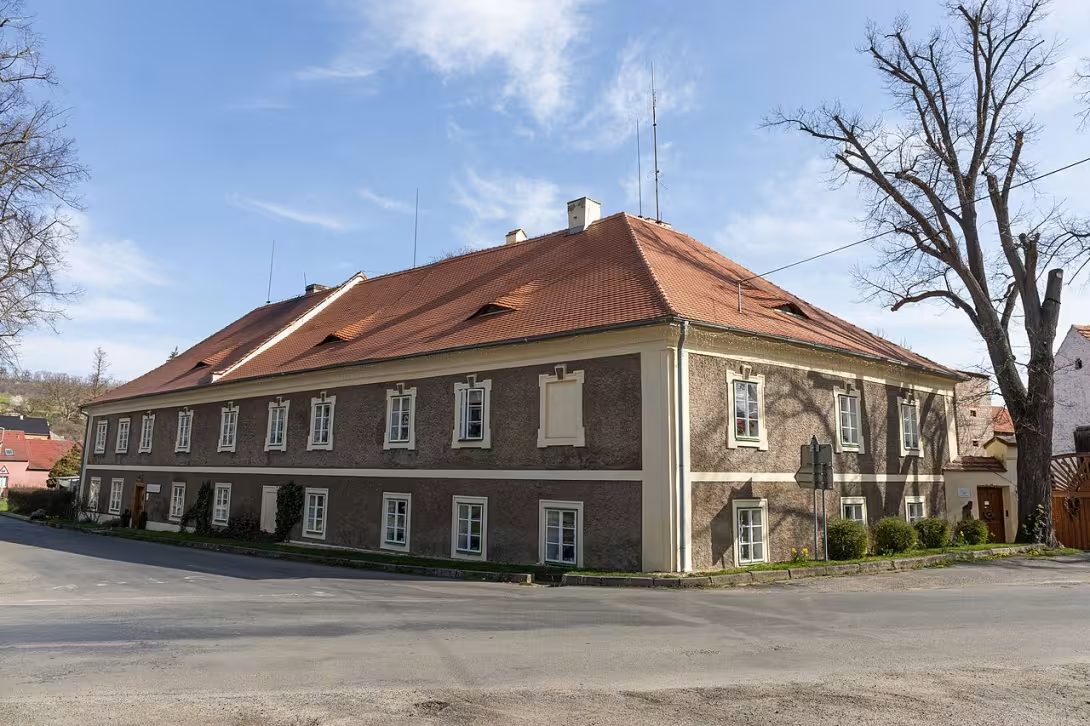
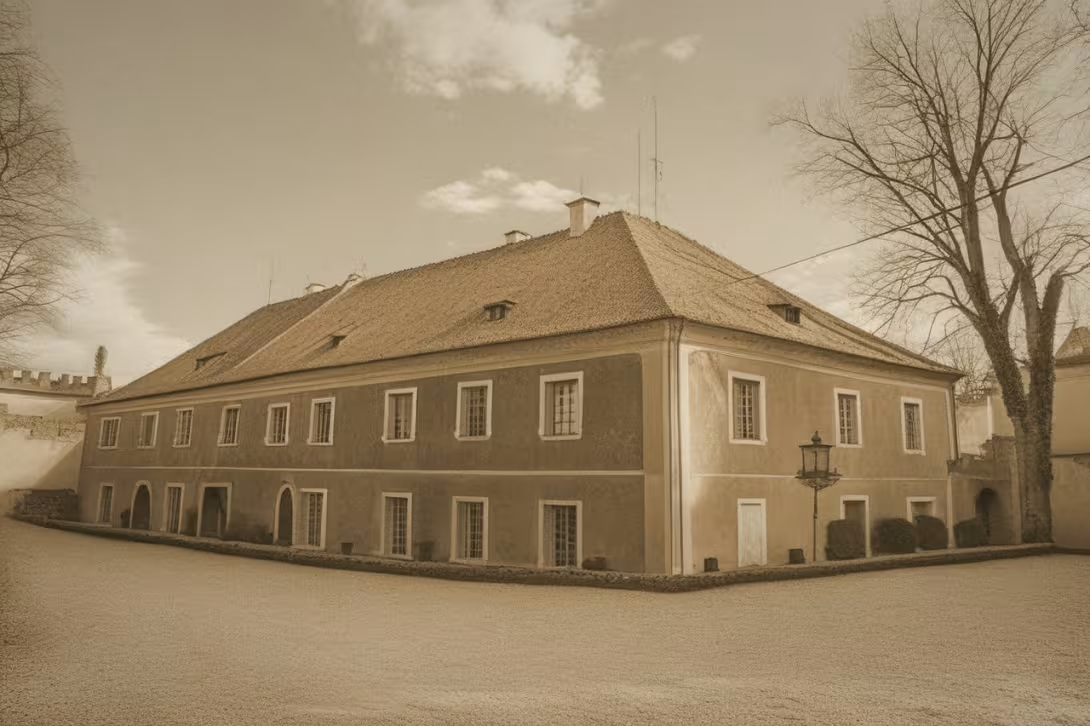
The historical appearance on the left is an AI-generated visualisation and serves as inspiration only.
Historical milestones
- 1475
- First documented mention of the fortress during a dispute.
- 1584
- Matyáš Štampach acquired Srbeč and integrated it into the Mšec estate.
- 1621
- Confiscation of the estate from Jan Jindřich Štampach due to his involvement in the Bohemian Revolt.
Architectural development
Originally a fortress, Srbeč underwent significant changes over time. In the sixteenth century, Matyáš Štampach had it fortified and renovated in the Renaissance style. The eighteenth-century addition of a Baroque castle marked another phase of development, with irregularities in its masonry suggesting complex construction history.
Historical events
The first documented mention of the fortress in Srbeč was in 1475 during a dispute between Jindřich Míčan z Klinštejna and Zbyněk z Kolovrat na Kornhauzu.
In 1584, Matyáš Štampach acquired Srbeč and integrated it into the Mšec estate, which he had purchased in 1585.
The estate was confiscated from Jan Jindřich Štampach in 1621 due to his involvement in the Bohemian Revolt.
Owners
Dětřich Reichl z Reichu (1535)
Eva Hrušková z Března (1575, with Kateřina)
Adam Hruška z Března (1581-1584)
Matyáš Štampach ze Štampachu (1584-1591)
Jan Jindřich Štampach (1621)
Vratislav z Fürstenbergu (1623)
Points of interest
- The Zámeček Srbeč's architectural evolution from a Renaissance fortress to an eighteenth-century Baroque castle reflects the broader European transition in styles and tastes over just a few centuries. - During its history, Zámeček Srbeč was involved in a notable legal dispute in 1475 between Jindřich Míčan z Klinštejna and Zbyněk z Kolovrat na Kornhauzu, highlighting its early significance as a manorial seat.
- The estate's confiscation during the Bohemian Revolt underscores the turbulent political climate of the time, with Jan Jindřich Štampach losing it to Vratislav z Fürstenbergu in 1623 due to his involvement in the revolt.
- Despite modern interventions like a concrete storage building that incorporated parts of older structures, Zámeček Srbeč maintains its status as a protected cultural monument, illustrating the challenges and compromises in preserving historical sites.
- Today, under the care of Společenství Dobromysl, Zámeček Srbeč serves not only as a testament to architectural history but also as a vibrant center for therapeutic and educational activities.
Guide
This guide is narrated by a synthetic voice generated by artificial intelligence.
Show guide text
This text was created by artificial intelligence and has not been editorially reviewed. It may contain inaccuracies.
Srbeč Castle stands in the village of the same name, north of Nové Strašecí in the Rakovnicko region. It is a small Baroque castle with an economic courtyard. Its predecessor was a fortified manor house, which was the seat of a small estate from the fifteenth century until the end of the sixteenth century.
In the fifteenth century, the village was divided into two parts. One of them belonged to a minor noble family, from which Martin and Diviš ze Srbče are mentioned in the year 1421. When the first manor residence was built here is unclear. The fortified manor house is first documented in 1475, when Jindřich Míčan z Klinštejna and Zbyněk z Kolovrat were disputing over the village. The historian August Sedláček believed that the fortified manor house was built precisely at that time, because Srbeč then became a hereditary estate.
In 1535, Dětřich Reichl z Reichu purchased the village with the courtyard and fortified manor house from Albrechta Šlika. His property was inherited in 1575 by his daughters Eva and Kateřina. Srbeč fell to Eva, who married Adam Hrušku z Března. After his death in 1581, Eva married again, this time to Matyáš Štampach ze Štampachu, and three years later she transferred Srbeč to him. There followed a dispute which ended only in 1591. Matyáš had to pay off the claims of Eva's sons from her first marriage.
Matyáš Štampach had the fortified manor house newly fortified and rebuilt in the Renaissance style. In 1585, however, he purchased the Mšec estate for fifty-five thousand Meissen groschens and joined Srbeč to it. The castle in Mšec became the main residence and the Srbeč fortified manor house lost its function. However, its courtyard continued to serve agricultural purposes. The fortified manor house is last mentioned in 1621. At that time the estate was confiscated from Jan Jindřích Štampach for his participation in the Czech Estates Revolt. In 1623 it was purchased by Vratislav z Fürstenbergu. After that the fortified manor house disappears from the records, probably standing directly in the economic courtyard.
In the eighteenth century a Baroque castle grew up on the western side of the courtyard. Irregularities in its masonry, however, suggest a more complex construction history. At the same time, the other buildings of the courtyard were also substantially rebuilt.
In the second half of the twentieth century the courtyard served a unified agricultural cooperative. From that period comes a reinforced concrete warehouse, which partially used an older opaline structure. This had four storeys on the west and windows originally vaulted with a segmental arch.
The castle, the deputy's house, the cattle shed and the eastern wing of the courtyard are heritage protected. Since 2015 the complex has been owned by the non-profit organization Společenství Dobromysl. It operates a weekly day care centre with therapy and Waldorf pedagogy as well as an information and cultural centre.
Tips for visitors
The best time to visit Zámek Srbeč is during the late spring or early autumn months, typically from May to September. During this period, the weather is generally mild and pleasant, making it ideal for exploring the natural landscapes surrounding the castle. Additionally, these seasons offer vibrant flora that enhances the beauty of the area, providing a picturesque backdrop for your visit.
It's advisable to check current transportation options online before your visit to ensure a smooth journey.
When visiting Zámek Srbeč, consider bringing comfortable walking shoes as you may want to explore the surrounding natural landscapes and historical sites. Also, pack a light jacket or sweater, as temperatures can vary throughout the day. Don't forget essentials like water, snacks, and sunscreen if planning to spend time outdoors.
For photography enthusiasts, Zámek Srbeč offers several picturesque spots. The best lighting for capturing the castle's architecture is during the golden hours of early morning or late afternoon when the sunlight creates a warm glow. Additionally, the surrounding natural landscapes provide excellent opportunities for landscape photography, especially in spring and autumn.
Within a 30-minute drive from Zámek Srbeč, you can visit other historical sites such as Mšec Castle, which offers its own unique charm and history. The nearby villages also present an opportunity to explore local culture and traditions. These destinations are perfect for extending your day trip in the Středočeský region.
Frequently asked questions
Can the monument be visited?
Some buildings of this kind are open for guided tours, others serve another purpose or are privately owned. We have not verified whether and when this monument is open – please ask the operator.
What are the opening hours and admission?
We have not verified the opening hours or admission. Current information is published by the operator.
Where is the monument?
Location: Srbeč, Středočeský kraj. The map on this page shows the exact spot.
Why is the monument protected?
It is listed in the Central List of Cultural Monuments of the Czech Republic as a cultural monument (register no. 33736/2-3105).
Businesses nearby
Do you run a restaurant, accommodation, shop, museum, rental, wellness or other visitor service near this monument? Show yourself directly to the people heading to it — this is how they will see you in the app and on the web:
Nearby
Zámek Srbeč is located in a rural setting, with natural landscapes typical of the Středočeský region. The area includes other historical sites such as Mšec and nearby villages.
Accommodation nearby
Themed route
Tematická výletní trať: Zámek Srbeč a okolí
1. Zámeček Srbeč (zámek)
Typ: Historický zámek
Proč stojí za návštěvu: Zámeček Srbeč je jedním z nejstarších a nejkrásnějších gotických zámků v České republice. Jeho historie sahá do 13. století, což jej činí fascinujícím místem pro milovníky historie a architektury. Zámek nabízí návštěvníkům přehledné výstavy o jeho bohaté minulosti, zatímco jeho krásný park poskytuje klidnou útěchu.
2. Mšec
Typ: Historická vesnice
Proč stojí za návštěvu: Mšec je malá, ale historicky významná vesnice známá svým kostelem a zříceninami starého hradu. Tato lokalita nabízí jedinečné pohledy na českou dějiny a kulturu. Návštěva Mšec poskytuje vhled do života v minulých stoletích, zatímco jeho mírné prostředí je ideální pro relaxaci.
3. Okolní vesnice
Typ: Tradiční česká vesnice
Proč stojí za návštěvu: Obce v okolí Zámku Srbeč, jako jsou například Kostelec nad Černými lesy nebo Všestary, zachovávají tradiční české venkovské prostředí. Tyto vesnice nabízejí návštěvníkům možnost prozkoumat autentické české dědictví a zároveň si užít klidné chvilky v přírodě. Jejich maloměstský charakter umožňuje návštěvníkům cítit se jako doma, zatímco prozkoumávají jejich historické a kulturní aspekty.
Tato trať nabízí kombinaci historie, kultury a přírody v jednom z nejkrásnějších regionů Středočeského kraje.
Seasonal recommendations
Spring: Visiting Zámek Srbeč during spring offers a unique experience as the surrounding landscape bursts into life with vibrant colors from blooming flowers and fresh greenery, creating a picturesque setting for photography enthusiasts. The soft sunlight enhances the beauty of the castle's architecture, casting gentle shadows that add depth to its historic charm. This is an ideal time for nature lovers who can enjoy peaceful strolls through the gardens before they become busier in summer. Visitors should wear comfortable layers as temperatures can vary, and it’s wise to arrive early to avoid larger crowds attracted by the pleasant weather.
Summer: The castle shines under the bright sun during summer, providing perfect lighting for exploring its historical interiors and expansive grounds. This is a popular time for visitors, especially families and tourists, so expect larger crowds. To fully enjoy your visit without feeling rushed, consider arriving early in the morning or later in the afternoon to avoid peak times. Dressing in light, breathable clothing is advisable due to warmer temperatures, and don’t forget sunscreen and hats for protection against the sun.
Autumn: Autumn at Zámek Srbeč offers a serene atmosphere as the foliage transforms into warm hues of red, orange, and yellow. The cooler weather makes it an ideal time for leisurely exploration without the summer crowds, allowing visitors to appreciate both the castle's history and its natural surroundings in tranquility. Wearing layers is recommended, as temperatures can be quite variable, ranging from mild days to chilly evenings. This season also provides a unique opportunity to capture stunning photographs of the landscape bathed in autumn light.
Winter: Winter brings a magical atmosphere to Zámek Srbeč with snow-covered grounds and possibly festive decorations that enhance its historic appeal. Visitors should dress warmly in layers, including hats, gloves, and insulated footwear, as temperatures can be quite cold. While the winter landscape offers a unique charm, some outdoor areas might be less accessible due to snow, making indoor exploration more appealing during your visit.
Visualizations and artistic views


The visualisations are generated by artificial intelligence and serve as inspiration.
Photos from the area
Real photos taken near the monument


Zdroj a licence jsou uvedeny u každého snímku.
Tips from visitors
No tips yet. Be the first!
Log in and add your tip.
Sources and literature
Photos: A.Patek / CC BY-SA 3.0, rozlišení zvýšeno umělou inteligencí — Wikimedia Commons. The author and licence also appear when you hover over the image.
Faktickým podkladem tohoto textu byl článek na Wikipedii, jehož autory jsou přispěvatelé Wikipedie. Článek je dostupný pod licencí CC BY-SA 4.0.
Location on the map
Příběhy a pověsti
Legendy, pověsti a příběhy spjaté s touto památkou
Fotografie návštěvníků
Zatím žádné fotografie. Buďte první, kdo přidá fotografii z návštěvy!
Log in a přidejte svou fotografii nebo hodnoťte.
Za ověřenou návštěvu v aplikaci získáte víc bodů — poznáme podle GPS, že jste na místě.
Reviews and comments