



zámek Brodec Chateau
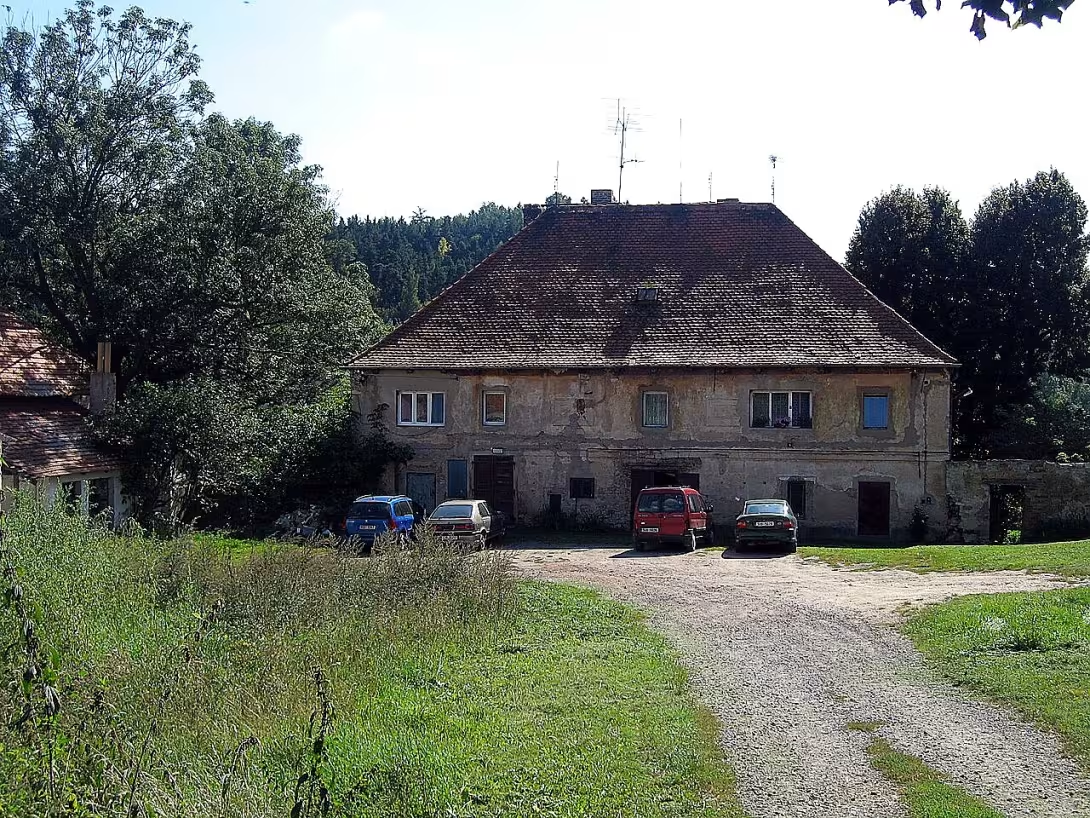
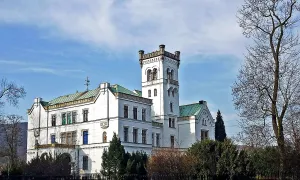
Brodec Castle is a baroque structure located in Brodec village within the Louny District, Ústecký kraj. Originally built as a sixteenth-century fortress, it was significantly transformed into its current form during the late seventeenth century and later modified. The site is notable for its evolution from a noble seat to an administrative residence under the Schwarzenberg family, reflecting broader cultural and political shifts in Bohemia.
The origins of Brodec Castle date back to around 1549 when Jiřík Jan Kuneš z Lukovec constructed the initial fortress. Its history includes several ownership changes, starting with Adam Hruška z Března a na Cítolibech in 1580 and passing through various hands over the next century. Notably, Jáchym Jindřich Štensdorfo ze Štensdoru's involvement in the Bohemian Revolt led to its confiscation in 1612. The Thirty Years' War devastated the structure until Albrecht Kryštof Hložek purchased and restored it in 1651, adding agricultural facilities.
The architectural transformation into a baroque edifice began under Markéta Blandina z Cron around 1659. This period saw much of its medieval structure replaced with baroque elements, marking a significant shift in style and function. Later, in the early nineteenth century, the Schwarzenberg family modified it to classical style for administrative purposes.
Throughout its history, Brodec Castle has had numerous owners, including notable figures such as Kašpar Felix Manubio de Mantua and Karel Daniel Pachta z Rájova. The castle's role evolved from a noble seat to an administrative hub under the Schwarzenberg family, reflecting broader socio-political changes in the region.
Today, Brodec Castle is no longer accessible for public tours as it stands within a former agricultural estate now part of a unified agricultural cooperative since 1950. Its transformation into a simple single-story building with an oblong ground plan marks its departure from historical grandeur. Despite this, the castle remains a site of interest due to its rich history and architectural evolution.
Visitors can explore the surrounding area along cycling route number 3035 or the yellow-marked tourist trail leading to Divice and Dolní Ročov Monastery. While the castle itself may not be accessible, its historical significance and picturesque village setting make it a worthwhile destination for those interested in Bohemian history and architecture.
Then and now
Drag the slider to compare how the landmark may have looked when it was built with the view today.
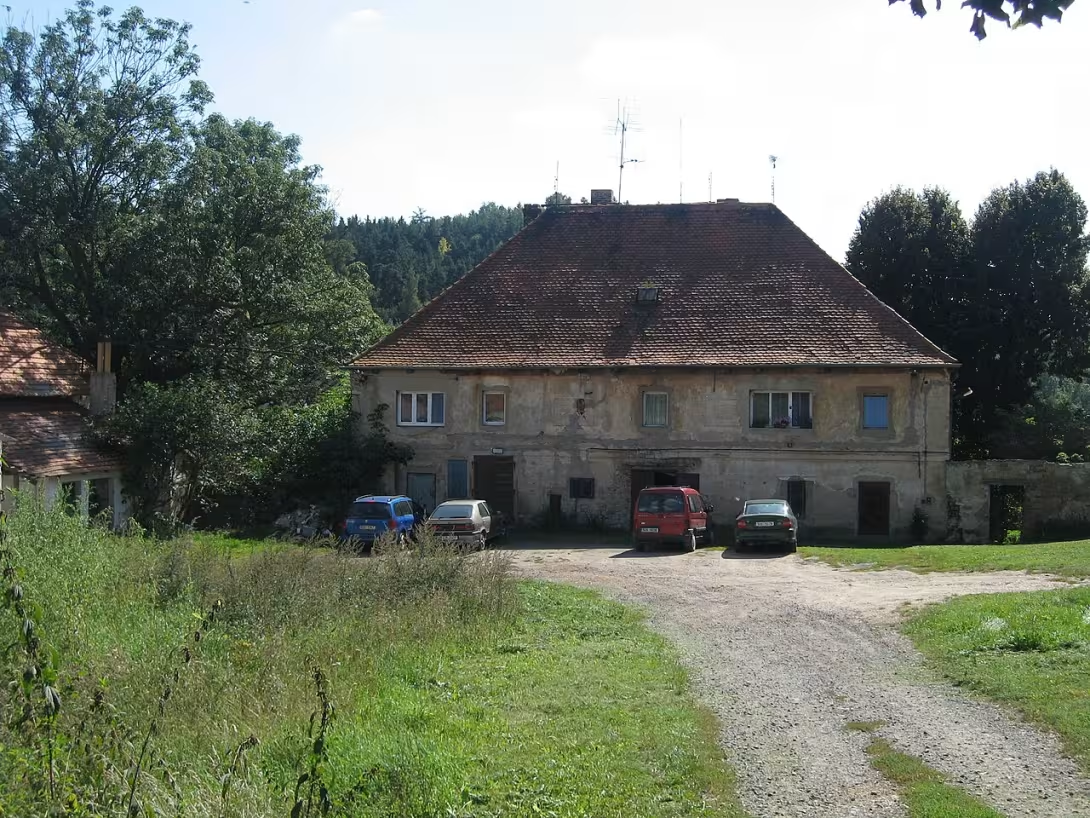
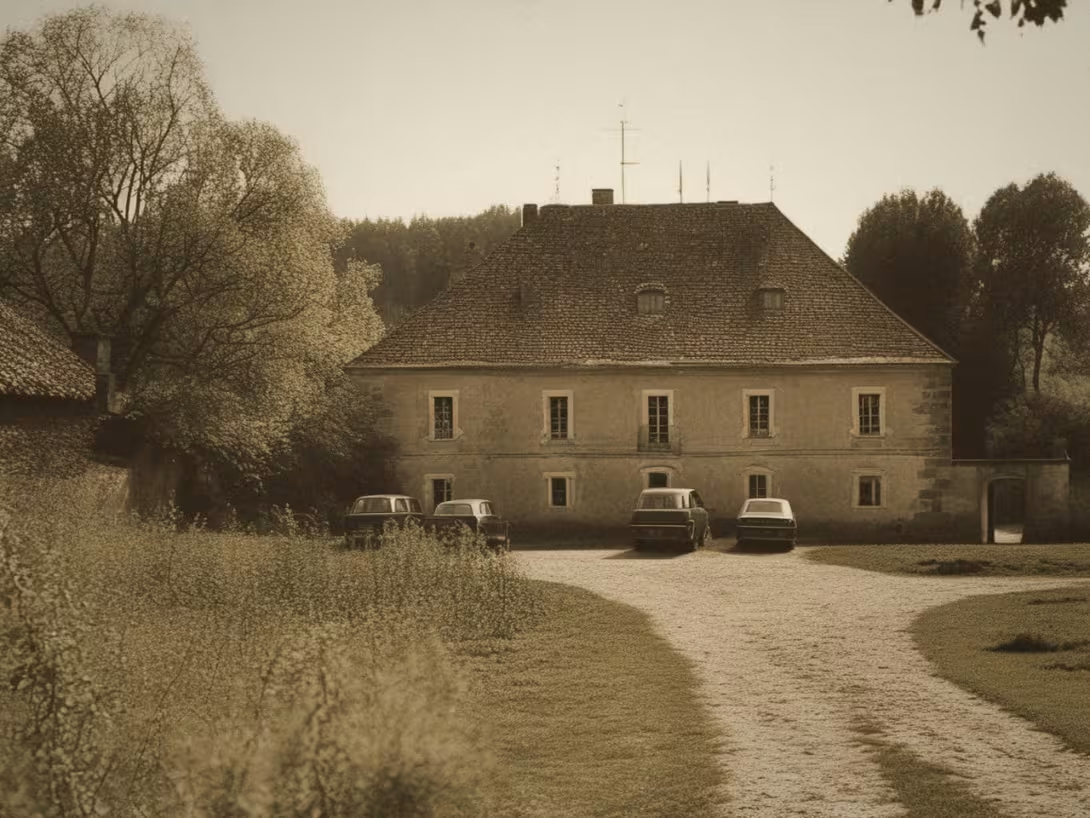
The historical appearance on the left is an AI-generated visualisation and serves as inspiration only.
Historical milestones
- 1549
- Jiřík Jan Kuneš z Lukovec built the original castle.
- 1580
- Adam Hruška z Března a na Cítolibech became the owner.
- 1612
- The castle was confiscated due to Jáchym Jindřich Štensdorfova's involvement in the Bohemian Revolt.
- 1651
- Albrecht Kryštof Hložek restored the castle and added agricultural facilities.
- 1659
- Markéta Blandina z Cron began the Baroque transformation of the castle.
Architectural development
Brodec Castle evolved from a sixteenth-century fortress, which was significantly damaged during the Thirty Years' War. Albrecht Kryštof Hložek had it rebuilt and expanded with agricultural facilities in the mid-seventeenth century. The transformation into a baroque castle occurred under Markéta Blandina z Cron's ownership. Later, in the early nineteenth century, the Schwarzenberg family modified it to classical style for administrative use.
Historical events
The castle was confiscated from Jáchym Jindřich Štensdorfo in 1612 due to his involvement in the Bohemian Revolt.
Markéta Blandina z Cron initiated a baroque reconstruction of the fortress into a castle around 1659.
Owners
Jiřík Jan Kuneš z Lukovec (circa 1549)
Adam Hruška z Března a na Cítolibech (1580-1581)
Jan Hruška (1596–1597)
Kryštof mladší Šlik (1604)
Volf Bernart Fictum z Egerberka (1608)
Jáchym Jindřich Štensdorfo ze Štensdoru (1612, confiscated during the Bohemian Revolt)
Jan Reinhard Hildebrandt (1624)
František Emanuel Hildebrandt (post-1651)
Albrecht Kryštof Hložek ze Žampachu (1651)
Kašpar Felix Manubio de Mantua (circa 1656)
Jiří z Donína and Markéta Blandina z Cron (1659)
Arnošt ze Schützenu (post-1659)
Points of interest
- Brodec Castle underwent a significant transformation from a medieval fortress to a baroque structure under the ownership of Markéta Blandina z Cron around 1659. This change involved replacing much of its original architecture with baroque elements, reflecting broader stylistic shifts in Bohemia during that period.
- The castle's confiscation following Jáchym Jindřich Štensdorfo ze Štensdoru's involvement in the Bohemian Revolt highlights its strategic importance and the turbulent political landscape of early 17th-century Bohemia, which led to frequent changes in ownership due to shifting allegiances.
- Albrecht Kryštof Hložek played a crucial role in restoring Brodec Castle after it was devastated during the Thirty Years' War. His restoration efforts included adding agricultural facilities, illustrating how practical needs often drove architectural modifications in post-war periods.
- The transformation of Brodec Castle into an administrative hub under the Schwarzenberg family in the early nineteenth century marked its transition from a noble seat to a functional building reflecting socio-political changes, as it adapted to new roles within the region's evolving administrative landscape.
- Although no longer accessible for public tours since becoming part of a unified agricultural cooperative in 1950, Brodec Castle remains an intriguing site due to its rich history and architectural evolution. Its current state as a simple single-story building contrasts sharply with its historical grandeur, offering insights into how historical sites can be repurposed over time.
Guide
This guide is narrated by a synthetic voice generated by artificial intelligence.
Show guide text
This text was created by artificial intelligence and has not been editorially reviewed. It may contain inaccuracies.
Castle Brodec stands in the western part of the village of the same name in the Louny region, within the yard of a farm complex. Its origins date back to the middle of the sixteenth century. However, its present appearance is the result of a Baroque reconstruction in the second half of the seventeenth century and later modifications.
The first noble residence in Brodec was a fortified house, which was probably built around fifteen forty-nine by Jiřík Jan Kuneš z Lukovec. In fifteen eighty, Adam Hruška z Března and na Cítolibech purchased the estate, but he died just a year later. His sons then managed the estate together for a long time and divided it between themselves only in the years fifteen ninety-six to fifteen ninety-seven. Brodec fell to the eldest of them, Jan Hruška, who sold it to Anežka, the wife of Kryštof mladší Šlik. In sixteen oh four, Volf Bernart Fictum z Egerberka acquired the village from her. Four years later, he sold it to Jáchym Jindřích Štensdorf ze Štensdorfu, whose lands were confiscated for participation in the Estates Revolt.
In sixteen twenty-four, Jan Reinhard Hildebrandt purchased the estate and his son František Emanuel inherited it after him. The fortified house was devastated by the Thirty Years War in the meantime. In sixteen fifty-one, it was purchased by the provincial judge Albrecht Kryštof Hložek ze Žampachu. He had it renovated and added farm buildings to it, including a brewery and a sheep house. But just five years later, he sold the estate to Kašpar Felix Manubio de Mantua. The historian August Sedláček lists him as Karel Šťastný Manerbia.
In sixteen fifty-nine, Jiří z Donína purchased the village and that same year Markéta Blandina z Cron, the wife of Arnošt ze Schützenu, bought it from him. It was she who had the fortified house rebuilt into a Baroque castle. Their descendants owned the estate until seventeen twenty-one, when Karel Daniel Pachta z Rájova inherited it. The Pachtas held it until seventeen ninety-seven, when Arnošt Karel Pachta z Rájova sold it to Jakub Wiemar z Wiemmersberka. Five years later, the estate was purchased by Prince Josef Druhý ze Schwarzenbergu.
By then, the castle no longer served as the residence of the local authority. The Schwarzenbergs had it modified in the Classical style and their officials lived in it. After the land reform, the farm complex became a residual estate and from nineteen fifty onwards the entire compound belonged to the unified agricultural cooperative. During later modifications, all artistic decoration disappeared and the castle became a simple single-storey building with a rectangular floor plan.
Tips for visitors
The best time to visit Brodec Castle is during late spring or early autumn when the weather is mild, making it ideal for exploring both indoors and outdoors. These seasons offer pleasant temperatures and beautiful natural surroundings, enhancing your experience as you walk through the castle grounds and nearby trails. Additionally, visiting outside of peak tourist season can mean fewer crowds, allowing for a more relaxed visit.
The castle is accessible by car, but public transport options are also viable. For those preferring cycling, the castle lies along cycling route number 3035, making it an excellent destination for a bike ride.
When visiting Brodec Castle, consider bringing comfortable walking shoes as there are several outdoor areas to explore. A camera is recommended to capture the picturesque views of the baroque architecture and surrounding farmland. Sunscreen and a hat can be useful if you plan on spending time outdoors during sunny days. Additionally, carrying a light jacket or sweater might be wise in case of cooler temperatures.
For photography enthusiasts, some of the best spots include the castle's main entrance and courtyard where the baroque architecture is most striking. The lighting conditions are ideal during late morning or early afternoon when the sun illuminates the structures without harsh shadows. Exploring the surrounding trails can also provide unique perspectives and natural backdrops for your photos.
Nearby attractions within a 30-minute drive include Divice and Dolní Ročov Monastery, both of which offer historical insights and scenic views. These sites are accessible via a yellow-marked tourist trail that starts near Brodec Castle, making them perfect extensions to your visit. For families with children, the castle grounds provide ample space for exploration and play, while the nearby trails can be an enjoyable family hike.
Frequently asked questions
Can the monument be visited?
Some buildings of this kind are open for guided tours, others serve another purpose or are privately owned. We have not verified whether and when this monument is open – please ask the operator.
What are the opening hours and admission?
We have not verified the opening hours or admission. Current information is published by the operator.
Where is the monument?
Location: Brodec, Ústecký kraj. The map on this page shows the exact spot.
Businesses nearby
Do you run a restaurant, accommodation, shop, museum, rental, wellness or other visitor service near this monument? Show yourself directly to the people heading to it — this is how they will see you in the app and on the web:
Nearby
Brodec Castle is situated within the village of Brodec, surrounded by farmland. It lies along cycling route number 3035 and near a yellow-marked tourist trail leading to Divice and Dolní Ročov Monastery.
Accommodation nearby
Themed route
Thematic Tour Itinerary: Zámek Brodec and Surroundings
1. Zámek Brodec (Castle) - Type: Historical Castle - Why Visit: The Zámek Brodec, nestled within the village of Brodec, offers a glimpse into historical architecture surrounded by serene farmland. Visitors can explore its rich history and enjoy panoramic views from the castle grounds.
2. Cycling Route 3035 - Type: Cycling Trail - Why Visit: This route provides an enjoyable cycling experience through picturesque landscapes, connecting Brodec with nearby attractions. It's perfect for those who wish to combine exercise with exploration of the region’s natural beauty.
3. Yellow-Marked Tourist Trail to Divice and Dolní Ročov Monastery - Type: Hiking/Walking Trail - Why Visit: This trail offers a scenic walk leading to significant cultural sites, including the historic Divice and the serene Dolní Ročov Monastery. It's ideal for history enthusiasts and nature lovers seeking tranquility and architectural marvels.
This itinerary provides a balanced mix of historical exploration and outdoor activities, ensuring an enriching experience in the Brodec area.
Seasonal recommendations
Jaro: During the spring season, Brodec Castle offers a stunning view of blooming gardens and natural lighting that highlights architectural details. With warm sunny days, the castle transforms into a lively place where flowering shrubs and trees provide an inviting atmosphere for visitors. This period is ideal for morning visits to enjoy the sun without excessive heat. Clothing should be comfortable and suitable for mild weather; a raincoat or umbrella are good choices in case of sudden rain.
Léto: In summer, Brodec Castle is favored by travelers for its peaceful environment and beautiful surroundings. With long sunny days, visitors have the opportunity to explore its interiors in full lighting, providing unforgettable impressions. However, due to the summer tourist peak, it's recommended to visit the castle early in the morning to avoid larger crowds and enjoy milder weather. Clothing should be light and bright, with sun protection such as a hat or scarf.
Podzim: In autumn, Brodec Castle offers another kind of beauty — fall colors and milder weather. Sunny days are ideal for photography when architectural elements of the castle reveal themselves in vibrant color contrasts. Visiting during this period can be more relaxed, as it is outside the main tourist season. Clothing should be moderate and include an outer layer for protection against cold winds or rain.
Zima: A winter visit to Brodec Castle offers unique views as architecture and surrounding landscape transform into a snowy haven. Warm clothing is essential — with emphasis on insulated boots, a warm coat, and head protection. Visiting in the early hours can provide a more tranquil experience before the snow begins to melt as the day progresses.
Visualizations and artistic views


The visualisations are generated by artificial intelligence and serve as inspiration.
Tips from visitors
No tips yet. Be the first!
Log in and add your tip.
Sources and literature
Photos: Gortyna / CC BY-SA 3.0 — Wikimedia Commons. The author and licence also appear when you hover over the image.
Faktickým podkladem tohoto textu byl článek na Wikipedii, jehož autory jsou přispěvatelé Wikipedie. Článek je dostupný pod licencí CC BY-SA 4.0.
Location on the map

Příběhy a pověsti
Legendy, pověsti a příběhy spjaté s touto památkou
Fotografie návštěvníků
Zatím žádné fotografie. Buďte první, kdo přidá fotografii z návštěvy!
Log in a přidejte svou fotografii nebo hodnoťte.
Za ověřenou návštěvu v aplikaci získáte víc bodů — poznáme podle GPS, že jste na místě.
Reviews and comments