






Zámek Chlumín Chateau
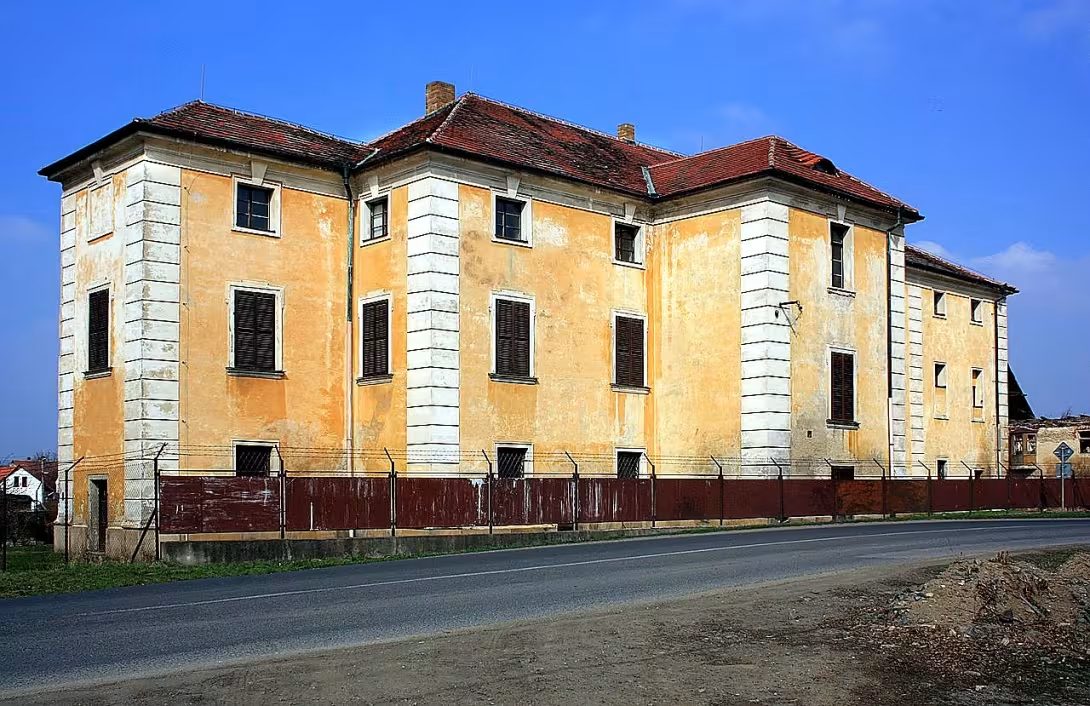
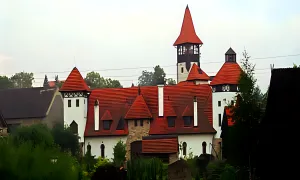
Zámek Chlumín is a baroque chateau in the village of Chlumín near Mělník, Středočeský kraj, Czech Republic. Originally built on an older fortress site in the 16th century, it has undergone significant transformations and now serves as a depository for the Museum of Decorative Arts in Prague. This historical monument is notable for its architectural evolution and rich history involving several noble families.
The origins of Zámek Chlumín trace back to the 16th century when it was constructed on an older fortress site. Initially, it served as a noble residence, reflecting the strategic importance and prestige of such sites during that era. Over time, ownership changed among various noble families, including the Kyšperští z Vřesovic in the late 16th and early 17th centuries, and later the Údrčtí z Údrče, who were responsible for its baroque renovations in the 17th century. These renovations marked a significant transformation in architectural style, introducing new windows and combining vaulted ceilings with lunettes and barrel vaults.
Architecturally, Zámek Chlumín features a two-story structure with an oblong ground plan adorned with numerous risalits. The baroque renovation introduced new elements while retaining some Renaissance window frames, showcasing a blend of styles. The main building features a unique combination of valené and křížové hřebínkové klenby (vaulted ceilings), adding to its historical and aesthetic value.
Throughout its history, Zámek Chlumín has seen various owners who influenced its development and use. After the baroque renovations by the Údrčtí z Údrče, it was sold in 1726 to Anna Maria Toskánská. In the early 19th century, it came under the ownership of the Chotkové z Chotkova, who repurposed it for use as a school and parish office. This period marked a shift from its original residential function to serving educational and administrative purposes.
The chateau's history includes intriguing details such as rokokové nástěnné malby (rococo wall paintings) until before 1984, with some surviving doors featuring rococo figurative paintings. These artistic elements highlight the cultural richness embedded within the structure over centuries.
Today, Zámek Chlumín stands as a protected cultural monument, with its main building serving as a depository for the Museum of Decorative Arts in Prague. The site includes not only the chateau itself but also an associated economic building and remnants of original fortifications. Visitors can appreciate its architectural beauty and delve into its storied past, making it a worthwhile destination for those interested in Czech history and baroque architecture.
Zámek Chlumín offers a unique glimpse into the region's noble heritage and architectural evolution. Its preservation as a cultural monument ensures that future generations can explore and learn from this remarkable piece of history. Visitors are invited to experience the charm and historical significance of Zámek Chlumín, where each corner tells a story of its illustrious past.
Then and now
Drag the slider to compare how the landmark may have looked when it was built with the view today.
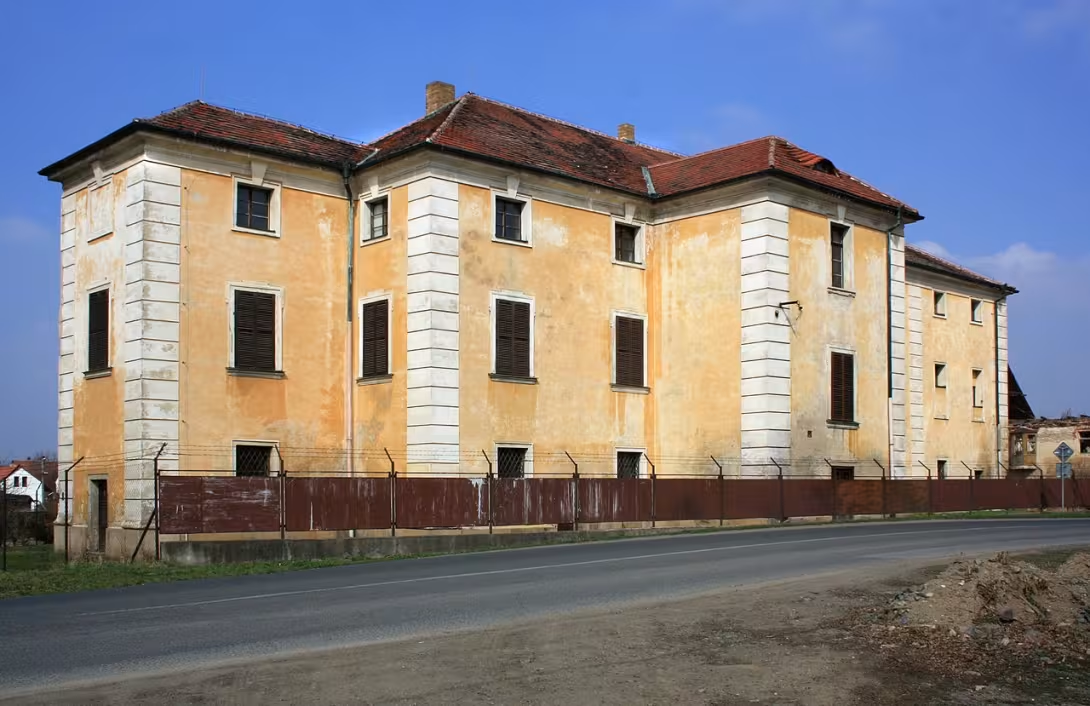

The historical appearance on the left is an AI-generated visualisation and serves as inspiration only.
Historical milestones
- 16. století
- Zámek Chlumín postaven na starší pevnosti.
- Konec 16. a počátek 17. století
- Vlastnictví rodiny Kyšperští z Vřesovic.
- 17. století
- Barokní přestavby provedly Údrčtí z Údrče.
- 1726
- Zámek prodán Anny Marii Toskánské.
- Počátek 19. století
- Převeden na školu a faru Chotkovými z Chotkova.
Architectural development
Zámek Chlumín was originally built on the site of an older fortress in the 16th century. It underwent significant baroque renovations during the 17th century, which included the addition of new windows and a combination of vaulted ceilings with lunettes and barrel vaults. The main building features a two-story structure with numerous risalits and retains some Renaissance window frames.
Historical events
Baroque renovation in the 17th century
Converted for use as a school and parish office in the early 19th century
Owners
Founded in the 16th century on the site of an older fortress
Kyšperští z Vřesovic (1559-1643)
Kaplíř ze Sulevic (1643-1646)
Chotkové z Chotkova (early 19th century)
Points of interest
- One of the lesser-known facts about Zámek Chlumín is its transformation from a noble residence to an educational and administrative building in the early 19th century under the ownership of the Chotkové z Chotkova, who repurposed it as a school and parish office.
- An intriguing aspect of the chateau's history involves the rokokové nástěnné malby (rococo wall paintings) that adorned its interiors until before 1984. Some doors still feature rococo figurative paintings, offering a glimpse into the artistic styles that once embellished the chateau.
- The baroque renovations carried out by the Údrčtí z Údrče in the 17th century introduced significant architectural changes, including new windows and a unique combination of valené (barrel vaults) and křížové hřebínkové klenby (cross-ribbed vaults), which reflect a blend of Renaissance and baroque styles.
- A fascinating detail about Zámek Chlumín is its architectural evolution, where the original fortress site from the 16th century was transformed into a two-story structure with an oblong ground plan adorned with numerous risalits, showcasing how it adapted to changing aesthetic and functional needs over time.
- Although now serving as a depository for the Museum of Decorative Arts in Prague, Zámek Chlumín retains its status as a cultural monument, allowing visitors to explore not only its main building but also an associated economic building and remnants of original fortifications, thus preserving its historical significance.
Guide
This guide is narrated by a synthetic voice generated by artificial intelligence.
Show guide text
This text was created by artificial intelligence and has not been editorially reviewed. It may contain inaccuracies.
Welcome to the historic Zámek Chlumín, a remarkable cultural monument nestled in the quaint village of Chlumín near Mělník in Středočeský kraj. As you stand here, take a moment to absorb the serene atmosphere surrounding this majestic estate. The air carries whispers from centuries past, inviting you on a journey through time.
Zámek Chlumín's story begins in the 16th century when it was constructed upon the foundations of an older fortress. This transformation marked a new chapter in the region’s history, as the chateau emerged as a symbol of strength and nobility. Initially under the ownership of the Kyšperští z Vřesovic family towards the end of the 16th century, the estate bore witness to significant historical events and transitions.
As you move around the property, notice how the architecture has been shaped by its storied past. In the 17th century, the Údrčtí z Údrče family undertook extensive baroque renovations, leaving a lasting imprint on the chateau's aesthetic and structural design. While specific architectural details remain elusive, the essence of these transformations can be felt in the elegant lines and harmonious proportions that define the estate today.
The narrative of Zámek Chlumín is enriched by its association with notable historical figures such as the Kyšperští z Vřesovic and Údrčtí z Údrče families. These noble lineages played pivotal roles in shaping not only the physical structure but also the cultural significance of this site. Their influence can still be sensed, adding depth to your exploration.
An intriguing aspect of Zámek Chlumín is its remarkable transformation in the early 19th century under the ownership of the Chotkové z Chotkova family. In a unique shift from its noble roots, the chateau was repurposed as an educational and administrative building, serving as both a school and parish office. This lesser-known chapter adds a fascinating layer to the estate's history, highlighting its adaptability and enduring relevance.
As you continue your visit, let yourself be drawn into the rich tapestry of stories that Zámek Chlumín has to offer. Feel free to wander around, taking in the sights and imagining the lives once lived within these walls. Each corner holds a piece of history waiting to be discovered.
Thank you for joining us on this journey through time at Zámek Chlumín. We hope this experience has inspired you to delve deeper into its fascinating past. As you conclude your visit, carry with you the memories and stories that have unfolded here today. Until next time, may your curiosity continue to lead you to new discoveries.
Tips for visitors
The best time to visit Zámek Chlumín is during the late spring or early autumn months, when the weather is mild and pleasant for exploring the grounds. During this period, the surrounding agricultural fields and forests are particularly beautiful, offering a serene backdrop that enhances the historical ambiance of the chateau.
When visiting, it's advisable to bring comfortable walking shoes as there are several areas of the chateau grounds and surrounding landscape that may require some walking. Additionally, consider bringing a camera for capturing the picturesque views, especially during golden hour when the light is soft and warm. A hat or sunscreen might also be useful due to the open rural setting.
For photography enthusiasts, the best spots at Zámek Chlumín include the chateau's main façade and any remaining towers that offer panoramic views of the surrounding countryside. Early morning or late afternoon light provides ideal conditions for capturing dramatic shadows and highlights on the chateau’s architecture.
Nearby attractions within a 30-minute drive include the historic town of Mělník, which offers charming streetscapes and local museums to explore. The area is also known for its natural beauty, with opportunities for outdoor activities such as hiking in nearby forests or visiting local vineyards that produce regional wines.
For families with children, Zámek Chlumín can be a delightful outing. The expansive grounds offer plenty of space for kids to run around and explore nature. Additionally, the historical setting provides an educational experience about the region's past. Ensure you check if there are any specific family-friendly events or guided tours available during your visit.
Frequently asked questions
Can the monument be visited?
Some buildings of this kind are open for guided tours, others serve another purpose or are privately owned. We have not verified whether and when this monument is open – please ask the operator.
What are the opening hours and admission?
We have not verified the opening hours or admission. Current information is published by the operator. Official website: https://www.chlumin.cz/zamek.htm
Where is the monument?
Location: č.p. 3, Chlumín, Středočeský kraj. The map on this page shows the exact spot.
Why is the monument protected?
It is listed in the Central List of Cultural Monuments of the Czech Republic as a cultural monument (register no. 22248/2-1314).
Businesses nearby
Do you run a restaurant, accommodation, shop, museum, rental, wellness or other visitor service near this monument? Show yourself directly to the people heading to it — this is how they will see you in the app and on the web:
Events nearby
Zdroj akcí: otevřená data měst a obcí ČR (Národní katalog otevřených dat) a kalendář akcí Národního památkového ústavu.
Nearby
Zámek Chlumín is situated near Mělník in a rural landscape. The surrounding area includes agricultural fields and forests typical of the Central Bohemian region.
Accommodation nearby
Trips and activities nearby
Guided tours, tickets and activities nearby from GetYourGuide
Affiliate link: if you buy from the partner, we may receive a commission. The price for you does not change.
Search tours and activities →Themed route
Tematická výletní trasa: Zámek Chlumín a jeho okolí
1. Zámek Chlumín
Typ: Historický zámek
Proč stojí za návštěvu: Zámek Chlumín je klíčovou památkou, která nabízí pohled na bohatou historii a architekturu regionu. Jeho krásné zahrady a elegantní stavby jsou ideálním místem pro pochopení kulturního dědictví oblasti.
2. Lesy kolem Zámku Chlumín
Typ: Lesní oblast
Proč stojí za návštěvu: Obklopující lesy poskytují klidné prostory k relaxaci a pochopení přírodního prostředí regionu. Jsou ideální pro krátké procházky nebo pikniky, což vám umožní užít si zelených ploch a klidný zvuk lesa.
3. Polní oblasti kolem Zámku Chlumín
Typ: Polní krajinářské prostory
Proč stojí za návštěvu: Tyto plochy ukazují typickou zemědělskou činnost regionu, kde můžete pozorovat různé plodiny a pochopit význam zemědělství pro místní ekonomiku. Jsou to místa, která nabízejí pohled na život venkovských oblastí.
4. Nádvoří Zámku Chlumín
Typ: Historické nádvoří
Proč stojí za návštěvu: Nádvoří zámku je výjimečným místem, kde se dají prozkoumat architektonické detaily a historie samotného zámku. Nabízí pohled na jeho strukturu a umožňuje si užít atmosféru starověkých budov.
5. Zámecký park Zámku Chlumín
Typ: Park s historickou zahradní architekturou
Proč stojí za návštěvu: Park je ideálním místem pro relaxaci a pochopení zahradnického umění z doby, kdy byl zámek v plné síle. Jeho klidné chodníky a krásný design nabízejí útulek od každodenního života.
Tato trasa vám umožní prozkoumat nejen samotný Zámek Chlumín, ale i jeho okolí, což vám poskytne komplexní pohled na historické a přírodní bohatství regionu.
Seasonal recommendations
Spring: Visiting Chlumín Chateau during spring offers a unique experience as the surrounding landscape bursts into life with vibrant colors and fresh blooms. The chateau grounds become particularly enchanting under the soft, golden light of longer days, enhancing the natural beauty that envelops this historic site. Visitors are encouraged to explore the gardens, where wildflowers create picturesque scenes against the backdrop of the chateau's ancient walls. This season tends to attract fewer crowds than summer, allowing for a more tranquil exploration. It is advisable to wear comfortable walking shoes and layers, as temperatures can vary throughout the day.
Summer: The chateau provides an idyllic setting during summer with its lush greenery and warm sunshine creating a perfect atmosphere for leisurely strolls through its historic halls and gardens. This period marks the peak tourist season, so it's wise to arrive early in the morning to avoid the larger crowds that gather later in the day. Long daylight hours offer ample time to explore at your own pace, but be sure to wear light clothing and sun protection to stay comfortable under the summer sun. The chateau often hosts various events during this time, adding a lively dimension to your visit.
Autumn: Autumn transforms Chlumín Chateau into a magical retreat with its rich tapestry of fall colors—golden leaves and fiery reds that frame the historic architecture beautifully. The cooler temperatures make for pleasant walking conditions as you explore both indoors and out. This season is less crowded than summer, providing an opportunity to enjoy the chateau's charm without the hustle and bustle. Dressing in layers is recommended, as the weather can be unpredictable with brisk mornings and warmer afternoons.
Winter: Winter at Chlumín Chateau offers a serene and picturesque experience, especially when snow blankets the grounds, creating a fairy-tale-like setting. The chateau's stone structures take on a majestic appearance against the crisp white landscape, while shorter days mean fewer visitors, allowing for a more intimate exploration. It is important to dress warmly in layers and wear sturdy boots to navigate potentially icy paths. Keep in mind that some areas might be closed or have reduced hours during this season due to weather conditions.
Visualizations and artistic views


The visualisations are generated by artificial intelligence and serve as inspiration.
Photos from the area
Real photos taken near the monument


Zdroj a licence jsou uvedeny u každého snímku.
Tips from visitors
No tips yet. Be the first!
Log in and add your tip.
Sources and literature
Photos: Pavel Hrdlička (Czech Wikipedia user Packa) / CC BY-SA 3.0 — Wikimedia Commons. The author and licence also appear when you hover over the image.
Faktickým podkladem tohoto textu byl článek na Wikipedii, jehož autory jsou přispěvatelé Wikipedie. Článek je dostupný pod licencí CC BY-SA 4.0.
Location on the map

Příběhy a pověsti
Legendy, pověsti a příběhy spjaté s touto památkou

Fotografie návštěvníků
Zatím žádné fotografie. Buďte první, kdo přidá fotografii z návštěvy!
Log in a přidejte svou fotografii nebo hodnoťte.
Za ověřenou návštěvu v aplikaci získáte víc bodů — poznáme podle GPS, že jste na místě.
Reviews and comments