






zámek Lanškroun Chateau
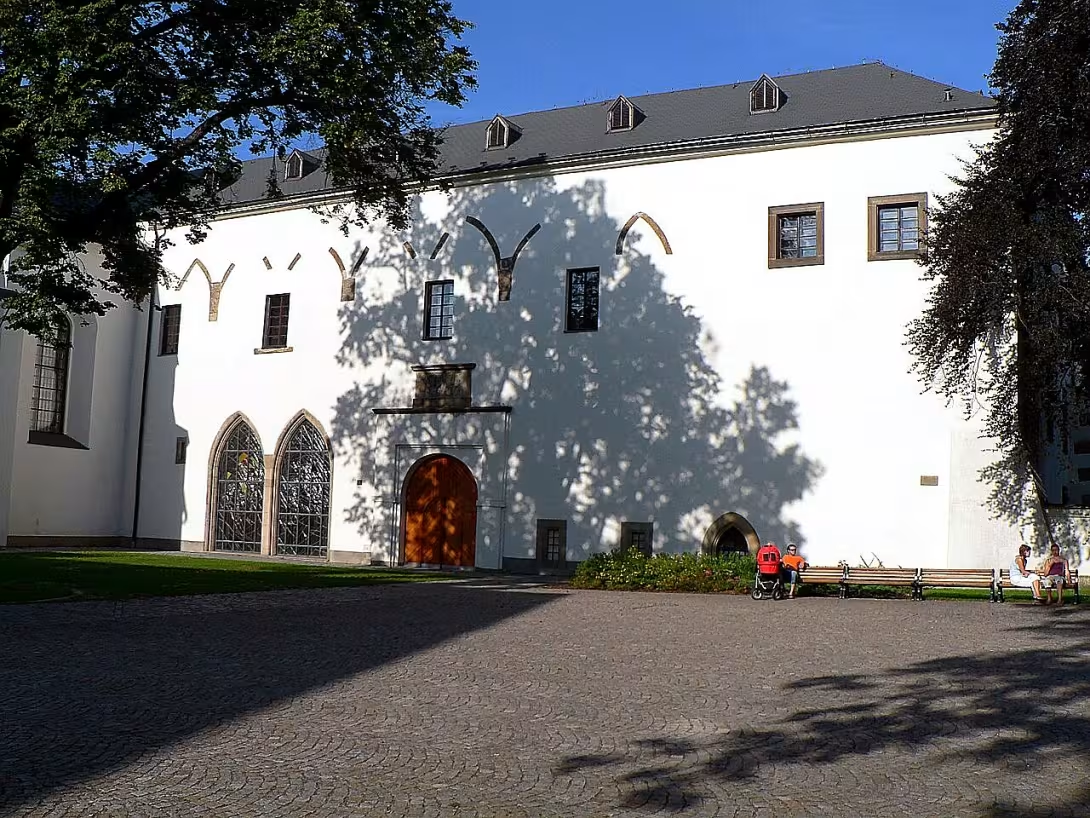
Lanškrounský Zámek, located in Lanškroun-Vnitřní Město within Pardubický kraj, stands as a testament to its rich history. It evolved from an Augustinian monastery founded in 1371 into a Renaissance castle. This cultural monument is notable for its architectural transformations and the significant figures associated with its past. Situated on Náměstí Aloise Jiráska, it offers insights into the region's history through its layered heritage.
The origins of Lanškrounský Zámek trace back to 1371 when Litomyšlský biskup Petr Jelito established an Augustinian monastery in Lanškroun. Initially located before the town walls near today’s Church of Saint Mary Magdalene, it was moved within the town by 1393 due to a new construction project. The monastery occupied what is now known as Jiráskovo náměstí and featured Gothic architecture with a cross-vaulted cloister hall. However, its existence was short-lived; in 1421, during the Hussite Wars, advancing forces destroyed it, leading to the monks' flight.
The transformation into a castle began under Vilém Kostka z Postupic in 1432. The Kostka family played a pivotal role in its history. Zdeněk Kostka restored the Lanšpersko-Lanškrounské panství in 1451, and ownership passed through his descendants until 1505. By then, the eastern wing of the former monastery had been repurposed for occasional stays by owners and possibly as an administrative center. The castle's significance grew when Markéta Kostková married Vojtěch z Pernštejna in 1507, transferring ownership to the Pernštejn family.
The Renaissance period marked a significant architectural transformation under Adam Hrzán z Harasova around 1601. He initiated extensive renovations that included constructing a new southern wing with distinct Renaissance features and redesigning existing structures. The entrance portal from this era, adorned with Hrzán's coat of arms, remains notable today.
Ownership changes continued throughout the centuries, reflecting broader political and economic shifts in the region. After Adam Hrzán's death in 1619, his sons divided the estate, with Vilém initially inheriting Lanškroun before it passed to Zdeslav Hrzán. These transitions highlight the castle's role as a strategic asset within noble families.
Today, Lanškrounský Zámek stands as a cultural monument, offering visitors a glimpse into its storied past. Its architectural evolution from a medieval monastery to a Renaissance castle encapsulates significant historical narratives of Bohemia. The site is accessible and provides an enriching experience for those interested in exploring the layers of history embedded within its walls.
Lanškrounský Zámek invites visitors to delve into its rich tapestry of history, where each stone tells a story of transformation and resilience. Its enduring legacy as a cultural monument makes it a must-visit destination for anyone keen on understanding the historical dynamics of the Pardubice Region.
Then and now
Drag the slider to compare how the landmark may have looked when it was built with the view today.
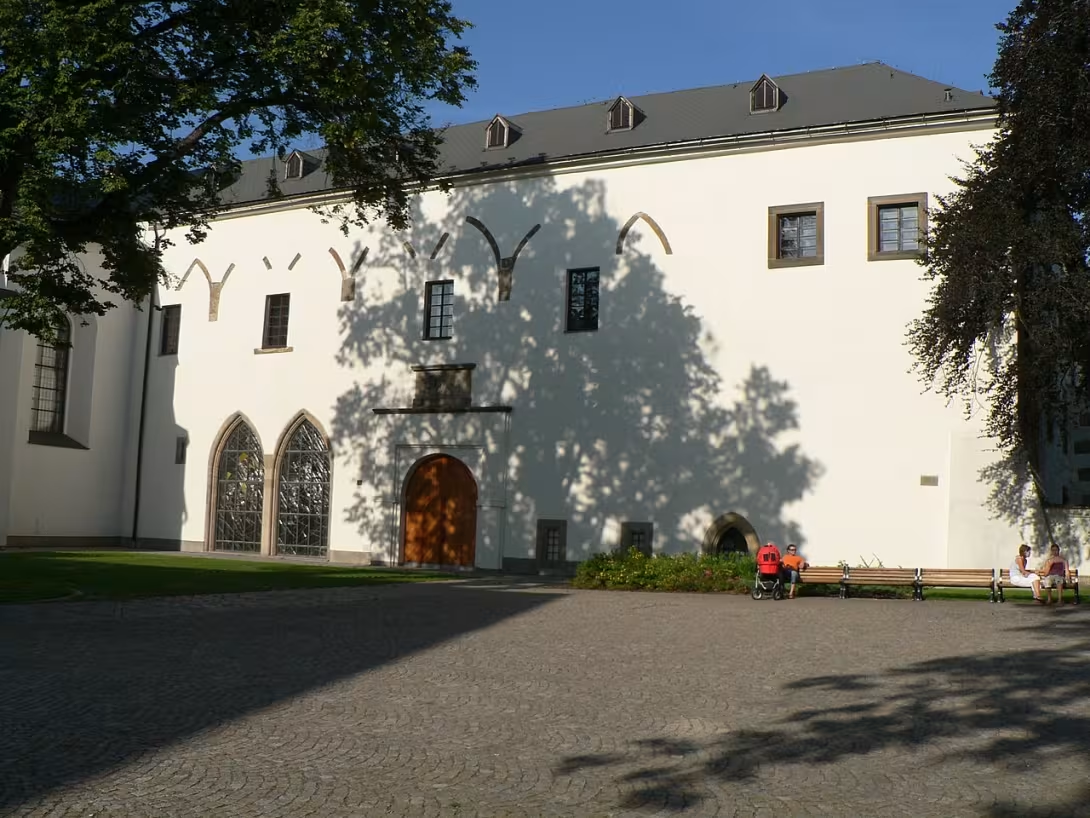

The historical appearance on the left is an AI-generated visualisation and serves as inspiration only.
Historical milestones
- 1371
- Founding of the Augustinian monastery by Petr Jelito.
- 1432
- Transformation into a castle under Vilém Kostka z Postupic.
- 1601
- Renaissance renovations completed with an entrance portal featuring Adam Hrzán's coat of arms.
Architectural development
The Lanškrounský Zámek began as an Augustinian monastery, which was later converted into a castle in the early 15th century. The Renaissance period saw significant renovations under Adam Hrzán z Harasova, who added new structures and redesigned existing ones to reflect Renaissance aesthetics.
Historical events
The Augustinian monastery was founded in 1371 by Litomyšlský biskup Petr Jelito.
In 1432, Vilém Kostka z Postupic transformed the site into a castle.
Renaissance renovations were carried out by Adam Hrzán z Harasova around 1601.
Owners
Vilém Kostka z Postupic (1432)
Zdeněk Kostka (1451-1468)
Jan Kostka (1468-1505)
Anna a Markéta Kostková (1505)
Vojtěch z Pernštejna (1507)
Adam Hrzán z Harasova (1588)
Points of interest
- The Lanškrounský Zámek was originally an Augustinian monastery founded in 1371 by Litomyšlský biskup Petr Jelito, showcasing its early religious significance before transitioning to a Renaissance castle.
- During the Hussite Wars in 1421, the advancing forces destroyed the Lanškrounský Zámek’s original structure, leading to the monks' flight and marking a pivotal moment of conflict that reshaped the site's history.
- The transformation into a castle began under Vilém Kostka z Postupic in 1432, highlighting how noble families like the Kostkas played crucial roles in repurposing religious sites for secular use during turbulent times.
- In the Renaissance period around 1601, Adam Hrzán z Harasova initiated extensive renovations that included constructing a new southern wing with distinct Renaissance features, reflecting broader architectural trends and personal ambitions of nobility.
- The entrance portal from the Renaissance era, adorned with Hrzán's coat of arms, remains notable today as an example of how personal heraldry was integrated into architecture, serving both decorative and symbolic purposes.
Guide
This guide is narrated by a synthetic voice generated by artificial intelligence.
Show guide text
This text was created by artificial intelligence and has not been editorially reviewed. It may contain inaccuracies.
Lanškroun Castle stands on Alois Jirásk Square. Its roots reach back to a time when there was no noble residence here, but rather a monastery.
In the year 1371, Litomyšl Bishop Petr Jelito founded an Augustinian monastery in Lanškroun. Initially it stood outside the city walls, in the location of today's Church of Saint Mary Magdalene. However, as early as 1393, a new convent began to be built right in the center of the city, near the parish Church of Saint Václav. The monastery at that time occupied almost the entire present-day Jirásk Square. Its wings opened onto the courtyard through a Gothic vaulted cloister. In the eastern wing, which is today the western wing of the castle, there was a Gothic-vaulted chapter hall.
The monastery in this form did not last long. In the year 1421, Hussite forces approached Lanškroun. The monks fled to Olomouc and the building apparently burned in the attack. For the following 11 years, the city was alternately ruled by Hussite commanders.
In 1432, Lanškroun was acquired by Vilém Kostka of Postupic. In the second half of the fifteenth century, the Kostkové family renovated the eastern wing of the destroyed monastery with its chapter hall and part of the cloister. It served for the occasional stays of the owners and probably also as the residence of an administrative official. By 1507, the building is first mentioned as a castle. In that same year, the estate passed by marriage of Markéta Kostkové to Vojtěch of Pernštejn to the Pernštejn family. Under their rule, the castle became the administrative center and later also the permanent residence of the estate, where the nobility only occasionally visited.
A fundamental transformation came in 1588, when Jan of Pernštejn sold the estate to Adam Hrzán of Harasov. The castle at that time was partly stone and partly wooden. Hrzán turned it into the owner's residence for the first time, and therefore undertook a Renaissance renovation. He repaired the western single-story wing and created an entrance portal with a passage. He completely newly built the southern wing in the pure Renaissance spirit. Utility buildings from the older monastery structures together with a newly established garden created the first castle courtyard, surrounded by a wall.
This renovation is remembered today primarily by the entrance portal with the completion date of 1601. It bears the coat of arms of Adam Hrzán and his wife Anna of Sulevic. The preserved Renaissance door frames also date from the same period.
Tips for visitors
The best time to visit Lanškrounský Zámek is during late spring or early autumn, when the weather is pleasant for exploring both the castle grounds and surrounding natural landscapes. During these months, you can enjoy the blooming gardens and vibrant colors of the Pardubice Region without the summer crowds or winter chill. Additionally, visiting in this period allows you to experience local cultural events that often take place around historical sites.
Walking through the town center offers an immersive experience of its historical charm.
When visiting Lanškrounský Zámek, it's recommended to bring comfortable walking shoes as there are several areas within and around the castle grounds that require some exploration on foot. A camera or smartphone is essential for capturing the stunning architecture and scenic views, particularly during golden hours in the morning or late afternoon when the light enhances the textures of the buildings and landscapes.
For photography enthusiasts, the best spots include the main entrance of the castle with its impressive facade and the surrounding gardens that offer a variety of angles and natural backdrops. The Church of Saint Wenceslas nearby also provides excellent opportunities for capturing historical architecture against the backdrop of Lanškroun’s picturesque setting.
Nearby attractions within 30 minutes include the Church of Saint Wenceslas, which is renowned for its architectural beauty and historical significance. Exploring this site offers insight into the region's cultural heritage. For families with children, consider visiting local parks or engaging in outdoor activities that allow kids to enjoy the natural landscapes while learning about history.
Frequently asked questions
Can the monument be visited?
Some buildings of this kind are open for guided tours, others serve another purpose or are privately owned. We have not verified whether and when this monument is open – please ask the operator.
What are the opening hours and admission?
We have not verified the opening hours or admission. Current information is published by the operator.
Where is the monument?
Location: nám. A. Jiráska 1, Lanškroun-Vnitřní Město, Lanškroun, Pardubický kraj. The map on this page shows the exact spot.
Why is the monument protected?
It is listed in the Central List of Cultural Monuments of the Czech Republic as a cultural monument (register no. 15933/6-3965).
Businesses nearby
Do you run a restaurant, accommodation, shop, museum, rental, wellness or other visitor service near this monument? Show yourself directly to the people heading to it — this is how they will see you in the app and on the web:
Nearby
Lanškrounský Zámek is located in Lanškroun, surrounded by historical buildings and natural landscapes. The area includes cultural sites such as the Church of Saint Wenceslas and offers scenic views typical of the Pardubice Region.
Accommodation nearby
Themed route
Thematic Walking Tour: Lanškroun Castle and Its Surroundings
1. Lanškrounský Zámek (Castle) - Type: Historical Monument - Why Visit: Begin your journey at the heart of Lanškroun with a visit to this stunning castle, which stands as a testament to the architectural and historical significance of the Pardubice Region. Explore its rich history and enjoy panoramic views from its elevated position.
2. Church of Saint Wenceslas - Type: Cultural Site - Why Visit: A short walk from the castle, this church is an essential stop for those interested in religious architecture and local culture. Its historical significance and serene atmosphere make it a perfect spot to reflect on Lanškroun's heritage.
3. Vnitřní Město (Inner Town) - Type: Historical District - Why Visit: Stroll through the charming streets of Vnitřní Město, where the blend of historical buildings and vibrant local life offers a glimpse into the town’s past and present. This area is ideal for capturing picturesque scenes typical of this region.
4. Lanškroun Castle Gardens - Type: Scenic Park - Why Visit: Conclude your tour in the beautifully maintained gardens surrounding Lanškrounský Zámek. These gardens provide a peaceful retreat and an opportunity to enjoy nature, with well-kept paths leading through lush landscapes.
This thematic route offers a comprehensive exploration of Lanškroun's historical and cultural highlights, ensuring a memorable experience for visitors.
Seasonal recommendations
A visit to Lanškroun Castle in the spring offers unique experiences as historical facades and parks transform into stunning floral palettes. From late January to early April, visitors can enjoy the breathtaking bloom of lily fields surrounding the castle, creating an unforgettable atmosphere full of colors. Visitors should wear footwear suitable for walking on grass and dress lightly with a warm coat that can be removed as temperatures can change quickly. Visit the castle early in the morning or later in the day to avoid crowds and fully enjoy the spring magic.
Summer is when Lanškroun Castle offers its full splendor. Long summer days provide ideal conditions for exploring extensive parks and observing historical architecture under pleasant sunlight. This is also a time when the castle can become very busy, especially during peak summer season, so it is recommended to visit early in the morning or later in the day. Visitors should be prepared for sunny weather with UV protection such as hats and sunscreen, and wear light clothing suitable for warm weather. It is also useful to bring water, as it can get quite hot in the park.
Fall offers Lanškroun Castle in a gentler and quieter atmosphere. The changing colors of trees in surrounding forests and gardens bring a beautiful palette of shades, making it an ideal time for photography or relaxation in the outdoor environment. Visitors should wear layered clothing to accommodate chilly mornings and warmer evenings, and consider footwear suitable for potential wetness. Visit the castle during quieter times, such as Sunday or late afternoon, to enjoy a mild crowd and the beautiful fall charms.
Winter brings a unique view of Lanškroun Castle, where historical architecture is adorned with snow and parks offer peaceful strolls. During the Advent period, the atmosphere can be especially magical, with the castle appearing in unforgettable lighting from stunning illumination. Visitors should dress warmly with thick coats and protective footwear to accommodate the cold weather. Visit the castle early in the morning or during quieter times throughout the day to enjoy a mild crowd and fully appreciate the winter magic.
Visualizations and artistic views


The visualisations are generated by artificial intelligence and serve as inspiration.
Photos from the area
Real photos taken near the monument


Zdroj a licence jsou uvedeny u každého snímku.
Tips from visitors
No tips yet. Be the first!
Log in and add your tip.
Sources and literature
Photos: Martin Vavřík / Public domain — Wikimedia Commons. The author and licence also appear when you hover over the image.
Faktickým podkladem tohoto textu byl článek na Wikipedii, jehož autory jsou přispěvatelé Wikipedie. Článek je dostupný pod licencí CC BY-SA 4.0.
Location on the map
More monuments – Lanškroun-Vnitřní Město
Show all in the municipality

Příběhy a pověsti
Legendy, pověsti a příběhy spjaté s touto památkou

Fotografie návštěvníků
Zatím žádné fotografie. Buďte první, kdo přidá fotografii z návštěvy!
Log in a přidejte svou fotografii nebo hodnoťte.
Za ověřenou návštěvu v aplikaci získáte víc bodů — poznáme podle GPS, že jste na místě.
Reviews and comments