






Zámek Nasavrky Chateau
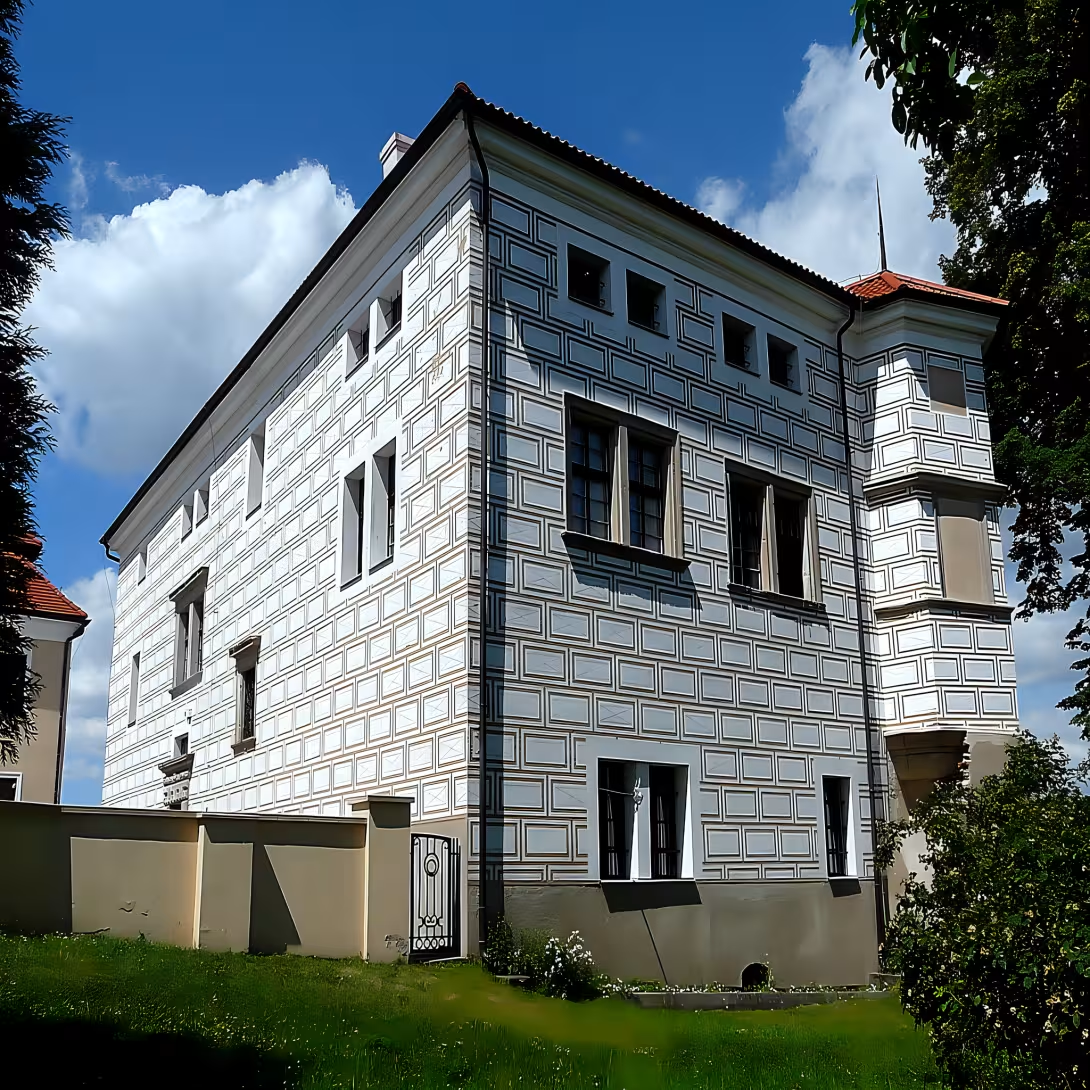
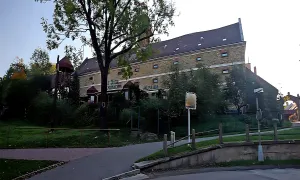
Zámek Nasavrky, a late Renaissance building from around 1600, is a cultural monument of the Czech Republic located in the centre of the village Nasavrky in the district Chrudim. This historical object is known for its architectural value and rich history ranging from Gothic beginnings to the present. The chateau boasts a unique ground plan reminiscent of the letter T, six-sided turrets on the demanding main wing and writing sgraffiti decorating the facade. Today the chateau serves cultural purposes, guests of exhibitions, musical evenings and other social events.
Zámek Nasavrky was built on the site of an earlier Gothic fortress around 1600. At that time, the Czech Republic moved from the late Renaissance to the Baroque period, affecting architectural elements and artistic decoration of the chateau. Originally belonged to the estate controlled by the owner of the Castle Strádov. Václav Zárub z Hustířan, the original owner, was followed in 1610 by his son, Czubor, whose property was confiscated in 1623 and bought by Imperial Colonel František de Courier. He then went into the hands of Schönfeld and after the marriage to Jan Adam of Auersperg, who, after 1757, translated the administration here.
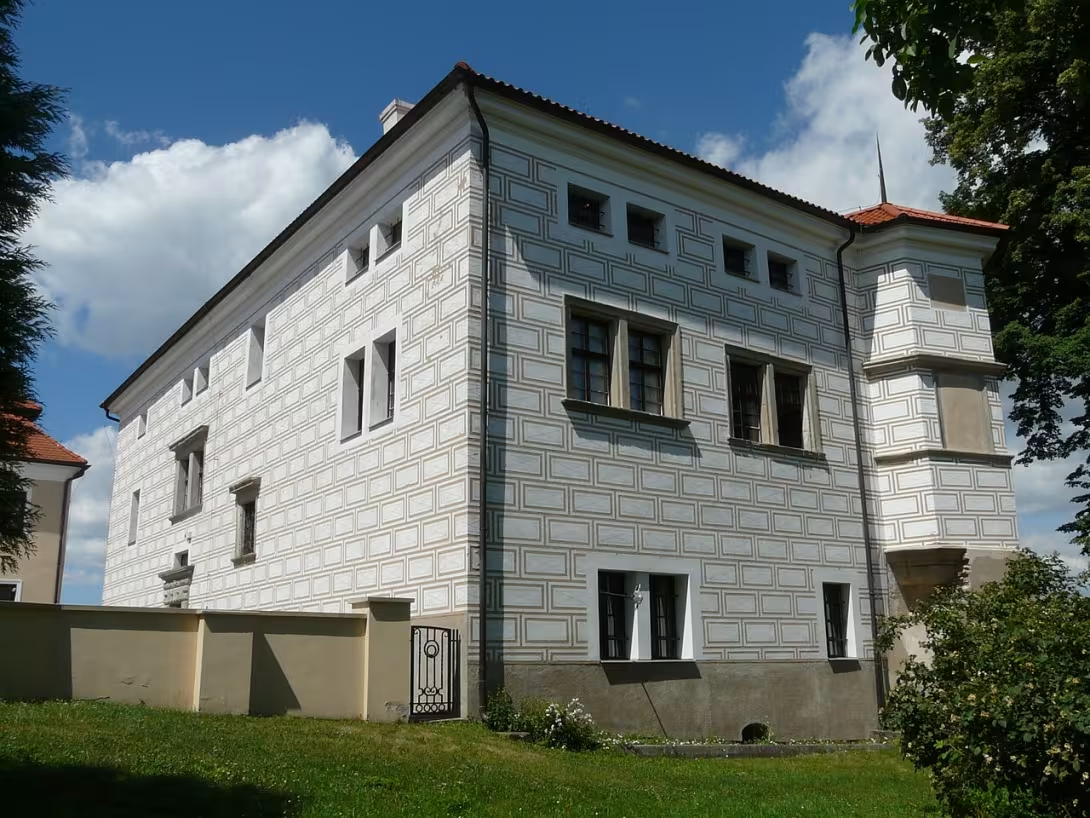
The architecture of the chateau Nasavrky is characteristic of the late Renaissance. The two-storey structure with an irregular floor plan has a circumferential wall thickness of up to 150 cm, indicating its strength and durability. On the eastern corners of the main wing there are six-sided turrets which supply the chateau with a noble character. The facade is decorated with writing sgraffiti, which adds an impression of richness and artistic taste. The entrance portal is oblong, barefoot and decorated with an ornament of a strange man's mask.
The history of Nasavrky Chateau owners is full of dramatic changes. After the confiscation in 1623, František de Courier bought it, followed by Schönfeld and finally Jan Adam z Auerspergu, who translated the administration of the estate into Nasavrky around 1757. A smaller storey building was added to the chateau under the Auerspergs and the second floor was reduced in 1840. After the abolition of the patrimonial administration in 1850, the chateau served as a rented seat for state offices, including the district court and the tax office.
Key events in the history of the chateau include its focus as cultural monuments of the Czech Republic in 1964. After 1987 the Regional Administration of the Protected Landscape Area of the Iron Mountains moved into the chateau, which was the beginning of successive repairs and reconstruction. After 1990 the chateau was transferred to the property of the city Nasavrky and the total reconstruction was completed in 1999 when the sgrafito, the entrance portal and window lining were restored.
Today the Nasavrky Chateau is open to the public and serves cultural purposes. Various events such as exhibitions, music evenings and weddings are held in its premises. The information centre on the ground floor offers visitors valuable information about the history of the chateau and surrounding monuments. On the first floor there is a permanent exhibition "Following the footsteps of the Celts," which focuses on the history of the region.
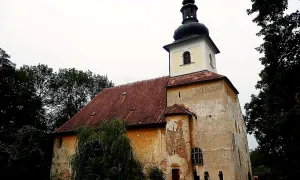
In the vicinity of the chateau Nasavrky you can find other attractions, such as the natural monument of Chestnut with a set of chestnuts set up by Jan Adam Auersperg in 1776. Under the chateau there is an inaccessible cellar which, according to the legend, leads to the ruins of the castle Strádov. In addition, there is a Gothic church of St. Gilje from the late 13th century, baroque after the fire in 1740.
Zámek Nasavrky is not only an architectural monument, but also a place of rich history and cultural heritage. Its restaurants and new use as a centre for culture and social events demonstrate its importance and attractiveness. Visiting the Nasavrky Chateau offers visitors the opportunity to immerse themselves in history, enjoy art works and explore rich cultural programs. It is a place worth discovering and appreciating its unique contribution to regional and national heritage.
Then and now
Drag the slider to compare how the landmark may have looked when it was built with the view today.
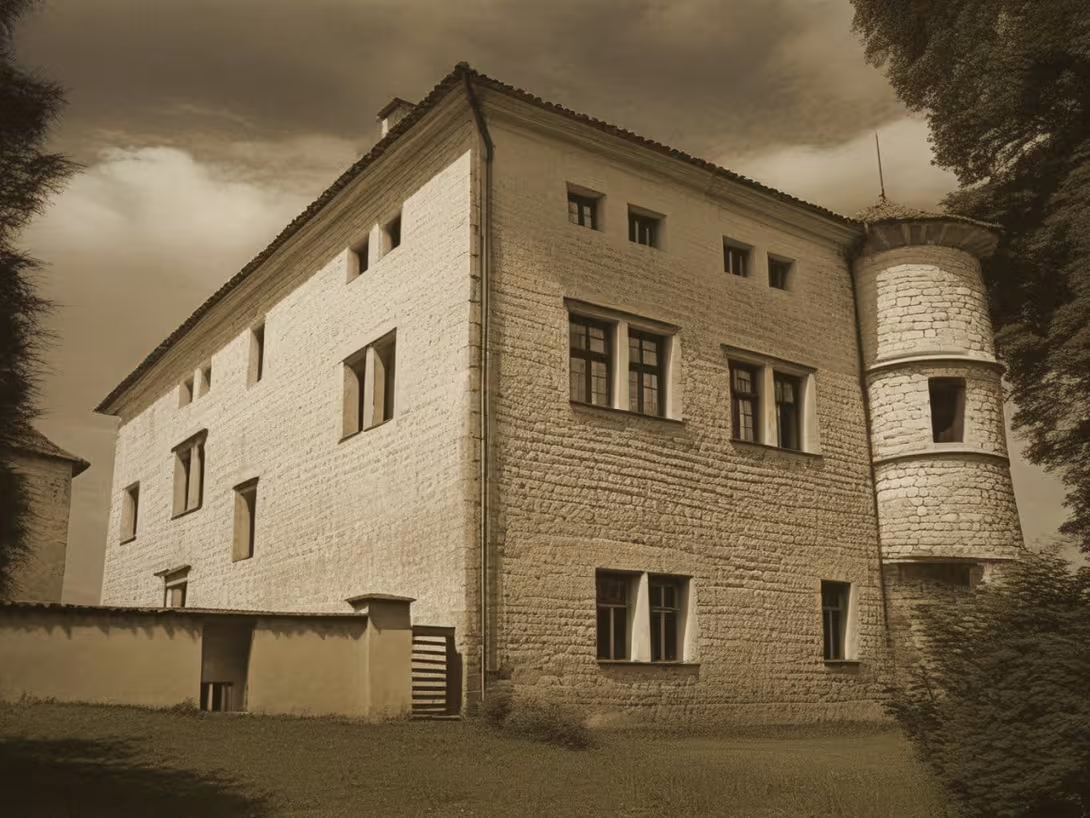
The historical appearance on the left is an AI-generated visualisation and serves as inspiration only.
Historical milestones
- 1964
- Focus as a cultural monument of the Czech Republic.
Architectural development
The original Gothic fortress was rebuilt into the Renaissance chateau around 1600. Over the years, some modifications were made, including a reduction of the second floor in 1840 and the addition of a smaller building behind Auerspergs. After 1999, a reconstruction involving restoration of sgraffiti, portal and window lining took place.
Historical events
- 1600
- Chateau construction.
- 1623
- Confiscation and purchase by František de Courier.
- 1964
- Focus as a cultural monument of the Czech Republic.
Points of interest
- Zámek Nasavrky is a late Renaissance building from around 1600.
- The architecture of the chateau boasts a unique ground plan reminiscent of the letter T, six-sided turrets and writing sgraffiti decorating the facade.
- The chateau was built on the site of a former Gothic fortress and belonged originally to a estate controlled by the owner of the castle Strádov.
- After the confiscation in 1623, the chateau went into the hands of František de Courier, followed by Schönfeld and finally Jan Adam z Auerspergu.
- The chateau was focused as a cultural monument of the Czech Republic in 1964.
Guide
This guide is narrated by a synthetic voice generated by artificial intelligence.
Show guide text
This text was created by artificial intelligence and has not been editorially reviewed. It may contain inaccuracies.
Welcome! You are standing in front of one of the most impressive historical monuments in our region - the chateau Nasavrky. Look up and notice its unique architecture. The chateau boasts a ground plan resembling the letter T, with six-sided turrets on both eastern corners of the main wing and is covered with a saddle valb roof. The facade is decorated with writing sgraffiti, which you will find interesting detail.
Let's move on to history and find out what happened here many years ago. Zámek Nasavrky was built around 1600 on the site of a former Gothic fortress. It belonged originally to a estate dominated by the House of Zárub from Hustriján, who were an important family in our region. Among them was also Václav Zárub z Hustířan, who played an important role in the history of the chateau.
Now pay attention to the architecture of the building itself. The chateau is late Renaissance, which means that its construction style is characterized by a unique combination of different elements. Check the facade and notice how the individual parts of the lock are connected to the harmonious integrity. The chateau is really impressive and its architecture will certainly give you a good impression.
The interesting thing is that the chateau Nasavrky is a cultural monument of the Czech Republic since 1964. This is proof of its historical value and significance to our national history.
Notice the atmosphere around the chateau. It's a really special place that I'm sure will interest you. Whether you like whether you've ever been in a similar environment, or whether you're here for the first time, you have a real historical pearl in front of you.
Let me invite you to explore this beautiful place again. Zámek Nasavrky is a really special monument that will certainly impress you. Whether you like whether you've ever been in a similar environment, or whether you're here for the first time, you have a real historical pearl in front of you.
Tips for visitors
The best time to visit Chateau Nasavrky is in the spring or autumn season when the weather is pleasant and the chateau is surrounded by beautiful green meadows. This time of year also offers ideal lighting conditions for photography.
For those travelling by public transport, the chateau is easily accessible; a specific connection can be verified in the current route search engine.
When visiting, take with you suitable shoes and clothing that will match the outdoor conditions. Remember also the umbrella and protective cream against UV radiation, especially in summer.
The best place for photography is inside the chateau garden, where the Renaissance architecture is provided. The best light offers a period before noon and in the afternoon when the sun is lower.
In the vicinity of the chateau is worth exploring the Church of St. Jilje, which has a rich history and architectural details. In addition, you can visit the City Office Nasavrky, where the former official building of the estate is located.
Frequently asked questions
Can the monument be visited?
Some buildings of this kind are open for guided tours, others serve another purpose or are privately owned. We have not verified whether and when this monument is open – please ask the operator.
What are the opening hours and admission?
We have not verified the opening hours or admission. Current information is published by the operator.
Where is the monument?
Location: Náměstí 1, Nasavrky, Pardubický kraj. The map on this page shows the exact spot.
Why is the monument protected?
It is listed in the Central List of Cultural Monuments of the Czech Republic as a cultural monument (register no. 46563/6-921).
Businesses nearby
Do you run a restaurant, accommodation, shop, museum, rental, wellness or other visitor service near this monument? Show yourself directly to the people heading to it — this is how they will see you in the app and on the web:
Events nearby
Zdroj akcí: otevřená data měst a obcí ČR (Národní katalog otevřených dat) a kalendář akcí Národního památkového ústavu.
Nearby
The church of St. Jilje from the late 13th century, baroque after the fire in 1740.
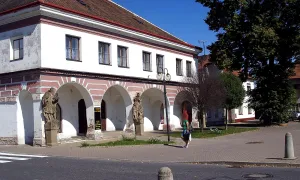
City office Nasavrky based in the former official building of the estate.
Accommodation nearby
Themed route
Route: Zámek Nasavrky and its surroundings
1. Church of St. Jilji - historical church This church is worth a visit because of its unique architecture and rich history dating back to the end of the 13th century. After the fire in 1740, the church was baroque, which manifested itself in its present appearance.
2. City Office Nasavrky - architectural monument The city office located in the former official building of the estate is worth visiting because of its historical value and architectural interest. The building dates back to when the Nasavrky Chateau was in the hands of noble families.
3. Zámek Nasavrky - main destination of the route Zámek Nasavrky is the main destination of this cruise route. Its history dates back to the 13th century and has undergone many modifications and reconstructions. The chateau is interesting with its architecture and rich history, which is reflected in its present appearance.
4. Next walk around - quiet walk After a tour of the chateau and church you can take a quiet walk around the surrounding area where you can enjoy peace and nature.
Seasonal recommendations
Spring:
Spring is the perfect time to visit the Nasavrky Chateau because nature around the chateau is in full bloom. Green meadows and flowering trees create a pleasant atmosphere that increases even more thanks to warm weather. Lighting is natural, so it doesn't matter about artificial lighting. We recommend visiting the chateau in May or June, when the weather is the hottest and nature is the most beautiful. Also enjoy the possibility of walking around or picnic in the garden.
Summer:
Summer is the main season for visitors to the chateau Nasavrky. In summer the chateau is most early opened so that visitors can enjoy warm weather. We recommend arriving at 9:00 to avoid crowds that appear later on the day. Lighting is natural and nature is in full bloom. Don't forget to bring enough water and breakfast, because in summer there are many people in the garden.
Autumn:
Autumn is a beautiful season for visiting the chateau Nasavrky. Blossoming trees and green meadows create a pleasant atmosphere. The lighting is natural and nature is in a quiet time. We recommend visiting the chateau in September or October, when the weather is the hottest and nature is the most beautiful. Also enjoy the possibility of walking around or picnic in the garden.
Winter:
Winter is a quiet season for visitors to the chateau Nasavrky. The lock is only open for a limited time to maintain heat. We recommend visiting the chateau in January or February, when the weather is the coldest. Don't build warm clothes and shoes to avoid freezing. The lighting is artificial so that visitors can see better.
Visualizations and artistic views


The visualisations are generated by artificial intelligence and serve as inspiration.
Photos from the area
Real photos taken near the monument

Zdroj a licence jsou uvedeny u každého snímku.
Tips from visitors
No tips yet. Be the first!
Log in and add your tip.
Sources and literature
Photos: Imani / CC BY-SA 3.0, rozlišení zvýšeno umělou inteligencí — Wikimedia Commons. The author and licence also appear when you hover over the image.
Faktickým podkladem tohoto textu byl článek na Wikipedii, jehož autory jsou přispěvatelé Wikipedie. Článek je dostupný pod licencí CC BY-SA 4.0.
Location on the map

Příběhy a pověsti
Legendy, pověsti a příběhy spjaté s touto památkou

Fotografie návštěvníků
Zatím žádné fotografie. Buďte první, kdo přidá fotografii z návštěvy!
Log in a přidejte svou fotografii nebo hodnoťte.
Za ověřenou návštěvu v aplikaci získáte víc bodů — poznáme podle GPS, že jste na místě.
Reviews and comments