




Žárové pohřebiště u Škvořetic Mowel burial ground
Žárové pohřebiště u Škvořetic is an important archaeological site from the turn of the period of the Hallatian and Latenian. Located in Strakonice district on the southern slope of the Hradiště hill. The location is at an altitude of 480-500 metres at the interface of the cadastral areas of the Damage River and Sedlice. It is one of the biggest monuments of its type in Bohemia.
The funeral home dates from a period of transition from late bronze to iron in central Europe. The records available do not include specific details of the people who created it.
The construction of the graves consisted in pits of approximately one metre deep and diameter from 0.5 to one meter. These excavations were subsequently covered with flat stones.
The locality was discovered in 1883 by the owner of the land F. Prošek from the Damage River. In 1887 or 1888 there was extensive research by Baron A. Koller. He allegedly examined 500 graves, although it is assumed that there were in fact significantly fewer.
The survey was conducted in a non-technical manner, leading to the irreversible loss of part of the findings. Ceramics were thrown out because you couldn't build the whole container from the shards. Only metal items have been stored, but have also been lost over time. The documented findings included bronze bracelets, decorated bronze plate, a jewel composed of 68 bronze buttons, horse tubes, two spikes of spear, knife and dagger.
At present, a heat burial site is protected as a cultural monument. Despite the losses from early research, this site remains an important witness to the region's prehistoric inhabitants. Visiting this place offers the possibility of meeting history in the natural environment of the southern slope of the Hradiště hill.
Historical milestones
- about 500 bc.
- The creation of a burial site at the turn of the period of the Hallatians and Latinese
- 1883
- Discover the site by the owner of the property F. Prošem
- 1887
- The beginning of extensive research by Baron A. Koller
Architectural development
Grave pits were about one meter deep and on average from 0.5 to 1 meter. They were covered with flat stones.
Points of interest
- It is one of the biggest monuments of its type in Bohemia. The graves formed pits about three feet deep, covered with flat stones. - The location was discovered in 1883 by the owner of the land F. Prošek. - The survey was conducted inexpertly, so ceramics was thrown out and metal objects were lost. - Among the findings were bronze bracelets, decorated plate, 68-button jewelry, horse tags, spear tips, knives and dagger.
Guide
Show guide text
This text was created by artificial intelligence and has not been editorially reviewed. It may contain inaccuracies.
Welcome, distinguished visitors. You have just arrived at a place that may at first glance look like an ordinary piece of landscape, but beneath your feet is a fascinating story from ancient times. You're standing in front of a fire burial site near the Skoda River, in the Sedlic area. Look around you. You are located on the southern slope of the Hradiště hill, at an altitude of approximately four to five hundred metres. Feel the peace and quiet of this place, because it is this atmosphere that brings us back thousands of years, to a time when there were people whose names were no longer remembered, but their tracks remained deep in the ground.
Let us now move together into a deep past. Imagine it's about five hundred years earlier. It was at this time, at the turn of two great primordial periods, which experts call the period of Hallatian and Latinese, that this burial ground was created. For the people of that time, it was not just a place to put the dead, but a sacred place where the world of the living joined the realm of the dead. This place was chosen deliberately, probably due to its position on the hill slope, which provided an overview and perhaps even spiritual importance. It is important to remember that you are located in one of the largest prehistoric sites of your type in all Bohemia. This means that this place was very important throughout the region and was used by a large number of people around it.
Now, if you look at the terrain around you, you might not see any monumental structures, but let's think about what the graves looked like at the time of their creation. Notice the structure of the earth. The graves here consisted of pits that reached the depth of about one meter. These pits were not left open, but were carefully covered with flat stones. So imagine the entire area of this slope covered with these stone covers. It is this way of burying when the body was devoured, thus burning in the fire, giving this place its name. The fiery burial ground is such a silent witness to the rituals that took place here over 2,000 years ago.
Now let's move many centuries forward, until the ninth century, when this place came to its senses again. Every great discovery begins by chance and here it was the same. In the year one thousand eight hundred eighty-three, the owner of the land here, Mr. František Prošek, came to the fact that there are unusual findings in the country. He was the first man from the modern age to reopen the gates to this prehistoric world. A few years later, in the year one thousand eight hundred eighty-seven, Baron Alois Koller joined the research. These two men are the main figures associated with this site.
But here comes a moment that is somewhat sad for us today, but also very enlightening. When we think about the way the research was done, we have to acknowledge that at that time there were no rules and methods as strict as we know today. The survey conducted at that time was, unfortunately, very unprofessional. Imagine a situation where people dig up the earth and find shards of old ceramics in it, which at that point they consider worthless waste and just throw it away. That's what happened here. Many cremation items that may have been an inconclusive source of information for today's science have been lost or have been exported without a record. Among the findings were, for example, bronze objects which today tell us about the craftsmanship of the then inhabitants. It is a reminder of how important it is to take care of monuments properly and with respect, so that valuable information is not lost forever.
But this imperfection of the first research does not take away its secrets. On the contrary, it creates a certain mystery. How many other things remain hidden in the land? What stories did the shards of ceramics that were thrown away want to tell us? The fact that this place is one of the largest monuments of its type in Bohemia makes it unique. Even though we do not see tombs hanging out above the surface today, we know that the history of an entire region lies below us. Today, this site is protected as a cultural monument, which means the state recognises its great value to all of us.
Stop for a moment and let's try to realize the contrast between what we see now and what happened here a thousand years ago. Here, on this slope, people met, there was smoke from fire fires, and later, the first researchers of the ninth century worked with tension. It's a place where three worlds intersect: the world of prehistoric people, the world of first amateur archaeologists and our world today.
Now we invite you to look around in peace and feel the space around you. Walk slowly around, observe the slope of the Hradiště hill and think about how much the landscape has changed, but how much it has remained the same. This place teaches us humility before time and reminds us that even under an ordinary layer of grass can be hidden treasure of history.
Thank you for spending some time with us at the fire burial site at the Khrvoretic. We hope that you are interested in this short trip to the past and that you are leaving with a new look at this quiet but talking landscape. We wish you a pleasant further journey and many other discoveries while exploring our beautiful sights. Goodbye.
Tips for visitors
The best time to visit are spring and autumn months, when lower vegetation allows a better overview over the terrain of the southern slope of the Hradiště hill. Transport to the Sedlic area is possible by car and public connections, check the specific path in maps. In the field, wear suitable shoes for walking in hills and plenty of water because it is a free landscape.
For the best photos we recommend a golden hour before sunset, when low light highlights the relief of terrain and surrounding landscape. The most interesting views offer the surroundings of the burial ground itself, overlooking the valley. In the nearby area you can visit the village Škhorvorětice, the village Sedlice or come to the top of the Hradiště.
For families with children, the place is suitable for exploring nature and teaching about ancient people. We recommend you prepare in advance simple maps so that children can look for traces of ancient history in the landscape, even if no buildings are visible on the surface.
Frequently asked questions
Can the monument be visited?
This is an archaeological site. Often there is little to see on the ground and the land may be private. We have not verified access.
Where is the monument?
Location: Sedlice. The map on this page shows the exact spot.
Why is the monument protected?
It is listed in the Central List of Cultural Monuments of the Czech Republic as a cultural monument (register no. 1000142537).
Businesses nearby
Do you run a restaurant, accommodation, shop, museum, rental, wellness or other visitor service near this monument? Show yourself directly to the people heading to it — this is how they will see you in the app and on the web:
Nearby
Vrch Hradiště, obec Škvořetice a obec Sedlice.
Accommodation nearby
Themed route
Here is the design of the thematic route:
1. Municipality of Sedlice (municipality) - The entry point of the trip, where you can prepare to walk through the countryside. 2. Žárové pohřebiště u Škvořetic (archaeological sites) - The main destination of the journey, which offers a view into ancient history and ancient rituals. 3. Municipality of Zhravoretice (municipality) - A place to relax and explore local architecture near the site. 4. Upper Hradiště (upper) - An elevated location overlooking the surrounding landscape and strategic importance.
Seasonal recommendations
In spring, the surrounding landscape awakens to life and green grass helps to better perceive the space of the site. The air is fresh and light soft, which creates a calm atmosphere. We recommend moisture-resistant shoes because the fields can be filled after melting snow. It's best to visit the place in the morning.
In the summer months it dominates the landscape of heat and bright sun, which, while illuminating the details of the terrain, can be painful. Nature is full of flowers and its surroundings are deep green. It is necessary to choose light, breathable clothes and take with you enough water. The ideal time for visiting is early morning or shortly before sunset when it is least hot.
Autumn brings golden colors and melancholy mood to the landscape. Due to the lower sun height, small inequalities and shadows are better seen in the field, which can help in the idea of ancient grave layout. It is suitable for layered clothes and fixed shoes for walking on the wilted grass. The best are sunny days in October.
Zimą is a landscape covered with silence and often a white collision that compares the surface of the earth. The atmosphere is rough and desolate, which underlines the nature of the burial ground. Hot shoes with an anti-slip sole and sufficiently warm clothing are necessary to move in the field. We recommend a visit at noon when there is the most daylight.
Visualizations and artistic views

The visualisations are generated by artificial intelligence and serve as inspiration.
Tips from visitors
No tips yet. Be the first!
Log in and add your tip.
Sources and literature
Faktickým podkladem tohoto textu byl článek na Wikipedii, jehož autory jsou přispěvatelé Wikipedie. Článek je dostupný pod licencí CC BY-SA 4.0.
Location on the map
More monuments – Sedlice
Show all in the municipality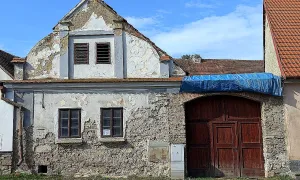
Příběhy a pověsti
Legendy, pověsti a příběhy spjaté s touto památkou
Fotografie návštěvníků
Zatím žádné fotografie. Buďte první, kdo přidá fotografii z návštěvy!
Log in a přidejte svou fotografii nebo hodnoťte.
Za ověřenou návštěvu v aplikaci získáte víc bodů — poznáme podle GPS, že jste na místě.
Reviews and comments