






Židovský dům čp. 382 House
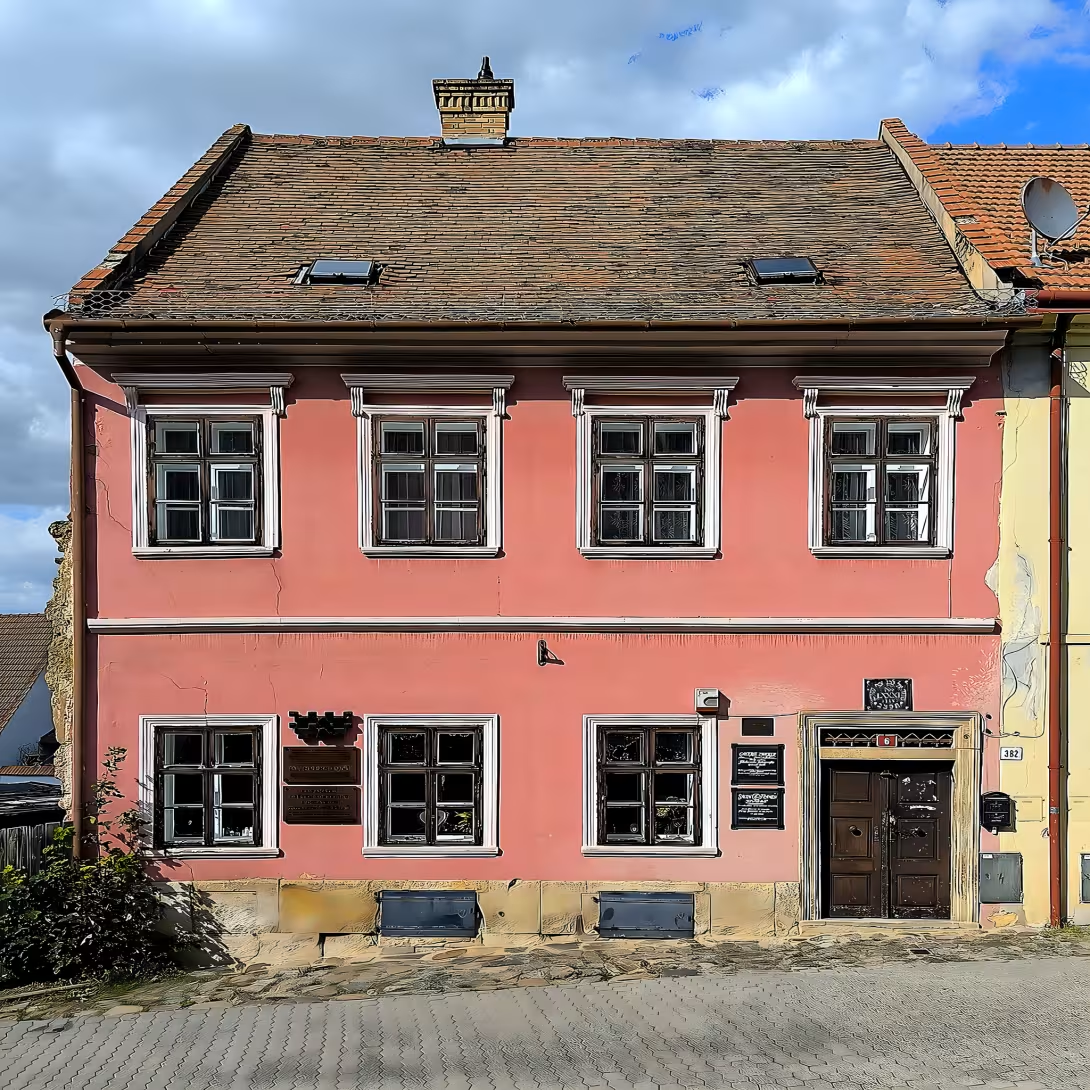
Židovský dům čp. 382 in Boskovice is a historically significant residential building that stands as a testament to the Jewish community's presence and history in the region. Located in what was once a Jewish quarter of Boskovice, this classicist-style house has witnessed centuries of cultural and historical developments. Its importance lies not only in its architectural features but also in its connection to pivotal events and figures from the past.
The origins of Židovský dům čp. 382 trace back to the early 18th century when it was first established on a building plot that had been occupied since then. The house underwent significant reconstruction following a fire in 1823, which led to its current form. This period marked an era of growth and development for the Jewish community in Boskovice, which had been officially recognized by the mid-15th century. By the 19th century, Jews constituted a substantial portion of the town's population.
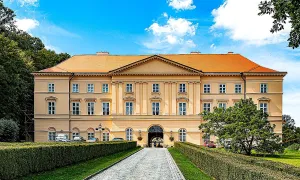
Architecturally, Židovský dům čp. 382 is characterized by its classicist elements, including a notable portal and a slate roof supported by a cornice. The building features four windows on the first floor and three in the ground floor, with simple shutters adorning each window. A distinctive feature of the house is its entrance located on the right side of the ground floor, marked by a classicist portal topped with an overhanging lintel. The interior includes a vaulted cellar with barrel vaults and a Prussian-style ceiling in the ground floor rooms, adding to its architectural interest.
Ownership of the house has seen several notable figures throughout its history. Initially owned by Abraham Brand in 1823, it later came into the possession of Nathan Löw in 1855, who was a prosperous entrepreneur at the time. The Zwicker family subsequently acquired the property and maintained ownership until their deportation in 1942 during World War II. This period marked a tragic chapter in the history of Boskovice's Jewish community, as many were deported and did not return.
Key events associated with Židovský dům čp. 382 include its reconstruction after the fire in 1823 and the commemoration of historical events through memorial plaques. A significant moment was the unveiling of a plaque on August 21, 2018, marking the 50th anniversary of the Warsaw Pact invasion on August 21, 1968. This event is remembered alongside another plaque dedicated to victims of totalitarian regimes, both accompanied by fragments of a T-55 tank as symbols of remembrance.
Today, Židovský dům čp. 382 serves not only as a historical monument but also as a cultural site. It houses the Framesi cosmetic salon and the Galerie Zwicker, which exhibits photographs from the Jewish quarter's history. Visitors can explore these exhibitions during the salon's operating hours, offering an opportunity to engage with the rich heritage of Boskovice's Jewish community.
Židovský dům čp. 382 is a poignant reminder of the cultural and historical tapestry that defines Boskovice. Its architectural beauty and its role in commemorating significant events make it a valuable site for those interested in history and culture. Visitors are invited to explore this monument, where each corner tells a story of resilience, heritage, and memory.
Historical milestones
- kolem 1700
- Founding of the Jewish House, No. 382 in Boskovice.
- 1823
- Significant reconstruction after a fire.
- 1855
- Nathan Löw becomes the owner of the house.
- 1942
- The Zwicker family is deported during World War II.
- 1968
- A significant event related to a 2018 plaque unveiling.
- 2018
- Unveiling of a commemorative plaque marking the 50th anniversary of the Warsaw Pact invasion.
Architectural development
The building's history began in the early 18th century and underwent significant reconstruction after a fire in 1823. The classicist portal and slate roof are notable architectural features. Post-war renovations altered its original internal layout.
Historical events
In 1343, Jews were first mentioned in Boskovice, with a Jewish community established in the 15th century.
The house was rebuilt after a fire in 1823 and suffered destruction around 1832.
A memorial plaque commemorating the events of August 21, 1968, during the Warsaw Pact invasion, was unveiled on August 21, 2018.
Owners
The house was initially owned by Abraham Brand in 1823, followed by Nathan Löw in 1855. It later belonged to the Zwicker family until their deportation in 1942. Post-war reconstruction altered its internal layout.
Points of interest
- Židovský dům čp. 382 is a historically significant residential building in Boskovice that reflects the Jewish community's history and presence. - The house was first established in the early 18th century and underwent reconstruction after a fire in 1823, shaping its current form. - Architecturally, it features classicist elements such as a notable portal, slate roof supported by a cornice, and a Prussian-style ceiling in some rooms. - Ownership of the house has included figures like Abraham Brand and Nathan Löw, with the Zwicker family owning it until their deportation in 1942 during World War II. - A plaque unveiled on August 21, 2018, commemorates the 50th anniversary of the Warsaw Pact invasion on August 21, 1968, alongside another plaque dedicated to victims of totalitarian regimes.
Guide
Show guide text
This text was created by artificial intelligence and has not been editorially reviewed. It may contain inaccuracies.
Welcome to Boskovice. Please, take a moment to settle in and look around you. You are currently standing directly in front of a place that serves as a silent witness to centuries of coexistence, struggle, and resilience. Before you is the Židovský dům čp. 382. At first glance, it may seem like a modest residential building, but as you gaze at its facade, I invite you to look beyond the stone and mortar. This house is not merely a structure; it is a living archive of the Jewish community that once thrived here in Boskovice. Feel the atmosphere of the street and imagine the footsteps of the many generations who crossed this threshold, each leaving behind a fragment of their story.
To truly understand the significance of this building, we must travel back in time. The story of Židovský dům čp. 382 begins around the year 1700. In the early 18th century, this house was established as a home for the Jewish population, providing a sanctuary and a center for daily life during a period when the Jewish community was carving out its place within the town. For over a century, the house stood as it was, witnessing the slow evolution of Boskovice. However, history is often marked by sudden and violent changes. In 1823, a devastating fire swept through the area, leaving much of the neighborhood in ruins. The house was severely damaged, but the spirit of its inhabitants was not broken. Following the fire, the building underwent a significant reconstruction. It was during this period of rebirth in the early 19th century that the house acquired much of the character you see today, blending the necessity of shelter with the aesthetic tastes of the era.
Now, I invite you to focus your attention on the architectural details of the building. As you look at the entrance, notice the classicist portal. This portal is a key feature of the house, reflecting the architectural trends of the time when the building was reconstructed. The clean lines and balanced proportions of the classicist style were intended to convey a sense of order and dignity. If you look upward, your eyes will find the roof. Notice that it is a slate roof, a durable and prestigious material, which is supported by a decorative cornice. This cornice acts as a graceful transition between the walls and the roofline, adding a touch of elegance to the overall silhouette of the residence.
While we are standing here outside, let us imagine the spaces hidden from view within the walls. The interior of the house is just as fascinating as its exterior. Beneath your feet lies a vaulted cellar, characterized by sturdy barrel vaults that have supported the weight of the home for centuries. Moving up to the ground floor, the rooms feature a very specific architectural detail known as a Prussian-style ceiling. This type of ceiling was a sophisticated engineering choice for its time, providing strength and a distinct visual rhythm to the living spaces. These elements—the portal, the slate roof, the barrel vaults, and the Prussian ceilings—all combine to tell us that this was a house of substance, built to last and designed with care.
But a house is more than just an architectural specimen; it is defined by the people who called it home. Throughout its long history, Židovský dům čp. 382 was inhabited by individuals who played roles in the social and economic fabric of the town. Among the names associated with this place is Abraham Brand, whose presence reminds us of the early days of the house. Later, in 1855, the property came into the hands of Nathan Löw. Imagine Nathan Löw walking through that classicist portal, perhaps discussing business or family matters, during a time when the Jewish community in Boskovice was deeply integrated into the life of the town. For decades, the house was a place of warmth, laughter, and the quiet routines of domestic life.
However, the history of this house also contains a profound and painful shadow. As we move into the 20th century, the narrative shifts from one of stability to one of tragedy. The house was home to the Zwicker family, who lived their lives within these walls until the dark days of the Second World War. In 1942, the peace of this home was shattered when the Zwicker family was deported. The sudden emptiness of the house became a symbol of the wider tragedy that befell the Jewish community across Europe. The silence that fell over these rooms in 1942 was not just the silence of an empty building, but the silence of a stolen future.
Yet, the story of Židovský dům čp. 382 did not end in the darkness of the war. The house continued to exist, and in more recent times, it has become a site of reflection and remembrance. There is a fascinating connection between this house and the broader political history of the region. If you look closely at the building, you will find a memorial plaque. This plaque was unveiled in 2018 to mark the 50th anniversary of the 1968 invasion of Czechoslovakia by the Warsaw Pact. It is a poignant addition to the house, linking the specific suffering of the Jewish community to the wider struggle for freedom and sovereignty in the 20th century. The fact that a house built around 1700 now bears a reminder of events from 1968 shows us how this single location has become a crossroads of history, bridging the gap between different eras of hardship and hope.
As you stand here now, consider the layers of time that exist in this one spot. You are looking at a building that survived a great fire in 1823, witnessed the prosperity of owners like Nathan Löw, endured the horror of the 1942 deportations, and now serves as a monument to the memory of those who were lost and the events that shaped the nation. It is a place where the architectural beauty of a classicist portal meets the heavy weight of historical memory.
I encourage you to take a few more minutes to simply be present here. Look at the slate roof once more and think about the families who looked up at that same sky over three hundred years ago. Think about the resilience it took to rebuild after a fire and the courage it took to maintain an identity in the face of persecution. The Židovský dům čp. 382 is not just a landmark in Boskovice; it is a testament to the endurance of the human spirit.
Thank you for spending this time exploring the history of this remarkable home. As you prepare to move on to the next part of your journey through Boskovice, carry with you the stories of Abraham Brand, Nathan Löw, and the Zwicker family. May their legacy remind us of the importance of preserving our shared history, no matter how joyful or how painful it may be. Please feel free to wander a bit further and explore the surrounding area, letting the echoes of the past guide your steps. Farewell for now.
Tips for visitors
The best time to visit Židovský dům čp. 382 is during the late spring or early autumn months when the weather is mild, allowing for comfortable exploration of both the house and its surroundings. This period often coincides with local cultural events that can enrich your experience. The historical ambiance is particularly captivating during these times as you walk through the former Jewish quarter of Boskovice, surrounded by remnants of a vibrant past.
Parking near Židovský dům čp. 382 may be limited due to its central location in the historic area of Boskovice. Visitors are encouraged to use public transportation or park at designated areas outside the immediate vicinity and walk from there. This not only eases congestion but also allows you to enjoy a leisurely stroll through the charming streets leading up to the site.
When visiting Židovský dům čp. 382, it is advisable to bring comfortable walking shoes as exploring the historic quarter involves some walking on uneven surfaces. Additionally, carrying water and wearing weather-appropriate clothing will enhance your visit. A camera or smartphone for capturing photographs of the architectural details and nearby historical sites can also be beneficial.
For photography enthusiasts, early morning light offers a soft glow that beautifully highlights the intricate details of Židovský dům čp. 382's architecture. The courtyard provides an excellent vantage point for capturing both the building and its surroundings. Nearby, the remnants of the Jewish quarter offer unique backdrops for photographs, allowing you to capture the essence of Boskovice’s rich history.
Within a 30-minute drive from Židovský dům čp. 382 are several sites worth exploring. The Church of St. Wenceslas and the Town Hall in Boskovice offer insights into the town's architectural evolution. Additionally, the surrounding countryside provides picturesque landscapes for those interested in nature walks or cycling.
Businesses nearby
Do you run a restaurant, accommodation, shop, museum, rental, wellness or other visitor service near this monument? Show yourself directly to the people heading to it — this is how they will see you in the app and on the web:
Events nearby
Zdroj akcí: otevřená data měst a obcí ČR (Národní katalog otevřených dat) a kalendář akcí Národního památkového ústavu.
Nearby
The house is situated in a former Jewish quarter of Boskovice, near other historical sites and remnants of the community's past.
Accommodation nearby
Themed route
1. Former Jewish quarter of Boskovice (Area) – Explore the historic district to understand the spatial organization and atmosphere of the old community.
2. Židovský dům čp. 382 (House) – The central landmark of the tour, providing a detailed look at the architecture and history of the local Jewish population.
3. Remnants of the community's past (Historical sites) – Discover the remaining physical traces and markers that testify to the long-standing presence of the community in the town.
Seasonal recommendations
In spring, Boskovice awakens with fresh greenery and a gentle, brightening light that highlights the architectural details of Židovský dům čp. 382. The atmosphere is one of renewal, making it a peaceful time to explore the historical surroundings before the peak tourist season begins. Visitors should dress in layers to accommodate the unpredictable spring weather and aim for mid-morning visits when the light is soft and the air is fresh.
Summer brings intense sunlight and a lively energy to the town. The long daylight hours are perfect for admiring the exterior of the house, but the heat can be significant during the midday hours. To avoid both the peak heat and the larger crowds typical of the main summer season, it is best to arrive early in the morning. Light, breathable clothing and sun protection are essential for a comfortable visit.
As autumn settles in, the landscape around Boskovice turns into shades of gold and amber, creating a reflective and somewhat melancholic atmosphere that suits a historical site. The lighting becomes warmer and more dramatic, which is ideal for photography. It is advisable to wear comfortable walking shoes for the local streets and to plan your visit for the afternoon to catch the beautiful, low-angled sunlight.
During the winter months, the atmosphere becomes quiet and contemplative, especially during the advent season. The days are shorter and the air is often crisp, lending a sense of stillness to the area. Because of the colder temperatures and potentially shorter opening hours, visitors should dress warmly and plan their visit around midday to make the most of the limited natural light.
Visualizations and artistic views


The visualisations are generated by artificial intelligence and serve as inspiration.
Photos from the area
Real photos taken near the monument


Zdroj a licence jsou uvedeny u každého snímku.
Tips from visitors
No tips yet. Be the first!
Log in and add your tip.
Sources and literature
Fotografie: Roman Mifek / CC BY-SA 4.0, rozlišení zvýšeno umělou inteligencí — Wikimedia Commons. The author and licence also appear when you hover over the image.
Faktickým podkladem tohoto textu byl článek na Wikipedii, jehož autory jsou přispěvatelé Wikipedie. Článek je dostupný pod licencí CC BY-SA 4.0.
Location on the map


Příběhy a pověsti
Legendy, pověsti a příběhy spjaté s touto památkou
Fotografie návštěvníků
Zatím žádné fotografie. Buďte první, kdo přidá fotografii z návštěvy!
Přihlaste se a přidejte svou fotografii nebo hodnoťte.
Za ověřenou návštěvu v aplikaci získáte víc bodů — poznáme podle GPS, že jste na místě.
Reviews and comments