



Židovský hřbitov v Neznašově Jewish cemetery
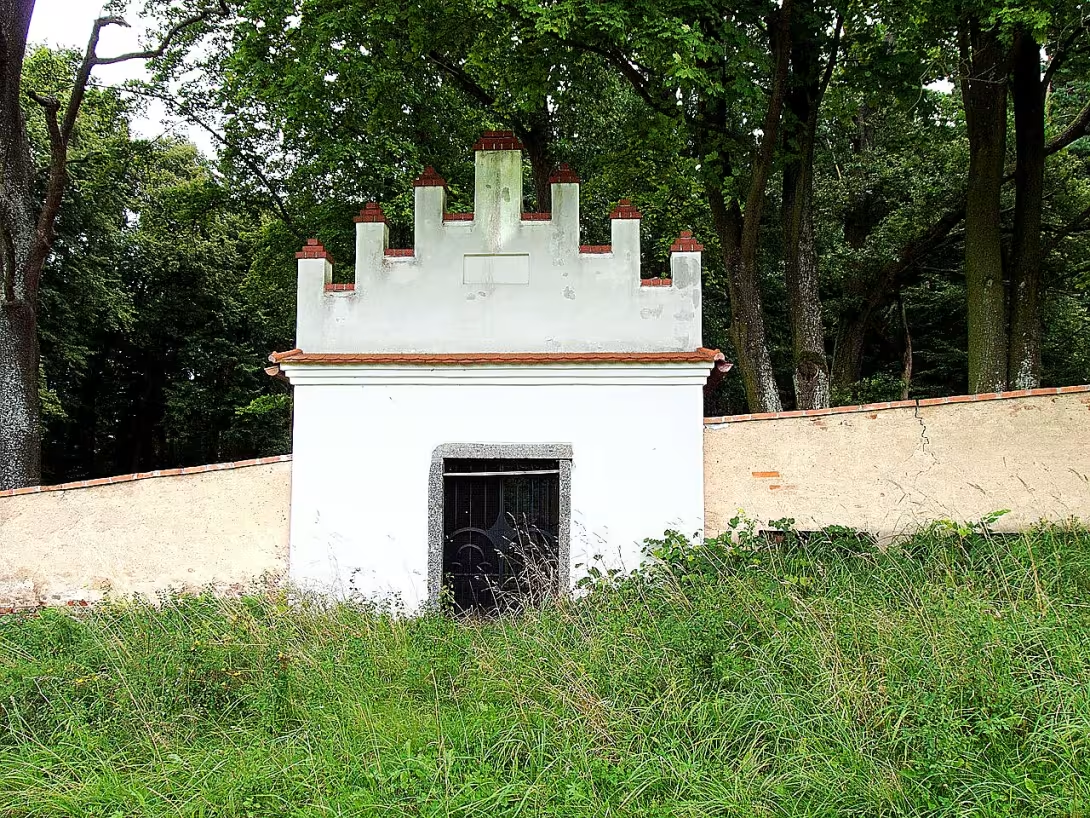
Židovský hřbitov v Neznašově is a protected cultural monument of the Czech Republic located around the same-name village in the district of České Budějovice. Founded in the first half of the 18th century, it represents an important historical element of Jewish life in the South Bohemia region. His oldest preserved tombstone dates back to 1735, which refers to a long tradition of funeral ritual in this area. The area was extended in 1858 and the funerals continued until the 1930s.
The creation of the cemetery is related to the development of Jewish settlement in Bohemia, especially in cities and municipalities. At the time, Jewish cemeteries were a key part of the religious life of the community. Their construction was managed by local Jewish leaders. In Europe, the modernization of funeral rituals, which also influenced Czech Jewish traditions, has also developed.
The architecture of the cemetery reflects the typical elements of the then Czech Jewish cemeteries. The oldest part was built of local stones and materials, simple and practical. In 1858, a new morgue was built with a stone ceremonial table, which was used for ritual washing of the deceased. This detail shows attention to religious rituals.
The cemetery is surrounded by walls that protect it from external influences. Access is only possible after prior agreement, which ensures the protection of the monument. The area contains approximately 250 preserved tombstones, mostly simple stones, often damaged by erosion. The reconstructed morgue from 1858 is one of the most important elements of the cemetery, preserved in its original state.
Today, the Jewish cemetery in Neznašov is one of the few preserved monuments of its kind in the region. Its preserved state and historical importance make it an interesting destination for historians and tourists. Access is possible by prior agreement, allowing visitors to explore this peaceful location.
This monument reminds of the long history of Jewish life in Czech countries. Each tombstone here represents a person whose life and death have found its place here. The cemetery offers visitors the opportunity to know the past and respect cultural traditions.
Then and now
Drag the slider to compare how the landmark may have looked when it was built with the view today.
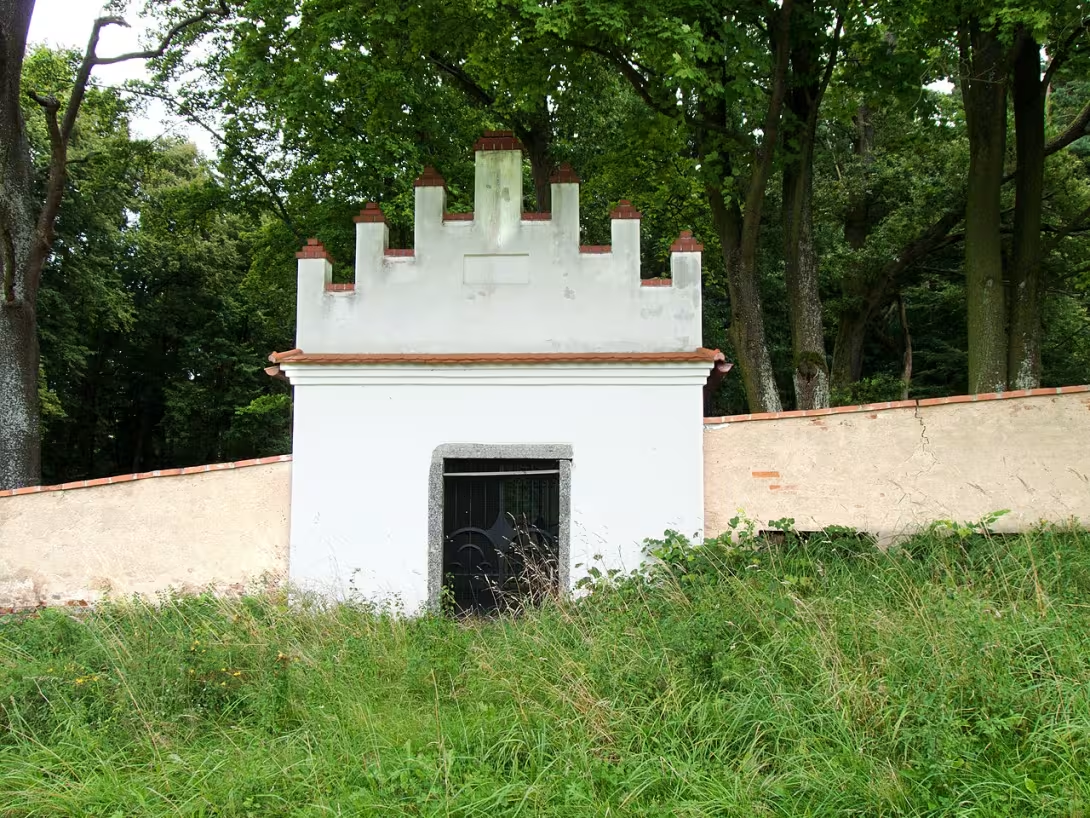
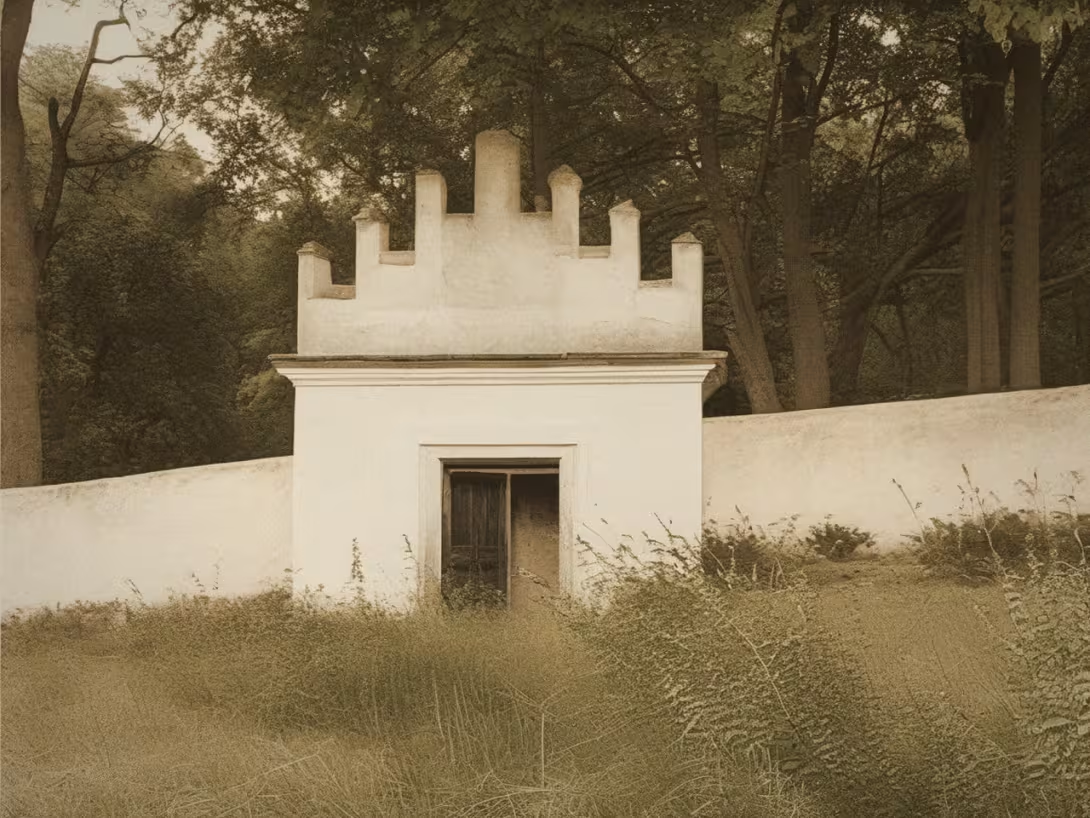
The historical appearance on the left is an AI-generated visualisation and serves as inspiration only.
Historical milestones
- around 1735
- The first preserved tombstone in the cemetery in Neznašov, referring to the beginning of the tradition of funeral rituals in this area
- first half of the 18th century
- The establishment of a Jewish cemetery in Neznašov as an important element of the religious life of the Jewish community in South Bohemia
- 1858
- Extension of the cemetery and construction of a new morgue with a stone ceremonial table for ritual washing of the deceased
- around 1930
- Last funerals in the cemetery in Neznašov
- first half of the 18th century
- Development of Jewish settlement in Bohemia and the importance of cemeteries as a key part of religious life
- first half of the 18th century - first half of the 20th century
- Typical Czech Jewish cemeteries developed and adapted to modernization of funeral rituals
Architectural development
The cemetery was built in the first half of the 18th century from local stones and materials, typically for then-Czech Jewish cemeteries. A reconstruction took place in 1858, during which a new morgue was built with a stone ceremonial table. The area is characterized by simple but functional architecture, typical of Jewish cemeteries at the time.
Historical events
- 1735
- The foundation of the first burial sites in the first half of the 18th century, with the oldest preserved tombstone from 1735
- 1858
- Extension of the cemetery and construction of a new morgue with ceremonial table
- until the 1930s
- Last funerals in the cemetery in Neznašov
Points of interest
- Located in the vicinity of the village Neznašov in the district of České Budějovice. The oldest preserved tombstone dates back to 1735. In 1858, a new morgue with a stone ceremonial table was expanded and built. The area has approximately 250 preserved tombstones, mostly simple stones. - Access is only possible after prior agreement with the Office.
Guide
Show guide text
This text was created by artificial intelligence and has not been editorially reviewed. It may contain inaccuracies.
Welcome to the Jewish cemetery in Neznašov - a place where we encounter the past and the memory of Jewish life in our region. You're standing in front of a high wall that separates this quiet area from the outside world. Behind it lies an ancient burial ground, where from the beginning of the eighteenth century people who lived here have been resting, working and praying. Notice how silence and shade of trees, if they grow here, create a special atmosphere of respect and memories.
This cemetery was founded in the first half of the eighteenth century, when Jewish communities in the Czech Republic developed and needed places for their last rest. The oldest preserved tombstone you can see here dates back to 1735 - it is the first trace of those who were buried here according to old traditions. The area was later, in 1858, extended to accommodate an increasing population. There was also a morgue, a stone building with a ceremonial table, where ritual washing of the deceased was held before the funeral. This building is still preserved today and is an important part of funeral habits.
Let's take a closer look at what surrounds you. There are about two hundred and fifty tombstones in front of you - mostly simple stones that bear names and dates, but also symbols of faith and life. Some of them are more than two centuries old, others come from a time when they were still buried here until the 1930s. Note that most stones are simple, without decorating, as was typical of the Jewish burial ground. But each of them carries the story of a man who rests here.
Now pay attention to the 1858 morgue. It's a small but significant structure that served its purpose until the last burial. The stone ceremonial table inside was intended for ritual washing of the deceased, which was an integral part of the funeral ceremony. Imagine how people here carefully prepared their loved ones for the final journey, with respect and respect. The morgue is renovated today, but it still carries a trail of time and tradition.
The interesting thing is that this cemetery has long been hidden from the wider world. It lies in a quiet village of Neznašov, near České Budějovice, and its existence was known mainly to the locals. It was only later that the site was recognised as a protected monument when it became more concerned with the preservation of cultural heritage. Today, it is only accessible after prior agreement, which gives the place even more value - as if time allowed us to look into the privacy of the past.
Take another look at the tombstones before leaving. Each is a memory of the man who lived here, worked and prayed. This cemetery is not only a gathering of stones, but a living testimony about the life of the Jewish community in our region. If you are interested in learning more, you can visit the local museum or library where you can find more information about the history of Jewish settlement in this area.
Thank you for taking the time to visit this place full of history and respect. May this moment inspire you to further explore our roots. Goodbye.
Tips for visitors
The most suitable period for visiting is from April to October, when the weather is pleasant and the cemetery is well lit. In summer it is also possible to visit the surrounding natural landscape. Avoid a period of heavy rain or storms that could disturb a quiet environment.
The monument is available by car and public transport. It is recommended to use public transport as the cemetery is located in the centre of the village. There are no significant traffic links in the area, so it is advisable to inform you in advance about the available routes.
For a visit it is advisable to take quality shoes that are resistant to moisture because part of the cemetery can be wet. We also recommend wearing comfortable shoes and light clothes. It is also suitable to take water-resistant sun protection, sunglasses and a hat. It is useful for families with children to carry small toys or books.
It is possible to photograph in the cemetery, but respect the funeral cult. The best places for photography are the central parts of the cemetery with well lit tombstones, especially in the morning or afternoon when the light is pleasant. Avoid photography at a time when there is a large visit to the cemetery to avoid disturbing the peace.
The village Neznašov offers a historical core with traditional houses. Explore the old alleys and you will see the typical architecture of the region. In the surrounding area there are natural forests and field areas that are suitable for walking and observing nature.
Near the cemetery there are woods and field areas that are ideal for short trips. Here you can observe wild nature, collect forest fruits or enjoy a quiet rural environment. It is recommended to look for places with well visible views of the surrounding landscape.
It is advisable for children to visit the cemetery at a time when it is quieter, for example in the morning. You can explain the meaning of the cemetery and its history in simple words. It is possible to play on small areas or see natural elements in the surroundings. It is also recommended to visit natural forests where children can observe birds and other animals.
Frequently asked questions
Can the monument be visited?
Cemeteries and graves are usually accessible; please respect the dignity of the place. We have not verified the opening hours of this cemetery.
Where is the monument?
Location: Neznašov, Jihočeský kraj. The map on this page shows the exact spot.
Why is the monument protected?
It is listed in the Central List of Cultural Monuments of the Czech Republic as a cultural monument (register no. 1000121938).
Businesses nearby
Do you run a restaurant, accommodation, shop, museum, rental, wellness or other visitor service near this monument? Show yourself directly to the people heading to it — this is how they will see you in the app and on the web:
Nearby
V okolí hřbitova se nachází vesnice Neznašov s historickým jádrem, které je součástí regionu Jihočeského kraje. V blízkosti se nachází přírodní krajina s lesy a polními plochami, ale žádné významné památky v okruhu 5 km.
Accommodation nearby
Trips and activities nearby
Guided tours, tickets and activities nearby from GetYourGuide
Affiliate link: if you buy from the partner, we may receive a commission. The price for you does not change.
Search tours and activities →Themed route
Thematic cruise route: Židovský hřbitov v Neznašově and surroundings
1.Židovský hřbitov v Neznašově Type: Historical monument, cultural heritage Why? A unique proof of Jewish history in the region, with preserved tombstones from the 19th century. A quiet place for reflection and knowledge of the local past.
2. History of the village Neznašov Type: Walk through the historical core Why? Original building with typical South Bohemian houses and settlements. It shows the life of a rural village a hundred years ago, when the Jewish community also lived here.
3. Natural surroundings - forest trail Type: Short tourist route Why? There are woods around the village with rich flora and fauna. Ideal for a short walk around nature after visiting the sights.
Recommended order: Start at the cemetery, then explore the village and finish with the natural district. All points are in the immediate vicinity, distances are minimal (up to 1 km).
Seasonal recommendations
Spring on this quiet burial ground brings the awakening of nature, which contrasts with the silence of stone tombstones. The sun is already strong enough to illuminate space, but temperatures can be variable, often accompanied by spring rains. The atmosphere is particularly peaceful and relaxed at this time, as the trees around the cemetery begin to grow and their fresh green colour softens the hardness of the old stone. For visitors, the ideal period of the afternoon is when air gets warmer and shadows get shorter. It is recommended to dress in layered clothes in order to easily adapt to rapid weather changes, and choose shoes with good grip, as soil can be slippery after rain. The crowds are minimal this season, allowing for private and deep contextation without interference.
Leto offers the longest days and brightest lighting, which reveals details of reliefs and inscriptions on tombstone crosses. Nature is in full bloom, green lawns and trees create cool shadows that are in the middle of the morning a welcome haven from the sun. The atmosphere is quiet, but in the main summer season the traffic may rise slightly, especially on weekends. It is best to arrive early in the morning, when the air is fresh and the space is still uninhabited, or late in the afternoon, when the heat calms down. Light, breathable clothes are worn and protection from the sun is essential. Despite higher temperatures, it is important to remember respect for the place and avoid noisy activities.
Autumn brings a unique atmosphere to the cemetery, where tree leaves turn colors into golden and red shades, creating an impression of historical depth and melancholy. The sun shines lower so the shadows extend and the lighting is softer and more dramatic, ideal for photographic images. Nature slowly converts, increasing the sense of silence and rest. The temperatures are falling, which is why it is necessary to carry a jacket and warm socks, because it may be cold in the morning and evening. The visit is best in the afternoon when the sun hits the stone surfaces and highlights their texture. At this time the roads are dry and solid, which makes it easier to move around the whole area without fear of mud.
Winter at the Jewish cemetery in Neznašov offers the quietest and most remote atmosphere, often decorated with snow, which covers the grass and gives the place strict beauty. Short days mean that light is rare and intense, with sharp shadows that model the contours of tombstones. Nature is resting, bare branches of trees form complex patterns against the background of the grey sky. Hot winter clothes, including gloves and hats, and shoes with anti-slip soles are necessary for the visit due to possible ice surface. The best time is the late morning when daylight is brightest. In advent time and around Christmas the attendance may be lower than in summer, providing maximum privacy and the possibility of contemplation over the history and eternity of the place.
Visualizations and artistic views


The visualisations are generated by artificial intelligence and serve as inspiration.
Photos from the area
Real photos taken near the monument


Zdroj a licence jsou uvedeny u každého snímku.
Tips from visitors
No tips yet. Be the first!
Log in and add your tip.
Sources and literature
Photos: Jitka Erbenová (cheva) / CC BY-SA 3.0 — Wikimedia Commons. The author and licence also appear when you hover over the image.
Faktickým podkladem tohoto textu byl článek na Wikipedii, jehož autory jsou přispěvatelé Wikipedie. Článek je dostupný pod licencí CC BY-SA 4.0.
Location on the map





Příběhy a pověsti
Legendy, pověsti a příběhy spjaté s touto památkou
Fotografie návštěvníků
Zatím žádné fotografie. Buďte první, kdo přidá fotografii z návštěvy!
Log in a přidejte svou fotografii nebo hodnoťte.
Za ověřenou návštěvu v aplikaci získáte víc bodů — poznáme podle GPS, že jste na místě.
Reviews and comments