






Židovský hřbitov v Terezíně Jewish cemetery
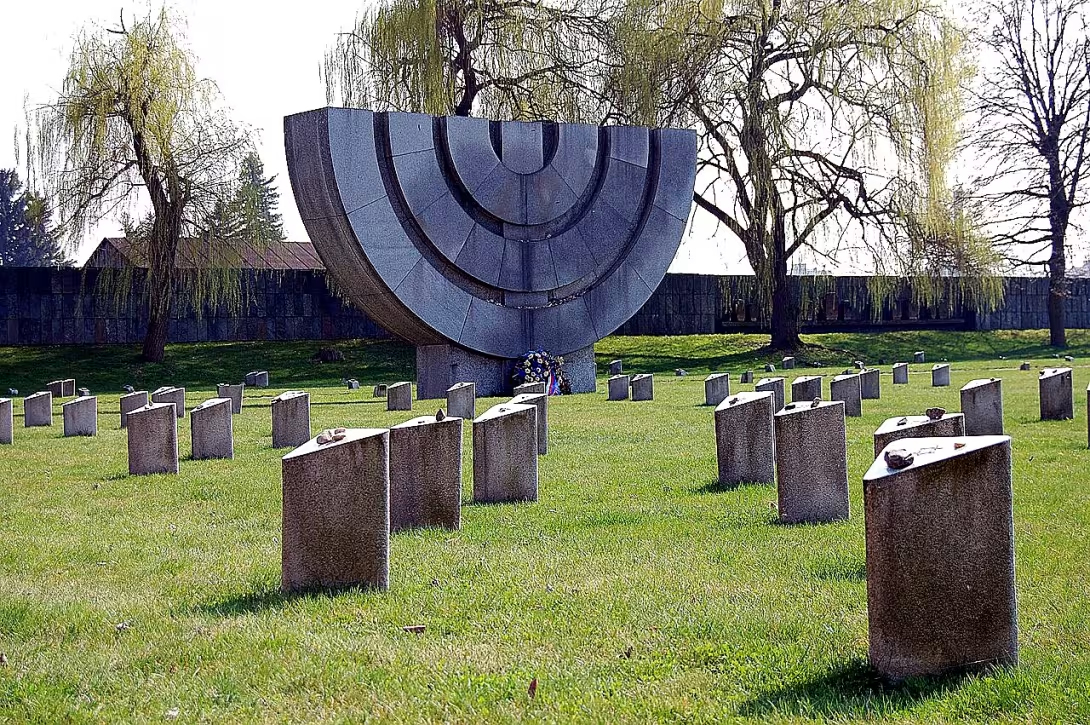
Židovský hřbitov v Terezíně is a historical monument located about one kilometre south of the city towards Bohusovice nad Ohří. It was created during World War II when the Nazis buried dead prisoners from the Terezín ghetto. It is part of the Terezín Monument and has a park model, which allows public access.
Terezín was part of the Protectorate of Bohemia and Moravia during the war, where the Nazi regime sought systematic elimination of the Jewish population. The cemetery in Bohushovická basin served as a burial ground for thousands of dead prisoners.
The architecture of the cemetery is not described in detail, but it is known that it has been architecturally modified and today has a park piety. Its inclusion in the Terezín Memorial highlights the importance of the tragedy of World War II.
After the war the Czech authorities dealt with the administration of the cemetery and it was integrated into the Terezín Memorial. The cemetery went through various stages, including the period after the crematorium was stopped in 1945, when burial in the cemetery was temporarily restored.
Opening the Teresian crematorium in 1942 led to a stop to burial in the cemetery. After the war was reused for funerals and today it is part of the Terezín Memorial. During the floods in 2002, the cemetery, like the whole city, was flooded.
Today, the Jewish cemetery is publicly accessible and serves as a place for a memorable pilgrimage. Its park piety allows visitors to reflect the tragedy that took place here. It is an important part of the Terezín Memorial and reminds of the fate of thousands of people.
The value of the cemetery lies in its historical importance as a monument to the tragedy of World War II. Visiting this place is an opportunity to honor the victims and reflect on the consequences of the Nazi regime. When visiting, everyone can realize the importance of memorable places to preserve history and learn from the past.
Then and now
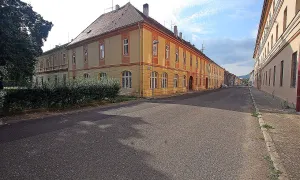
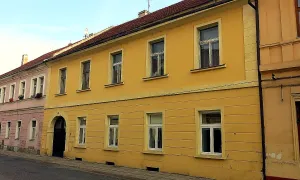
Drag the slider to compare how the landmark may have looked when it was built with the view today.
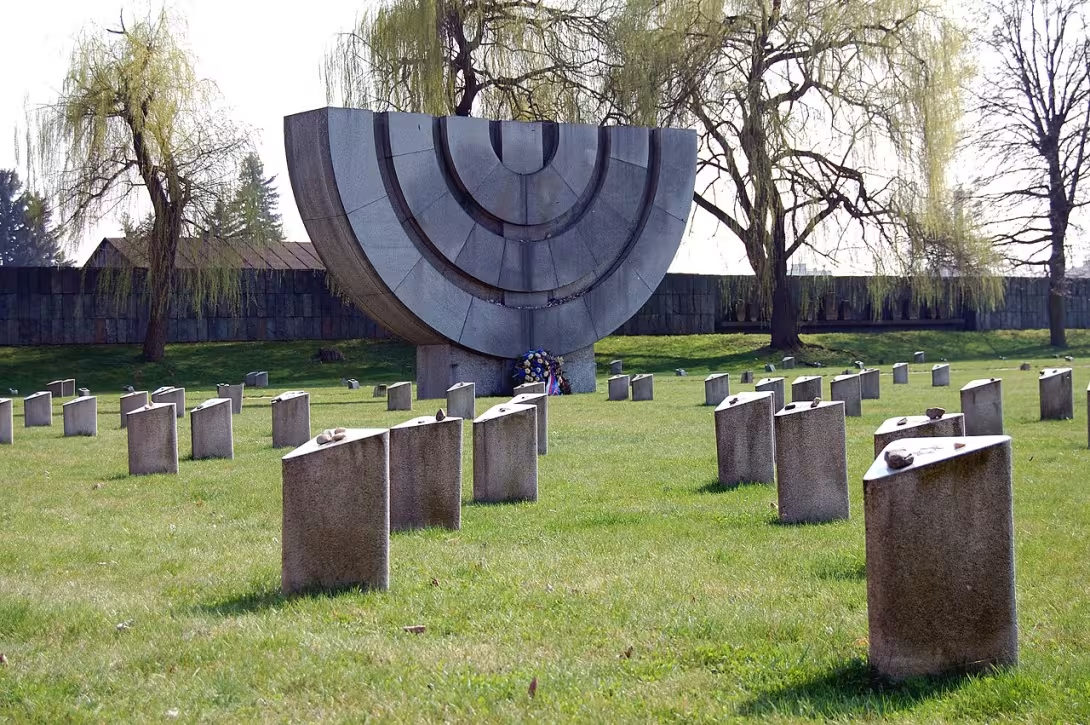
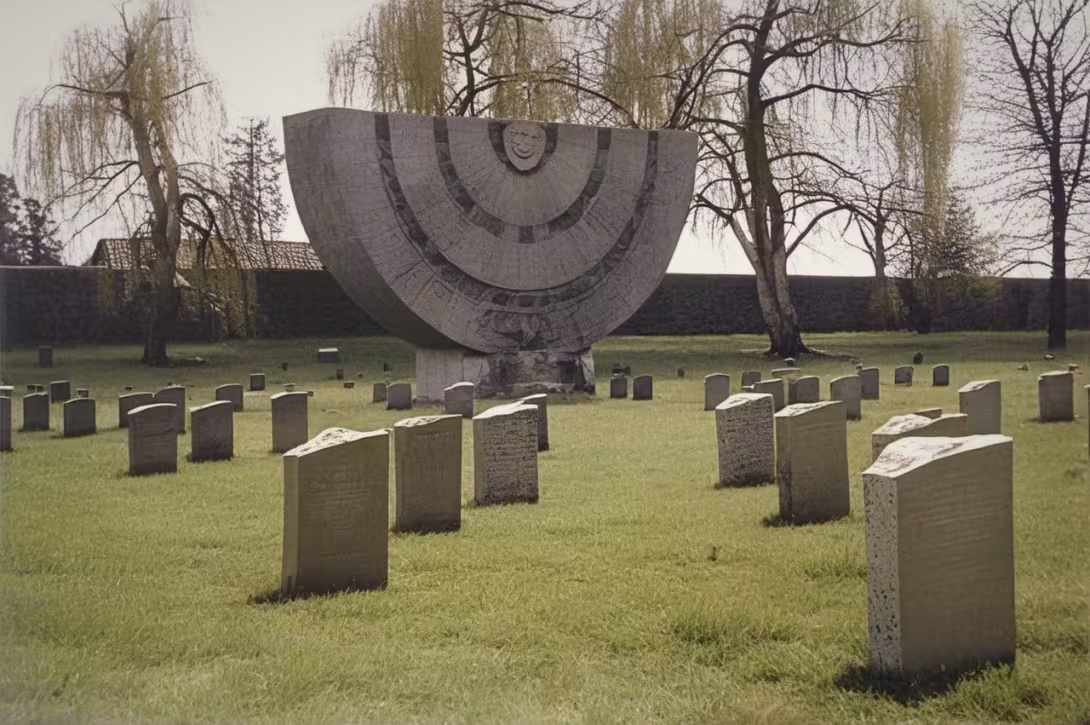
The historical appearance on the left is an AI-generated visualisation and serves as inspiration only.
Historical milestones
- 1942
- Setting up the Teresian crematorium.
- 1945
- Shortly after the crematorium was shut down, the cemetery was reused for burial.
Historical events
- 1941
- The beginning of using the cemetery to bury dead prisoners.
- 1942
- Opening the Teresian crematorium and stopping burying in the cemetery.
- 1945
- Shortly after the crematorium was shut down, the burial was returned to the cemetery.
Points of interest
- Židovský hřbitov v Terezíně is a historical monument located about one kilometre south of the city towards Bohusovice nad Ohří.
It was created during World War II when the Nazis buried the dead prisoners from the Terezín ghetto.
- It is part of the Terezín Memorial and has a park pietech, which allows public access.
- After the war, the Czech authorities dealt with the administration of the cemetery and it was integrated into the Terezín Memorial. The cemetery went through various stages, including the period after the crematorium was stopped in 1945, when burial in the cemetery was temporarily restored.
During the floods in 2002, the cemetery, like the whole town, was flooded.
Guide
Show guide text
This text was created by artificial intelligence and has not been editorially reviewed. It may contain inaccuracies.
Welcome. Please stop for a moment and just feel the space around you. You're standing right outside the Jewish cemetery in Terezín. If you look around, you'll see a place that seems peaceful at first, almost peaceful. You are about one kilometre south of the city center Terezína, on the way to Bohusovice nad Ohří. It is this position, slightly detached from the urban rush, that gives this place a special, quiet atmosphere. You can see in front of you the space that has been carefully maintained and modified. Notice the park penmanship surrounding this burial ground. It's a space designed for silence, for consideration and for deep respect. It is thanks to this adjustment that this place is now open to the public and allows us to enter here in peace and pay our respects to those who are resting here.
Let us now think together about why this place was created and what its historical context is. To understand the meaning of this cemetery, we must return to the darkest years of the twentieth century, namely the times of World War II. This burial ground was not founded as a common city cemetery, but was created as a result of the horrors of the Nazi regime. This is where the Nazis buried the prisoners who died in the Terezín ghetto. Terezín was not just a city, it was a place of suffering, a closed world where thousands of people faced inhuman conditions. This cemetery is such a silent witness to the tragedies that took place here. It's a place where the personal pain of thousands of families combined with a huge historical crime. Now, when you look around, you realize that every foot of this land carries the story of a man who was ripped from his home and ended up in the Teresian ghetto.
Now pay attention to what you see right in front of you. Even if you don't find complex architectural elements or monumental structures that dominate the landscape, it is in that simplicity that the power of this place lies. Notice how the park is intertwined with the character of the burial ground. It is a space that does not have the task of celebrating victory or power, but serves as a place of memory. Look around and see how nature returns to a place that was once associated with such great sadness. This penmanship you see today is part of the wider Terezín Memorial complex. Its purpose is to maintain the dignity of this space and to ensure that visitors can move here in a sense of respect. Follow the line of space, perceive the openness of the landscape and how the cemetery naturally passes into the surrounding terrain. It is this tonnage that helps to make a person feel small here before the weight of history, but at the same time found room for their own internal dialogue.
When we think about people who are connected to this place, we don't find the names of famous personalities or great leaders who would be highlighted in the background. That is where the greatest tragedy and the greatest truth of this cemetery lie. Thousands of nameless people are buried here. Ordinary people, fathers, mothers, children who had dreams, their homes and loved ones. Each of them was one of the thousands of prisoners of the Teresian ghetto. Even though we don't know the specific names of the architects who designed this space, or the specific personalities that would be raised here, their presence is felt in every wind and every quiet moment. It's a collective memory cemetery. It's a place where individual fates unite into one big, painful story. Imagine the thousands of lives that ended up here, and remember that this quiet field is one of the few physical evidence of their existence in this place.
Let me now interest you in one chronological interest that will help us better understand how those who died were handled in Terezín. The history of this cemetery is closely linked to the operation of the Teresian crematorium. In 1942, in the middle of war chaos and suffering, the crematorium was put into operation in Terezín. This fundamentally changed the way the Nazis treated dead prisoners. However, after some time, the situation changed. Shortly after 1945, when the operation of the crematorium was stopped, this cemetery was again fully used for funerals. This transition from one way of dealing with the deceased to another shows us how conditions have changed in a short time and how, with the end of the war, the need to give people a dignified final rest in the country. It is a fascinating, albeit sad detail that reminds us that even in such chaos there was some chronology and a system that was governed by those who ruled here.
Now that you have learned of the origin of this place, its connection to the ghetto and the fate of those who rest here, I suggest you stop for a moment. Let silence surround you. Take another look at the park layout that is protecting this space today. It's the contrast between the horror of the past and the room of the present. This place isn't just a cemetery, it's a lesson in history that teaches us where hatred and intolerance can lead. It is a space where time has stopped to remind us that freedom and human dignity are the highest values.
Let us now slowly say goodbye to this part of the tour. I ask you to take a slow walk around this drinking area. Feel the atmosphere, think about the people who stayed here, and let the silence of this place guide you. If you have time, I suggest you explore other parts of the Terezín Memorial to help you build up a complete picture of what happened here in the years of World War II. Every stone and every tree in this area has its meaning, even if no one tells us it's out loud.
Thank you for your attention and for the respect you have given this place. I hope this short trip to history has helped you better understand the importance of the Jewish cemetery in Terezín. Now you can put your headphones away and continue your journey in silence. Good-bye and a safe journey to discover the sights of this city.
Tips for visitors
The best time to visit the Jewish cemetery in Terezín is the early spring or late autumn. During these months you avoid extreme temperatures and have the opportunity to use mild light that is ideal for photography. This cemetery is a quiet location where you can enjoy the comfort and reflective atmosphere.
Parking at the Jewish cemetery in Terezín is not directly within the border of the monument. We recommend parking in nearby municipalities such as Bohusovice nad Ohří. You can travel by bus or tram by public transport; check available information in the online search engine for current connections and times.
When visiting the cemetery, it is advisable to bring comfortable shoes because the terrain can be irregular. We also recommend protective sunglasses and plenty of water, especially in the summer months. Also remember the camera or mobile phone to capture views.
Photography at the Jewish cemetery offers several interesting places, especially in the early morning or late afternoon when light is fine and calm atmosphere allows you to capture the calm beauty of the cemetery. Detailed views of monuments and tombstones are also important, which tell about history.
In the vicinity of the Jewish cemetery in Terezína you can visit an interesting location such as the Terezín ghetto and museum. It is a place that offers a deep insight into the history of World War II and Jewish communities in the region. It is advisable for families with children to prepare information about this history in order to make a visit for all.
Businesses nearby
Do you run a restaurant, accommodation, shop, museum, rental, wellness or other visitor service near this monument? Show yourself directly to the people heading to it — this is how they will see you in the app and on the web:
Events nearby




Zdroj akcí: otevřená data měst a obcí ČR (Národní katalog otevřených dat) a kalendář akcí Národního památkového ústavu.
Nearby
XXXHistorical monuments (96)
- Krematorium 0.0 km
- Columbarium 0.4 km
- Jewish and Christian Hall 0.5 km
- Museum of Nostalgia 0.5 km web
- Muzeum Geocachingu 0.6 km web
- Magdeburg barracks 0.7 km
- Basic stone strength Terezín 0.8 km
- Museum Ghetta: Jewish prayer room and replica of the Mansard 1.0 km web
- magazine 1.0 km
- Jan Hus 1.1 km
- Muzeum Ghetta 1.1 km Komenské 148
- Park Teresian Children 1.1 km
- Memorial to children who died during fascism 1.1 km
- Olga Klicpeva 1.1 km
- In memory of Jewish citizens 1.2 km
- Bohusovické forward fortification 1.4 km
- Auto Museum 1.4 km
- National Cemetery 1.4 km
- I. bastion 1.5 km
- II. bastion 1.7 km
Restaurant and catering (194)
- XZ0ZCHOA Vietnamese restaurant 0.8 km + 420778590878
- Atypk 1.1 km
- Pizza House Teresin 1.1 km + 420 731 771 841 web
- Klobouk 1.1 km
- Railway restaurant 1.2 km
- Asian Wok 1.6 km Cross
- McDonald's 1.7 km Cross
- Café Kontik 2.8 km
- KFC 2.8 km
- U green caterpillar 3.4 km
- Coffee Stánek 3.5 km + 420 774 911 595 web
- Coffee with steam 3.6 km
- Bašta 3.6 km web
- Guesthouse Milk poisons 3.6 km
- Don Pedro 3.6 km
- Vicar 3.6 km
- Orbis 3.6 km
- Zanzibar 3.6 km
- Ruby 3.6 km
- Wine Food Klaret 3.6 km Kostelní square 233 + 420776700651 web
Accommodation (49)
- Memorial 0.8 km + 420 777138545 web
- Parkhotel Terezín 1.1 km + 420 775 885 990 web
- Camp Slavoj Litomerice 3.4 km + 420 731 443 463 web
- Andě 3.6 km Jarošova 13 / 43 + 420 721 840 415 web
- _ 3.8 km + 420 777 655 140 web
- Hotel Koliba 3.8 km + 420 416 732 861 web
- U Pine 3.8 km
- Hotel Apollon 3.9 km Na Valech 2094 / 25 + 420 222 539 539 web
- U Saint Wenceslas 3.9 km
- Hotel Labe 3.9 km
- Guesthouse Mácha 3.9 km Bakery 496 / 17 web
- Brewery Hall 4.0 km
- Hotel Roosevelt 4.0 km Roosevelt 962 / 18 + 420 702 156 382 web
- Hotel Dejmalick 4.1 km
- Pension Relax 4.1 km Stránské 6 + 420 222 539 539 web
- litometics 4.2 km
- Hostel St. Stephen's 4.3 km Komenské 748 / 4 + 420 731 402 588 web
- Sokol 4.3 km
- Karavan Camp Nučnky 5.0 km + 420 603 859 061; + 420 602 443 935; + 420 724 184 239 web
- Marina Labe 5.9 km + 420 774 584 249 web
▶ Rental and Sport (17)
- Yacht-Club Lovosice 3.3 km web
- norskamodaxZ4ZX 3.6 km
- Skicentrum 3.9 km
- Swimming pool 4.1 km Daliborova 2078 / 7
- Sokol 4.3 km
- Marina Whistles 6.0 km
- City pool ASK Lovosice 6.8 km
- Yacht-Club Lovosice 7.0 km
- Cyklo Vondra 7.5 km Palacký 450 / 7
- Roudnický pools 11.0 km
- byjk: a 11.4 km
- Yachtclub Roudnice nad Labem 11.7 km
- Velo Novy 12.1 km
- Sportcentrum 12.8 km
- K + S 13.2 km
- Elbe Arena Racice 14.1 km
- Course Martinéves 14.6 km
© Tourism and Nature (151)
- Hálka sets 0.6 km
- Czechoslovak Army 0.9 km
- Dukel Heroes 0.9 km
- Jirask sets 1.1 km
- Pioneer Park 1.1 km
- Smetan Sets 1.2 km
- Park Václav Havla 4.1 km
- Jirask sets 4.1 km
- Lukavek well 4.8 km
- Křemín 4.9 km
- Bridge views 5.0 km
- Rajdobýl 5.1 km
- Mostka 5.1 km
- Rajdobýl 5.2 km
- Rajdobýl 5.2 km
- Cat (Owls) 5.7 km
- Children's Farm U Tonica 5.8 km
- Elishka's tops 6.2 km
- Park Inspirace 6.2 km
- Bídnice 6.4 km
Accommodation nearby
Trips and activities nearby
Guided tours, tickets and activities nearby from GetYourGuide
Affiliate link: if you buy from the partner, we may receive a commission. The price for you does not change.
Search tours and activities →Themed route
Terezín Jewish cemetery is one of the most prominent sites of the Holocaust monument in this area. Since there is no specific surroundings in the entry, we will focus solely on exploring the cemetery's premises and its immediate surroundings, which are part of this historic place.
The route begins at the main entrance to the complex.
Main gate cemets Type: Entry object First stop will introduce you to the atmosphere of the place. Here you can realize the weight of history and prepare for a spiritual and historical tour that follows.
Central Cemetery Type: Funeral area A walk between the graves allows you to see the personal fate of the victims. Many inscriptions on the graves are in Hebrew, which gives space specific character and dignity.
Last resting place of children Type: Specific section of the cemetery This section is dedicated to the youngest victims. It is the most emotionally intense point of the route where visitors often take a break to reflect on the tragedy of war.
Border zone and commemorative plates Type: Information and commemorative elements At the edges of the premises there are boards with text reminiscent of the victims. These elements complement the picture of the whole place and provide context for what happened here during the occupation.
Preview terrace above cemeters Type: Natural and prospective element The final stop offers a view back to the whole area. The increased position enables you to gain perspective on the extent of the cemetery and its relationship to the surrounding landscape, which concludes the tour on a quiet and thoughtful tone.
This route is designed to respect the dignity of the site and allow visitors to gradually enter the history and atmosphere of Terezína without the need to leave the immediate site of the monument.
Seasonal recommendations
In spring, the cemetery comes alive due to the awakening nature and fresh green grass, creating a special contrast to the silence of the monument. Soft spring light is ideal for contemplation and perception of details. We recommend to dress in layered clothes because the weather is variable, and to visit the place in the morning when crowds of tourists are still mild.
The summer season brings sharp sun and rich color landscapes that highlight the geometry of cemetery spaces. The atmosphere is very intense in hot days and the most people flow through space. It is advisable to come first thing in the morning to avoid the biggest groups of visitors and burning heat. Don't forget light clothing and plenty of fluids.
Autumn with its golden leaves and frequent mists gives the place a deep melancholy touch and quiet. The evening lumbar and muted colours underline the historical seriousness of space. It is practical to wear moisture resistant shoes and a warm sweater. In this period, visitors are significantly less experienced, allowing for a more private and deeper experience.
In the winter, the cemetery works most sparsely, especially if the tombstones are covered with snow, which creates a sense of absolute silence and purity. The light is gray and the days are short, which deepens the sense of loneliness and humility. It is necessary to have very warm clothes and to check in advance the shortened opening hours. The best is a visit around noon when the most daylight is.
Visualizations and artistic views


The visualisations are generated by artificial intelligence and serve as inspiration.
Photos from the area
Real photos taken near the monument

Zdroj a licence jsou uvedeny u každého snímku.
Tips from visitors
No tips yet. Be the first!
Log in and add your tip.
Sources and literature
Fotografie: Ladislav Faigl / CC BY-SA 3.0 — Wikimedia Commons. The author and licence also appear when you hover over the image.
Faktickým podkladem tohoto textu byl článek na Wikipedii, jehož autory jsou přispěvatelé Wikipedie. Článek je dostupný pod licencí CC BY-SA 4.0.
Location on the map
More monuments – Terezín
Show all in the municipality

Příběhy a pověsti
Legendy, pověsti a příběhy spjaté s touto památkou
Fotografie návštěvníků
Zatím žádné fotografie. Buďte první, kdo přidá fotografii z návštěvy!
Přihlaste se a přidejte svou fotografii nebo hodnoťte.
Za ověřenou návštěvu v aplikaci získáte víc bodů — poznáme podle GPS, že jste na místě.
Reviews and comments