



Zvonice (Žumberk) Belfry
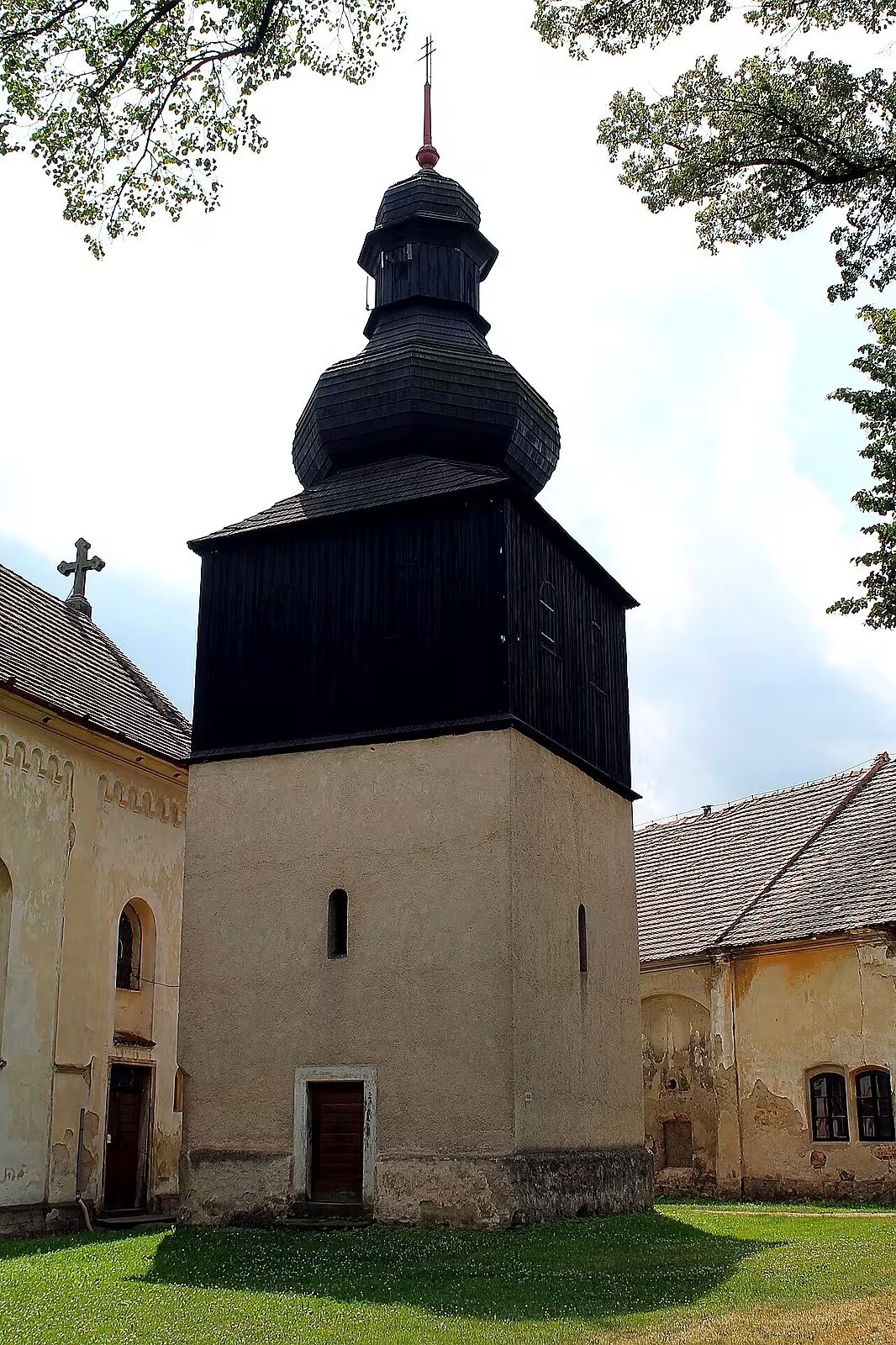
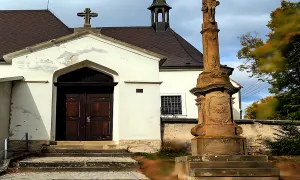
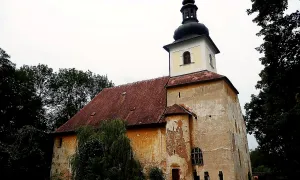
The bell tower in the village Žumberk in Chrudim is a stand-alone Baroque tower building. It was completed in 1789 on original Gothic foundations. The building is supplemented by the neighbouring Church of All Saints and since 1958 it has been included in the list of real cultural monuments of the Czech Republic.
The construction was built in 1789, i.e. during the period of enlightened reforms of emperor Joseph II. At that time, the European context affected the political changes associated with the outbreak of the French Revolution. More detailed reports have not been made on specific builders, yet the bell tower is a typical regional example of separate bells for rural single-boat churches.
The architectural object consists of a prism suspect made of quarry stone, which is preset by about ten centimeters. On this gothic basis, a wall floor with smooth limestone plaster was built, separated by slit, semi-circular finish windows without lining. There is a bell floor over the wall, beaten by wooden planks. It is illuminated by a pair of wider half-circle windows with shutters. The whole building is completed by a pit with onion, covered with shingles and finished with a double metal cross. The entrance to the bell tower leads through the east wall through the sandstone lining with closely cut edges.
The interior consists of a square space, the walls of which are reclining on floors. Above the walled floor there is a stenary structure with bell stool, in which there is a bell cast in 1767. The structure of the stool has undergone modifications in the past in which some beams have been replaced, although part of the elements remained original. The coat of the bell floor is carried by a modern stenýří construction and the cross is also modern.
The interesting thing is that the bell tower was in the past equipped with tower clocks with dials on the north and east side. According to the memoirs, the sound of the ticking clock was audible up to a distance of two kilometers. The remains of this clock machine and dials are kept in the bell tower until today.
Today this monument represents a valuable document of regional rural architecture and historical development of sacral sites. Visit Žumberka offers the opportunity to see this technically and historically interesting object in the immediate vicinity of the Church of All Saints.
Then and now
Drag the slider to compare how the landmark may have looked when it was built with the view today.
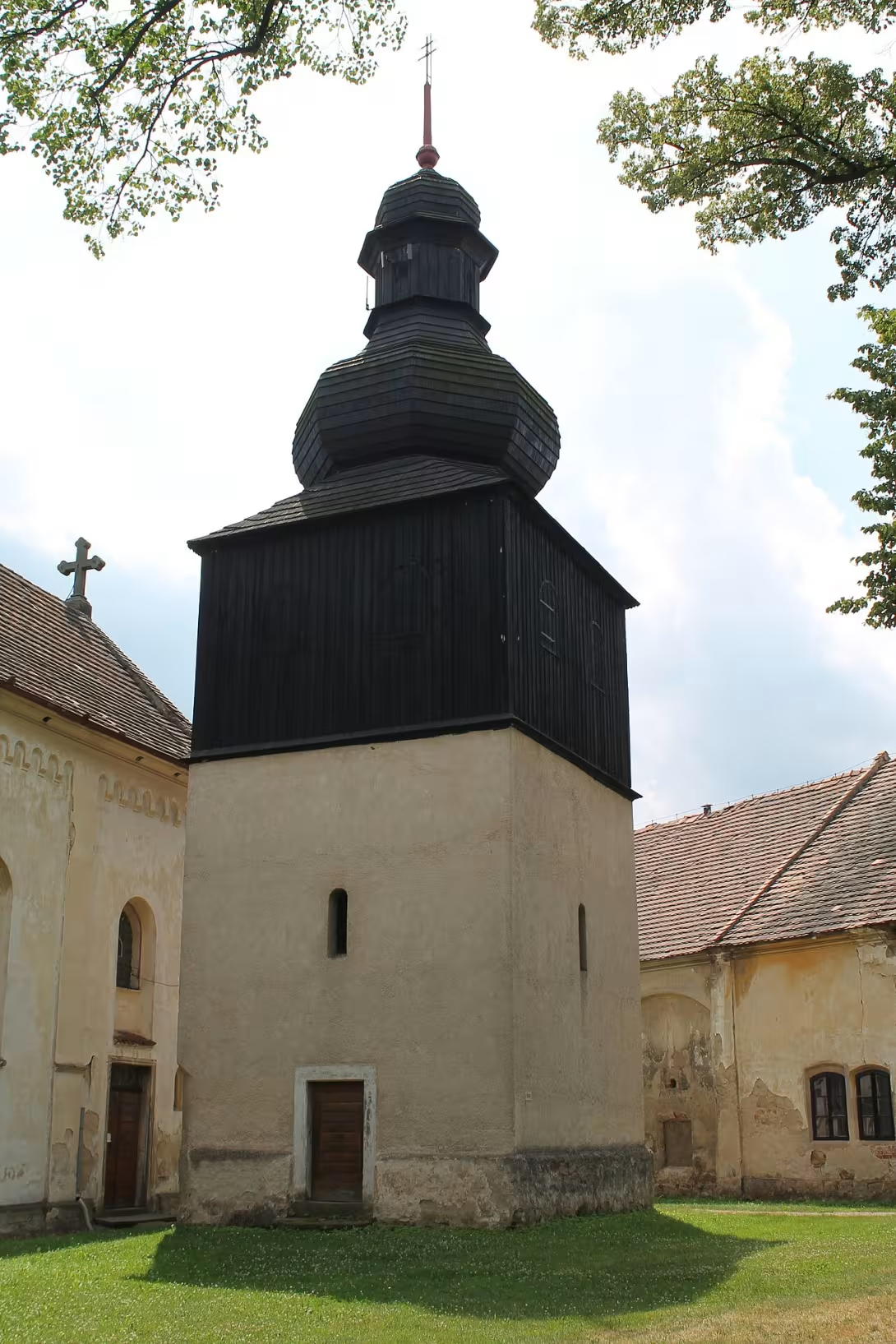

The historical appearance on the left is an AI-generated visualisation and serves as inspiration only.
Historical milestones
- 1767
- The bell that is placed in the bell stool today.
- 1789
- Completion of bell tower construction on Gothic foundations.
- 1958
- Declaration of the bell tower for a real-estate cultural monument.
Architectural development
The basis of the construction is the original Gothic suspect, on which was built the brick floor in 1789. The upper part consists of a wooden stenary structure, which has been partially modified over time. The roof pit with onion is covered with shingles and represents a characteristic element of baroque curvature.
Historical events
1789: Construction of bell tower on Gothic foundations. 1958: Entry of the building into the list of real cultural monuments of the Czech Republic.
Points of interest
- The bell tower was completed in 1789 on the foundations that came from the Gothic period. - The construction has been listed in the list of real cultural monuments of the Czech Republic since 1958. - Inside the bell tower there is a bell that was cast in 1767. - In the past, the tower was equipped with clocks whose sound was audible up to two kilometers away. - The remains of the clock machine and dials that were placed on the north and east side are still preserved in the bell tower.
Guide
Show guide text
This text was created by artificial intelligence and has not been editorially reviewed. It may contain inaccuracies.
Welcome to Žumberk. Stop for a moment, take a breath and look ahead. Right now, you're facing one of the most prominent silent witnesses in local history, which is this self-standing bell tower. It is a building that complements the surroundings with its silhouette and immediately brings about a sense of peace and stability. Feel her presence, her height and the way she sticks to the sky. It is a place where practical purpose meets aesthetic value, and that is why it deserves our attention.
Let us now look together at how this building was created and what its historical context is. The bell tower you see was completed in 1789. However, her story does not begin until the end of the eighteenth century. If we could look deep underground, we would find that the entire tower is standing on much older foundations that come from the Gothic period. Imagine how many generations of people passed through here and how many events took place, while these foundations were patiently bearing the weight of the construction. The bell tower was not built randomly or as a separate ornamental element, but served as a functional complement to the neighbouring Church of All Saints. It was common at that time that the bell tower was separated from the main temple ship, which often had practical reasons, for example so that the vibrations of the heavy bell would not damage the arches of the church.
Now pay attention to the architecture itself and look at the details that form the face of this tower. I suggest you follow the structure from the bottom up as if you were slowly discovering it. First, look at the lower part, the brick suspect. It consists of a prism base made of quarry stone. This material is typical of its roughness and resistance, which gives the whole building a feeling of strength and anchoring in the ground. The quarry stone reminds us of the craftsmanship of ancient builders who used materials available nearby.
As your eyes rise above, notice a significant change in the material. Above the stone foundation begins the upper bell floor. Here we see no more cold stone, but warm wood. This whole floor is beaten by wooden planks, which with time has acquired its characteristic patina. This contrast between the heavy rock below and lighter wood above is typical of many similar structures in our regions and creates a harmonious overall impression.
Now look up to the very top. The bell tower is finished with the onion. This shape is very specific and gives the tower an elegant, almost playful look. Note that this entire onion is covered with shingles, i.e. small wood fragments, which form a protective layer against rain and snow. At the very top, you will see a poppy, supplemented by a double cross. This detail is not just an ornament, but it bears a deep symbolic meaning that resembles the spiritual dimension of this place.
When we think about bells, the first thing we think about is sound. And this is where we get to one of the most valuable parts of this monument. Inside the tower there is a bell that is much older than the actual building itself. It was cast already in 1767. Try to imagine the sound of the 18th century silence. The bell was not only a tool for calling believers to church, but it was also the main means of communication of the village. The sound of the bell announced the joy of birth, the sadness of death, the warning of a fire or calling people together for a joint council. So that particular bell from 1767 is the real link between us and the people who lived here over two centuries ago.
Although we do not know the names of the particular architects who designed this tower, or the personalities that would be directly associated with it, the actual matter of the building speaks to us. It contains the patience of craftsmen and the needs of the community. It is fascinating to realize that this tower has endured troubled times, changes in regimes and changes in the landscape around it.
Now I want to impress you with one interesting thing, which may not be visible at first glance, but which created the atmosphere of this place in the past. The tower was previously equipped with clocks. Their sound in the past was an inseparable part of the rhythm of life in Žumberk. They thought people were oriented, planning their work on fields and workshops, knowing how much time they had until tonight. We can't hear the clock in this form anymore, but in the quiet surroundings, we can imagine how regular clock strikes accompanied the day-to-day performance of the local population.
This bell tower is much more than an old tower today. In 1958 it was officially declared a cultural monument of the Czech Republic. That means the state has recognized its irreplaceable value for our history and culture. It is a recognition that even such a simple but honest construction is an important fragment of our common memory.
Now, if you look at the whole structure again, try to perceive its overall harmony. From the Gothic foundations, which are hidden in the ground, to the robust quarry stone, to the wooden boards, to the fine shingle onion with double cross. It's a journey through centuries, written in materials.
I hope this short trip to history has helped you see this bell tower with different eyes. It's not just a building made of stone and wood, it's a symbol of endurance and tradition. Now, let's invite you to further explore the area. Walk slowly around the tower, you may notice some detail I missed in the description, or just enjoy the atmosphere of this historic corner of Žumberka in peace.
Thank you for your attention and I wish you a pleasant further journey. Goodbye.
Tips for visitors
The best time to visit is in the morning or in the evening, when the sun pleasantly illuminates the historical wall of the bell tower and the neighbouring church, which creates ideal conditions for shooting details of architecture. Take with you fixed shoes to move around the church and the camera as the contrast between the Gothic foundations and the younger extension is very photogenic. In the immediate surroundings you can visit the adjacent Church of All Saints, which is formed by one historical whole. We recommend to families with children a walk around the village Žumberk, which offers a quiet environment suitable for a simple trip with the possibility of sightseeing exteriors.
Frequently asked questions
Can the monument be visited?
This is a structure in a public space that can usually be seen from outside free of charge. We have not verified that this particular one is freely accessible.
Where is the monument?
Location: Žumberk, Pardubický kraj. The map on this page shows the exact spot.
Why is the monument protected?
It is listed in the Central List of Cultural Monuments of the Czech Republic as a cultural monument (register no. 1000135535).
Businesses nearby
Do you run a restaurant, accommodation, shop, museum, rental, wellness or other visitor service near this monument? Show yourself directly to the people heading to it — this is how they will see you in the app and on the web:
Events nearby

Zdroj akcí: otevřená data měst a obcí ČR (Národní katalog otevřených dat) a kalendář akcí Národního památkového ústavu.
Nearby
Přímo sousedí s kostelem Všech svatých v obci Žumberk, která se nachází v okrese Chrudim.
Accommodation nearby
Seasonal recommendations
Spring
The bell tower at Žumberk in the spring season offers visitors a beautiful view from the height when the weather begins to come to life and nature wakes up. Flowers in nearby meadows and trees begin to bloom, which gives the bell tower a romantic character. The sun illuminates the tower with various colors that change with daily procedure. For a visit it is advisable to come early in the morning or in the evening when there are lower temperatures and less probability of high days. It is recommended to wear clothes according to temperature because spring weather can suddenly be variable.
Summer
In summer is the bell tower Žumberka a favourite destination for tourists who enjoy warm sunny weather and excellent views of the surrounding countryside. High temperatures attract many people, so it is advisable to visit the memory early in the morning or later in the evening to avoid large crowds. It is possible to use cold air on the tower and to overlook the landscape of remote mountains. It is recommended to wear light clothes, sunglasses and plenty of drinking water.
Autumn
V podzimu nabízí zvonice Žumberka jedinečnou atmosféru s barevným pozemím, kdy se listy stromů proměňují do zlatých a rudých odstínů. Slunečné dny jsou často přerušovány chladnými vichřicemi, což může dodat návštěvníkům pocit autentičnosti a klidu. Je vhodné navštívit památku v poledne, kdy je slunce na nejvyšší úrovni a poskytuje nejlépe osvětlený pohled na okolní krajinu. Doporučuje se nosit více vrstev oblečení a přinést deštník, protože počasí může být proměnlivé.
Winter
V zimním období nabízí zvonice Žumberka návštěvníkům klidnou atmosféru a možnost užít si pohled na sněhově pokryté horstva. Při chladném počasí je navštívění věže méně zatíženo davem, což umožňuje klidné procházky a fotografie. Sluneční svit na sněhu může dodat pohledu romantický tón. Je vhodné navštívit památku v poledne, kdy je slunce nejvyšší a poskytuje teplejší okamžiky. Doporučuje se nosit teplé oblečení, ochranné rukavice a obuv vhodnou pro sněhové podmínky.
Visualizations and artistic views


The visualisations are generated by artificial intelligence and serve as inspiration.
Photos from the area
Real photos taken near the monument


Zdroj a licence jsou uvedeny u každého snímku.
Tips from visitors
No tips yet. Be the first!
Log in and add your tip.
Sources and literature
Photos: Harold / CC BY-SA 3.0 — Wikimedia Commons. The author and licence also appear when you hover over the image.
Faktickým podkladem tohoto textu byl článek na Wikipedii, jehož autory jsou přispěvatelé Wikipedie. Článek je dostupný pod licencí CC BY-SA 4.0.
Location on the map
Příběhy a pověsti
Legendy, pověsti a příběhy spjaté s touto památkou
Fotografie návštěvníků
Zatím žádné fotografie. Buďte první, kdo přidá fotografii z návštěvy!
Log in a přidejte svou fotografii nebo hodnoťte.
Za ověřenou návštěvu v aplikaci získáte víc bodů — poznáme podle GPS, že jste na místě.
Reviews and comments