






Vodní mlýn (Žumberk) Water mill
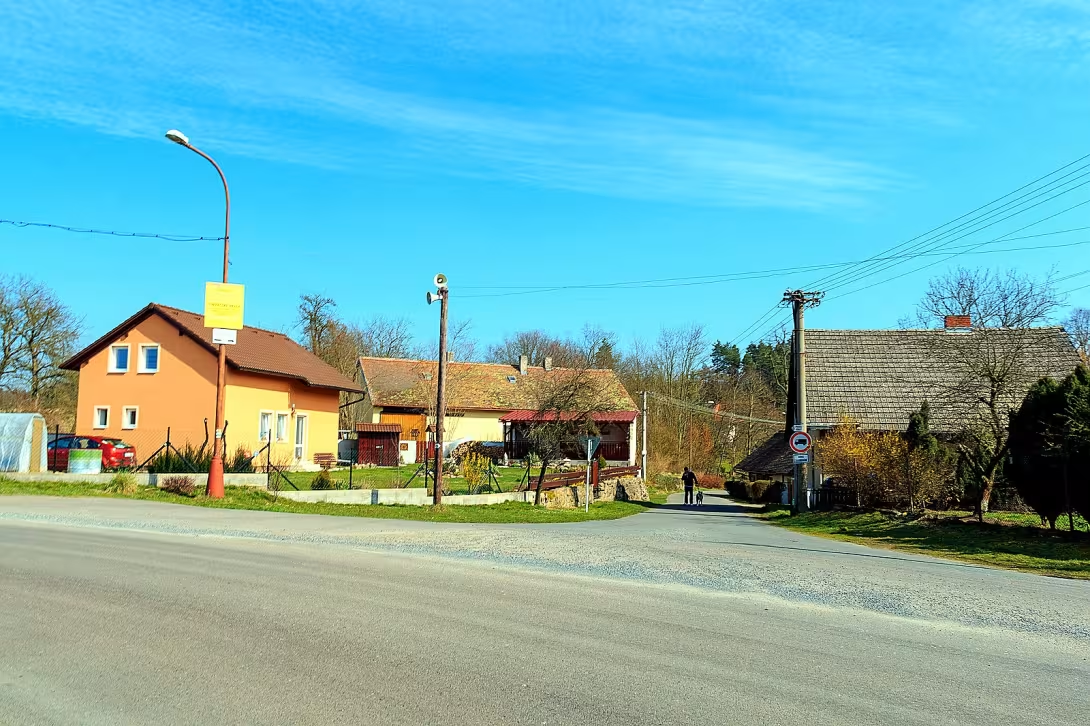
The upper mill in Žumberk in Chrudim is a Renaissance water mill on the river Lížák. This cultural monument of the Czech Republic represents an important technical object. Its history dates back to the middle of the 16th century and to this day valuable evidence of miller technology has been preserved, including complete artistic composition.
The mill was founded in 1548 Hynek Janovský ze Soutic. This event is witnessed by a stone plate above the door, on which is carved the foundation text mentioning also the builder, Master Luke of Sec. The creation of the building falls into the 16th century, when the building of economic buildings flourished under the patronage of the nobles in the Czech lands.
The original Renaissance building has undergone technological modifications over the centuries. In the years 1704 and 1757 the mill had two milling compounds and a drive to the top water; In 1757, there is also evidence of a single rise. Before 1906 the equipment consisted of one ordinary composition with French stones and one artistic composition with milling stool. In 1930 the mill used the top water wheel of 4.0 HP, which in 1936 replaced the more modern Francis turbine with 14.5 HP.
Long-term operators were the Carrot family. The history of the mill was marked by the tragedy of 1914, when the miller Antonín Mrkvička starší suffered a fatal injury. In 1937, the building was hit by a devastating fire that was created in the mill from a wooden extractor. After this event the building was rebuilt and equipped with a new artistic composition of red pine. The last miller Antonín Mrkvička mladší was here until 1955. After that, the activity was closed and the building was subsequently maintained by the national firm Mlýny and the pastoral plants as an advance.
Today, the Upper Mill is valued primarily for the preserved historical core with stone elements and complete artistic composition, which is an important example of the development of miller technology. The construction in the landscape of the Iron Mountains remains an important witness to the craft tradition and technical skills of past generations. Visiting this place offers a unique opportunity to look into the history of the mill industry and appreciate preserved technological units that form an integral part of our cultural heritage.
Then and now
Drag the slider to compare how the landmark may have looked when it was built with the view today.
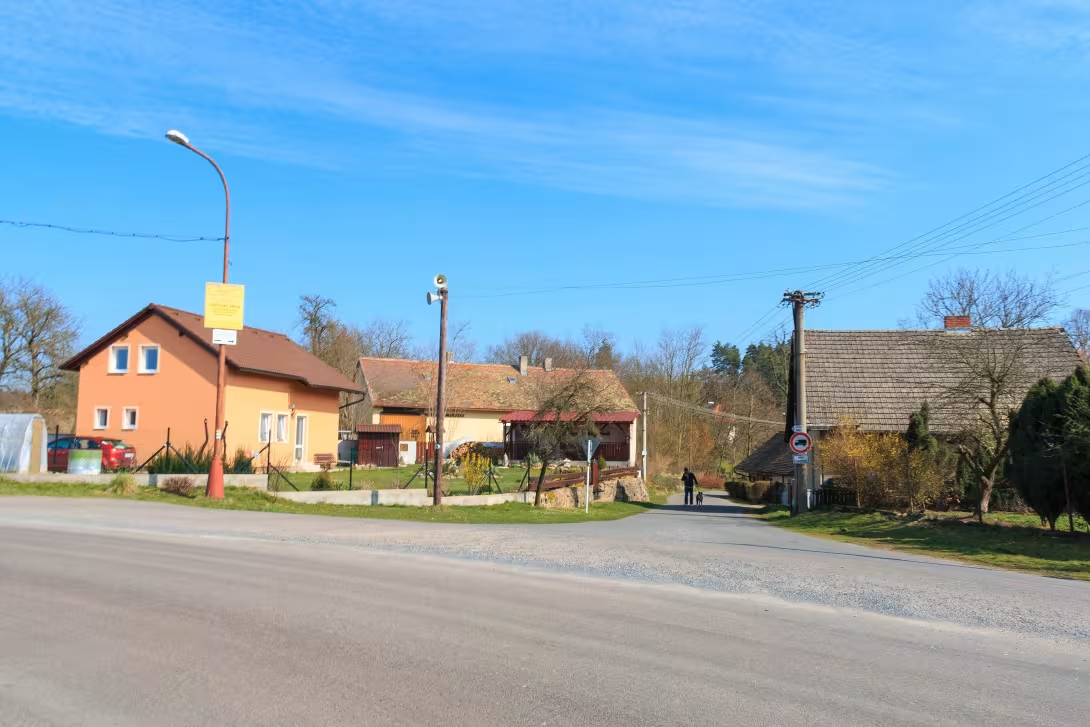
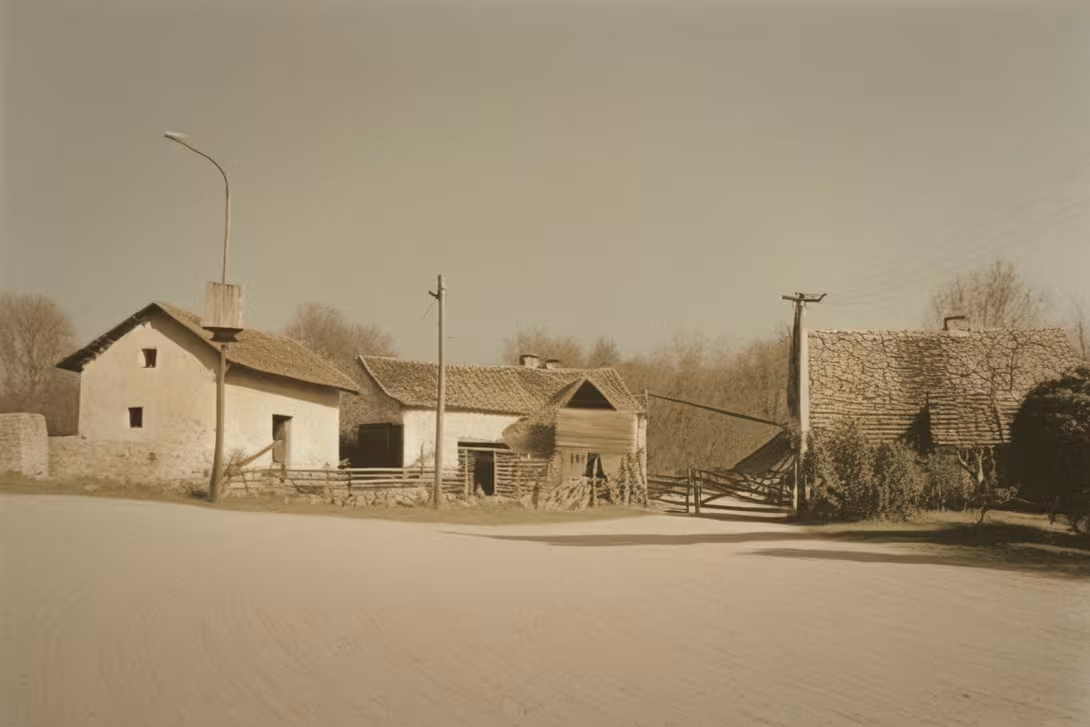
The historical appearance on the left is an AI-generated visualisation and serves as inspiration only.
Historical milestones
- 1548
- The founding of the mill by Master Luke of Sec.
- 1936
- Installation of Francis's 14,5 HP turbine.
- 1937
- The mill fire and the subsequent reconstruction.
- 1955
- Termination of operation by the last miller Antonín Carrot younger.
Architectural development
The original Renaissance building has been adapted for the needs of miller technology over the centuries. After the fire in 1937, there was a major reconstruction of the mill and installation of new equipment from the red pine tree. The object kept the historical core with stone elements.
Historical events
1548: set-up of the mill, 1937: extensive fire and subsequent modernization, 1955: completion of the mill activity.
Owners
Hynek Janovský ze Soutic (1548), the family of Carrot, the national enterprise Mlýny and the pastoral plant.
Points of interest
- The upper mill in Žumberk is a Renaissance water mill on the river Lížák, whose history dates back to the middle of the 16th century. - The mill was founded in 1548 by Hynek Janovský ze Soutic, which is evidenced by a stone plate above the door with the name of the builder, Master Luke of Sec. - In 1936, the original top water wheel of 4.0 HP replaced the more modern Francis turbine with 14.5 HP. - In 1937, the building was hit by a devastating fire that originated in the mill from a wooden extractor. - The last miller Antonín Mrkvička mladší was here until 1955 when the activity was completed.
Guide
Show guide text
This text was created by artificial intelligence and has not been editorially reviewed. It may contain inaccuracies.
Welcome to the Upper Mill in Žumberk. You are standing at one of the most important technical uniqués in this area, right by the river Lížák. Feel this moment when you stop and let yourself be carried away by the story that has been taking place here for centuries. In front of your eyes is a building that is not just an ordinary piece of construction, but a living witness to history that goes deep into Renaissance times. Feel the atmosphere of this place, where for many decades the sound of flowing water mixed with the rhythmic movement of miller work. It's a place where the force of nature connects with human ingenuity.
In order to understand the true meaning of the place where you are standing right now, we must return together to a deep past. The whole story of this mill began in the mid-sixteenth century. It's the year 15 hundred and forty-eight. At a time when European countries were forming into new structures and the economy began to gain a new pace, Hynek Janovský ze Soutic here decided to set up this important object. This decision was not accidental; It was a thought-out investment in a technology that was supposed to use the endless energy of the water in the Lížák River. The mill was built as a Renaissance water mill, which carries proof of the then expansion and ability to work with materials and with natural forces with great precision.
Now, please, pay attention to the details you have in front of you. Look up to the opening above the entrance. Notice the stone plate that's placed there. It's not just a simple ornament or a random architecture element. It's a historical document that allows us to connect with the people who actually built this mill. On this board is engraved the name of Master Luke of Sec. He was the builder who, in the sixteenth century, had to think about every stone and joint to create a solid and functional structure that could withstand generations. This record is a silent witness to the time that had passed since its foundation and reminds us of the craft championship that was necessary at that time for the creation of such an object.
Let us now move on to the technological heart of this place and its constant transformation. The mill was never a static machine; It was an organism that had to constantly adapt to new science and technical possibilities. Imagine what traffic looked like in the first centuries. The water was flowing through the upper channel and powered massive water wheels. This round, which used the energy of water from higher water, was a symbol of the progress and work of the river's natural decline. But science kept walking forward and the mill had to walk with it. In a thousand and nine hundred and thirty-six, one of the most important changes in his history occurred. The original mechanical systems were replaced by modern technology - the Francis turbine was installed here. This turbine had 14 and a half horsepower, which at that time represented a significant technological leap and an increase in the efficiency of the entire operation. This change meant that the mill became even more efficient and prepared it for the challenges of the modern industrial age.
However, history is not always about progress; It's also about overcoming the trials. In the year one thousand and nine trăm thirty-seven the mill found itself in danger that no one had anticipated. A violent and devastating fire has endangered this entire historical structure and has endangered its existence. You can only imagine the anxiety of the people of the time and the miller when they saw their lives and jobs threatened by fire. Yet this object didn't collapse. The fire was followed by a thorough reconstruction that allowed the mill to continue its life role and maintain its functionality. This building's resilience, its ability to survive disaster and rebirth, is one of its greatest and most fascinating stories.
And who worked in this mill? Behind every machine and every stone is a man. In addition to the founder, Hynka Janovski of Soutic, over the years there were people who took care of this place and who formed it. We can name a family of Carrots here that is closely connected to this place. Antonín Mrkvička starší and his son, Antonín Mrkvička mladší, were the ones who experienced the daily efforts of the miller craft in this place. It was Antonín Mrkvička mladší who was the last miller who ended the long and rich tradition of operating this mill in the year one thousand nine hundred fifty-five. With his departure, a chapter closed in '55, but the spirit of this place remains.
If you look around now, you might be interested in the constant presence of water. There is something mysterious about how the Lížák River has been tirelessly flowing around these walls for hundreds of years, and how its strength shaped the lives of the people who lived and worked here. It's an invisible energy that drove wheels, turbines, and the very fate of the miller families. It is a force that was present here in fifteen hundred forty-eight even in one thousand nine hundred fifty-five.
I hope this brief view of history has brought you new views of this fascinating object. You are standing in front of a place where the Renaissance tradition is combined with technical modern and where every part of the building tells its own story about the human effort to control the power of nature. Please continue your tour, feel the atmosphere and enjoy the beauty of Žumberka. Thank you for your attention and I wish you a pleasant further part of your journey.
Tips for visitors
{'Navsteva': 'The best time to visit is late spring or early autumn, when the surrounding nature of the Iron Mountains is the most photogenic and the Lížák River has plenty of water, which underlines the atmosphere of the historic mill.', 'transport': 'The village Žumberk is the easiest to reach by its own car. Parking is possible near the sights on the reserved areas in the village. If you choose public transport, check the current connection in the respective connection search engine.', 'equipped _ and _ photo': 'We recommend fixed shoes to move around the river. The best morning light for photography is the stone plate from 1548. The mill offers unique technical details that excel when using a wide-angle lens.', 'everything': 'In the immediate surroundings you can explore the picturesque village Žumberk, walk along the banks of the river Lížák or take advantage of tourist routes in the adjacent landscape of the Iron Mountains, offering peace and natural scenery.', 'families': 'For families with children, the location is ideal for easy walking in nature. Children can discover the technical elements of the mill and observe the flow of the river, which is a great way to familiarise them with the history and technology of our ancestors.'}
Businesses nearby
Do you run a restaurant, accommodation, shop, museum, rental, wellness or other visitor service near this monument? Show yourself directly to the people heading to it — this is how they will see you in the app and on the web:
Events nearby
Zdroj akcí: otevřená data měst a obcí ČR (Národní katalog otevřených dat) a kalendář akcí Národního památkového ústavu.
Nearby
The village Žumberk, River Lížák, surrounding landscape of the Iron Mountains.
Accommodation nearby
Themed route
1. Village Žumberk (type: village) - Start your journey by exploring the local atmosphere in this quiet settlement. 2. river Lížák (type: water flow) - Walk along the shore and enjoy the sight of running water. 3. Vodní mlýn (Žumberk) (type: historical mill) - The main destination of the trip, where you can admire the history and construction of this object. 4. surrounding landscape of the Iron Mountains (type: natural area) - Complete the route by walking in the vast and picturesque nature.
Seasonal recommendations
Spring: In the spring season, the water mill at Žumberk is oddly charming thanks to the light that is projected into the roofs and stones according to long sunlight. The landscape around it is revived by flowering bushes and leafy trees, creating an attractive atmosphere for visitors. At this time the weather can be variable, so we recommend wearing top clothes that can be easily added or reduced by temperature. The best time to visit is usually in the afternoon, when the sun illuminates the whole memory and the crowds are still quite few.
Summer: For years, the water mill becomes a popular destination for visitors seeking shelter from summer heat. The atmosphere is full of the sounds of nature and the snorting of water, which provides a quiet environment for relaxation. This season, it is recommended to visit the memory earlier in the afternoon to avoid the biggest crowds. It is advisable to wear light clothes and do not lack sun protective equipment such as a hat and perfume with high SPF factor.
Autumn: In autumn, the water mill at Žumberk becomes melancholic charm. The colours of leafy trees change and the landscape is covered with gold, red and yellow, creating an unforgettable atmosphere. The weather can be colder, so we recommend wearing warmer clothes. The best times to visit are early afternoon, when the sun is still above the horizon and the crowds are less.
Winter: In winter the water mill becomes mysterious. Freezing weather and snow sheets add something magical to the landscape, but they can also affect the opening times of the sights. It is necessary to wear warm clothes, including fur and shoes suitable for cold soil. You would rather visit him in the early afternoons, when the sun is still above the horizon, because evening visits may be limited due to the short hours of today.
Visualizations and artistic views


The visualisations are generated by artificial intelligence and serve as inspiration.
Photos from the area
Real photos taken near the monument

Zdroj a licence jsou uvedeny u každého snímku.
Tips from visitors
No tips yet. Be the first!
Log in and add your tip.
Sources and literature
Faktickým podkladem tohoto textu byl článek na Wikipedii, jehož autory jsou přispěvatelé Wikipedie. Článek je dostupný pod licencí CC BY-SA 4.0.
Location on the map
Příběhy a pověsti
Legendy, pověsti a příběhy spjaté s touto památkou

Fotografie návštěvníků
Zatím žádné fotografie. Buďte první, kdo přidá fotografii z návštěvy!
Přihlaste se a přidejte svou fotografii nebo hodnoťte.
Za ověřenou návštěvu v aplikaci získáte víc bodů — poznáme podle GPS, že jste na místě.
Reviews and comments