



Arboretum Střední lesnické školy v Hranicích Park
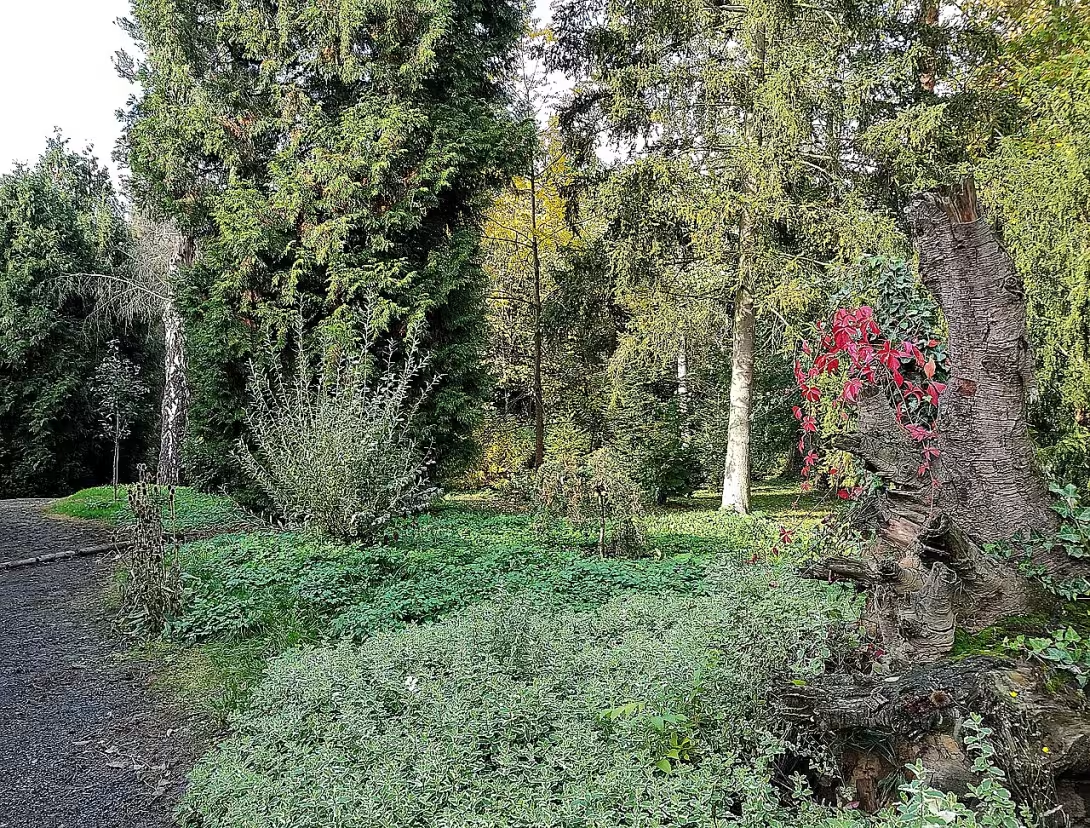
Arboretum Střední lesnické školy v Hranicích presents a unique collection of domestic and exotic trees at the foot of North Moravia, at an altitude of 250-263 metres. It lies close to the village Hranice and occupies an area of 3,07 hectares. In its current form, around 225 species of wood are grown between which conifers (65 species, about 450 specimens) and leafy trees and shrubs (160 species, around 600 specimens) prevail.
The origin of the arboretum is inextricably linked to the history of the forestry school. The educational facility was first located in Usov from 1852, but in 1896 it moved to Hranice. In the period after the move, the arboreta project was created - collections of trees and shrubs intended for teaching pupils. The original project was developed by the leading garden architect František Thomayer, whose name is also mentioned in the central concept: sets, gardens and functional elements of the park were intended to serve the educational purposes of the school. In addition to the school buildings and the residential house, the elements were set that existed years before the war.
World War II has become disastrous for the arboretum. Forestry school was closed, professors and pupils went to Přerova and German management occupied the school. The occupation administration decided to change the park drastically: the most beautiful part ordered it to be destroyed. Trees and shrubs were ripped out of the ground and dumped in a pile of gasoline and lit. The original nurseries disappeared, were also removed all labels and names of plants. Rozarium, flower beds and some other modifications have disappeared. In a place where rare species had previously grown, the occupants created a training ground and grew vegetables and potatoes for military purposes.
The natural disaster, which is supposed to have caused the greatest damage without human intervention, was the wind storm on March 9, 1990. It damaged a significant number of trees and returned to the already burdensome state of the arboretum after the war. Gradually, over the following years, there was reconstruction and redesign. During the winter of 1928-1929, even before the war, many trees and bushes were decimated by exotic species of strong frost.
Today, domestic and remaining exotic species take turns in arboretum - approximately half of the species come from the domestic region. Part of the revitalization is the upcoming project "Teaching Botanical-Geological Rock." Thus, the Arboretum continues its original mission: educational, didactic and educational function for visitors and students. The fact that at the beginning of the 21st century there were around 105 plant generations with more than 225 species - an expression of resilience and reblooming after difficult periods - is evidence of a lasting effort to preserve the wealth of flowers.
Then and now
Drag the slider to compare how the landmark may have looked when it was built with the view today.
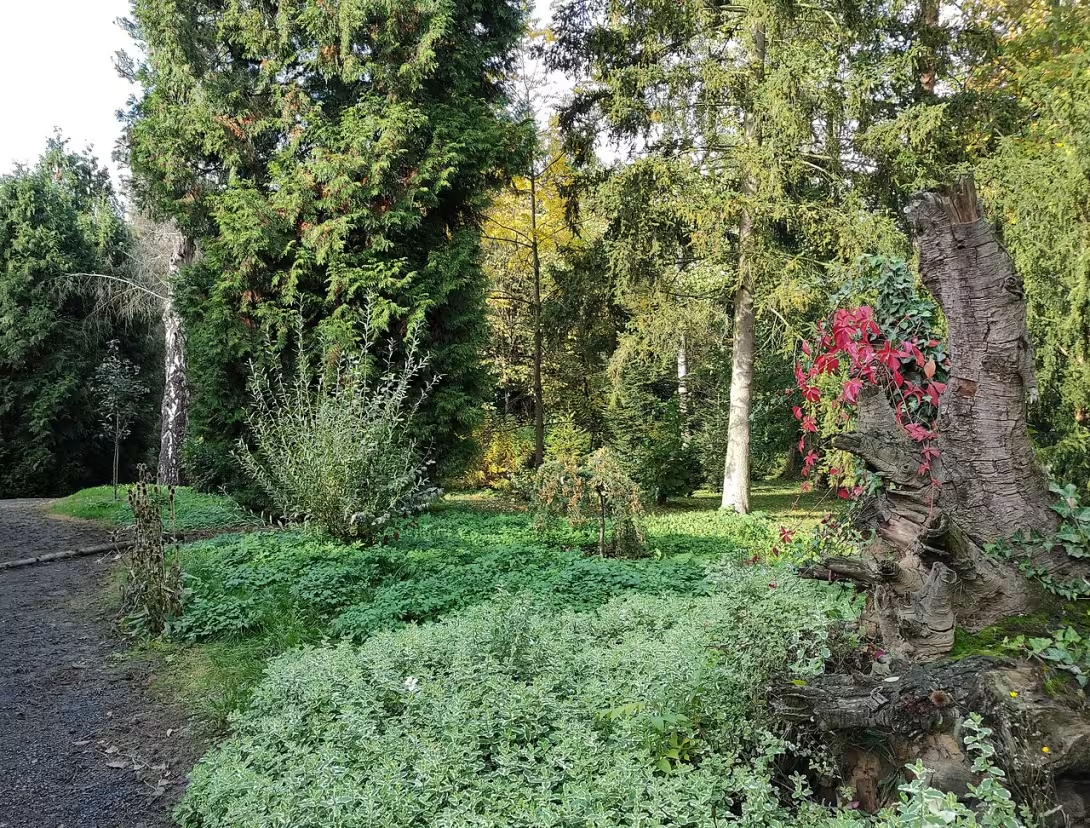
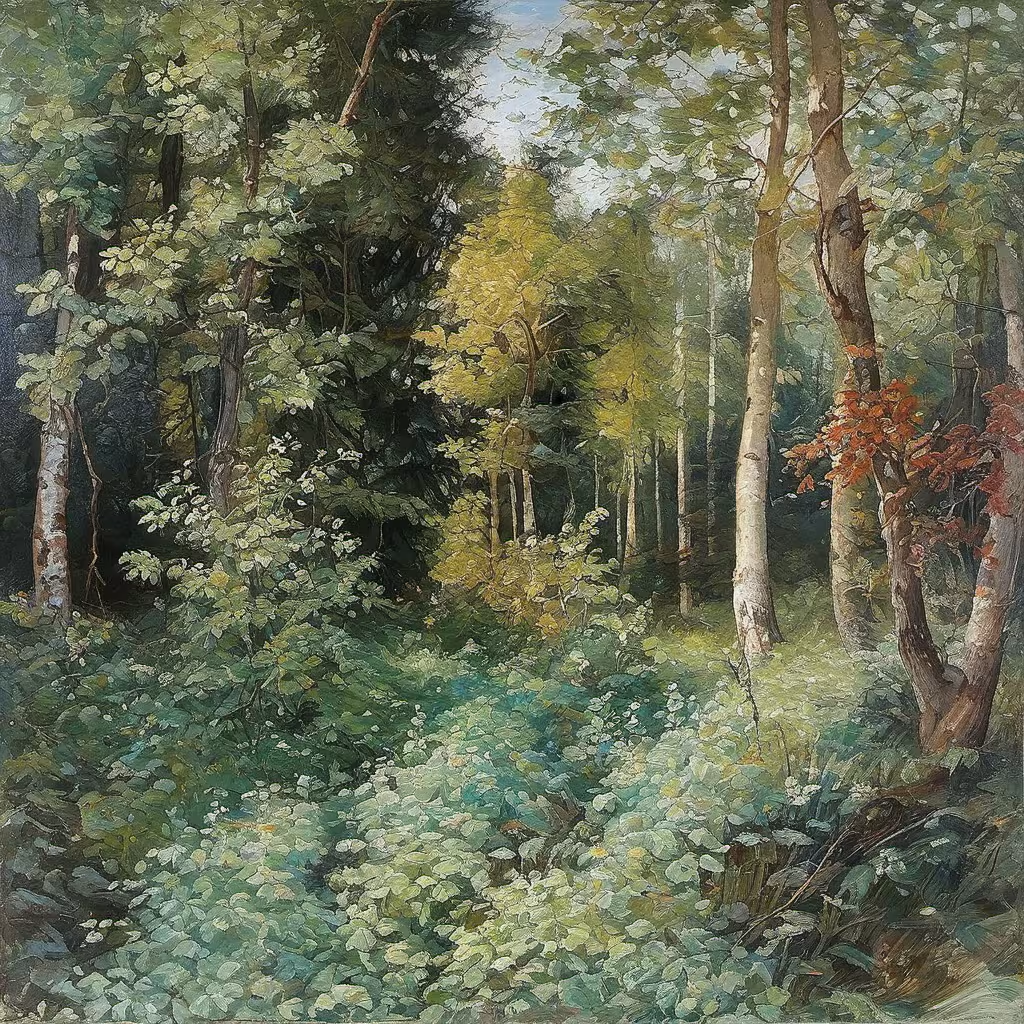
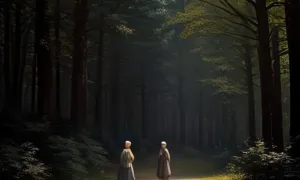
The historical appearance on the left is an AI-generated visualisation and serves as inspiration only.
Historical milestones
- 1896
- Establishing an arboretum simultaneously with moving the forestry school.
- 1939
- Damage to the arboretum during World War II.
- 1990
- The wind storm caused significant damage to the arboretum.
Architectural development
The arboretum was designed by Franz Thomayer and originally contained a rich collection of exotic trees. During World War II, there was significant damage, when the trees were plucked and the park destroyed. After the war, the arboretum has been renovated and today it contains over 225 species of wood.
Historical events
- 1896
- Moving the forestry school from Usov to Hranice and creating an arboretum.
- 1939
- Damage to the arboretum during World War II.
- 1990
- The wind storm caused significant damage to the arboretum.
Owners
The Arboretum is part of the High Forest School in Hranice, which is a public educational institution. The school is responsible for the maintenance and development of the arboretum. The ownership and management of the arboretum are provided by the school administration.
Points of interest
- Arboretum presents a unique collection of domestic and exotic trees at the foot of North Moravia. - The arboretum grows approximately 225 species of wood, between which conifers (65 species) and leafy trees and shrubs (160 species) prevail. - The origin of the arboretum is inextricably linked to the history of the forestry school, which moved to Hranice in 1896. The Second World War caused catastrophic damage to the arboretum, when trees and shrubs were plucked and burned. - The wind storm of March 9, 1990 damaged a significant number of trees and returned to the already burdensome condition of the arboretum after the war.
Guide
This guide is narrated by a synthetic voice generated by artificial intelligence.
Show guide text
This text was created by artificial intelligence and has not been editorially reviewed. It may contain inaccuracies.
The Arboretum of the Central Forestry School in Hranice in Moravia covers an area of 3.07 hectares and is located at an elevation of around 263 meters. At the beginning of the 21st century, over 225 species of woody plants are cultivated here. The arboretum serves primarily for educational purposes, but also for public outreach.
Its origin is connected with the history of the school itself. The forestry school operated since 1852 in Úsov and moved to Hranice only in 1896. It was precisely then that the arboretum was established so that students could learn directly among the trees and shrubs. The original project was designed by landscape architect František Thomayer, who lived from 1856 to 1938.
In addition to domestic woody plants, a rich collection of exotic species initially grew here. However, this collection was decimated by severe frosts during the winters of 1928 and 1929.
The most difficult period came during the Second World War. The Czech school was closed, professors and students left for Přerov, and German professors took over the teaching. On the orders of German leadership, the most beautiful part of the park was destroyed. Trees and shrubs were uprooted, piled up, soaked with gasoline, and set on fire. In the cleared area, a training ground and vegetable beds with potatoes were created. Plant labels, a rockery, and flower beds disappeared, and other trees suffered damage. During the occupation and in the following years, the appearance of the arboretum moved significantly away from the original project.
The greatest damage not caused by people is considered to be the consequences of the windstorm on March 9, 1990.
In 1977 in the park we find an alpine garden, that is a rockery, as well as an orchard, a garden, a residential house, and a school building. At the end of the 20th century, about 210 taxa of woody plants were cultivated here. Data from the beginning of the 21st century indicate 105 genera and over 225 species. Of these, 65 species of conifers are in approximately 450 specimens, and 160 species of deciduous trees are in roughly 600 specimens. About half of all species are made up of domestic woody plants. For the future, a project for an educational botanical and geological rockery is being prepared.
Tips for visitors
The best time to visit the Arboretum of the High Forest School in Hranice is the spring and autumn season when flowers and leaves are in the most beautiful condition. The park offers quiet rooms suitable for relaxing and visiting during these months.
It is recommended to check the current connection before the journey.
When you visit, take quality shoes with you, because the park includes walks along the lawn and perhaps even more walkabout terrain. Also remember the protective coat or jacket in case of cold weather as well as the umbrella and drops during warmer days.
Photography in arboretum offers many possibilities thanks to the variety of trees and flowering vegetation. The best light for photography is usually early morning or late afternoon when the sun is not too high and the light is softer.
For families with children, arboretum is an ideal place for learning about different kinds of trees and vegetation. Children can also enjoy playing on green surfaces or exploring nature. In the area, within 30 minutes walk from the arboretum, there is a historic station area Hranice with its park and other attractions for families.
Frequently asked questions
Can the monument be visited?
Parks and gardens are often open to the public, but some have opening hours or are part of a closed site. We have not verified the entry conditions.
What are the opening hours and admission?
We have not verified the opening hours or admission. Current information is published by the operator.
Where is the monument?
Location: Hranice, Olomoucký kraj. The map on this page shows the exact spot.
For kids
Imagine going back to the past. Instead of going to school today or hanging out in front of a TV, you're in a beautiful park near the river Moravia. It was not an arboretum at the time, but a forest where trees and bushes grew. People lived in nearby villages and used the forest to mine wood.
Who lived here? They were lumberjacks who took care of forest crops and used trees to build houses, boats or other needs. Sometimes even for making wooden toys and toys! It's hard to imagine that wood from our arboretum could have ended up in some wooden ship on the river Moravia.
Businesses nearby
Do you run a restaurant, accommodation, shop, museum, rental, wellness or other visitor service near this monument? Show yourself directly to the people heading to it — this is how they will see you in the app and on the web:
Nearby
The surrounding landscape is made up of forests and fields.
Accommodation nearby
Themed route
Head south from the village Hranice to park Arboretum Střední lesnické školy v Hranicích.
1.Arboretum Střední lesnické školy v Hranicích - type: park - is worth visiting for its diversity and variety of woodwork, which is visible here in the form of more than 3000 trees from around the world and exhibited in 12 separate parts.
2. Municipal Office Hranice - type: building - is worth visiting for its architectural value and for the opportunity to become acquainted with the history of the village.
3. Statue of St. John Nepomuk - type: statue - is worth visiting for its artistic value and for the opportunity to become acquainted with the history of the village.
Seasonal recommendations
Spring:
Spring is the perfect time to visit Arboretum Střední lesnické školy v Hranicích because nature is in full bloom. The woods are full of different kinds of trees and flowers that create beautiful colors and smells. The atmosphere is relaxed and calm, which is ideal for walking. We recommend visiting the arboretum in early spring weather, when temperatures are not too high and not too many people. The best way to do that is in the first half of April, when the flowers are in full bloom.
Summer:
Summer is the season when the arboretum is most visited. The woods are full of life and nature is in full swing. We recommend visiting the arboretum in the morning when there are not too many people. You can ride your bike or take a walk and enjoy beautiful summer days.
Autumn:
Autumn is a beautiful season for visiting arboretum. The woods are covered with the colors of ripe leaves and nature is full of amazing views. The atmosphere is calm and relaxed, which is ideal for walking. We recommend visiting the arboretum in the late autumn when temperatures are not too high and there are not too many people. You can walk through the woods and enjoy the beautiful autumn days.
Winter:
Winter is a peaceful season for visiting arboretum. The woods are covered in snow and nature is full of peace and quiet. We recommend visiting the arboretum in early winter weather when temperatures are not too low and not too many people. You can go skiing or take a walk and enjoy a quiet winter days.
Visualizations and artistic views


The visualisations are generated by artificial intelligence and serve as inspiration.
Photos from the area
Real photos taken near the monument


Zdroj a licence jsou uvedeny u každého snímku.
View from the area
This animation was generated by artificial intelligence from a real photograph of the surroundings. The motion and details are not real footage of the location.
Tips from visitors
No tips yet. Be the first!
Log in and add your tip.
Sources and literature
Photos: Palickap / CC BY-SA 4.0 — Wikimedia Commons. The author and licence also appear when you hover over the image.
Faktickým podkladem tohoto textu byl článek na Wikipedii, jehož autory jsou přispěvatelé Wikipedie. Článek je dostupný pod licencí CC BY-SA 4.0.
Location on the map

Příběhy a pověsti
Legendy, pověsti a příběhy spjaté s touto památkou
Fotografie návštěvníků
Zatím žádné fotografie. Buďte první, kdo přidá fotografii z návštěvy!
Log in a přidejte svou fotografii nebo hodnoťte.
Za ověřenou návštěvu v aplikaci získáte víc bodů — poznáme podle GPS, že jste na místě.
Reviews and comments