

Archa Barracks
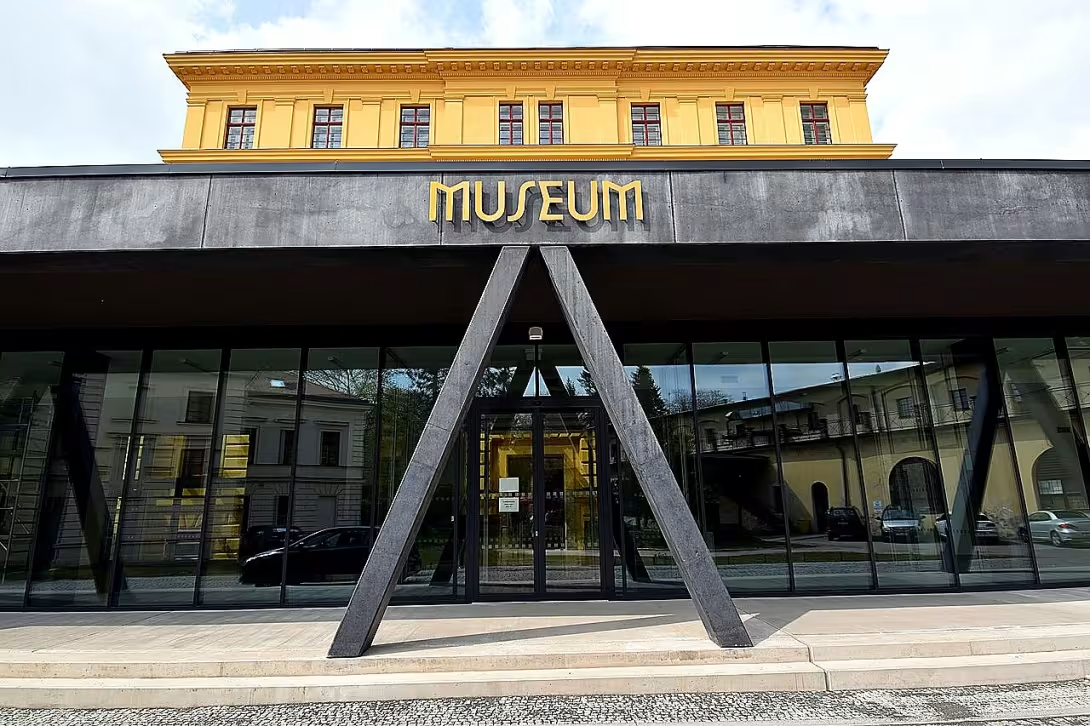
In Gayer barracks in Hradec Kralove, there is a building number 333, which we will recognize today as the Ark. This Neo-Renaissance building was built between 1897 and 1898 according to the projects of builders František Černý, Josefaalty and J. Manycha. However, the name Archa has only been named in the last 20 years; For many decades it was known as the Vrbenský barracks, according to the Belangrij Czechoslovak politician Bohuslav Vrbenski, journalist and anarchist, who later became the first Czechoslovak Minister of Nutrition of the People.
The barracks served the army continuously until the end of the 20th century. In the 1960s, a library of the Military Medical Information Centre was located in the building, which was part of the then Military Medical Research and Training Institute. The military character of the site is also recorded in the expert literature - the military doctor Jiří Kucera mentioned it in the book "White Barons or, Golden Cage.".
But the fate of the building changed significantly in the 21st century. In December 2008, the government decided to transfer the barracks to Hradec Králové, which took place in 2009. But Army let her go in a desolate state. The town offered the building for sale in summer 2010, but the interest of private buyers was low - none offered more than three million crowns. Thus, the attempt to sell Dolfin Real Estate for CZK 18 million in 2011 and its transformation project for various urban services failed in 2012.
A major turnaround came with the decision of the Králové Hradec Region in 2015 to start preparation for reconstruction of the building for the purposes of the Regional Museum of Eastern Bohemia. The planned exhibition, which was supposed to carry the name MEMbrana, was to occupy two floors and divided into six thematic circuits - from geology and paleontology to region biodiversity to human influence on the landscape. In 2019, a larger plan was approved to create a natural science exhibition, archaeological exposition of the history of Eastern Bohemia, the regional depository and underground spaces.
The long hesitation ended in February 2023 when the city donated the building to the Royal Hradec Region. Construction works started in June 2024 and lasted until 2025, their price reached CZK 382 million. The building is now equipped with a new exposure of 17,000 square metres between 2026 and 2027. The project is supported from mehrere sources, including the Ministry of Culture and the National Recovery Plan. With these investments, Archa is to become a modern Centre for Creative Museums for both professionals and the general public.
Then and now
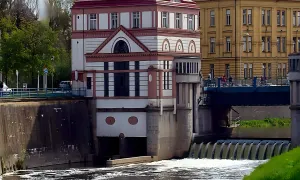
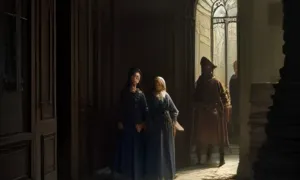
Drag the slider to compare how the landmark may have looked when it was built with the view today.
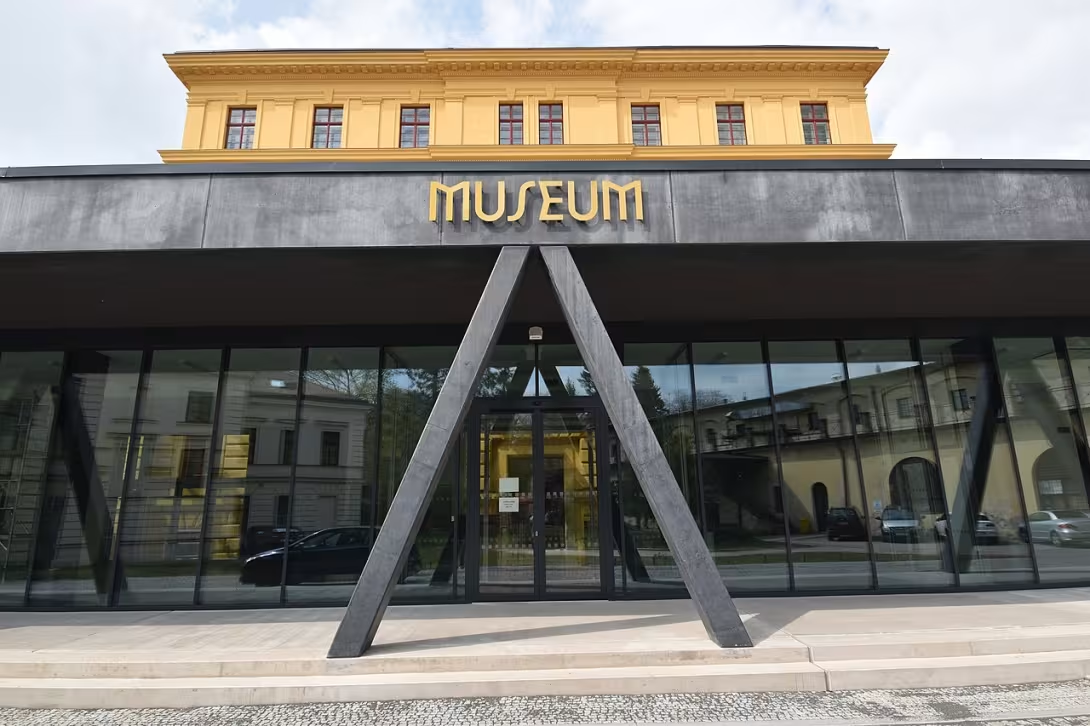
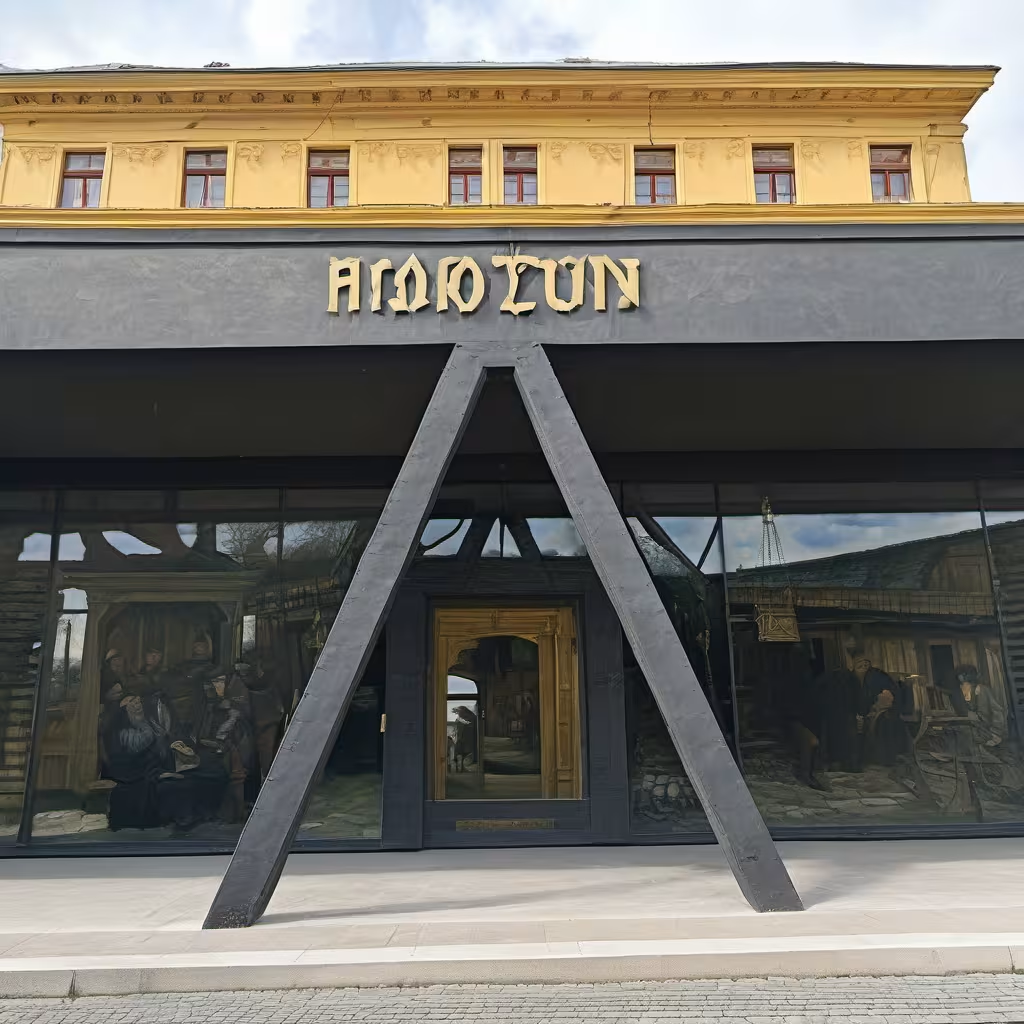
The historical appearance on the left is an AI-generated visualisation and serves as inspiration only.
Historical milestones
- 1898
- completion of the construction of the neo-renaissance building
- 2009
- transfer of barracks from state property to city Hradec Králové
- 2023
- the city donated the building to the Royal Hradec Region
- 2025
- completion of construction work for reconstruction
Architectural development
The building was built in 1897- 1898 in a neo-Renaissance style. In 2024, extensive modernization started for more than CZK 300 million. The goal is to create an exposure of 17,000 square meters.
Historical events
2009 - transfer of the building to the property of Hradec Králové; 2023 - donation of the building from the town of Králové Hradec Region; 2024-2025 - realization of extensive construction reconstruction.
Owners
Army of the Czech Republic (until 2009), City of Hradec Králové (2009- 2023), Královéhradecký kraj (from 2023)
Points of interest
- The building from the late 19th century originally served as a barracks in Gayer barracks. - The object was previously called the Vrbensky barracks according to the name Bohuslav Vrbenski. - There was a library of the Military Medical Information Center in the building. - Reconstruction from 2024 to 2025 cost a total of CZK 382 million. - The building is mentioned in George Kucera's book.
Guide
This guide is narrated by a synthetic voice generated by artificial intelligence.
Show guide text
This text was created by artificial intelligence and has not been editorially reviewed. It may contain inaccuracies.
Welcome to Hradec Kralove. Right now, you're standing in front of a building called Archa. It's a place with a very deep history that is currently changing right in front of your eyes. If you look at the building, you will see an impressive structure, which, both its size and its appearance, dominates the surrounding space. It's an object that carries the spirit of the last century, but it also has the energy of a new beginning. Feel the atmosphere of this place where military rigor meets future cultural flourishment.
Now let's go back in time together to understand how this place happened. The construction you're facing was completed in the year one thousand eight hundred ninety-eight. At that time there was a large area known as Gayer barracks. This building has been designed since its inception to serve the military, which is evident from its monumental appearance. Three architects who were František Černý, Josef Falta and J. Manych will be responsible for its creation. These men created a work in a neo-Renaissance style, which was the direction that, at that time, sought inspiration in the years of the flowering of European urban life and gave up excessive rigor in favour of elegance and order.
Now pay attention to the architecture itself. Look at the front of the building and feel its rhythm. Neo-Renaissance style manifests itself in harmony and balance of elements. Notice how the building looks stable and confident. Although you are now at a time when the building is undergoing extensive reconstruction, it is still possible to read its original grandiose intention. Follow the wall lines and the way the space is laid out. It's an architecture designed to create respect and a sense of security, which exactly matched the purpose of military equipment.
When we talk about the history of this place, we can't forget the personalities that were associated with it. The building was formerly referred to as the Vrbenski barracks. She got her name according to Bohuslav Vrbensky, which was the personality that left its mark in this space. Imagine what generations of soldiers have been going through here over the decades, what the morning lines were and what the order was. Military life has lasted a long time here, which has made the building a solid part of the military identity of Hradec Kralove.
What's interesting, however, is that the building has changed its face and function over time. After a long period of military use there was a library of the Military Medical Information Centre. It's fascinating to think of the contrast. Where there may have previously been a noise of military training and strict order, it later became a haven for silence, study and medical science. Books and silent reading were replaced by military marshals. This indicates the ability of this building to adapt to the period situation.
However, the way to the present state was not quite easy. The building went through a period of decline. The time has come when there have been long discussions in the city about how to deal with this huge object further. It would be a shame to have such a jewel of neo-Renaissance architecture destroyed, but it was also necessary to find a meaningful use that would bring benefits to the whole city and region. The solution came with the takeover of the building Museum of Eastern Bohemia.
Let's now look at the modern history of this place, which are very dynamic. In the year two thousand and nine came a major break when barracks were transferred from state property to the hands of the city of Hradec Králové. The city thus gained control of its territory and could plan future development. Another important step came in the year two thousand twenty-three, when the city donated the building to the Royal Hradec Region. This gift opened the way for the former barracks to become a modern museum called Archa.
When you look at scaffolding or building elements today, you are witnessing one of the biggest investments in culture in the region. The reconstruction that takes place between two thousand and twenty-four and two thousand twenty-five is a colossal business. The total cost of this repair and modernization is CZK 3,882 million. It is a huge amount which, however, guarantees that the building will serve future generations in the highest possible quality. The aim is that construction works be completed in the year two thousand twenty-five and Archa can fully open its doors to the public.
Let us now try to imagine what awaits us in the future in these spaces. Archa won't just be a museum. It'll be a place where history and the present meet. Imagine the spacious halls that used to serve soldiers, and now will host unique exhibits, exhibitions and cultural events. It is a symbol of transformation from a closed and military place to an open, accessible and educational place.
It's fascinating how one building can become the mirror of the history of the entire city. From the end of the nineteenth century, to the times of world conflict, to the era of military medicine, to today's vision of a modern museum. It's all happening right here in these walls.
Now that you know the story of the Archa building, I suggest you try to bypass the object and perceive it from different angles. Watch how the term Neo-Renaissance facade changes depending on the light. Feel the contrast between the historical nature of the building and the modern elements that bring ongoing reconstruction. It's a moment when history meets the future in real time.
Thank you for stopping by this important castle monument. I hope you're interested in the Ark's story and that one day you will return here when the reconstruction is complete and you will be able to enter their inner space. I wish you a pleasant continuation of your journey to Hradec Kralove. Say good-bye to this building and embark on the next beauty of this beautiful city. Goodbye.
Tips for visitors
The best time to visit is spring or autumn, when lighter light best highlights the details of the Neo-Renaissance architecture of the building.
The location is available by car and by public transport; Check the current connection and stop options in the search engine.
With us we recommend to take comfortable shoes that allow you to comfortably explore the exterior of the building and surrounding area.
For the best photos we recommend morning or late afternoon hours when the sun hits the facade at an angle that highlights the plastic elements of the building.
In the immediate vicinity are Gayer barracks, which are ideal for a short walk. We recommend families with children to explore this historic space together.
Frequently asked questions
Can the monument be visited?
Some buildings of this kind are open for guided tours, others serve another purpose or are privately owned. We have not verified whether and when this monument is open – please ask the operator.
What are the opening hours and admission?
We have not verified the opening hours or admission. Current information is published by the operator.
Where is the monument?
Location: Hradec Králové, Královéhradecký kraj. The map on this page shows the exact spot.
For kids
Imagine going back 128 years, until the modern construction of the creative human manuscript was not yet replaced in Czech territory. It was a time when castle Archa stood on top of its glory and was a symbol of power and power.
How did it look here? Who lived here? What happened here? There were many people who took care of the castle to stay in good condition. They were craftsmen, builders and other people who tried to preserve his beauty.
Businesses nearby
Do you run a restaurant, accommodation, shop, museum, rental, wellness or other visitor service near this monument? Show yourself directly to the people heading to it — this is how they will see you in the app and on the web:
Nearby
Gayerovy kasárna
Accommodation nearby
Themed route
1. Gayer barracks (Historical area) - A tour of former military buildings near the main target. This part of the route represents an interesting architecture. 2. Archa (Museum) (Educational institutions) - The main destination of the trip offering various programs. It's the perfect place to know history. 3. Archa (Museum) - Detailed tour of collections in the museum premises. Here you can see the most valuable parts of the collections.
Seasonal recommendations
Spring brings gradual warming and awakening vegetation to the Royal Hradec Region, creating a pleasant contrast to historical architecture. Light can be soft and scattered during this period, ideal for observing facade details without sharp shadows. Nature around the monument is covered with fresh greenery and flowers, which softens the impression of stone materials. Practically, spring is a good time to visit, because temperatures are already tolerable for longer walks, but visitors should expect possible rain and weather. A light laminated garment kit is recommended, which allows for easy reaction to temperature changes, and waterproof footwear, as roads can be slippery after rain. The morning clock is often quieter, which allows for a focused study of the building without interference.
Summer offers the longest days and the most intense sunlight that reveals the texture of historical materials in full beauty. The atmosphere is alive and temperatures often reach higher levels, which requires customization of clothing. For a comfortable stay it is crucial to choose light, breathable fabrics and protect yourself from direct sun cap or hat. Since this is a summer season, it is more likely to meet with a larger number of people in the area, therefore it may be advantageous to visit a monument either early in the morning or late in the afternoon when the intensity of the sun falls. Hydration is necessary during this period and it is therefore advisable to carry enough water. The green surrounding landscape is in full bloom, providing a beautiful background for photos and relaxation near the building.
Autumn brings with it colder air and dramatic change of colors in nature, which becomes a dominant element of overall perception. Tree leaves change colour into warm shades of yellow, orange and red, creating a picturesque environment around the historical monument. Light is usually lower and warmer, which gives the scene an intimate and nostalgic atmosphere. Practical advice includes clothing into layers because temperatures can drop significantly, especially in the morning and evening. It is advisable to carry a warm jacket and possibly a scarf. The roads can be covered with fallen leaves, which can be slippery, which is why footwear with a good heel is important. The autumn walk offers a quieter environment, ideal for deeper immersion in the history and atmosphere of the place without disturbing noise.
Winter brings a sharp contrast between cold air and the heat of historic buildings, often decorated with snow, which softens the shape of the object. Light is short and often gray, which creates a specific, quiet and thoughtful mood tone. Nature is resting, the trees are bare and the landscape can be covered with snow, which changes the acoustics and visual perception of space. Hot clothes, including winter jackets, gloves, scarf and cap, are essential to visit in winter to prevent hypothermia. The footwear should be waterproof and with anti-slip sole due to possible ice surface. Short days mean that the visit should be planned within the time of day when there is enough light for safe orientation and observation of details. The quiet winter atmosphere allows a special connection to the historical heritage of the place.
Visualizations and artistic views


The visualisations are generated by artificial intelligence and serve as inspiration.
Photos from the area
Real photos taken near the monument

Zdroj a licence jsou uvedeny u každého snímku.
Atmosphere of the place
This atmospheric visualisation of the place and period was generated by artificial intelligence. It is not real footage of the location.
Tips from visitors
No tips yet. Be the first!
Log in and add your tip.
Sources and literature
Photos: Lukáš Nekolný / CC BY-SA 4.0 — Wikimedia Commons. The author and licence also appear when you hover over the image.
Faktickým podkladem tohoto textu byl článek na Wikipedii, jehož autory jsou přispěvatelé Wikipedie. Článek je dostupný pod licencí CC BY-SA 4.0.
Location on the map
More monuments – Hradec Králové
Show all in the municipality
Příběhy a pověsti
Legendy, pověsti a příběhy spjaté s touto památkou
Fotografie návštěvníků
Přidat fotografiiZatím žádné fotografie. Buďte první, kdo přidá fotografii z návštěvy!
Máte k místu vzpomínku nebo zajímavý příběh?
Log in a přidejte svou fotografii nebo hodnoťte.
Za ověřenou návštěvu v aplikaci získáte víc bodů — poznáme podle GPS, že jste na místě.
Reviews and comments