



Arnoltovice Ruin
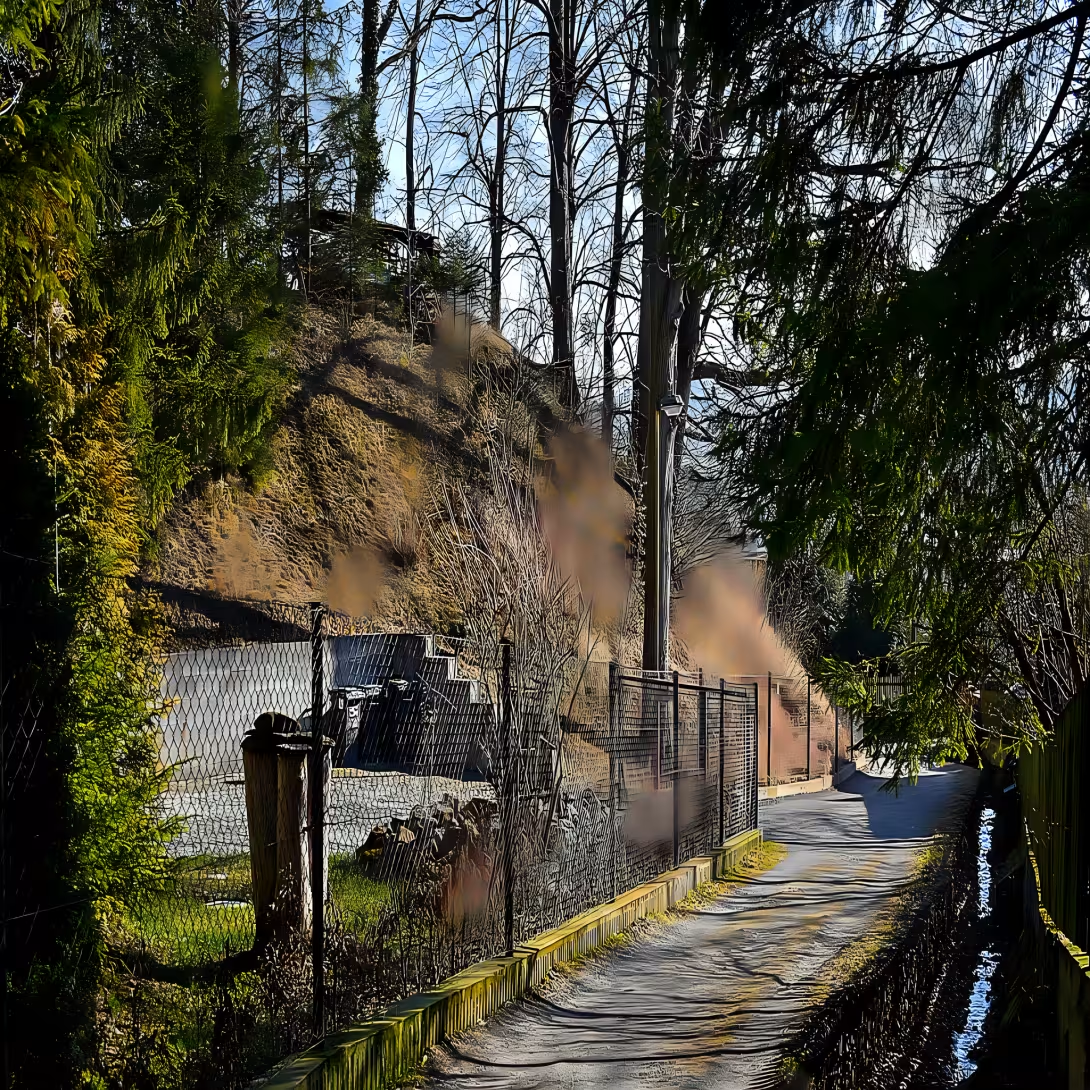
The Arnoltovice is located in the northern part of the village Poličná, approximately 1.6 km west of the centre of Valachian Meziříčí, on the track called the Nemčíkov hill. The remains of the former chateau have been protected as a cultural monument since 3 May 1958. Both the chateau core and the adjacent front are located in private gardens and are not accessible to the public.
The chateau was built in connection with the colonization of the Upper Pobečvi, which was run by the Bishop of Olomouc. The oldest written mention dates back to 1307, when a certain George of the Arnold's marshal was Bishop John VI of Valdštejn and got involved in a dispute with the storyline earls. Written sources later mark the fortified manor with different terms - castro, municio or propulgaculum - and show that it served as the centre of the bishop's holiday farm. At the end of the fourteenth century it belonged to the town of Mezíříčí, as well as the village of Hrachovec, Křevé, Oznice, Poličná, Veselá and several now extinct settlements.
During the second half of the fourteenth century, the fists were held first by the lords of the Arnoltovic - Peter and Jeneč, of whom Jenech sold the fists in 1376 to Oldřich from Kortelangen. After Kortelangen, Arnoltovice switched to his brother Wilhelm. Around 1381, the chateau was seized by Bishop Jindřich of Bela, who sold it to the Olomouc Bishop of Riesenburg nine years later. This Bishop Arnoltovice made one of his main residences and published here the papers of 1394. Since 1396 they became Lacka from Kravař, after whose death in 1416 they were taken over by the masters of Bystřice, whom we also remind as brothers of Jindřich from Bystřice and Choryna, who in 1419 wrote here a godly foundation of eight kicks of grosses for three weekly mass in the parish church. Apparently, the chateau had its own chapel with a chaplain. After Jindřich's death in 1432 Heres of Bystrica took over, then his son. In the second half of the 15th century - from 1449 to 1463 in particular - it was owned by the Brňov family. The last known holder was Zich Rynda of Neznanice, who received the summer moon in 1463. In 1466, Zich Rynda is still remembered - since then, the chateau has no longer appeared in written sources.
Arnoltovice probably disappeared during the Czech-Hungarian wars and the respective villages became part of the Bishopric Len farm Mezíčí. At the beginning of the nineteenth century, the stones of the ruins were supposed to be used in the construction of the superintendent's office building in Krásně nad Bečvou, which was later converted into Empire castle Kinský.
It is not detailed in the background about археоlogical findings, just a reference in spring 1964, when a metal seal with a gothic shield and warts belonging to Zavish from Bystřice from the early 15th century was found when building the cellar at the foot of the German hill. According to regional explorer Eduard Dokala, who wrote at the beginning of the twentieth century, "there was no memory left of Arnoltovice Chateau," and the local population no longer knew the original name.
Then and now
Drag the slider to compare how the landmark may have looked when it was built with the view today.
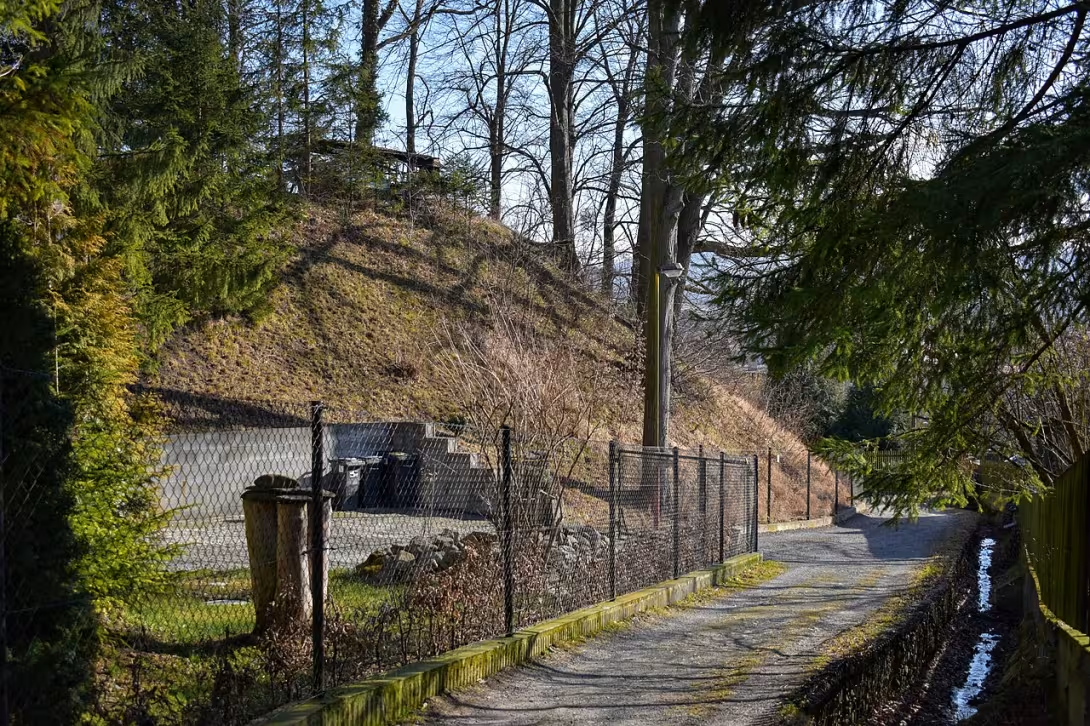
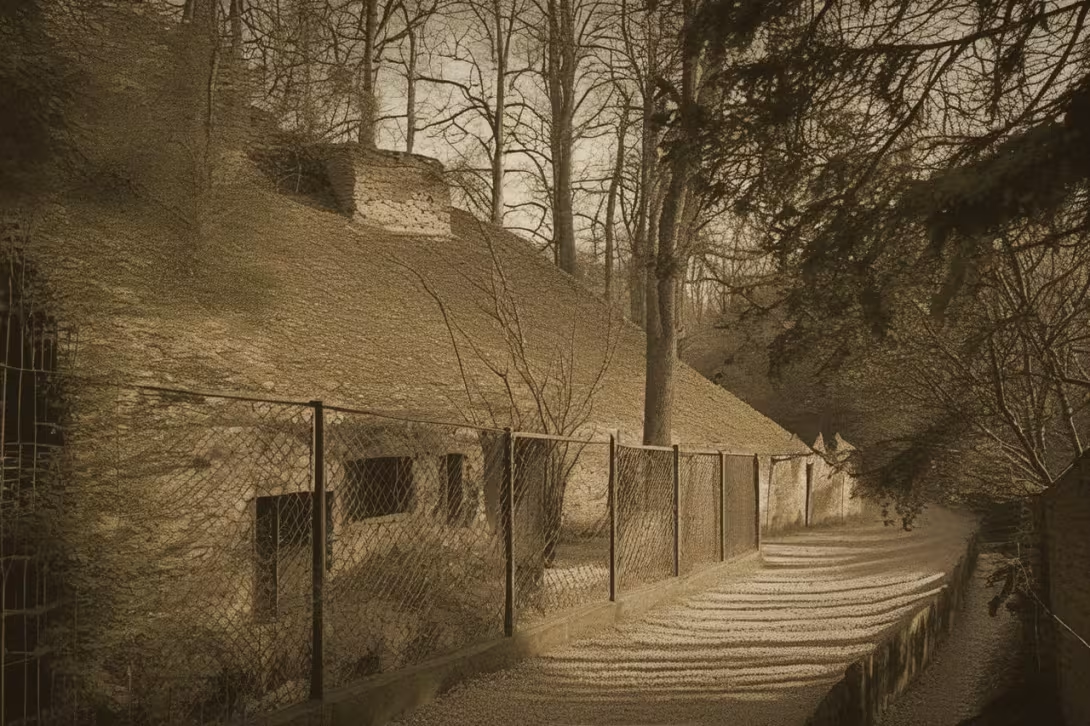
The historical appearance on the left is an AI-generated visualisation and serves as inspiration only.
Historical milestones
- 1307
- First written mention of the site
- 1376
- The fixed seat is referred to as a chateau in written sources
- 1463
- Last known owner Zich Rynda z Nezdenic
Architectural development
The chateau was built in connection with the colonization which was run by the Bishop of Olomouc in the area.
Historical events
1307: First written mention of the site
1376: The fixed seat is referred to as a chateau in the written sources
1463: Last known owner Zich Rynda z Nezdenic
Owners
Jiří z Arnotovice, Bohuslav z Krásna, Petr z Arnotovice, Jenech z Arnotovice, Oldřich z Kortelangen, Wilhelm z Kortelangen, Jindřich z Bělé, Mikuláš z Riesenburka, Lacka z Kravař, gentlemen from Bystřice, Henry z Bystřice, Herješ z Bystrice, Henry z Byřice, Zich Rynda z Nezdenic, Václav z Brňov
Points of interest
- The remains of the chateau have been protected as a cultural monument since 3 May 1958. - The base of the chateau and the forefront are located in private gardens and are not accessible to the public. - The chateau served as the centre of the bishop's holiday farm and at the end of the fourteenth century it belonged to the town of Meziřicí and several other villages. - The Bishop of Olomouc Mikuláš z Riesenburka made the chateau one of his main residences, and in 1394 he issued his papers. - In the spring of 1964, a metal seal with a gothic shield and warts, which belonged to Zavis from Bystřice, was found in the basement at the foot of the hill.
Guide
This guide is narrated by a synthetic voice generated by artificial intelligence.
Show guide text
This text was created by artificial intelligence and has not been editorially reviewed. It may contain inaccuracies.
Arnoltovice is an almost completely ruined castle in the northern part of Poličná municipality, approximately 1.6 kilometers west of the center of Valašské Meziříčí. The remains of the former episcopal castle have been protected as a cultural monument since 1958. The castle core and outer ward today lie in private gardens and are not accessible to the public.
The castle was built in connection with the colonization of the upper Pobečví region, which was directed by the Olomouc bishopric. The first written mention dates from 1307. At that time, a certain Jiří z Arnoltovic held the position of marshal to Bishop Jan z Valdštejna. The castle was the center of an episcopal feudal estate. By the end of the 14th century, the city of Meziříčí and a number of villages belonged to it, including Hrachovec, Křivé, Oznice, Veselá, and also Poličná, which was also called Arnoltovice after the castle.
The feudal holders often changed. In 1376, Jeneč z Arnoltovic sold it to Oldřich z Kortelangen, and around 1381 the castle came into the hands of the episcopal captain Jindřich z Bělé. In 1392, Mikuláš z Riesenburka, the Olomouc bishop, took over the fee. He made it one of his main residences and issued several documents there. From 1396, Lacek z Kravař held Arnoltovice, and after his death in 1416 it went to the lords z Bystřice. Under them, the city of Meziříčí was separated from the estate. In 1419, Jindřich z Bystřice had a pious foundation written up at the castle for three weekly masses at the altar of Saint John the Baptist in the Meziříčí parish church. A chaplain is mentioned from this time, so the castle apparently had its own chapel.
Between 1449 and 1463, Arnoltovice was owned by the Brňov family. The last known owner was Zich Rynda z Nezdenic. The castle is last mentioned in sources in 1466. It apparently fell into ruins during the Czech-Hungarian wars, and its villages became part of the Meziříčí estate.
At the beginning of the 19th century, stones from the ruins were allegedly used in the construction of an administrative building in Krásná nad Bečvou, which later became the Empire-style Kinský castle. Regional historian Eduard Domluvil wrote at the beginning of the 20th century that nothing remained of the castle but an embankment and that people no longer knew the name Arnoltovice. They called the hill Němčíkův kopec.
In the spring of 1964, during the construction of a cellar at the foot of the hill, a metal seal with a Gothic shield and two crossed axes was found. According to the inscription, it belonged to Záviš z Bystřice.
Tips for visitors
The best period for visiting is spring or late autumn, when vegetation is thinner and the terrain inequality of the lost chateau is better seen. In the summer months the site is overgrown and the remains of the wall are almost undetectable in private gardens.
Locality is located in the village Poličná.
Since this is a ruin in private space, we recommend fixed shoes for field movement. For shooting, select a wide-angle lens to capture the terrain walls, and use the morning or evening light to highlight the shadows in the field.
In the vicinity you can visit the Dolina above Valašské Meziřicí, which offers pleasant nature walks. For families with children the trip is more suitable as a short stop during a long hike, because the monument itself does not offer any game elements or background.
Frequently asked questions
Can the monument be visited?
This is a ruin. Such sites are often freely accessible, but some can only be visited with a guide or are closed for safety reasons. We have not verified the current situation – take care and respect any restrictions.
Where is the monument?
Location: Poličná, Zlínský kraj. The map on this page shows the exact spot.
Why is the monument protected?
It is listed in the Central List of Cultural Monuments of the Czech Republic as a cultural monument (register no. 29680/8-293).
For kids
Imagine you're a little adventurer going to explore mysterious places. How about we go to the mysterious Arnoltovice? Here, in the shadows of the old chateau, lies stories that even the greatest knights would dare not forget. Arnoltovice is hidden in the northern part of the village Poličná and are almost completely extinct, but their history is like a book full of surprises.
Businesses nearby
Do you run a restaurant, accommodation, shop, museum, rental, wellness or other visitor service near this monument? Show yourself directly to the people heading to it — this is how they will see you in the app and on the web:
Nearby
Dolina nad Valašské Meziřicí
Accommodation nearby
Themed route
Thematic cruise route from Polická to Arnoltovic
1. Arnoltovice (chateau) * Type: * Historical Chateau * Why is it worth a visit: * Chateau Arnoltovice is one of the oldest forts in Moravia, built in the 13th century. It offers views of the surrounding landscape and historical information about life in the Middle Ages.
2. Dolina over Valachian Mezirici * Type: * Natural area * Why is it worth a visit: * This beautiful mountain area offers peaceful walks and views of the natural landscape. It is an ideal place for relaxation and knowledge of local flora and fauna.
3. Police * Type: * City centre * Why is it worth a visit: * Poličná is famous for its historical architecture, including church and local museum. It's an ideal place to know regional culture and history.
4. Political courtyard * Type: * Local public space * Why is it worth a visit: * The railway station in Polická is the centre of local life where various cultural events and markets take place. It offers the opportunity to explore local gastronomy and art works.
5. Police area around Dolina nad Valašské Meziríč * Type: * Walk in nature * Why is it worth a visit: * This area is ideal for hiking and cycling. It offers various routes that allow you to view the landscape beauty and nature reserves of the region.
This route offers a combination of historical and natural experiences in the area of Polická, making it ideal for a day trip.
Seasonal recommendations
Spring - After a winter's sleep, a fine light spreads over the ruins of Arnold's, highlighting old stone walls and flowering shrubs. The air is fresh, but no longer freezing, and the smell of freshly hatched trees is spreading around. We recommend arriving early in the morning when there are still few visitors and the sun hits at an angle that creates interesting shadows. Light waterproof clothes and solid shoes are suitable because the terrain can be slippery after rain.
Summer - In the summer months the sun illuminates the chateau ruins bright and warm, which underlines its historic atmosphere and allows a detailed tour. Although it is the main tourist season, the crowds concentrate more in the afternoon; Therefore it is best to arrive soon, no later than 10 o'clock, when it is still quiet and temperatures are pleasant. We recommend sunglasses, hat, light clothes and plenty of water; It can be windy on the ridge, so a light jacket is handy.
Autumn - The colourful leaves around the chateau create picturesque contrasts with grey stones, and the sun rays in the late afternoon give the scene a nostalgic touch. The visitors are less, so you can explore all the corners. The ideal is to arrive in the late afternoon when light changes and the atmosphere is most romantic. Dress in layered - warm sweaters and waterproof jacket, because the weather can fluctuate quickly, and don't forget fixed shoes for slippery leaves.
Winter - In winter, the ruins are covered in a quiet white coat; The sunlight reflects snow and creates dramatic contrasts that underline centuries of history. The opening time is shorter and it is therefore advisable to arrive immediately after the opening so that you have sufficient time for the tour. The crowds are minimal, allowing private experience. Dress warm - thermal linens, thick jacket, hat, gloves and tight shoes with anti-slip sole because the stones can be frozen and slippery.
Visualizations and artistic views


The visualisations are generated by artificial intelligence and serve as inspiration.
Photos from the area
Real photos taken near the monument


Zdroj a licence jsou uvedeny u každého snímku.
Atmosphere of the place
This atmospheric visualisation of the place and period was generated by artificial intelligence. It is not real footage of the location.
Tips from visitors
No tips yet. Be the first!
Log in and add your tip.
Sources and literature
Photos: Pavel Lasztovicza / CC BY-SA 4.0, rozlišení zvýšeno umělou inteligencí — Wikimedia Commons. The author and licence also appear when you hover over the image.
Faktickým podkladem tohoto textu byl článek na Wikipedii, jehož autory jsou přispěvatelé Wikipedie. Článek je dostupný pod licencí CC BY-SA 4.0.
Location on the map

Příběhy a pověsti
Legendy, pověsti a příběhy spjaté s touto památkou
Fotografie návštěvníků
Zatím žádné fotografie. Buďte první, kdo přidá fotografii z návštěvy!
Log in a přidejte svou fotografii nebo hodnoťte.
Za ověřenou návštěvu v aplikaci získáte víc bodů — poznáme podle GPS, že jste na místě.
Reviews and comments