



Horní Předměstí (Valašské Meziříčí) Settlement
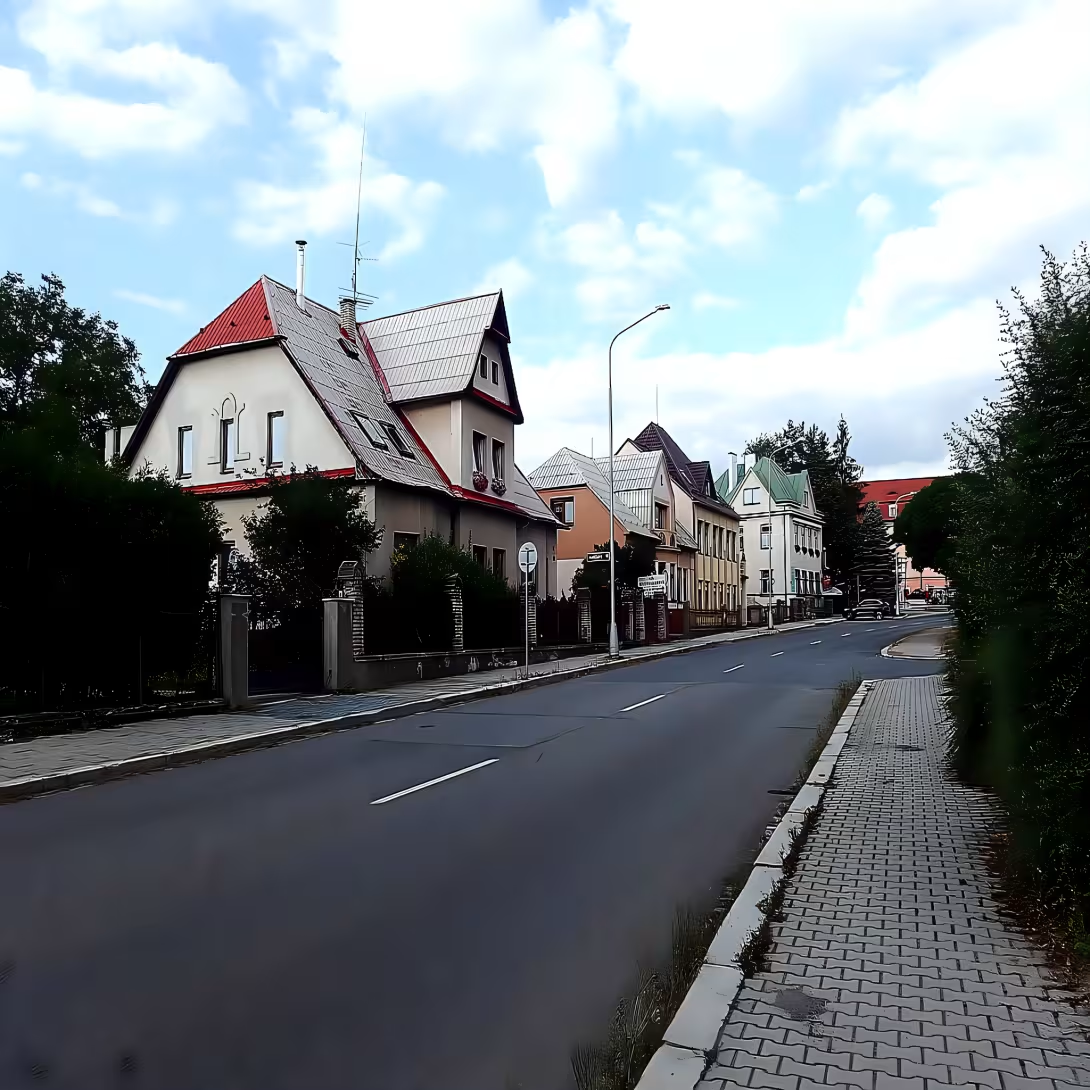
Upper The suburb is the historical part of the Valašské Meziříčí in the district of Vsetín in the Zlín Region. It originated outside the city walls on the left bank of Rožnovská Bečva. This site is remarkable from the Middle Ages through the period of a separate cadastral territory to the extensive urbanization of the 20th century.
The settlement was created outside the walls and differed from Lower Suburb. This lay on the right bank of the river and followed on to Beauty above Bečva. In the first half of the 19th century, today's street Sokolská, Králová, Nová, Vsetínská and Žerotínova were built. By the beginning of the 20th century, the scope of this area remained virtually unchanged.
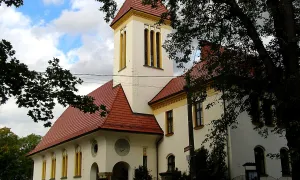
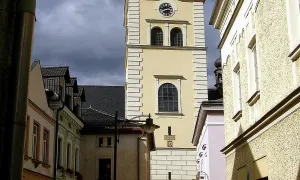
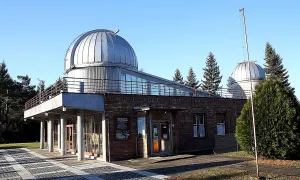
Important buildings in this part include the Church of the Holy Trinity from the 16th century. At the end of the construction in today's Vsetín Street, they built a deaf-mute institute in 1909-1910. In 1929 there was an old observatory, next to it is also the urban one.
In the 20th century, the Upper Suburb had undergone significant changes. In the first half it carried the construction of family houses, while the second half brought about the creation of housing sites. In the 1970s, most of the historical buildings were demolished. In particular, it affected Sokolská street near the centre, Králová street and parts of Vsetín and Žerotín street. These areas were subsequently replaced by panel houses or road haulage.
The administration was a separate cadastral territory Valašské Meziříčí-Upper Suburb until 1974. It was then cancelled and added to the main town register.
Today is the Upper Suburb typical combination of modern urbanization and several preserved monuments. Despite the extensive demolitions of the 1970s, there are still selected objects that resemble the original form of this part of the city.
Visiting this area offers the possibility to monitor the contrast between modern buildings and historical landmarks. It is a place where the urban development of Valachian Mezirici can be explored over centuries.
Then and now
Drag the slider to compare how the landmark may have looked when it was built with the view today.
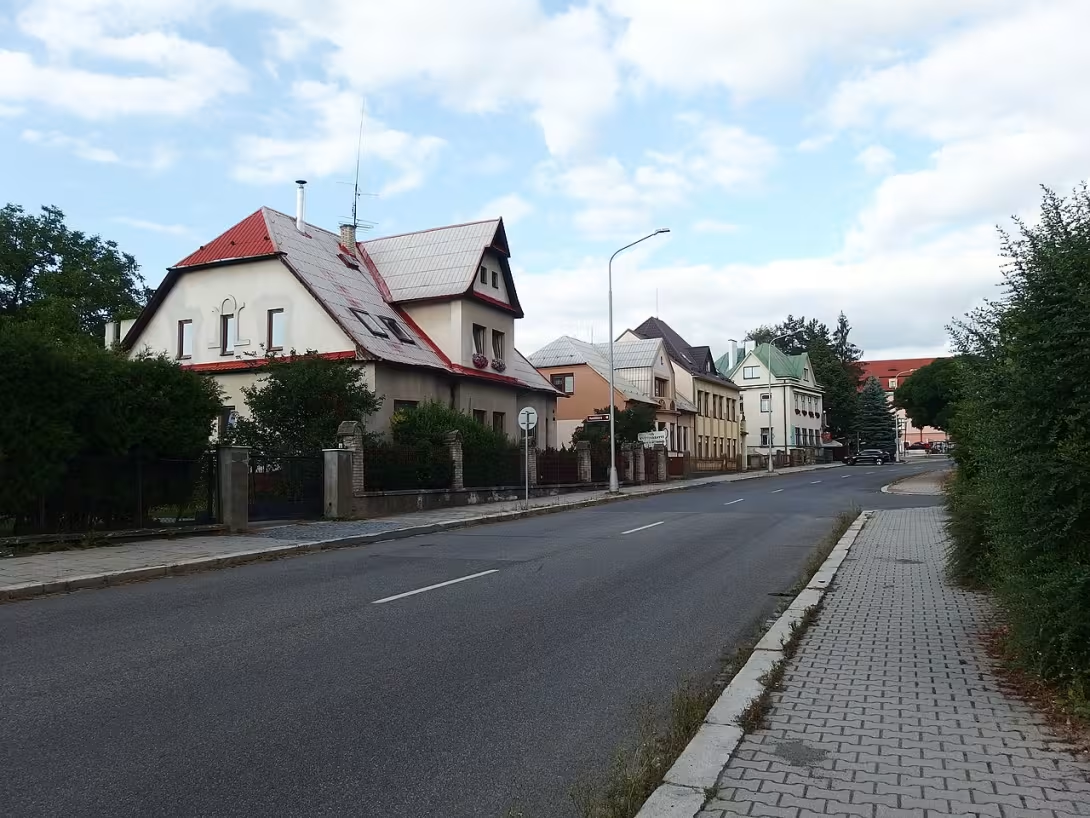

The historical appearance on the left is an AI-generated visualisation and serves as inspiration only.
Historical milestones
- 16th century
- the creation of the Church of the Holy Trinity
- 1909-1910
- building a constitution for deaf-mute
- 1929
- the formation of an old observatory
- 1974
- cancellation of a separate cadastral territory
Architectural development
In the 19th century, the original medieval building was supplemented with city streets. At the beginning of the 20th century, an institution for the deaf-mute was added. In the second half of the 20th century there was a massive construction of settlements and demolition of the historical core around the centre.
Historical events
In 1974, the separate cadastral territory of Valašské Meziříčí-Upper Suburb was abolished and added to the Valachian Meziřicí cadastral.
Points of interest
- The part was built outside the city walls on the left bank of Rožnovská Bečva. - Important buildings include the Church of the Holy Trinity from the 16th century. - In 1909-1910, an asylum for the deaf was built in Vsetín Street. - In 1929, there was an old observatory, with the city one standing next to it. - It was a separate cadastral territory until 1974.
Guide
This guide is narrated by a synthetic voice generated by artificial intelligence.
Show guide text
This text was created by artificial intelligence and has not been editorially reviewed. It may contain inaccuracies.
Welcome to the heart of the Valachian Mezirich. You're standing right here in a place called Upper Suburb. If you look around now, perhaps the first impression will surprise you. You see a space that is now heavily influenced by modern times. They dominate high panel houses and wide road roads that determine the rhythm of today's city. It's an environment that's functional and urban, but underneath this layer of modernity, there's a deep history that goes far ahead, to a time when everything looked completely different.
Stop for a second and let's try to get through time together. Imagine you're standing on the left bank of the Rozhnov Bečva River. It was here, in the space before the city walls themselves, that the Upper Suburb began to emerge. It was an area that developed gradually since the Middle Ages. At that time there were no concrete structures, but rather a series of houses that formed a natural transition between the wilderness, the river and the fortified centre of the city. People lived here, traded and built their homes on the streets known today as Sokolská, Kralove, Nová, Vsetín and Žerotín. It was a lively neighborhood that breathed the spirit of crafts and neighborly assistance.
Now, if you look around you, look at the atmosphere of this place. Although most of the historical buildings have disappeared, there are still traces that tell us the story of how the city changed. The biggest change came in the 1970s. At that time, there was a large reconstruction that led to the removal of most of the old houses. What you see today is the result of the time when there was a new solution for the housing of thousands of people. It's a fascinating contrast between what was and what was left.
Let us now focus on the rarest jewels that have survived in this area. One of the most important points is the Church of the Holy Trinity. This building dates back to the 16th century. Imagine how many ages and events this temple has seen. He stood here at a time when the city had just been formed, survived the storm of history and still stands as a silent witness to the past. Notice his presence in space, it's a fixed point that connects today's modern suburb to its ancient roots.
Now let's focus on Vsetín Street. It was here in the years of a thousand nine hundred and nine to a thousand nine hundred and ten that a deaf-mute institution was built. This building is not only an architectural element, but above all a symbol of aid and education. Imagine those people coming from different corners of the county to learn how to communicate with the world. It's a place where personal fates intersect with the history of welfare in our region.
If we continue our research, we'll find another fascinating place. In the year one thousand nine hundred twenty-nine there was an old observatory. It's a place for dreamers and explorers who looked at the stars at a time when astronomy was perceived with great wonder. Interestingly enough, the town observatory is next to her. This set of buildings shows us that Upper Suburb was not only a place of residence, but also a centre of science and knowledge.
Now, if we thought about the fate of this place, we would encounter some kind of nostalgia. Upper Suburb has long been seen as a separate whole, with its own character and identity. This lasted up to a year of a thousand nine hundred seventy-four when its separate cadastral territory was abolished. With this act, the administrative link with other parts of the city has been established, but it remains a particularly important neighborhood in the memory of the elderly as well as in historical records.
Let's try to stop at one interesting thing now, which may not be visible at first sight, but it's important to understand the whole space. Notice how strategically this area is located. The fact that it was built outside the walls on the left bank of the river meant that there were people living here who were in contact with the river but also in a safe vicinity of the city centre. The river Bečva was a lifeblood that brought trade and energy, and the Upper Suburb was the gate where new signs and new people entered the city.
It may be strange to admit that today in this space we are looking for history among the panel houses. But that's the secret of this place. It's like reading a book from which some pages have been ripped out, but there are still bright and strong images left. The church, the institute for deaf-mute and observatory are like these remaining pages that allow us to reconstruct the image of the old suburb in mind.
If you look around now, imagine what those old houses would look like in the streets of Sokolsky or Žerotín. Imagine the sound of horse cars on the pram, the smell of old wood and stone and the hangers of the people who took the morning sacrifice to the Church of the Holy Trinity. It is a fascinating game with imagination, when modern concrete in our eyes begins to turn into a historic building.
Now that you've met the spirit of Upper Suburb, I suggest you go through the surroundings in peace. Feel the contrast between old and new. Take a look at the details of the buildings left behind, and see if you can find a trace of the time when this place was at the heart of the development of the Wallachian Mezirich.
Thank you for accompanying me on this short journey through time. I hope you felt the depth of this place, which is much more than just a set of modern buildings. It is a place with a memory that still lives in several selected buildings and in the very flow of the River Bečva. I wish you a pleasant further walk through the city and many new discoveries. Goodbye.
Tips for visitors
The best time to visit is late spring or autumn, when the colors of the surrounding nature complement the historic development. Walk at these times offers pleasant temperatures and a quieter atmosphere.
The location is available by car and by public transport; Check the current connection in the search engine. We recommend to bring comfortable shoes suitable for walking on the city streets and in the summer months a sun hat.
For photo lovers are the most interesting views of the old houses and banks of the river. The best light for pictures of façades and landscapes is early morning or shortly before sunset when shadows are softer.
With the children you will appreciate a walk along the river Rožnovská Bečva, which is safe and relaxing. The centre of Valasský Meziríčí is located in a short distance, where you can continue to explore the city.
Frequently asked questions
Can the monument be visited?
This is a structure in a public space that can usually be seen from outside free of charge. We have not verified that this particular one is freely accessible.
Where is the monument?
Location: Valašské Meziříčí, Zlínský kraj. The map on this page shows the exact spot.
For kids
Imagine going back to the past. The place we would have gone today was remote and difficult to access. People came here on narrow roads and on foot.
It was like a game of survival. The inhabitants here had to learn to live with nature. The bark of trees served as tents, wood destroyed by forest fires used to bend and pinch together.
Businesses nearby
Do you run a restaurant, accommodation, shop, museum, rental, wellness or other visitor service near this monument? Show yourself directly to the people heading to it — this is how they will see you in the app and on the web:
Nearby
Rožnovská Bečva, centrum Valašského Meziříčí.
Accommodation nearby
Themed route
Here is the design of the thematic route:
1. Centre of Valašské Meziríčí (city core) - The starting point of the journey where you can observe the architecture and atmosphere of the city. 2. Upper Suburb (monument) - The main objective of the visit, which represents an important historical footprint in this area. 3. Rožnovská Bečva (river) - Natural end of the route, where the stream of water offers peace and space for relaxation in nature.
Seasonal recommendations
In the spring, the surroundings are waking up and the colors are getting more lively. The trees around here explode green and the light is softer than summer. It's the perfect time to observe the details of architecture in soft sunlight. I recommend you take more layers of clothes, because the morning can still be cold. The best thing to do is to leave soon after sunrise when the coast is clear and there are not so many people around.
The summer season brings intense sun and dense, dark green vegetation that highlights the historical character of the place. The atmosphere is full of life and long days allow for walking even in the late hours. Due to high temperatures, it is best to plan a visit either early morning or late afternoon when the air is more pleasant. Don't forget the headgear and plenty of fluids.
Autumn brings a nostalgic mood to the area and beautiful golden and red shades of leaves. The morning mist can provide a memory of the Tajemeni spirit, which creates a very poetic atmosphere. It is necessary to prepare for more frequent precipitation and cooler air, therefore a waterproof jacket and solid shoes for walking on a moist surface are suitable. The best light is offered in the afternoon when the sun shines low.
Zimą can be covered in white snow, which creates a quiet and fabulous landscape. The day is short and the light is cold, which highlights the shapes of buildings on a contrast background. For a comfortable stay outside it is necessary to wear very warm clothes, including gloves and caps, because frost can feel stronger. I recommend a visit to plan around noon hours, when there is the most light within a short day.
Visualizations and artistic views


The visualisations are generated by artificial intelligence and serve as inspiration.
Photos from the area
Real photos taken near the monument


Zdroj a licence jsou uvedeny u každého snímku.
Tips from visitors
No tips yet. Be the first!
Log in and add your tip.
Sources and literature
Photos: Palickap / CC BY-SA 4.0, rozlišení zvýšeno umělou inteligencí — Wikimedia Commons. The author and licence also appear when you hover over the image.
Faktickým podkladem tohoto textu byl článek na Wikipedii, jehož autory jsou přispěvatelé Wikipedie. Článek je dostupný pod licencí CC BY-SA 4.0.
Location on the map


Příběhy a pověsti
Legendy, pověsti a příběhy spjaté s touto památkou
Fotografie návštěvníků
Zatím žádné fotografie. Buďte první, kdo přidá fotografii z návštěvy!
Log in a přidejte svou fotografii nebo hodnoťte.
Za ověřenou návštěvu v aplikaci získáte víc bodů — poznáme podle GPS, že jste na místě.
Reviews and comments