



Augustiniánský klášter v Roudnici nad Labem Monastery
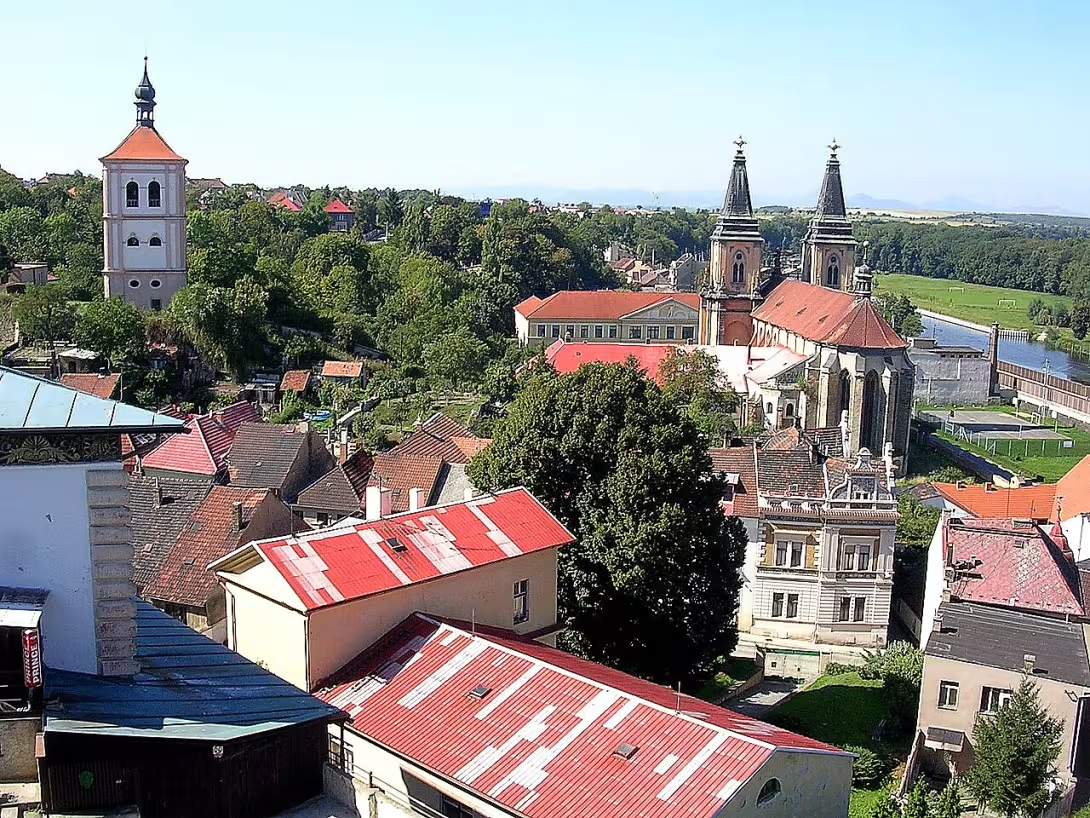
Augustiniánský klášter v Roudnici nad Labem grew up on the left bank of the Elbe in a place deeply connected with Czech ecclesiastical history. The Romanesque Bishopric Castle from the 1880s, which served the Prague bishops as a rural residence and a port on the road to Budyšín and Horní Lusatia, used to stand there. This is where the Prague Bishop Jan of Dražice decided to build a monastery of a new order.
Jan of Dražice met Augustinian canaries during his stay at the Papal Court in Avignon. After returning to Bohemia in 1329 he first tried to establish a monastery with Dominicans in the Old Town of Prague, but he did not get permission from city councils. So he chose his estate in Roudnice. Between 1330 and 1332 he requested an instructor from Avignon, who apparently came from the monastery of St. Rufus. With him also apparently came the master Wilhelm from Avignon, who was entrusted with the management of the building of the monastery complex and stone bridge via Elbe. The cornerstone was laid on May 25, 1333.
The monastery was founded according to the request of King Charles IV, approved by Pope Clement VI, originally as a community intended only for Czech brothers. The initial community was made up of twelve canoes and a probošt. After the death of Bishop John in 1343, the restrictions on Bohemia were lifted. The construction of the complex was completed in 1360 by his successor Arnošt z Pardubic, the first Archbishop of Prague, who supported the expansion of the monastery network - in 1349, monasteries were created in Jaroměř and Kladsk as a private foundation of Arnoš and his brothers.
The monastery became the center of education and culture. In 1352, with the Pope's permission, the joint dorm was abolished and replaced by individual cells. The scripts developed and the library was expanded, which attributed the monasteries to international reputation. Here came the "Routine Statutes," taken from the Alsatian monastery of Marbach, containing strict regulations for monastic life, especially for the promise of poverty. The first mentioned probošt. Mikulas stands in written records from 1347.
The effect of the monastery spread gradually. Other monasteries took over the Roudní reform - in the 14th century it happened in Zahrani, Neunkirchen am Brand and later in Indersdorf, Germany, which itself became the propagator of its reform.
Today, the monastery area with the Church of the Birth of the Virgin Mary, gardens, bell tower, walls and statues of saints has been protected as a national cultural monument since 2023. Visiting here means meeting with the place where the Czech monastery reform began to write.
Then and now
Drag the slider to compare how the landmark may have looked when it was built with the view today.
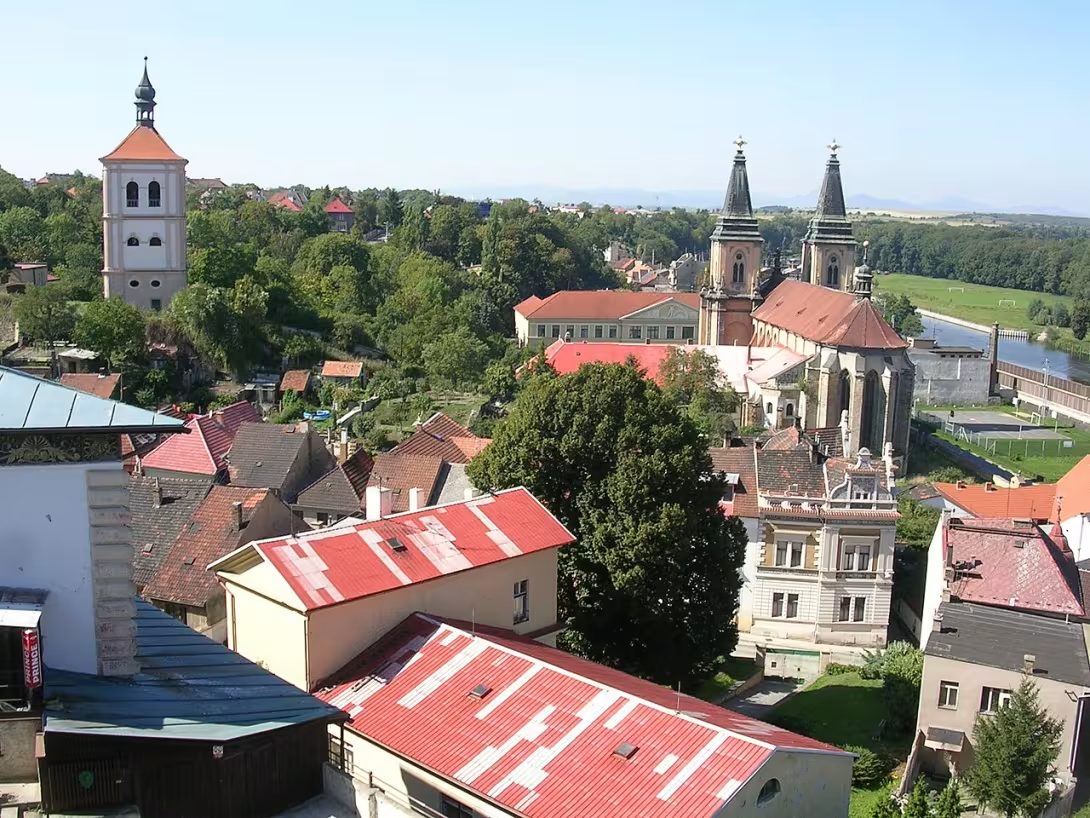
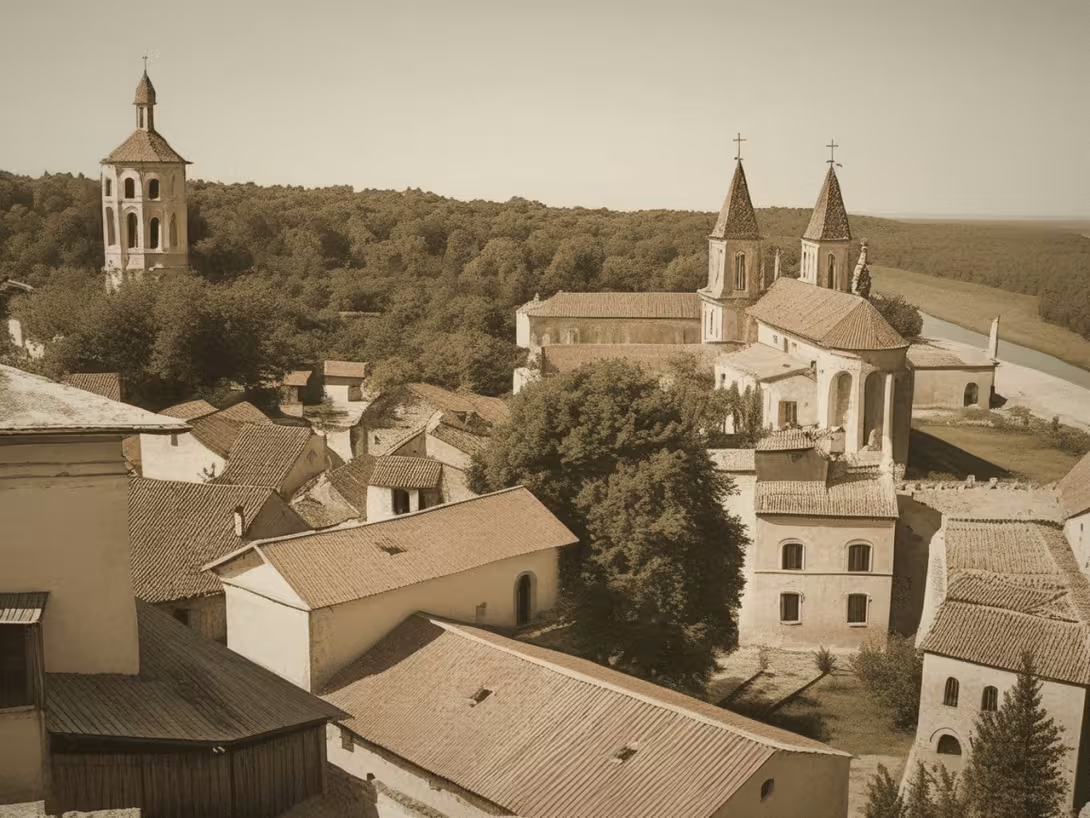
The historical appearance on the left is an AI-generated visualisation and serves as inspiration only.
Historical milestones
- 1333
- The establishment of the monastery by Bishop John IV of the Dražice.
- 1352
- Completion of the monastery complex by Archbishop Arnošt z Pardubic.
Architectural development
The monastery was built in a Gothic style with a share of stonework from Avignon. After completion in 1352 there were changes, especially during baroque adjustments between 1725 and 1733. The monastery complex contains the Church of the Birth of the Virgin Mary, bell tower and other structures.
Historical events
- 1333
- The establishment of the monastery by Bishop John IV of the Dražice.
- 1352
- Completion of the monastery complex by Archbishop Arnošt z Pardubic.
- 2023
- Declaration for a national cultural monument.
Owners
- 1333
- 1343-1360
Points of interest
- Augustiniánský klášter v Roudnici nad Labem was founded by Bishop Jan of Dražice of Prague after his return from Avignon in 1329.
- The base stone for the construction of the monastery and the bridge over the Elbe was laid on May 25, 1333.
- The monastery was originally intended only for Czech brothers at the request of King Charles IV, approved by Pope Clement VI.
- In 1352, with the permission of the Pope in the monastery, she abolished the common dorm and replaced it with individual cells, which led to the development of scripts and libraries.
- Today the site has been protected as a national cultural monument since 2023.
Guide
This guide is narrated by a synthetic voice generated by artificial intelligence.
Show guide text
This text was created by artificial intelligence and has not been editorially reviewed. It may contain inaccuracies.
Welcome! You are standing in front of one of the most interesting historical monuments of our region - Augustinian monastery in Roudnice nad Labem. Look up and you will see beautiful Gothic facades that are dominant of the local scene.
Let's move on to the past and try to imagine how it all started. Augustinian monastery was founded in 1333 by Bishop Jan of Dražice of Prague after his return from Avignon. Bishop Jan of Dražice was a great patron of art and education and wanted to establish a monastery that would become the centre of religious and cultural activity. The foundation stone for the construction of the monastery and the bridge over the Elbe was laid on 25 May 1333, a fact that confirms the importance of this place.
Notice how the monastery complex has evolved over the centuries. The monastery was originally intended only for Czech brothers at the request of King Charles IV, who was a great supporter of the Augustinian Order. Archbishop Arnošt z Pardubic completed the construction of the monastery complex in 1352. Mistr Vilém z Avignonu was the main architect of this project and his work is still remarkable.
Let us now devote ourselves to the key stories and personalities associated with this place. Jan IV. z Dražic was a great patron of art and education and its establishment of the monastery was the first step towards becoming an important cultural centre. Arnošt z Pardubic, who completed the construction of the monastery, was also an important person who contributed to its development.
Now stop for a moment and consider what the real meaning of the Routnik monastery was. In 1352 he became the centre of Roudnický reform, which had a major impact on other monasteries in Central Europe. This is a fact that confirms its importance in history.
Look at the facade of the monastery and feel the atmosphere that is being created here. It's a place where the past and the present meet and where you can feel spiritual peace and quiet.
As you like, I'll invite you to look for more interesting things in our town. Roudnice nad Labem has many other beautiful monuments and historical sites worth exploring. May you enjoy our city and its history!
Tips for visitors
The best time to visit the monastery in Roudnice nad Labem is the autumn or spring period, when vegetation is full of blood and the sunlight of the sun gives historical building elements a special atmosphere. More peaceful visitors during these months will allow you to explore the monastery complex and its history further.
When visiting the monastery, we recommend taking with you shoes suitable for walking on stone floors as well as a protective coat or jacket in winter months. Additional information about the history and architecture of the monastery can be found in the brochures available at the entrance.
Photography is one of the best ways to remember a visit. The best light for photos offers early morning or late afternoon when the sun illuminates the monastery buildings from an angle and gives them magic. For families with children, the monastery is an ideal place for a short walk, where they can discuss historical events associated with Augustines.
Frequently asked questions
Can the monument be visited?
Religious buildings are usually open mainly during services; at other times a visit is normally arranged with the parish or the operator. We have not verified specific times.
Where is the monument?
Location: Komenského 174, Roudnice nad Labem, Ústecký kraj. The map on this page shows the exact spot.
Why is the monument protected?
It is listed in the Central List of Cultural Monuments of the Czech Republic as a national cultural monument (register no. 488).
For kids
Imagine going back 693 years to when Augustiniánský klášter v Roudnici nad Labem was still young and full of life. From there, you could see the stone walls and cellars being built here to become a place where people pray and learn.
There lived canons who were like one big family. They were men who decided to live in a complete separation from the world so that they could focus fully on their religious mission. They lived here together with priests and monks who took care of their mental and physical health.
Businesses nearby
Do you run a restaurant, accommodation, shop, museum, rental, wellness or other visitor service near this monument? Show yourself directly to the people heading to it — this is how they will see you in the app and on the web:
Nearby
The monastery is located on the left bank of the Elbe in Roudnice nad Labem, close to the historical bishop's castle from the time of the Prince-Bishop Henry Břetslav III.
Accommodation nearby
Themed route
Roudnický tras
1. Augustiniánský klášter v Roudnici nad Labem - monastery This monastery is worth visiting thanks to its unique architecture and rich history. It is located on the left bank of the Elbe in Roudnice nad Labem, near the historical castle from the time of Prince-Bishop Henry Břetslav III.
2. Historical Bishop Castle - Castle It is located in close proximity to the monastery and represents an important monument from the time of the Prince-Bishop Henry Břetslav III.
3. Church of St. Jacob the Greater - Church Located in the heart of Roudnice nad Labem and is an important cultural monument of the city.
Seasonal recommendations
Spring:
In spring the Augustiniánský klášter v Roudnici nad Labem is surrounded by green vegetation of trees and flowering flowers. The atmosphere is calm and calm.
We recommend visiting the monastery in the spring season when temperatures are not too hot to enjoy a walk around.
Summer:
In summer, the monastery is open to visitors from 9:00 to 18:00, so it is good to arrive before a larger crowd arrives.
In the main summer season it is advisable to visit the monastery in the morning or late afternoon to avoid crowds.
Autumn:
In the autumn period, the monastery is surrounded by a beautiful autumn plot.
Winter:
In winter it is advisable to visit the monastery with warm clothes because temperatures can be low.
Visualizations and artistic views


The visualisations are generated by artificial intelligence and serve as inspiration.
Photos from the area
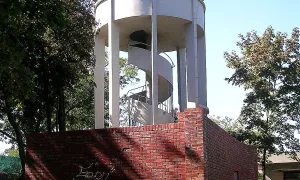
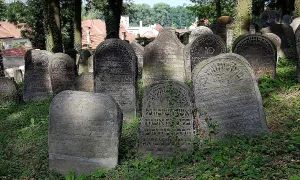
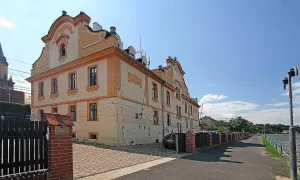
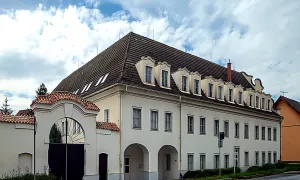
Real photos taken near the monument


Zdroj a licence jsou uvedeny u každého snímku.
Atmosphere of the place
This atmospheric visualisation of the place and period was generated by artificial intelligence. It is not real footage of the location.
Tips from visitors
No tips yet. Be the first!
Log in and add your tip.
Sources and literature
Photos: cs:ŠJů / CC BY-SA 3.0 — Wikimedia Commons. The author and licence also appear when you hover over the image.
Faktickým podkladem tohoto textu byl článek na Wikipedii, jehož autory jsou přispěvatelé Wikipedie. Článek je dostupný pod licencí CC BY-SA 4.0.
Location on the map

Příběhy a pověsti
Legendy, pověsti a příběhy spjaté s touto památkou
Fotografie návštěvníků
Zatím žádné fotografie. Buďte první, kdo přidá fotografii z návštěvy!
Log in a přidejte svou fotografii nebo hodnoťte.
Za ověřenou návštěvu v aplikaci získáte víc bodů — poznáme podle GPS, že jste na místě.
Reviews and comments