






kostel svatého Václava v Roudnici nad Labem Church
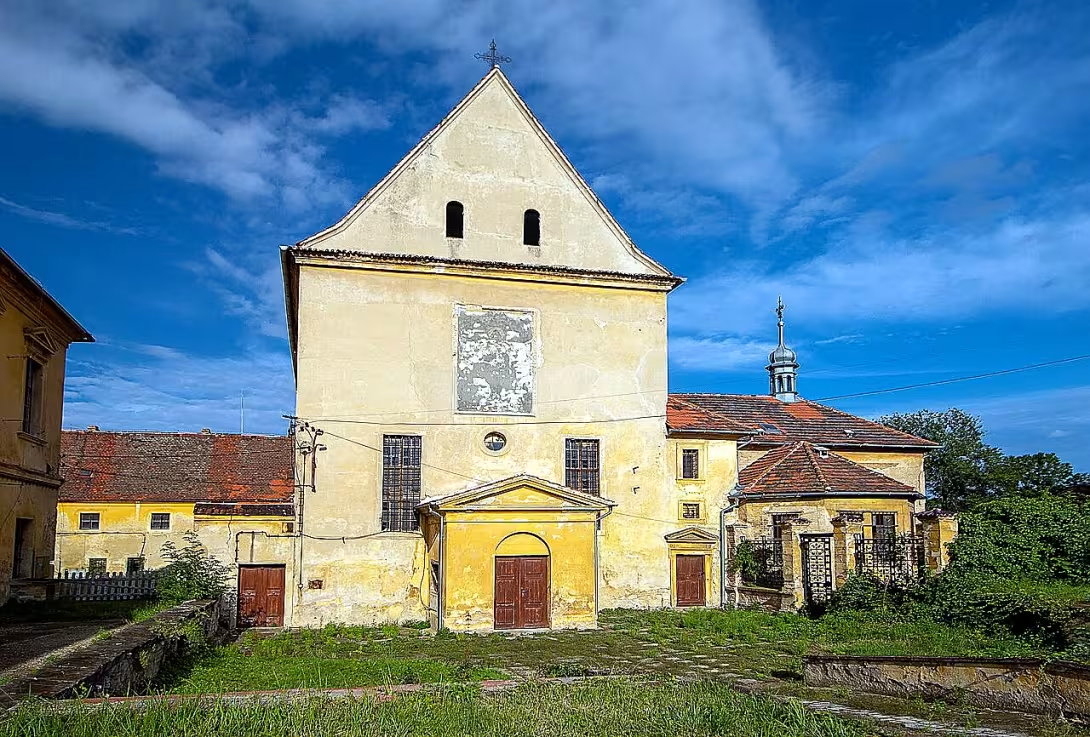
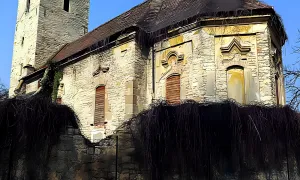
St. Wenceslas Church is one of the less famous but valuable monuments of Roudnice nad Labem. The building is located in the area of the local chateau, east of the city centre, where it forms an essential part of the complex of the former Capuchin monastery. The whole area is protected as a cultural monument.
The beginnings of the temple are tied to capuchins who came to Roudnice at the invitation of the owners of the Roudnice estate - the influential noble family of Lobkovice. At their request, the new church was dedicated to St. Wenceslas and became the place of burial of members of the family. The interesting thing is that Saint Wenceslas's patrocinium was taken from the already existing church in Roudnice, which was subsequently reunited with the Virgin Mary and later completely demolished in the 19th century.
Construction beginnings date back to May 1615, when the base stone of the Capuchin monastery and the church itself were laid. But the construction was significantly delayed by serious political disturbances - the state uprising and, in particular, the outbreak of the Thirty Years' War in the early 1620s. These circumstances shifted the completion of the building until 1628, when the temple was ceremoniously consecrated on 2 August.
Architecturally, the church ranks among the typical examples of Capuchin's sacral architecture. It is a single-boat building without a tower that is characterised by moderation and functionality. A characteristic element is a triangle shield, which architecturally expresses the philosophy of order. The construction of its simplicity and purity of forms corresponds to the spiritual mission of capuchins.
In the temple are buried important personalities from the Lobkovice family and associated aristocratic lines. Among them, Polyxena z Lobkovic (1566–1642), the military and politician Zdeněk Vojtěch Popel z Lobkovic (1568–1628), or Ferdinand Zdeněk z Lobkovic (1858–1938). These tombs bear witness to the importance of the temple for the local noble elite.
The fate of the church changed significantly in 1952 when the whole monastery area was closed after the communist coup. The building and monastery were subsequently used by the Czechoslovak army. Since then, the temple has gradually faded and its original charm has disappeared. Today, it stands as a silent witness to past times, closed to the public and without the care that this architectural monument would rightly deserve.
Then and now
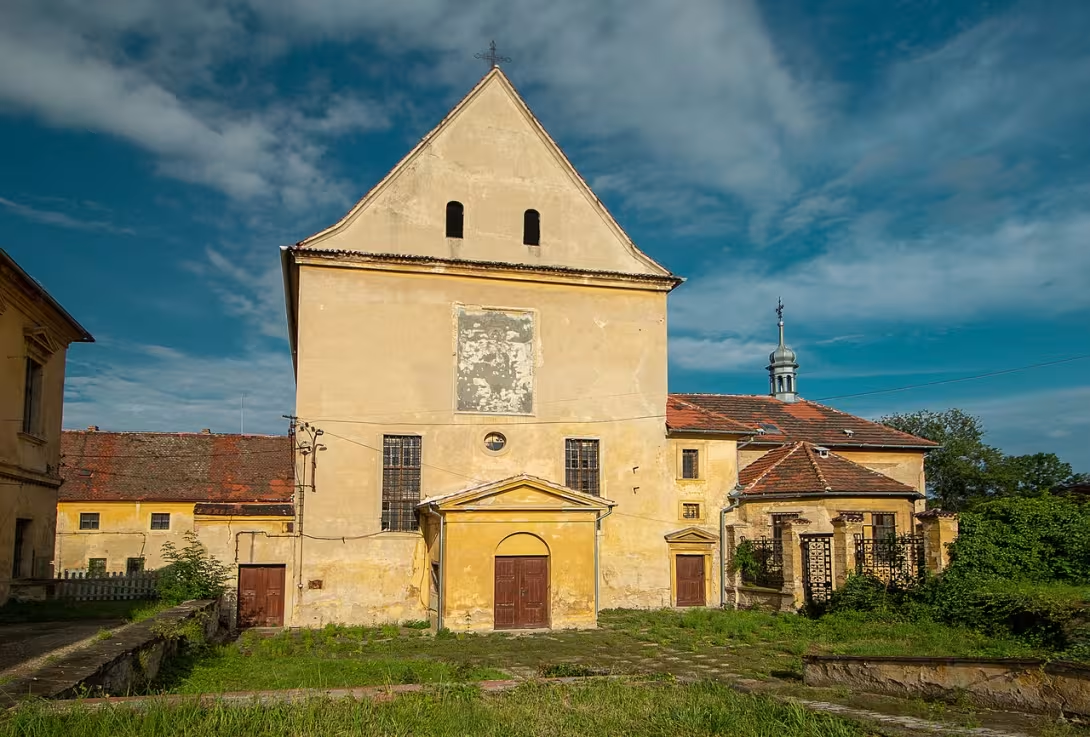
Drag the slider to compare how the landmark may have looked when it was built with the view today.
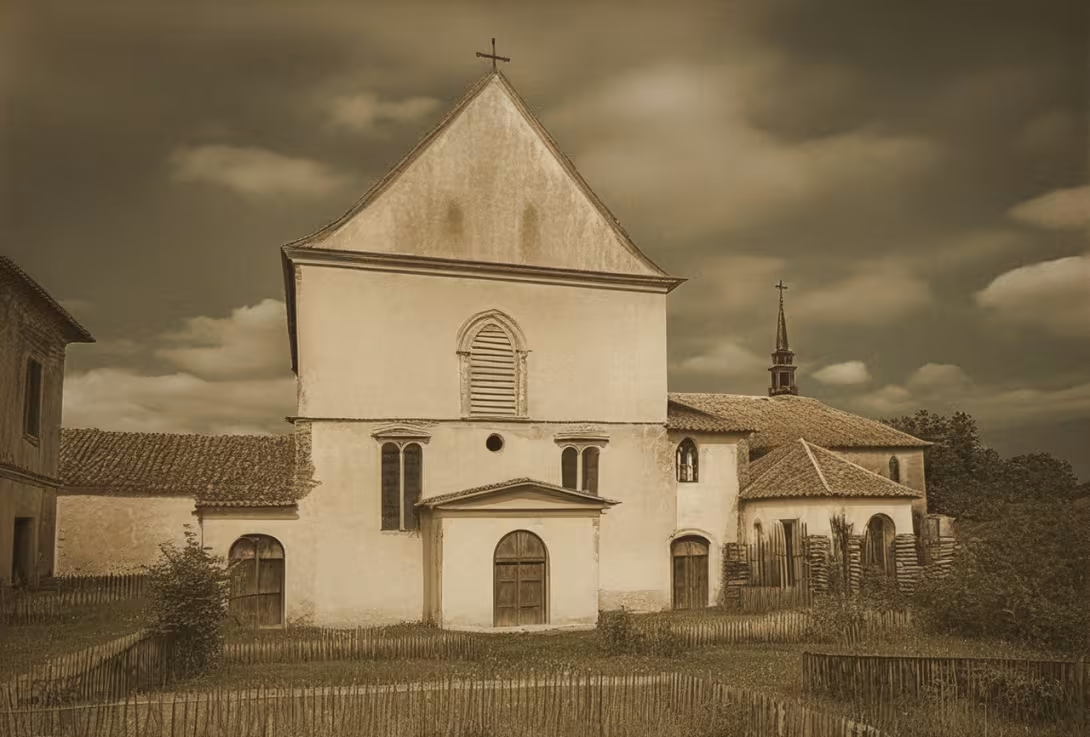
The historical appearance on the left is an AI-generated visualisation and serves as inspiration only.
Historical milestones
- 1615
- The laying of the foundation stone of the church and monastery at the request of the princes of Lobkovic.
- 1628
- Holy Wenceslas Church.
- 1952
- Closure of the church and monastery grounds by communist regime.
Architectural development
The church was built as a single-boat tower building in Capuchin style with triangular shield. The construction was probably delayed by a 30-year war and a state uprising. In the 19th century, the original church of the Virgin Mary, whose patronage was transferred to the church of St. Wenceslas, was demolished. The church was built of stone and bricks, typical of Baroque architecture.
Historical events
- 1615
- The laying of the base stone of the Capuchin monastery and the church of St. Wenceslas at the request of the princes of Lobkovic.
- 1628
- The consecration of St. Wenceslas' church, which became the family burial ground of Lobkovice.
- 1952
- Closure of the church and monastery area by communist regime, subsequent use by Czechoslovak army.
Owners
Capuchin Order
Points of interest
- The church of St. Wenceslas was built on the premises of the former Capuchin monastery, which is protected as a cultural monument along with it.
- The church began in May 1615, but its completion was delayed by political unrest and a 30-year war, so it was only ordained in 1628.
- The church was dedicated to St. Wenceslas at the request of the Lobkovice family, who also had their members buried here.
- St. Wenceslas's Patrocinium was taken from another church in Roudnice, which was then dedicated to the Virgin Mary and later demolished.
- In the temple are buried important members of the Lobkovic family, such as Polyxena of Lobkovic or Zdeněk of Vojtěch Poppel of Lobkovic.
Guide
This guide is narrated by a synthetic voice generated by artificial intelligence.
Show guide text
This text was created by artificial intelligence and has not been editorially reviewed. It may contain inaccuracies.
Welcome to St. Wenceslas Church in Roudnice nad Labem. You stand in a quiet corner of the chateau grounds, where a simple but noble structure stands before you, bearing traces of three centuries. This church, built for the Capuchin Order, is like a guardian of the past - its triangle shield, typical of Capuchin architecture, sees you from a distance. Whether you look at it closely or a little more distance, you feel the atmosphere of peace and respect left behind by those who built it and used it.
Let us return to 1615, when the princes of Lobkovic laid the cornerstone not only of the church, but also of the entire Capuchin monastery. It was a time when the Lobkovic family belonged to the most powerful and influential noble families in the country. Their headquarters in Roudnice should not only be the seat of power, but also a place where they could pray and rest their souls. The church of St. Wenceslas was supposed to serve as a family burial ground, where Lobkovice would be buried, whose names still sound like strings on the harp of Czech history. And so, after years of construction work that interrupted wars and riots of the Thirty Years' War, the church was finally consecrated in 1628. Back then, not only the capuchins were praying here, but also the members of the family who found their last rest in it.
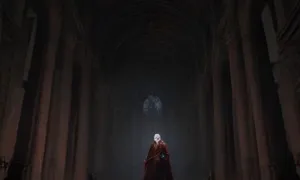
Now pay attention to the facade of the church. You see in front of you a simple but harmonious structure with that characteristic triangle shield that is like the seal of the Capuchin Order. The church is a single-boat - that is to say, there is a single boat, spacious and bright, as the capuchins knew it, which wanted their services to be simple and direct. The shield above the entrance is decorated only modestly, but it is this modesty that gives the church its special charm. Notice how the building blends with the surroundings - not a monumental cathedral, but rather a quiet house of prayer, built for those who sought the humility and proximity of God.
Among those closely related to this place was Polyxena of Lobkovic, one of the most important nobles of her time. She was a woman of reason and faith who not only supported art and education, but also the construction of this church. Her friend and relative was Zdeněk Vojtěch Popel from Lobkovice, who had the church built and who also found his last rest here. Later, in the 19th century, Ferdinand Zdeněk of Lobkovice, who was responsible for the restoration of the chateau complex, returned to his family traditions. Whether it was Polyxen, Zdenka Vojtek or Ferdinand, everyone here found a place where their names remained forever linked to this place.
But St. Wenceslas' church has a secret. You know his construction started in May 1615, but it wasn't finished until years later? Thirty years of war and political unrest delayed work, so the church witnessed a stormy time. And when he was finally ordained, he became not only a place of worship, but a place where the Lobkovic family prayed for peace and peace. But then what happened? In 1952 the area of the church and monastery was closed by the communist regime. Since then, this beautiful building has been abandoned, although its walls still bear memories of those who once lived here and prayed.
Look around you. See how the church blends with nature? How do his walls, though a little abandoned, still radiate peace? That's what makes this place so special. It's not just a stone building, it's a place where history, faith, and human destinies meet. Whether you're here for history, architecture or just because you're interested in this peaceful monument, I hope you've taken away at least a little of what this place has to offer.
If you wish to explore further corners of the chateau area or learn more about the fate of Lobkovic, feel free. Roudnice nad Labem has something to show - from the chateau halls to other hidden monuments. But now that you're standing in front of this church, stay a little longer and let yourself be carried away by the calm that has been here for centuries. May the memory of those who once lived here accompany you and the fact that even stone walls can tell stories. Thank you for coming to see us - and when you return, it may seem to you that the church of St. Wenceslas is whispering something only to you.
Frequently asked questions
Is kostel svatého Václava v Roudnici nad Labem open to the public?
Yes, the church is open to the public. The tour is possible during the opening hours.
How do I get to the place by car / public transport?
The church is available by car on I / 13 from Prague or Ústí nad Labem. The public transport can use lines 301 and 302 from Roudnice nad Labem to the city center.
How much is the entrance fee and is it paid on the spot?
Payment is made directly at the entrance to the church.
Is the tour suitable for children and seniors?
Yes, a church tour is suitable for all ages. The church has accessible premises and can be visited with children or seniors.
How long does the tour take?
The church tour takes approximately 30-60 minutes, depending on the speed of the visitors.
What are the opening times and booking is required?
The church is open to the public from Tuesday to Friday from 9: 00 to 5: 00. Sundays and public holidays are the exception. Reservation is not necessary, but it is recommended for groups over 10 people.
What's interesting in the immediate vicinity?
In the immediate vicinity of the church there is a chateau area with a monument park. In the vicinity you can also visit the Roudnice Museum or take a walk around the Elbe.
For kids
Imagine coming back 411 years... Until Roudnice nad Labem was still a small town and the church of St. Wenceslas was newly built by capuchin brothers.
It was like a game where you're a hero and you can discover the secrets of the past. This is how you feel when you enter the monastery church of capuchins in Roudnice nad Labem. The church is one of the oldest Capuchin buildings in Bohemia, built in 1615.
Businesses nearby
Do you run a restaurant, accommodation, shop, museum, rental, wellness or other visitor service near this monument? Show yourself directly to the people heading to it — this is how they will see you in the app and on the web:
Natáčelo se zde
- Na západní frontě klid (2022) film
Zdroj: Wikidata (vlastnost „místo natáčení“) · Všechna filmová místa
Nearby
- Baroque chateau, which is part of the same area as church and monastery.
- Natural landscape with views of the Elbe and surrounding forests.
- A museum presenting the history of the city and region.
Accommodation nearby
Themed route
Thematic cruise route Roudnice nad Labem
1. Church of St. Wenceslas - * Type: * Church - * Why is it worth visiting: * This church is one of the oldest sacral monuments in the area that attracts its historical architecture and beautiful interior. It's the perfect place for those who like history and want to dive into the past.
2. Chateau Roudnice nad Labem - * Type: * Lock - * Why is it worth visiting: * Baroque Chateau is part of the same area as the church and monastery, which offers a unique view of the architectural coherence of the period. Its beautiful park and historic spaces are an ideal complement to visit the church.
3. Labian plateau - * Type: * Natural area - * Why is it worth visiting: * This natural landscape offers views of the Elbe and surrounding forests, which is a great opportunity for relaxation in the air. It is an ideal place for a short walk or picnic where you can enjoy a quiet environment and view the surrounding countryside.
4. City Museum Roudnice nad Labem - * Type: * Museum - * Why is it worth visiting: * The City Museum offers a valuable overview of the history and culture of the city. It is a great way to learn more about the past of Roudnice nad Labem and its significant personalities.
This route offers a combination of historical monuments and natural beauty, making it ideal for a day trip.
Seasonal recommendations
Spring: In the spring season kostel svatého Václava v Roudnici nad Labem is strangely attractive thanks to the lighting, when the sunlight penetrates through coloured windows and illuminates the interior. Nature is awakening from winter, adding to the visit an atmosphere of recovery and hope. For visitors it is advisable to come in the early spring season when the crowds are still mild, and to take advantage of this calm for a deeper immersion in the history and beauty of the church. It is recommended to dress suitable for a cold day with the possibility of approaching a warm shirt or cape.
Summer: Summer is the perfect time to visit the church of St. Wenceslas, when the bright sunlight and nature are in full bloom. The atmosphere is revived and offers beautiful surroundings for photos with church in the background. In the main summer season it is recommended to visit the memory earlier in the afternoon to avoid large crowds and enjoy a quieter tour. Clothes should be light, with sun protection like a short glove or hat.
Autumn: The autumn visit to St. Wenceslas Church offers a unique atmosphere with darker leaf colours and calmer evening lighting. This season is ideal for a quiet tour without the presence of large crowds, allowing deeper immersion in the history and architecture of the monument. When visiting, clothes should be suitable for colder weather with the possibility to add a warm shirt or jacket, especially in the winter months.
Winter: During winter, St. Wenceslas Church offers visitors an atmosphere of peace and quiet. Coloured with snow or cold ice lighting, the interior is particularly attractive when it meets the warm light of color windows. Opening hours may be shorter, so it is advisable to visit the memory earlier on the day. It is recommended to wear warm clothes such as fur coats or jackets, and protective shoes for cooler conditions on the outside.
Visualizations and artistic views


The visualisations are generated by artificial intelligence and serve as inspiration.
Photos from the area
Real photos taken near the monument


Zdroj a licence jsou uvedeny u každého snímku.
Tips from visitors
No tips yet. Be the first!
Log in and add your tip.
Sources and literature
Fotografie: VitVit / CC BY-SA 4.0 — Wikimedia Commons. The author and licence also appear when you hover over the image.
Faktickým podkladem tohoto textu byl článek na Wikipedii, jehož autory jsou přispěvatelé Wikipedie. Článek je dostupný pod licencí CC BY-SA 4.0.
Location on the map

Příběhy a pověsti
Legendy, pověsti a příběhy spjaté s touto památkou
Fotografie návštěvníků
Zatím žádné fotografie. Buďte první, kdo přidá fotografii z návštěvy!
Přihlaste se a přidejte svou fotografii nebo hodnoťte.
Za ověřenou návštěvu v aplikaci získáte víc bodů — poznáme podle GPS, že jste na místě.
Reviews and comments