






Starý židovský hřbitov v Roudnici nad Labem Jewish cemetery
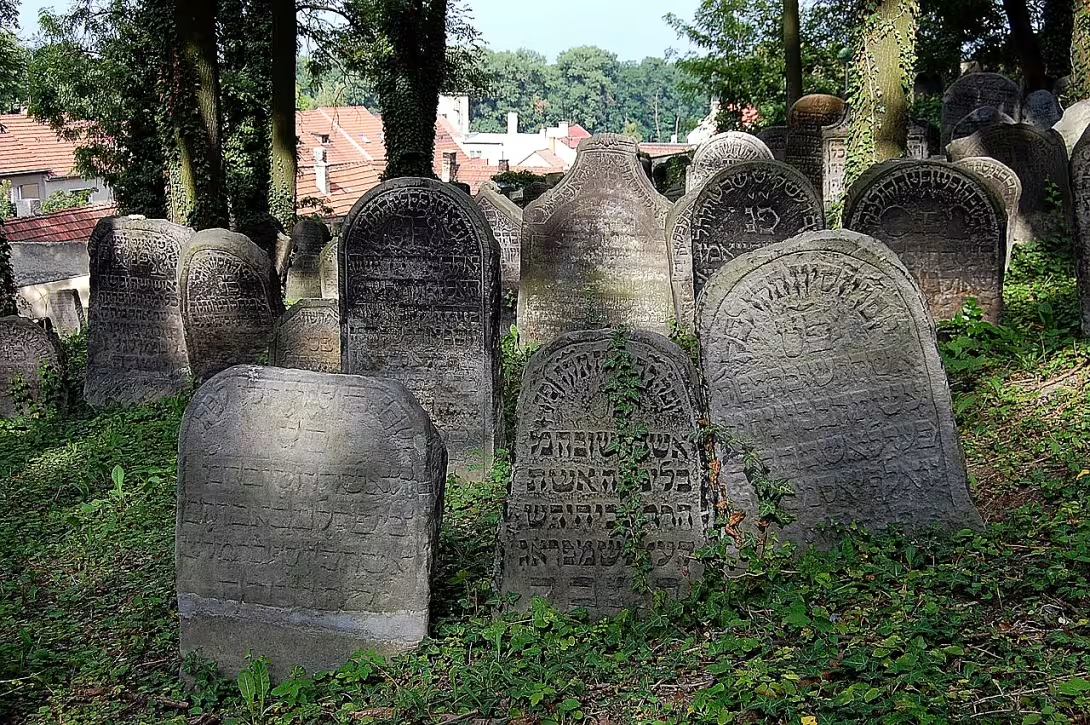
Starý židovský hřbitov v Roudnici nad Labem is a Renaissance cemetery founded in 1613. It is situated on an area of 4,679 square meters between the streets of Třebízský and Farsky. This complex hides 1,700 tombstones in the Renaissance, Baroque and Classicist styles. The last funeral took place here approximately in 1896.
The necropolis is located about a kilometer west of the Roudnice train station. At the time of their founding in 1613, the Czechs were part of the Habsburg monarchy under the rule of King Matthias of Habsburg. This happened only a few years before the outbreak of the Czech State uprising and the Thirty Years' War.
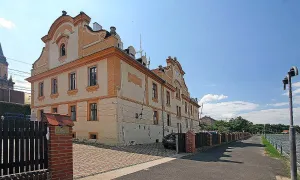
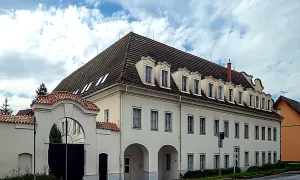
The architectural and historical value of the monument consists of 1,700 tombstones in the Baroque, Renaissance and Classicist style. The oldest stalk was transferred to the cemetery from a medieval burial site and even dates back to 1611. In the northern part of the complex lies a group of martyrs' graves where they found the last resting place of the pogrom victim. A part of the site is today also an abandoned house of the grave digger, who in the past served for living, and a road used as a garage. In the 1990s, a new gateway was created.
The cemetery is owned by the Federation of Jewish Communities. During World War II and under the previous regime, he suffered only minimal damage. Although there were efforts at the time to transform the monument into a park, the intention was prevented. In the 1990s, the complex was completely renovated with the support of local businessman Michal Horáček. In 1992, the cemetery was declared a cultural monument.
Chronology includes 1611 as the date of the oldest transferred tombstone from the medieval cemetery and 1613 as the time of foundation. It also recalls the year 1896 as the period of the last funeral and 1992, when the resort became a cultural monument.
Today, the cemetery is freely accessible from the newly built area at Farsky Street. The visit offers a view of the preserved secular monuments and a reminder of the history of the Jewish community in the region, which is why it is worth visiting on the way to Roudnice nad Labem.
Then and now
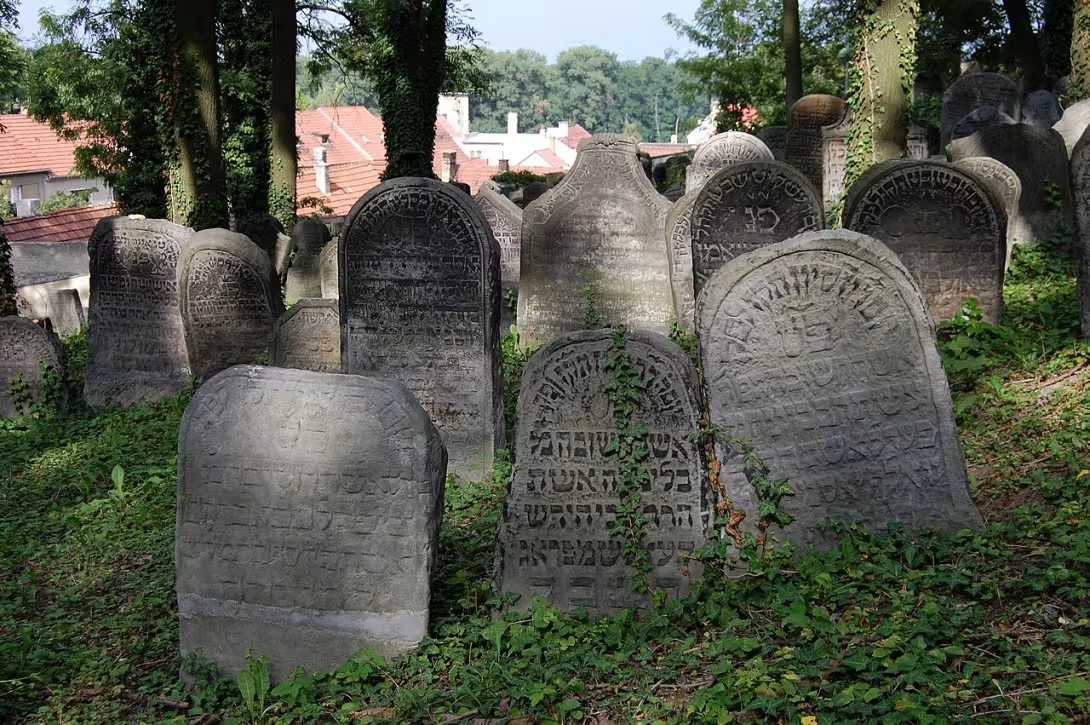
Drag the slider to compare how the landmark may have looked when it was built with the view today.
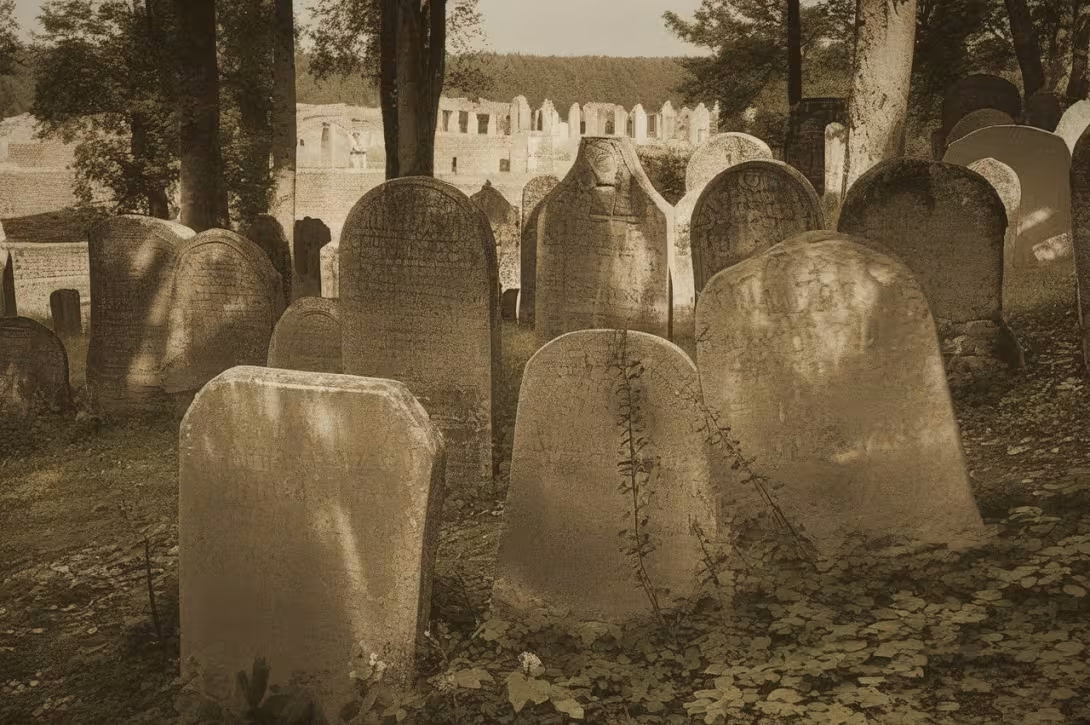
The historical appearance on the left is an AI-generated visualisation and serves as inspiration only.
Historical milestones
- 1611
- The oldest tombstone transferred from the medieval cemetery.
- 1613
- A cemetery.
- 1896
- The last funeral took place here.
- 1992
- The cemetery was declared a cultural monument.
Architectural development
The cemetery contains valuable tombstones in the Renaissance, Baroque and Classicist styles. There is a group of martyrs' graves in the northern part. In the 1990s a new entrance gate was created and the whole complex was renovated.
Historical events
In 1613 the cemetery was founded. A reconstruction was carried out in the 1990s with the support of Michal Horáček. In 1992, the cemetery was declared a cultural monument.
Owners
Federation of Jewish Communes
Points of interest
- The cemetery was founded in 1613 and is situated on an area of 4,679 square meters. - The area hides 1,700 tombstones in the Renaissance, Baroque and Classicist style, with the last funeral held here around 1896. - The oldest stalk was transferred from a medieval burial site and dates back to 1611. - There is a group of martyrs' graves in the northern part of the compound where they found the last resting place of the pogrom victim. - The cemetery is owned by the Federation of Jewish Communities and was declared a cultural monument in 1992.
Guide
Show guide text
This text was created by artificial intelligence and has not been editorially reviewed. It may contain inaccuracies.
Welcome to the place where time has stopped and where every stone whispers stories no one will ever see again. You're standing right outside the gates of an old Jewish cemetery in Roudnice nad Labem. Once you enter this space, you will feel a strange calm and weight of history surrounding you from all sides. In front of your eyes, there is a vast area that stretches on an area of nearly 5,000 square meters. It is a place that is not only a simple burial, but a monumental chronicle of human life, faith and fleeting. Feel this atmosphere, let yourself be consumed with silence and look around you. See those endless series of tombstones? Each of them is a trace of a man who once walked these streets, had his joys and pains, and is now resting in the silence of this sacred space.
Let's go back deep into the past together to understand how this place came to be. Although it may seem to you that the history of this place begins with its foundation, the truth is even deeper. In 1613, this cemetery was officially established, but its roots extend further into the darker times of the Middle Ages. Note that the oldest tombstone you can see here was not created directly for this place, but was brought here from an older medieval cemetery. This stone dates back to 1611, which means you're touching a monument older than the cemetery itself, as we know it today. This fragment of the past reminds us that people in this city have been looking for their last rest for centuries and that this place is simply a continuation of something much older and deeper.
Now pay attention to what you see right in front of you. When your eyes start to move between the tombstones, you notice their incredible diversity. It's not just a cluster of stones, it's an open textbook on art and history. The whole complex hides up to a thousand seven hundred tombstones and each tells a different story through its appearance. Watch how shapes and decorations change. You will see elements of the Renaissance style that bring harmony and peace into space. Then your eyes come across baroque tombstones, which are full of dynamics, emotions and drama, as if they wanted to express themselves by force even in this quiet place. And finally here you will find the shapes of the classicist, which by their purity and order bring a sense of grandeur and stability. This mixture of different epochs, which is poured over here, creates a fascinating visual texture. Take a look at the details of these stones, even though they may already be scraped by time and weather. It is in these cracks and in the worn-out lines that the truth lies about places that once were full of life.
If you continue to walk, your attention may be drawn to other structures that are part of this area. Notice the abandoned tomb man's house and the road yard. These buildings, although lonely today, were once the heart of the daily functioning of this place. Imagine the moments when cars moved here, when the last roads were being prepared and when people were doing their work here in close relation to life and death. These spaces give us the human dimension of the entire cemetery. It's not just the monumental stones, it's the entire community that lived here, worked here, and maintained this place. Within this community and the history of this place, it is also necessary to mention the names that have been remembered here. One of them is Michal Horáček, whose name is linked to the history of this place, and reminds us that even in this silence there are echoes of concrete fates.
Now I want to take you to one of the most surprising facts this cemetery holds. It may seem incredible to you, but this space that you are now exploring was once a much more lively place for parting rituals. The last funeral took place here around 1896. Try to imagine - for almost three centuries there have been ceremonies, families have been gathered here, generations have been interconnected here. And then came 1896 and with it a long period of silence, when there was no funeral anymore. This sudden interruption of tradition carries a strange mystery. Why did this happen? How did life change in Roudnice above the Elbe that this place stopped being part of the daily cycle of life and death? This question may accompany your steps in the next survey.
Look around you and see how this space was changing in time. Since 1992, this cemetery has been protected as a cultural monument, which means that its value for all of us is recognised and preserved for future generations. It's a place that teaches us humility. It's a place that shows us how human thinking changes, how art changes, and how society itself changes, but it also shows us that certain things, such as the need for decent rest, remain constant.
Now I'm not going to stop you from making another silent observation. I suggest you continue your slow walk among these thousands of history witnesses. Let the intuition guide you, stop by the tombstone that will address you with its shape, or the building that you find most interesting. Explore every corner of this complex, feel the smell of air and silence that exists here. Every step can lead you to a new revelation. Thank you for choosing to devote your time to this place and for trying to understand its silent story. We wish you a peaceful and inspiring journey through history. Goodbye.
Tips for visitors
For visiting the Old Jewish Cemetery in Roudnice nad Labem it is best to choose the morning hours during spring or autumn, when the sunlight creates ideal shading to excel details on historical tombstones. The location is located between the streets of Třebízský and Farský, about one kilometre west of the train station, which ensures good availability by foot and by car, and the current traffic links are best checked in the respective search engine. It is advisable for the tour to wear fixed shoes because of the uneven terrain between almost a thousand and seven hundred tombstones and also the headgear, as the area of the cemetery of four thousand six hundred seventy-nine square meters offers only limited shielding. The late afternoon light is best suited for photography, which highlights the Baroque, Renaissance and Classicist styles of these monuments registered since sixteen hundred thirteen. Since only the streets of Třebízský and Farský and the location west of the train station are listed in the immediate vicinity of the monument, we recommend to plan the rest of the trip directly to the centre of Roudnice nad Labem and the families with children can accommodate the visit as a peaceful history lesson in nature associated with a short walk from the station.
Businesses nearby
Do you run a restaurant, accommodation, shop, museum, rental, wellness or other visitor service near this monument? Show yourself directly to the people heading to it — this is how they will see you in the app and on the web:
Nearby
The cemetery is located in Roudnice nad Labem between the streets of Třebízský and Farský, about a kilometer west of the train station.
Accommodation nearby
Trips and activities nearby
Guided tours, tickets and activities nearby from GetYourGuide
Affiliate link: if you buy from the partner, we may receive a commission. The price for you does not change.
Search tours and activities →Themed route
Roudnický jewish stopping
1. Train Station Roudnice nad Labem Type: Transport Node Why is it worth a visit: The starting point for your walk through the city, where you will go about one kilometer west.
Starý židovský hřbitov v Roudnici nad Labem Type: Historical monument Why is it worth a visit: The main destination of the route located between the streets of Třebízský and Farsky, which keeps a significant memory of Jewish history.
3. Třebízský and Farsky streets Type: Urban zone Why is it worth a visit: The immediate surroundings of the cemetery in Roudnice nad Labem, which form a natural link for visitors to this location.
Seasonal recommendations
In spring, the cemetery wakes up with nature. Young leaves and fresh green create a beautiful contrast to grey stones and old tombstones. The lighting is very pleasant for viewing details thanks to the softer sun. I recommend arriving early in the morning when the air is still fresh. It is advisable to take layered clothes because the morning cold can still feel.
In the summer months there is a strong presence of the sun that penetrates through the trees and creates interesting shadows on the monuments. The atmosphere is warm and lively, but the shady parts of the cemetery offer refreshments. Due to the increased interest of visitors in the main summer season, it is best to arrive right after opening to enjoy peace. Dress lightly, but don't forget to protect yourself from the sun.
Autumn brings deep melancholy to this place. Golden and brown leaves covering tombstones create an unmistakable, nostalgic mood, often accompanied by morning fog. This fog gives the place a mysterious and dramatic touch. It is good to wear waterproof shoes because moisture and falling leaves can make the paths slippery. The best time to visit is in the afternoon when the low sun highlights the texture of the old stone.
The winter causes the cemetery in a very strong and quiet way. The bare branches of trees and any snow cover highlight the very structure of tombstones and their age weight. At this time there are the least people, which allows deep contemplation in peace. Due to low temperatures it is necessary to have very warm clothes and high quality shoes. In advent time or during freezing days I recommend a visit in the afternoon when the light is most.
Visualizations and artistic views


The visualisations are generated by artificial intelligence and serve as inspiration.
Photos from the area
Real photos taken near the monument


Zdroj a licence jsou uvedeny u každého snímku.
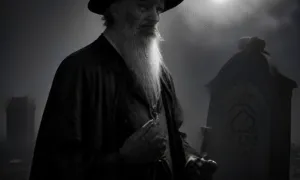
Atmosphere of the place
This atmospheric visualisation of the place and period was generated by artificial intelligence. It is not real footage of the location.
Tips from visitors
No tips yet. Be the first!
Log in and add your tip.
Sources and literature
Photos: Ladislav Faigl / CC BY-SA 3.0 — Wikimedia Commons. The author and licence also appear when you hover over the image.
Faktickým podkladem tohoto textu byl článek na Wikipedii, jehož autory jsou přispěvatelé Wikipedie. Článek je dostupný pod licencí CC BY-SA 4.0.
Location on the map

Příběhy a pověsti
Legendy, pověsti a příběhy spjaté s touto památkou
Fotografie návštěvníků
Zatím žádné fotografie. Buďte první, kdo přidá fotografii z návštěvy!
Log in a přidejte svou fotografii nebo hodnoťte.
Za ověřenou návštěvu v aplikaci získáte víc bodů — poznáme podle GPS, že jste na místě.
Reviews and comments