






barokní most v Náměšti nad Oslavou Bridge
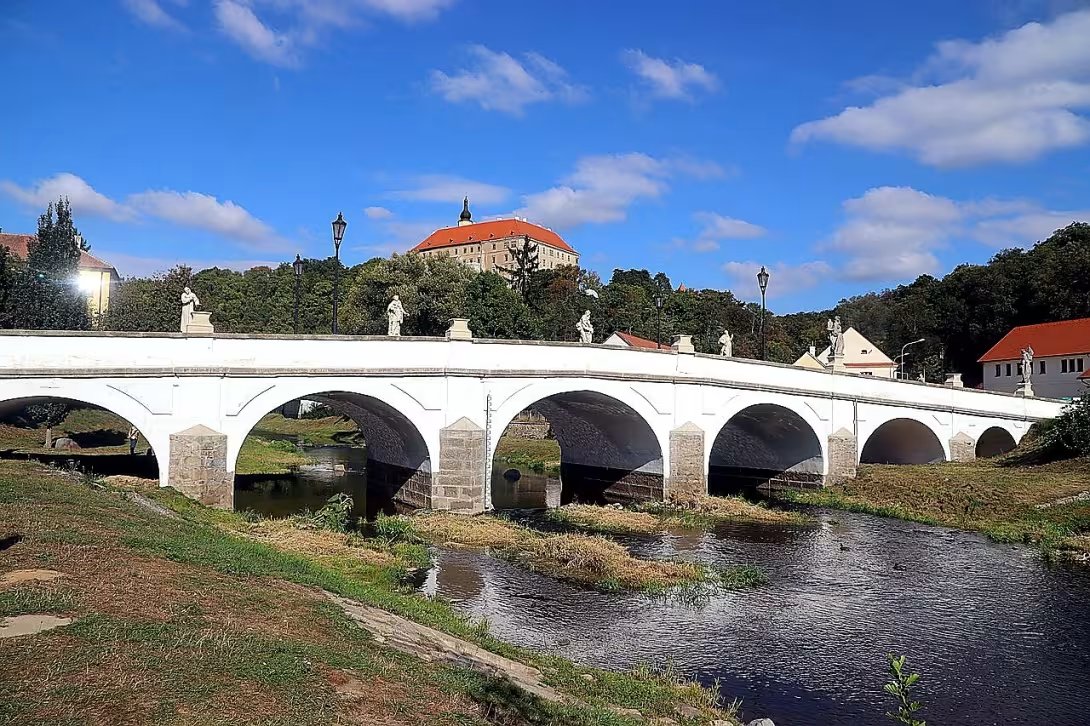
The Baroque bridge across the Festival River in Náměšť nad Oslavou was created by Václav Adrian from Enckenvoirt, owner of the castle of the town. The construction was only started after 1733, when the older owner of the estate Jan Filip Werdenberk died, and the new owner thus gained space for his construction projects. The decoration of the bridge came into the care of other owners - Marie Františka and Hanuš Leopold of Kufštejn, who decided to plant a bridge of twenty statues of saints and angels created between 1737 and 1744.
The bridge is an example of the skills of baroque construction. It has a straight, unbroken plan and extends over a length of 62 metres at a width of 8 metres. The bridge is slightly looped and reaches the highest height of 6.2 meters. The construction is supported by three triangular pillars two meters wide, connected by elliptic arches. The largest arch crosses a distance of 10 meters and reaches a height of 5 meters. Twenty statues were carved out of mussel limestone and formed a harmonious decoration of the railing.
The centuries of existence of the bridge were not peaceful for construction. In 1812 he was affected by the July flood; the repair was carried out by the owner of the then estate Henry Wilhelm III. Haugwitz. The iceberg was another threat. In modern history, the bridge passed through several reconstructions - in 1907 under the supervision of the Hořické sculptures school and in 1932 under the guidance of sculptor Josef Axmann of Brno. During World War II, the statues were hidden; On May 9, 1945, the bridge was demolished and the Soviet army entered the city.
The largest recovery came in the late 20th century. In 1984, there was a restaurant where the original statues were moved to a castle depository called Lutheran and replaced by copies. Further reconstruction followed in 1989 and continued until 1992. Due to traffic changes - a new bridge was built in 1986 and all road transport was seduced on it - the old Baroque bridge could be closed for normal operation.
Since 2019, the bridge has been struggling with the emergency condition caused by the reinforced concrete plate, which was previously laid over stone arches, but gradually destroyed them by the weather. Corrections launched in September 2020 revealed that the plate would need to be dismantled. In the depository, sculptures were taken from the bridge where experts assessed them as less damaged than expected. The reconstruction of the base plate was completed in April 2021 and the bridge body was repaired at the end of 2021. In 2024 the repair of wet and falling plaster was completed.
The bridge also became the target of the filmmakers - Emperor and Tambor appeared in the movies, Heritage, Come and get me, here is a haunted and in the "Guardian of Soulders." Today, it is a place that awaits a visitor by combining baroque elegance, rich sculptures and a long story of ongoing care for his position.
Then and now
Drag the slider to compare how the landmark may have looked when it was built with the view today.
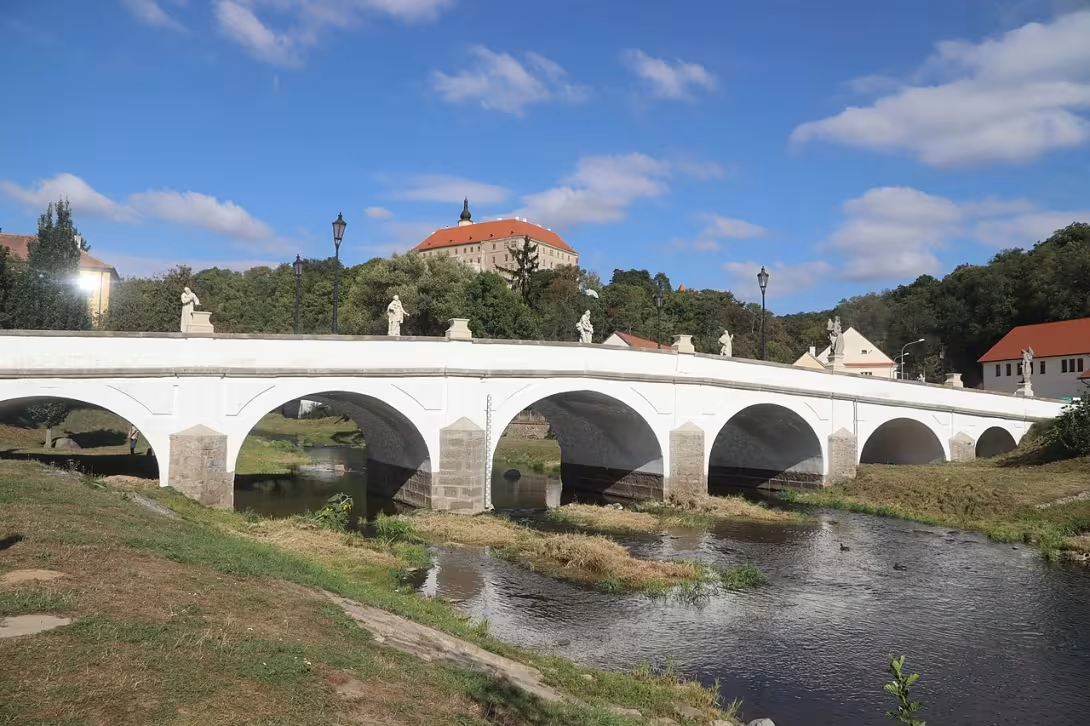

The historical appearance on the left is an AI-generated visualisation and serves as inspiration only.
Historical milestones
- 1737
- Opening of the bridge construction in place of older, flood-torn bridge.
- 1744
- Completion of sculpture decoration of the bridge with 20 Baroque statues.
- 1812
- First major bridge repair after flood damage.
- 1984
- Restored statues and replaced with copies on the bridge, original statues stored in the castle.
- 2020-2021
- Opening and completion of reconstruction of the bridge and statues.
Architectural development
The bridge is an arched road bridge with a straight floor plan, 62 metres long and 8 metres wide. The basic structure is made of stone with triangular pillars connected by elliptical arches. The highest arc has a range of 10 meters and a height of 5 meters. The original statues were replaced by copies in 1984, the original statues are stored in a castle in Lutheranka. In 2020, the reinforced concrete plate was removed from the previous reconstruction, which damaged the original construction.
Historical events
- 1737
- Opening of the bridge construction by Count Václav Adrian of Enckenvoirt.
- 1744
- Finishing the sculpture decoration of the bridge with twenty statues of saints and angels.
- 1945
- The bridge was demolished and the Soviet army entered the city after it.
- 2019-2021
- Commencing extensive reconstruction of the bridge and its statues.
Owners
- 1733-1744
- 1744-1812
- from 1812
Points of interest
- The bridge was built on the order of Václav Adrian of Enckenvoirt after 1733 when the previous owner Jan Filip Werdenberk died.
- The decoration of the bridge, consisting of twenty statues of saints and angels made of mussel limestone, was made between 1737 and 1744.
- During World War II, the statues were hidden and the bridge was demolished on May 9, 1945 when the Soviet army entered the city.
- In 1984, the original statues were moved to the castle depository and replaced by copies.
- The bridge was damaged in 2019 by a reinforced concrete plate which gradually destroyed stone arches.
Guide
This guide is narrated by a synthetic voice generated by artificial intelligence.
Show guide text
This text was created by artificial intelligence and has not been editorially reviewed. It may contain inaccuracies.
Welcome to the Town of Celebration. Right now, you're facing one of the most important and beautiful symbols in this city. In front of your eyes is a baroque bridge that overlaps the River Celebra and acts as a living link between history and the present. If you stop now and just let yourself look for a while, you might feel the strange atmosphere that this space radiates. It is a combination of a calm flow of water, a fortress of stone building and incredible work of art, which is reflected in every detail. This bridge is not just an ordinary passage across the river, it is a real work of art that deserves your full attention.
Now let's look deeper into the past together and understand how this unique whole came into being. This whole building has its beginning in a period when the changing fates of noble generations have formed into what we now know. After the death of the previous owner, Jan Filip Werdenberk, Count Václav Adrian of Enckenvoirt entered the scene. He was the man who had the vision and the power to create something special in this place. After 1733 he decided to build a new, much more dignified and durable structure in the place of the older bridge, which was torn down by devastating floods at that time. Work on this ambitious project started in 1737 and lasted several years. The whole process culminated in 1744, when the most important part was completed - a rich sculpture decoration that gave the bridge its unmistakable character.
Now pay attention to what you see right in front of you. If you look at the very structure of the bridge and its rich decorating, you immediately understand why this place is called the small Charles Bridge. This nickname is not random; Refers to its sculpture decoration, which resembles a more famous Prague bridge, but on a much more familiar and delicate scale. Notice the characters that line up along the bridge. You see a total of twenty statues representing saints and angels. These figures are not carved from any stone. If you approach and try to perceive their texture, you realize that they are made of clams. This material has its specific beauty and allows sculptors to work with fine shapes, even if it is also exposed to constant influences of nature. Every statue, every angel profile, and every holy figure here form a harmonious whole, which in baroque style seeks to move, emotion and spiritual ascension.
But to understand what this bridge looks like today, we must realise that its history was not only about creativity, but also about fighting natural forces. This bridge had to face many trials. The River Celebration, which flows beneath it, has shown its strength many times. Numerous floods, devastating icebergs that pushed against the pillars in the winter months, and even events associated with wars, all these moments left a mark in the history of this monument. Yet the bridge has always managed to recover from these crises through repeated reconstruction.
In this context, it is important to mention the key personalities behind this success. While Count Václav Adrian of Enckenvoirt was the one who initiated and funded the whole building, we must thank the very beauty of the statues to the master, named Josef Winterhalder starší. It was his sculptor hand that breathed life into the limestone characters and created the decoration that fascinates us today. It's a fascinating combination of political power and artistic talent that worked closely together in the middle of the century.
Now, however, I would like to invite you to think about one interesting thing, which carries a hint of mystery and deep respect for art. You might be thinking that the statues you see are the original ones from the eighth century. And yet, it's important to know that it's not exactly. During World War II, the situation in the country was so tense and dangerous that it had to be about protecting these rare works. The statues were hidden in secret at the time so as not to be harmed by war or by an unwilling hand. This protection was crucial to their survival. Later, in 1984, there was an important step in restoration. In order to keep the original, fragile sculptures of mussel limestone in the best possible condition for future generations, they were placed in a safe place in the castle. Their loyal copies were then placed on the bridge itself. This ensures that the bridge continues to act in its original impression, while the originals are protected in the museum environment.
In recent years, we have seen another great transformation. Between 2020 and 2021, a major reconstruction took place which included both the structure of the bridge itself and its sculpture decoration. This work was necessary so that this Baroque gem could continue to be presented safely and beautifully to the world. Thanks to this modern care, the bridge is today in such an excellent state that we could only see it in the best times of its history.
You are now standing before a monument that is a living witness for centuries. It is a place where art, nature and human determination meet to overcome obstacles. When you continue your walk, try to look at the bridge again, perhaps from another angle, and perceive the continuity of time. Every stone and every statue here has a story waiting to be discovered. I wish you the next steps in Náměště nad Záslavou as pleased as this view of the Baroque bridge. Thank you for your attention and I wish you a wonderful continuation in the tour of our city.
Tips for visitors
{'Nazen': 'Best time to visit', 'text': 'Best time to visit a bridge is in spring or autumn when the weather is pleasant and sunlight creates beautiful shadows on the statues of saints. It is recommended that early morning or late afternoon, when there are fewer people on the bridge and you can check out the detailed carving work in peace. The place is often visited in the summer, so avoid the main tourism at noon.'}
{'nazen': 'Parking and transport', 'text': 'Bridge is located in the centre of Náměště nad Záslavou, so parking is possible in nearby parking lots in the village. The location is also accessible by public transport; the current connection can be found in the traffic search engine. It is recommended to come on foot because it is only a few minutes walk from the parking lot to the bridge.'}
{'nazen': 'What to take with you', 'text': 'For a tour of the bridge, take comfortable shoes, because the way through the stone stairs and the bridge can be slippery. It is also convenient to take a map or mobile navigation to make it easy to navigate around. If you want to take quality photos, bring a close-up lens that stands out for detailed carving on statues.'}
{'nazen': 'Photography - best places and light', 'text': 'Best places for photography are the edges of a bridge where you can see a general view of statues of saints and angels. The sunlight falling from left or right on the statues creates interesting shadows and emphasizes detailed work. It is recommended to photograph early in the morning or in the evening when light is softer and more pleasant for photography.'}
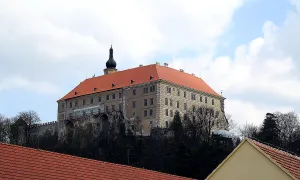
{'nazen': 'What to visit in the surroundings (within 30 minutes)', 'text': 'In the vicinity of the bridge is worth visiting the Square Castle, located in the village. Here you will find a Baroque castle with rich historical interiors, where the original statues are stored from the bridge. Another interesting thing is the Church of St. Jacob the Greater, Gothic-Renaissance building from the 15th century with later modifications, which also stands in the centre of the village.'}
{'Nazen': 'Tips for families with children', 'text': 'Children on the bridge can see statues of saints and angels that look like living figures. You can explain to them their importance and their reputation. In the surroundings it is also possible to visit the Square Castle, where children will appreciate the tour of historical interiors and the possibility of walking around the castle park. It is also recommended to visit the church where children can observe Gothic architecture and ancient paintings.'}
Frequently asked questions
Is barokní most v Náměšti nad Oslavou open to the public?
Yes, barokní most v Náměšti nad Oslavou is open to the public. However, the possibility of inspection is limited to certain hours of the day.
How do I get to the place by car / public transport?
The nearest transport connection is the bus station in Náměště nad Záslavou. Here you can switch to local lines or continue to the surrounding cities.
How much is the entrance fee and is it paid on the spot?
Payment is made directly at the bridge.
Is the tour suitable for children and seniors?
Yes, a tour of the Baroque Bridge in Náměště nad Záslavou is also suitable for families with children. However, the bridge has steep steps, so it is important to pay attention when walking.
How long does the tour take?
The tour of the Baroque Bridge in Náměště nad Záslavou takes approximately 30 minutes. However, it is possible that visitors decide to spend more time in the area.
What are the opening times and booking is required?
The Baroque bridge in Náměště nad Záslavou is open from 9: 00 to 17: 00. Reservation is not required, but we recommend prior verification of opening times before visiting.
What's interesting in the immediate vicinity?
In the immediate vicinity of the Baroque bridge there is a historical centre The square above Záslavou, where you can visit other monuments such as St. Nicholas church or castle.
For kids
Imagine going back 292 years and finding a little town called Náměšť nad Oslavou. There's a bridge over the Festival River that has a really amazing history.
It was like a game where you're a hero who goes on an adventure. And this place is exactly where you want to go. Because there was this baroque bridge here in 1734 with an arc beam and sculpture decoration.
Businesses nearby
Do you run a restaurant, accommodation, shop, museum, rental, wellness or other visitor service near this monument? Show yourself directly to the people heading to it — this is how they will see you in the app and on the web:
Nearby
{'memories': [{\ 'nazen': 'Namestyles', 'distance': 'in the village', 'description': 'Baroque castle with historical interiors': 'Gothic-Renaissance church from the 15th century with later modifications'}, 'priroda': [{'nature': 'national nature reserve of Red Mountain', 'distance': 'about 10 km', 'description': 'protected area with a rich flora and fauna at the top of its name]}}}}}
Accommodation nearby
Themed route
Thematic cruise route Náměšť nad Oslavou
1. Baroque bridge in Náměště nad Celebra * Type: * historical building, symbol of the village. It is worth visiting for its artistic sculptures and technical solutions from the 18th century which reflect the Baroque artistic spirit. It is also accessible from both sides of the Festival River.
2. Square Castle * Type: * Baroque residence, cultural monument. In its interiors are exhibited original statues from the bridge which were stored here after its demise. A tour of the castle halls and halls will bring the history of the place and the artistic value of the region closer.
3. Church of St. Jacob the Greater * Type: * Gothic-Renaissance sacral building. Its interior decoration and later modifications from the 17th century form a contrast to the surrounding Baroque monuments. In the church there is also historical equipment that complements the atmosphere of the place.
4. National nature reserve Red Mountain (approx. 10 km) * Type: * nature reserve with rich flora and fauna. After visiting the sights in the centre of the village is ideal rest in nature. Hiking tours offer views of the surrounding landscape and the possibility of observing protected species of plants and animals.
Seasonal recommendations
Spring During this period, the bridge in Náměště nad Záslavá is becoming a magical place thanks to the blooming nature. The blooming oak trees and maple trees create a green crown over the bridge, while the sun's rays reflect on its silver arcades. In the morning, visitors meet here with a calm atmosphere, when the city has not yet awakened. It is recommended to come before noon when there are even fewer people. Suitable clothing includes light raincoats and shoes on different terrain, because even in spring days can be wet. The best time to visit is on the eve of spring holidays, when nature is in full glory.
Summer The main summer season is a bridge full of life and color, but also crowds. The sunny days bring warmth, which refreshes the cold waters of the Festival under the bridge. In the morning is the best time to visit to avoid heat and a large number of tourists. It is recommended to wear light, airy clothes, but also sun protection. Suitable shoes should be comfortable because they often walk on wet stones. During the afternoon sunny hours, it's best to take a break at the local swimming pool.
Autumn Autumn brings a quiet and romantic atmosphere to the city. Leaves begin to roll and create golden and red shadows over the bridge that highlight its Baroque architecture. In the morning is the best time to visit when the air is colder and visitors are less numerous. It is recommended to wear warmer clothes, but also light raincoats. Suitable footwear should be moisture resistant. In this period it is ideal to visit a monument on the eve of autumn holidays, when nature is full of beauty.
Winter In winter, the bridge becomes a quiet and mysterious place that resembles a snow fairy tale. The white coating on the bridge and surrounding creates a breathtaking contrast to Baroque architecture. The best time to visit is in the morning when snow is still clean and the atmosphere is quiet. It is recommended to wear warm clothes, including top coats and shoes on snow. Due to shorter opening times, it is advisable to plan a memorial for a weekend or holiday. In winter it is ideal to visit the bridge in advent time when the city is decorated with light decorations.
Visualizations and artistic views


The visualisations are generated by artificial intelligence and serve as inspiration.
Photos from the area
Real photos taken near the monument

Zdroj a licence jsou uvedeny u každého snímku.
Atmosphere of the place
This atmospheric visualisation of the place and period was generated by artificial intelligence. It is not real footage of the location.
Tips from visitors
No tips yet. Be the first!
Log in and add your tip.
Sources and literature
Fotografie: Jiří Sedláček / CC BY-SA 4.0 — Wikimedia Commons. The author and licence also appear when you hover over the image.
Faktickým podkladem tohoto textu byl článek na Wikipedii, jehož autory jsou přispěvatelé Wikipedie. Článek je dostupný pod licencí CC BY-SA 4.0.
Location on the map

Příběhy a pověsti
Legendy, pověsti a příběhy spjaté s touto památkou
Fotografie návštěvníků
Zatím žádné fotografie. Buďte první, kdo přidá fotografii z návštěvy!
Přihlaste se a přidejte svou fotografii nebo hodnoťte.
Za ověřenou návštěvu v aplikaci získáte víc bodů — poznáme podle GPS, že jste na místě.
Reviews and comments