






kostel svatého Jana Křtitele Church
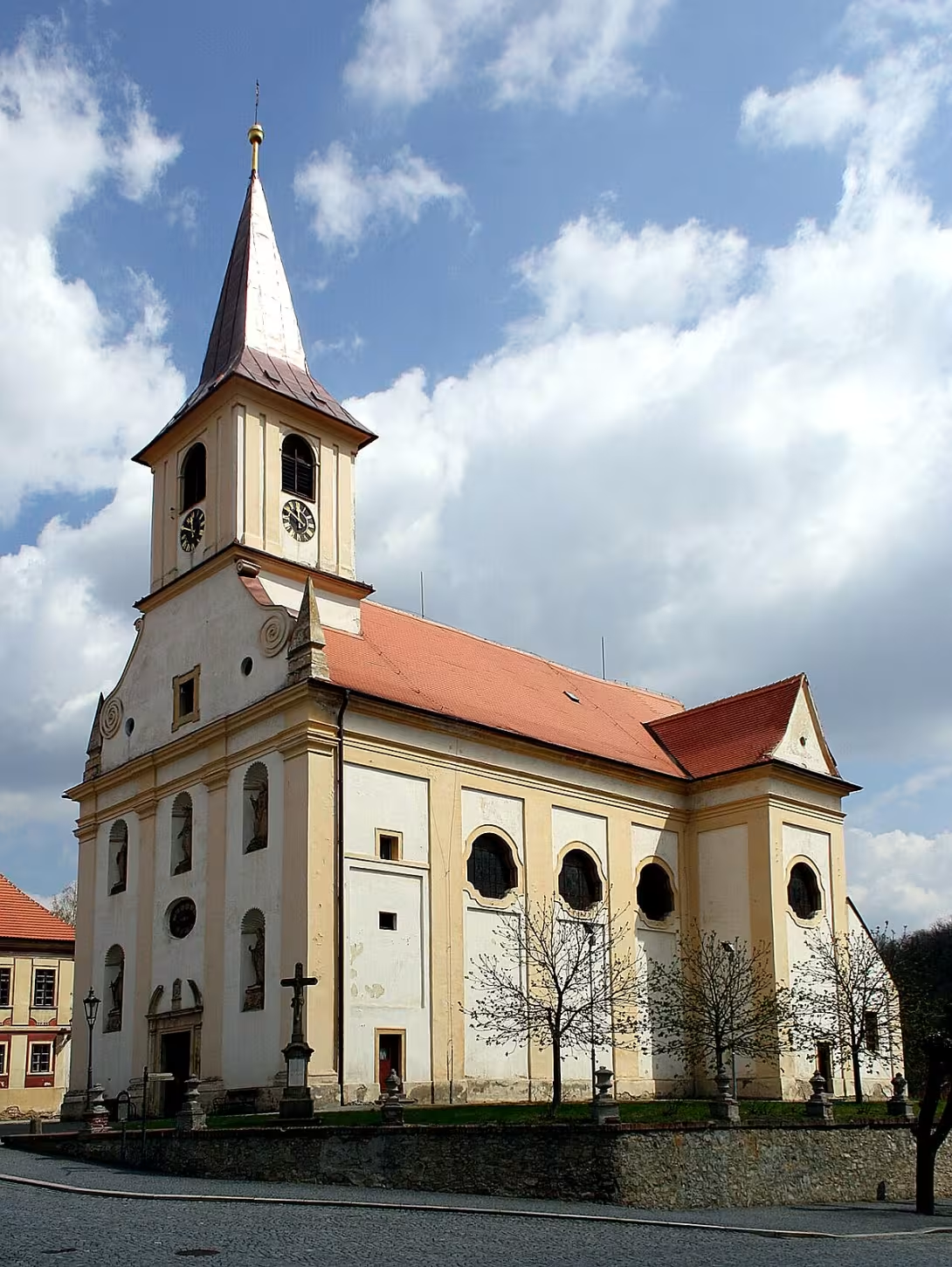
The Church of Saint John the Baptist in Náměšť nad Oslavou is a notable early Baroque monument with deep historical roots. Situated at the northwest edge of Masaryk Square, this church serves as both an architectural treasure and a cultural heritage site reflecting significant periods in Czech history. Originally built on the site of a small Romanesque church mentioned in 1345, it was destroyed by fire in 1629. The current structure, commissioned by Jan Baptista z Werdenbergu, was completed and consecrated by 1641. Its importance is further highlighted by its inclusion as part of Náměšť nad Oslavou's cultural heritage zone.
The origins of the Church of Saint John the Baptist are linked to the turbulent early 17th-century Bohemia, a time marked by political and religious upheaval during the Thirty Years' War. The original Romanesque church was destroyed in a major fire that devastated much of Náměšť nad Oslavou in 1629. In response, Jan Baptista z Werdenbergu commissioned the construction of a new Baroque church on the same site in 1639. This decision aimed not only at rebuilding but also served as part of the Counter-Reformation efforts to reaffirm Catholic dominance in the region. The church was consecrated by 1641, marking its readiness for religious services.
Architecturally, the Church of Saint John the Baptist exemplifies early Baroque design and craftsmanship. It features a single nave with a transverse nave, polygonal closure, and a four-sided tower. Significant renovations and expansions were undertaken in 1744, including the addition of two oratories, a pulpit, and decorative sculptures on its façade. The choir was rebuilt using brickwork during this period. Further artistic enhancements include Baroque sculptures from Adolf Loose senior's workshop, a main altar made of artificial marble, and angel sculptures by Josef Winterhalder. In 1910, five saintly statues crafted by Adolf Loos were installed in the church's façade.
Throughout its history, the Church of Saint John the Baptist has undergone various modifications to maintain its structural integrity and artistic heritage. The early 20th century saw the installation of five sculptures by Adolf Loos, while later restorations focused on preserving its exterior and interior elements. In the late 20th century, two additional bells were acquired for the tower, enhancing its auditory presence in Náměšť nad Oslavou.
Today, the Church of Saint John the Baptist remains a vital part of the cultural heritage zone in Náměšť nad Oslavou. It is protected as a cultural monument and continues to be an integral component of the town's historical narrative. Visitors are drawn not only by its architectural beauty but also by its rich artistic elements, including sculptures and altars that reflect centuries of religious devotion and artistic evolution.
The Church of Saint John the Baptist stands as a beacon of history and artistry in Náměšť nad Oslavou. Its enduring presence invites visitors to explore its storied past and appreciate its architectural splendor. Whether you are an admirer of Baroque architecture or interested in historical narratives, this church offers a unique glimpse into the cultural heritage of the region. A visit here promises not only an appreciation for its artistic details but also an understanding of its significant role in Czech history.
Then and now
Drag the slider to compare how the landmark may have looked when it was built with the view today.
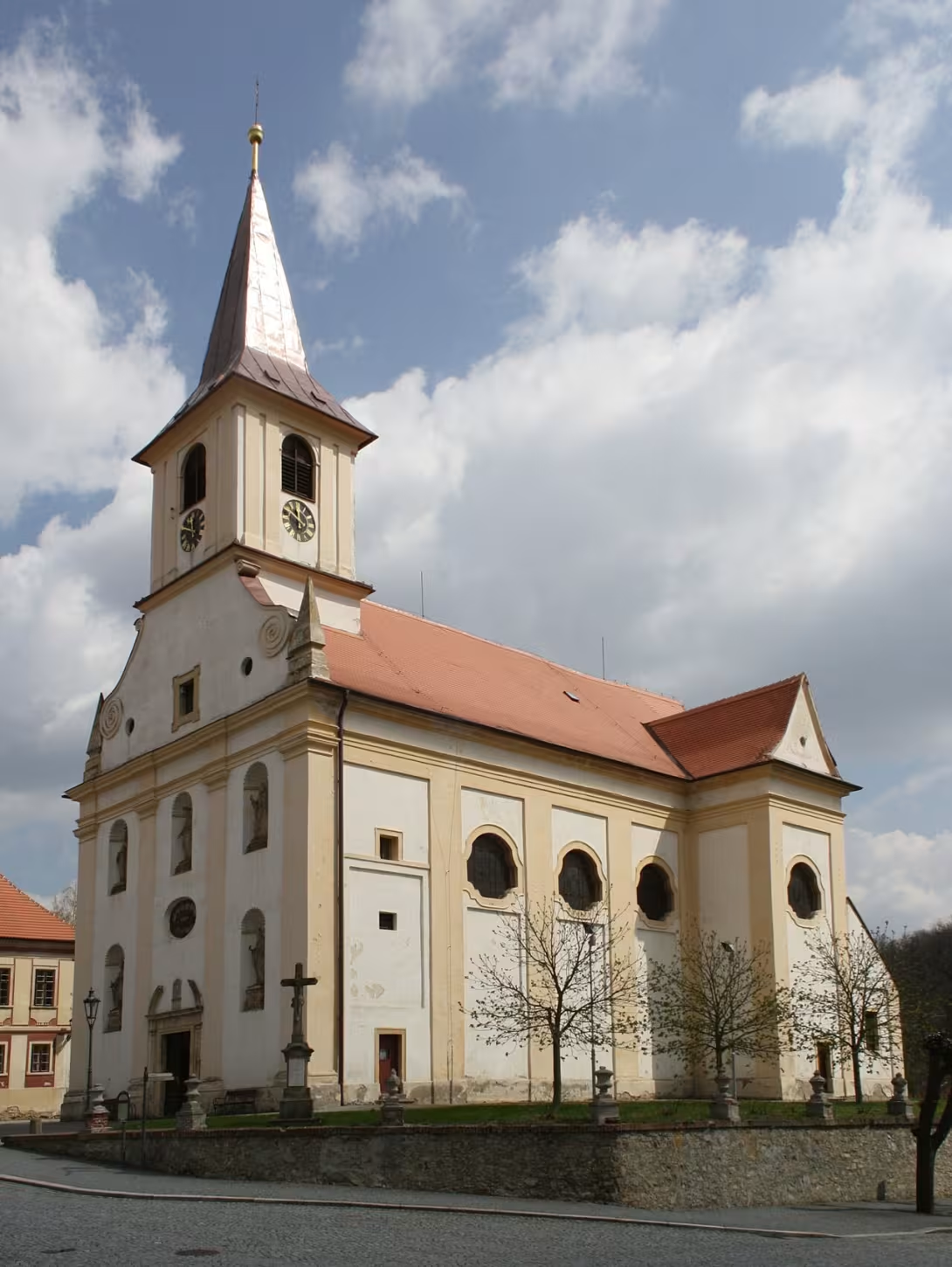
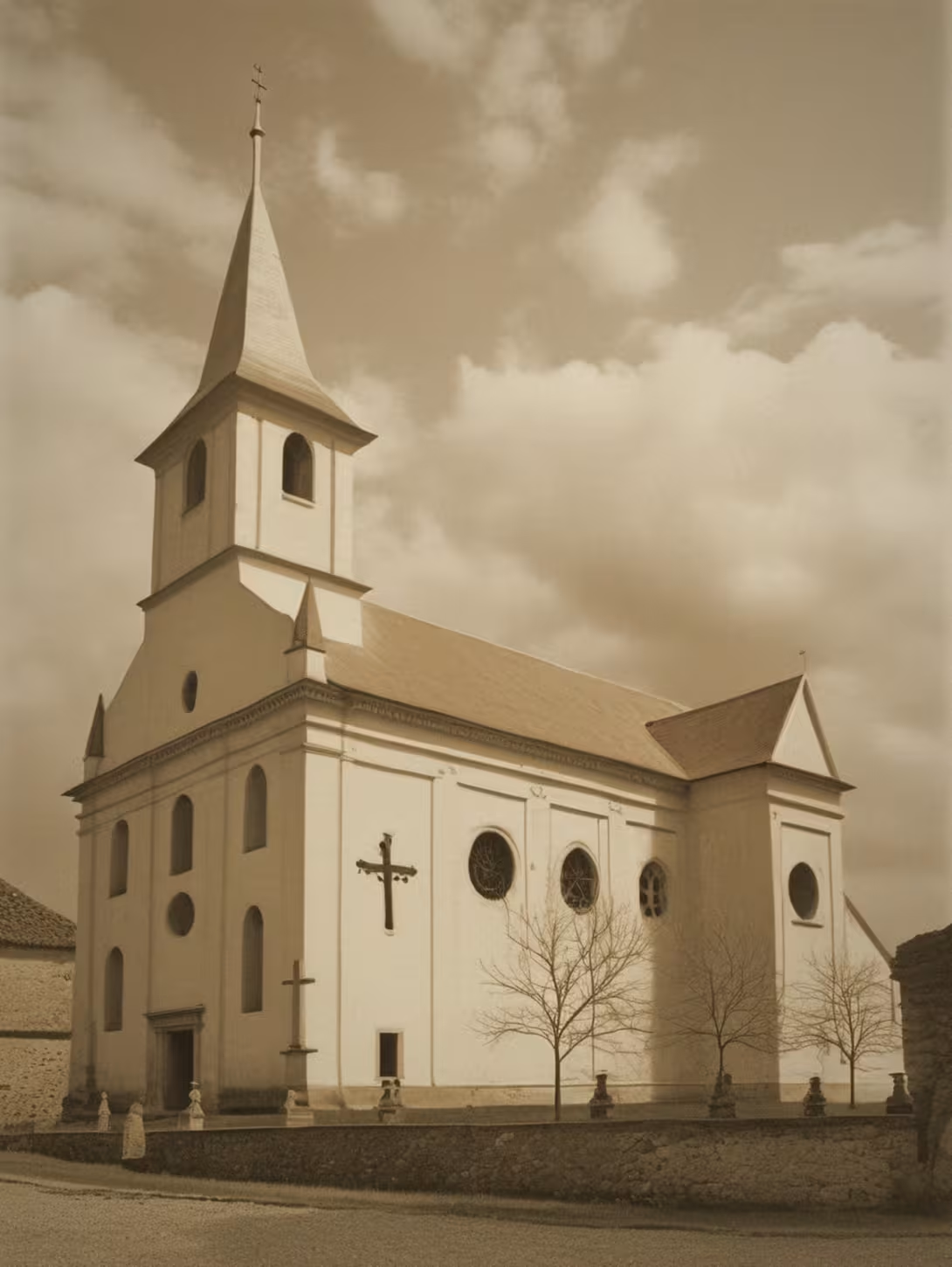
The historical appearance on the left is an AI-generated visualisation and serves as inspiration only.
Historical milestones
- 1345
- Mention of a small Romanesque church.
- 1629
- The original church was destroyed by fire.
- 1639
- Construction of the new Baroque church commissioned.
- 1641
- Consecration of the Church of Saint John the Baptist.
- 1744
- Significant renovations and expansions undertaken.
Architectural development
The Church of Saint John the Baptist was initially constructed in 1639 and consecrated by 1641. It underwent significant renovations and expansions in 1744, including the addition of two oratories, a pulpit, and decorative sculptures on its façade. The choir was rebuilt with brickwork during this period. Further modifications occurred throughout the centuries, such as the installation of five saintly statues by Adolf Loos in 1910 and various restorations to maintain its structural integrity.
Historical events
- 1629
- The original Romanesque church was destroyed in a major fire that also devastated much of the town.
- 1639
- Jan Baptista z Werdenbergu commissioned the construction of the new Baroque church on the site of the former structure.
Points of interest
- The Church of Saint John the Baptist was built on a site with Romanesque origins dating back to 1345, showcasing layers of architectural evolution from medieval to Baroque styles.
- Jan Baptista z Werdenbergu played a pivotal role in commissioning the church's construction as part of Counter-Reformation efforts, aiming to re-establish Catholic influence during the religious upheavals of the Thirty Years' War.
- The church features sculptures by Adolf Loose senior and Josef Winterhalder, highlighting an artistic collaboration that spans generations, with contributions from both father and son enhancing its Baroque aesthetic.
- In 1910, five saintly statues crafted by renowned architect Adolf Loos were installed in the church's façade, marking a rare intersection of architecture and religious artistry during the early 20th century.
- The acquisition of two additional bells for the tower in the late 20th century not only enhanced its auditory presence but also symbolized ongoing community efforts to preserve and celebrate this historical monument.
Guide
This guide is narrated by a synthetic voice generated by artificial intelligence.
Show guide text
This text was created by artificial intelligence and has not been editorially reviewed. It may contain inaccuracies.
Welcome to Náměšť nad Oslavou, where you find one of the most significant early Baroque monuments in the Czech Republic - the Church of St. John the Baptist. You stand before an exquisite building that rises on the site of a former Romanesque chapel from 1345. However, it was unable to withstand a fire that destroyed it in 1629.
Let's move forward in time and see how the church grew again. In 1639, Jan Baptista von Werdenberg, an important nobleman and patron, ordered the construction of a new Baroque church. And in 1641, the Church of St. John the Baptist was consecrated.
Notice that the church has a simple nave with a transept, a polygonal conclusion, and a unique floor plan. Take a look at the façade and note its distinctive architectural value.
Jan Baptista von Werdenberg played a key role in building the church, which was part of the Counter-Reformation. He was one of those who sought to preserve Catholic faith during a time when the Reformation spread across Europe.
Imagine that you are in Náměšť nad Oslavou in 1641 and are part of a major event - the consecration of the new church. The atmosphere is full of anticipation and hope.
Today, you can explore the Church of St. John the Baptist and discover its secrets. Take a look at its architecture, which is full of details and mysteries. Churches like this are excellent examples of how architecture evolved from the Middle Ages to Baroque.
So take your time and visit the Church of St. John the Baptist. The square in front of the church is filled with history and secrets.
Tips for visitors
The best time to visit the Church of Saint John the Baptist is during late spring or early fall when the weather is pleasant, allowing for a comfortable exploration of both the church and its surroundings. These seasons offer mild temperatures that are ideal for walking around Masaryk Square and appreciating the cultural heritage zone without the crowds typical of peak tourist seasons.
The church is accessible by both car and public transport; however, it's recommended to check current routes and schedules online for convenience.
When planning your visit, bring comfortable walking shoes as you'll likely explore beyond just the church itself. A camera is also advisable, especially if you're interested in capturing the early Baroque architecture of the church or the scenic views around Masaryk Square. Don't forget to bring a hat and sunscreen during sunny days for added comfort.
For photography enthusiasts, the best light for capturing the Church of Saint John the Baptist is during the golden hours—shortly after sunrise or before sunset. These times offer soft lighting that accentuates the church's architectural details. Additionally, exploring from different angles around Masaryk Square can provide unique perspectives and compositions.
Within a 30-minute drive from Náměšť nad Oslavou, visitors can explore other historical sites that enrich the cultural experience of the region. While specific recommendations are not provided here, the area is known for its rich history and beautiful landscapes, offering plenty of opportunities for further exploration.
Frequently asked questions
Can the monument be visited?
Religious buildings are usually open mainly during services; at other times a visit is normally arranged with the parish or the operator. We have not verified specific times.
Where is the monument?
Location: Náměšť nad Oslavou, Kraj Vysočina. The map on this page shows the exact spot.
Why is the monument protected?
It is listed in the Central List of Cultural Monuments of the Czech Republic as a cultural monument (register no. 1000139241_0001). It is protected as part of a larger listed ensemble.
Businesses nearby
Do you run a restaurant, accommodation, shop, museum, rental, wellness or other visitor service near this monument? Show yourself directly to the people heading to it — this is how they will see you in the app and on the web:
Events nearby
Zdroj akcí: otevřená data měst a obcí ČR (Národní katalog otevřených dat) a kalendář akcí Národního památkového ústavu.
Nearby
Situated on the northwest edge of Masaryk Square in Náměšť nad Oslavou, the church is part of a cultural heritage zone that includes other historical monuments and features within a five-kilometer radius.
Accommodation nearby
Themed route
Náměšť nad Oslavou Church of St. John the Baptist Tour
1. Náměšť nad Oslavou Church of St. John the Baptist - This beautiful Baroque church is the main attraction of the tour and a must-see for its stunning architecture and historical significance.
2. Náměšť nad Oslavou Town Hall - This historic town hall is located just a short walk from the church and offers a glimpse into the town's rich history and cultural heritage.
3. Náměšť nad Oslavou Masaryk Square - This picturesque square is the heart of the town and features several historic buildings, including the church and the town hall, making it a great spot to take in the local atmosphere.
4. Náměšť nad Oslavou Parish House - This charming parish house is located near the church and offers a peaceful retreat from the hustle and bustle of the town square.
5. Náměšť nad Oslavou Cemetery - This historic cemetery is the final resting place of many notable residents of Náměšť nad Oslavou and offers a poignant glimpse into the town's history and culture.
Seasonal recommendations
The atmosphere is calm and quiet, which enables a deeper exploration of the spiritual essence of the church.
Practical Tips: It's best to visit the church in the morning hours to avoid tourist crowds. We recommend wearing warm clothing, as temperatures can drop at night.
Léto: Specific to this season is the heat, which can be quite unpleasant during summer. The lighting is strong, but some parts of the church may be shaded by trees. The atmosphere is lively and full of energy, but also crowded with tourists.
Practical Tips: Visit the church early in the morning to avoid crowds. We recommend bringing coffee or water to avoid long waits.
Podzim: Specific to this season are the colorful hues of autumn leaves, creating beautiful contrasts with the colors of the church. The lighting is brighter than in winter, but some parts of the church may be shaded by trees. The atmosphere is calm and quiet, yet also somewhat melancholic.
Practical Tips: Visit the church on a sunny day's eve to avoid rain. We recommend wearing warm clothing, as temperatures can drop at night.
Zima: Specific to this season are the silence and tranquility that reign in winter. The lighting is weaker than in summer, but some parts of the church may be illuminated by spotlights. The atmosphere is calm and quiet, yet also somewhat melancholic.
Practical Tips: Visit the church on a sunny day's eve to avoid rain. We recommend wearing warm clothing, as temperatures can be low.
Visualizations and artistic views


The visualisations are generated by artificial intelligence and serve as inspiration.
Photos from the area
Real photos taken near the monument

Zdroj a licence jsou uvedeny u každého snímku.
Atmosphere of the place
This atmospheric visualisation of the place and period was generated by artificial intelligence. It is not real footage of the location.
Tips from visitors
No tips yet. Be the first!
Log in and add your tip.
Sources and literature
Photos: Jiří Sedláček - Frettie / CC BY-SA 3.0 — Wikimedia Commons. The author and licence also appear when you hover over the image.
Faktickým podkladem tohoto textu byl článek na Wikipedii, jehož autory jsou přispěvatelé Wikipedie. Článek je dostupný pod licencí CC BY-SA 4.0.
Location on the map
More monuments – Náměšť nad Oslavou
Show all in the municipality
Příběhy a pověsti
Legendy, pověsti a příběhy spjaté s touto památkou

Fotografie návštěvníků
Zatím žádné fotografie. Buďte první, kdo přidá fotografii z návštěvy!
Log in a přidejte svou fotografii nebo hodnoťte.
Za ověřenou návštěvu v aplikaci získáte víc bodů — poznáme podle GPS, že jste na místě.
Reviews and comments