






Battistova cihelna Brick
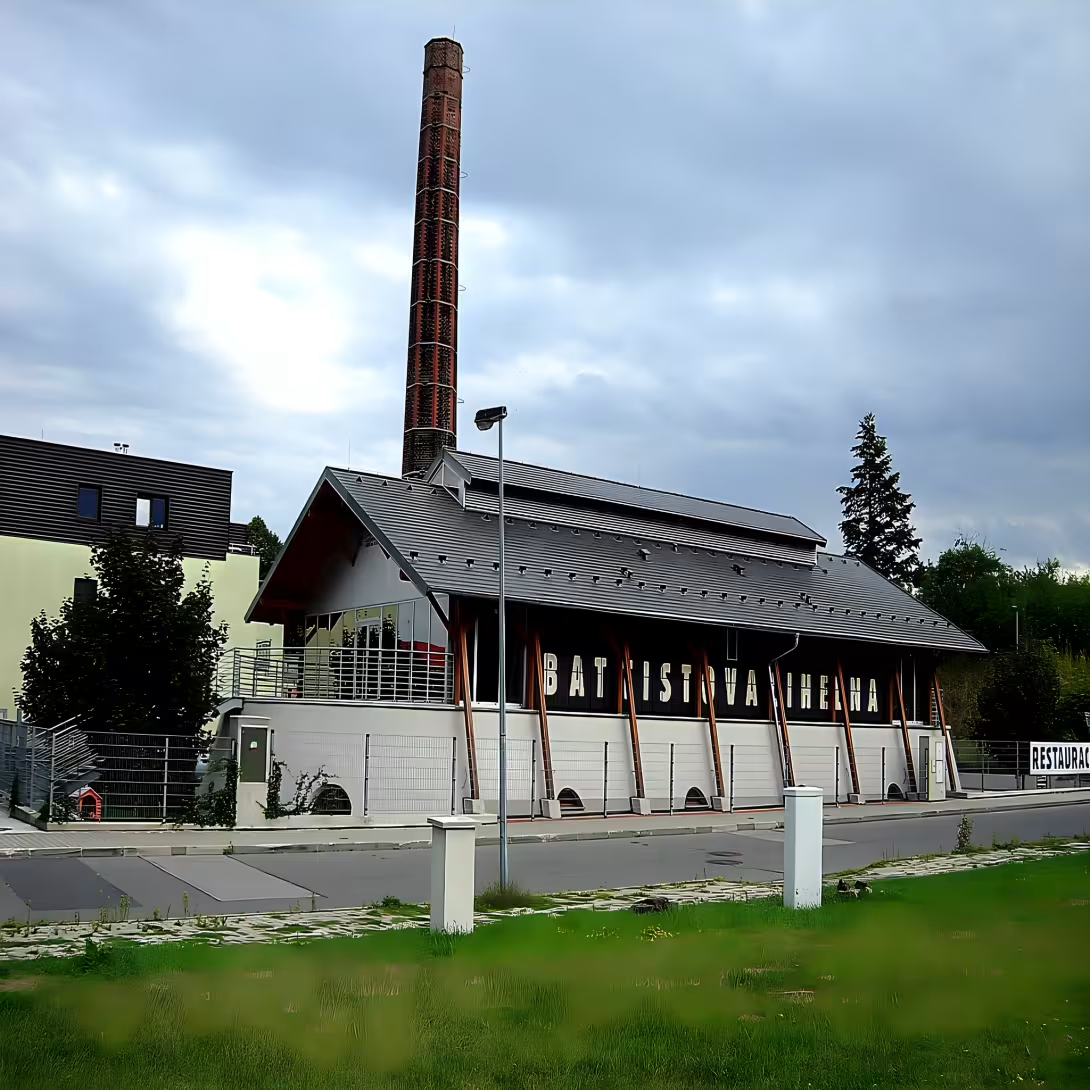
Battistova cihelna is located in the Prague part of Ďáblice, in U Prefy street, about 100 metres south of the Old Ďáblice village monument zone. It has been protected as a cultural monument since 1996 and represents an interesting proof of Czech industrial heritage.
The brick was founded in 1893 by the entrepreneur Josef Battista (born in 1867 in Smiřice), who purchased in Devils the land of an older state. In 1896, he built a residential house for his workers and asked the district authorities for tax exemptions of 24 years, which was a normal support practice for new industrial enterprises. In 1898 he then started the first circular furnace - the key equipment of each brick. He produced wall bricks and vaults marked by his name and soon became a member of the Union for the enhancement of the ceramic industry in Prague.
The brick area was gradually expanding. The central element remained a 12-chamber circular furnace with dimensions of 32 × 12,3 metres with rectangular operating structures located perpendicular to it. Later, there were additional structures, two presses, a wheel mill and a steam engine from Rapapach. The clay was extracted from the quarry clay, southwest of the furnace; its bottom reached the bulging rock and the wall was 80 meters. Since 1912, Battista lived in Karlín.
Industrial traffic gradually fell. During the First World War, the brick was rented to the businessman Kohn, during the Second World War the operation was stopped and no longer renewed. After the war, the builder Jaroslav Řerka rented the premises and produced xyllium tiles and cinder blocks. It was taken over by Prefa after nationalisation in 1948. Subsequently, the scientific workshops of state-owned enterprises - the construction of the project, Pragostva and the Earth buildings - went through it gradually. In the 1950s, the designer Miloslav Wimmer developed a prototype of a fitted house of the type "skeletepanel," which was later applied to the construction in U Prefy Street. Prefa returned in 1959 and remained on the premises until 1993.
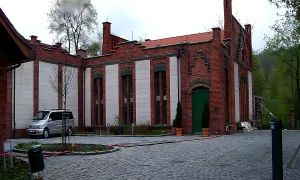
In the 1990s, the buildings were demolished in addition to the circular furnace and chimney, and the area was saved. The brick furnace was subsequently thoroughly repaired between 2005 and 2012 and adapted to the restaurant, thus giving this historic building a new function corresponding to the current need.
Then and now
Drag the slider to compare how the landmark may have looked when it was built with the view today.
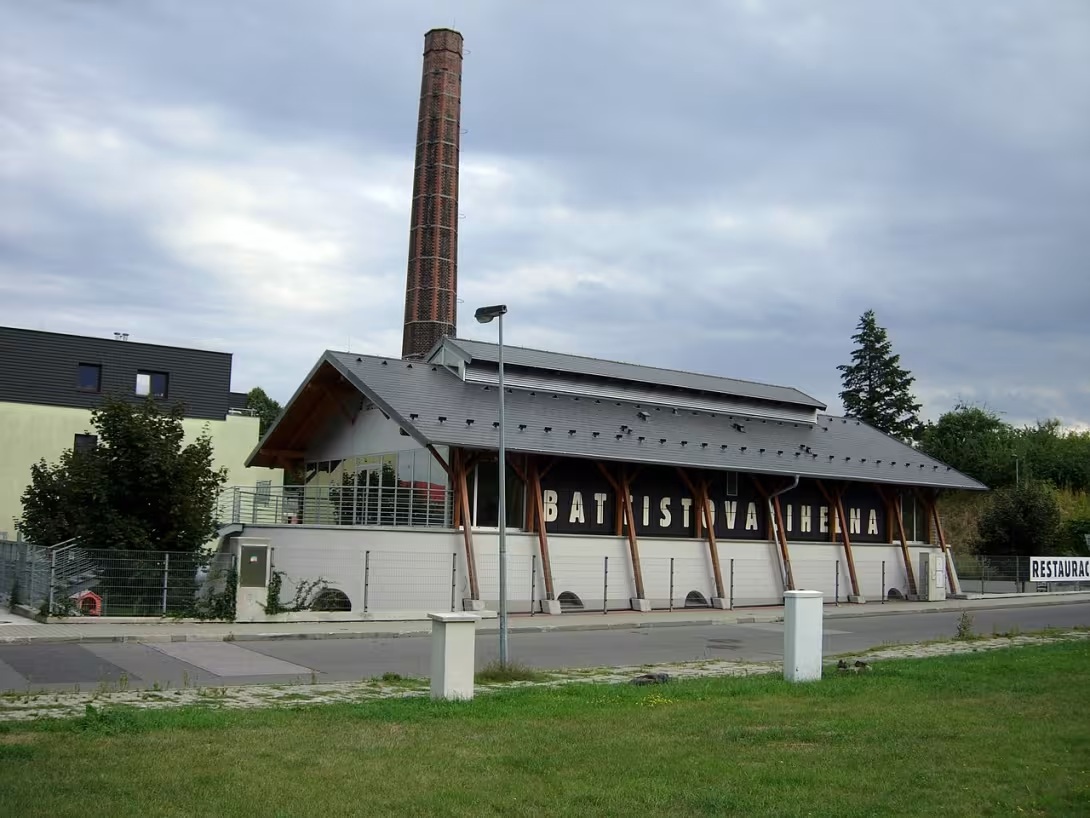

The historical appearance on the left is an AI-generated visualisation and serves as inspiration only.
Historical milestones
- 1898
- Position of the first circular furnace.
- 1996
- The area was declared a cultural monument of the Czech Republic.
Architectural development
The brick was made up of a 12-chamber brick furnace and rectangular operating buildings. During their history, other buildings were built, presses, wheel mill and steam engine were purchased. After the cessation of activity in 1939 there were several changes to the owners and purposes of the complex.
Historical events
- 1996
- The brick area was declared a cultural monument of the Czech Republic.
Points of interest
- Battistova cihelna is located in the Prague part Ďáblice and is protected as a cultural monument since 1996.
- The brick was founded by the entrepreneur Josef Battista in 1893, who built a residence for his workers and applied for tax exemptions of 24 years.
- In 1898 the first circular furnace - the key device of each brick, which was 12-chamber with dimensions of 32 × 12,3 meters, was operational.
- The clay was extracted from the quarry's clay, southwest of the furnace, whose wall was up to 80 meters.
- After saving in the 1990s, the brick furnace was repaired between 2005 and 2012 and adapted to the restaurant.
Guide
This guide is narrated by a synthetic voice generated by artificial intelligence.
Show guide text
This text was created by artificial intelligence and has not been editorially reviewed. It may contain inaccuracies.
Welcome to the Battista brick, one of the most interesting industrial monuments in Prague-Devils. You are standing in front of a circular brick furnace, which is a symbol of Czech industry at the end of the 19th century. Let's move on to the historical context that will lead us to when the brick was founded.
Cihelna was founded in 1893 by businessman Josef Battista, who built the local residential house for his workers and applied for tax exemptions for 24 years. In 1898 the first circular furnace became operational, which became a key element of the brick.
Notice how you see the face of the brick. The entry gate with the title "Battistova cihelna" is a symbol of the history and industry that developed here. Also check the circular furnace, the circular shape of which is characteristic of this brick. Feel the atmosphere of a place that is full of history and memories.
Josef Battista was not only an entrepreneur, but also a man who tried to improve the lives of his workers. His attempt to exempt him is proof that he sought justice and solidarity.
The interesting thing is that Battistova cihelna is located in the Prague part of Ďáblice and is protected as a cultural monument since 1996. Today the brick is adapted and serves as a restaurant where you can taste local specialities and enjoy the atmosphere of history.
Let us now return to the present and invite you to further explore this fascinating monument. We hope that you enjoyed our journey to the past and that our history interests you. Thank you for your attention and we hope to meet again.
Tips for visitors
The best time to visit Battista's brick is in the spring or autumn season when there are calmer visitors and nature around the sights offers beautiful green areas. This time of year also offers ideal conditions for photography when light is less intense than in summer.
You can verify the current connection using an online search engine.
What to take with you: We recommend you bring your protective shoes or sports shoes because the terrain around the brick is partially impenetrable. Also remember the umbrella and plenty of drinking water, especially if you visit the memory during warmer months.
Photography: The best places for photos can be found at the circular brick furnace, which is the dominant element of the complex. Morning or evening light offers the best captured colors and shadows, which can mean a better photographic effect.
What to visit nearby: In the vicinity of Battista's brick house there are several park areas and walking trails that are ideal for exploring after visiting the sights. These green areas offer a quiet space for relaxation and beautiful views of the surrounding countryside.
Tips for families with children: The Battista brick area is also suitable for family visits. Children can enjoy a walk through historic buildings while learning interesting things about the industrial past of the area. Bring toy toys or books that could be fun and educational for children.
Frequently asked questions
Can the monument be visited?
We have not verified whether this monument is accessible. Please ask the owner or operator, or the local municipal office.
Where is the monument?
Location: U Prefy 520/24, Ďáblice, Praha, Hlavní město Praha. The map on this page shows the exact spot.
Why is the monument protected?
It is listed in the Central List of Cultural Monuments of the Czech Republic as a cultural monument (register no. 11261/1-2243).
For kids
Imagine going back to when Praha was still a small town and people lived mostly from agriculture and craft. That's exactly where you're going to be today, the time machine. To the area of Battista brick in Prague 8-Devils.
It was like a village that grew around an industrial site. People lived near a brick and worked for it. The brick shop was an important employer at the time. She made bricks and ceramics for buildings in the city.
Businesses nearby
Do you run a restaurant, accommodation, shop, museum, rental, wellness or other visitor service near this monument? Show yourself directly to the people heading to it — this is how they will see you in the app and on the web:
Events nearby


Zdroj akcí: otevřená data měst a obcí ČR (Národní katalog otevřených dat) a kalendář akcí Národního památkového ústavu.
Nearby
Ambient landscape, natural elements up to 5 km
Accommodation nearby
Trips and activities nearby
Guided tours, tickets and activities nearby from GetYourGuide
Affiliate link: if you buy from the partner, we may receive a commission. The price for you does not change.
Search tours and activities →Themed route
Route: Battistova cihelna and surroundings
1. Battistova cihelna - brick Battistova cihelna is a unique brick that was operated from 1906 to 1972. Her history is linked to the Battista family who founded and operated her. Today, the brick is protected and serves as a museum where visitors can become acquainted with the history of bricks and the production of bricks.
2. Church of St. Martin - Church St. Martin's Church is a Roman Catholic church in Devils. It was built in 1911 and is known for its unique architecture. The church is in place of the older church, which has been standing here since the 14th century.
3. Memorial of the fallen - memorial The monument to the fallen is placed on a village of Devils and reminds the soldiers who fell during the First World War. The monument consists of two stone pillars and on them is a board with inscription.
4. Municipal Office - Building The municipal office in Devils is a building built in 1911. Today it serves as the seat of the municipal office and is a major dominant position.
5. Nav - public space The village of Devils is a historic place where various social events and events take place. It is surrounded by historic buildings and creates a pleasant environment for relaxation and relaxation.
Seasonal recommendations
Spring
Spring is the perfect time to visit Battista's brick, because nature around the object wakes up from winter sleep and green trees and flowers create a pleasant environment. The atmosphere is relaxed and quiet, which is ideal for sightseeing. We recommend visiting a brick in early spring weather, when it is open later and there are not so many tourists.
Summer
In the main summer season Battistova cihelna is a very popular destination for tourists. We recommend that they arrive early to avoid large crowds. The atmosphere is warm and pleasant and visitors can enjoy tours and exhibitions.
Autumn
In the autumn, nature is beautiful and colorful around the brick, creating a pleasant environment for a tour. The atmosphere is slightly cold, but still pleasant. We recommend visiting the brick in autumn weather, when it is open later and there are not so many tourists.
Winter
In winter, Battistova cihelna is open for a shorter time and we recommend visiting it in warm clothes. The atmosphere is calm and peaceful and visitors can see the historical memory without crowds.
Visualizations and artistic views


The visualisations are generated by artificial intelligence and serve as inspiration.
Photos from the area
Real photos taken near the monument


Zdroj a licence jsou uvedeny u každého snímku.
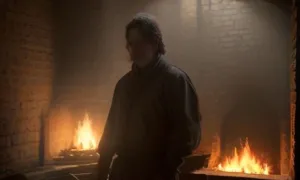
Atmosphere of the place
This atmospheric visualisation of the place and period was generated by artificial intelligence. It is not real footage of the location.
Tips from visitors
No tips yet. Be the first!
Log in and add your tip.
Sources and literature
Photos: Shadster / CC BY-SA 3.0, rozlišení zvýšeno umělou inteligencí — Wikimedia Commons. The author and licence also appear when you hover over the image.
Faktickým podkladem tohoto textu byl článek na Wikipedii, jehož autory jsou přispěvatelé Wikipedie. Článek je dostupný pod licencí CC BY-SA 4.0.
Location on the map
Příběhy a pověsti
Legendy, pověsti a příběhy spjaté s touto památkou
Fotografie návštěvníků
Zatím žádné fotografie. Buďte první, kdo přidá fotografii z návštěvy!
Log in a přidejte svou fotografii nebo hodnoťte.
Za ověřenou návštěvu v aplikaci získáte víc bodů — poznáme podle GPS, že jste na místě.
Reviews and comments