



Boží muka (Dolní Žďár) Wayside shrine
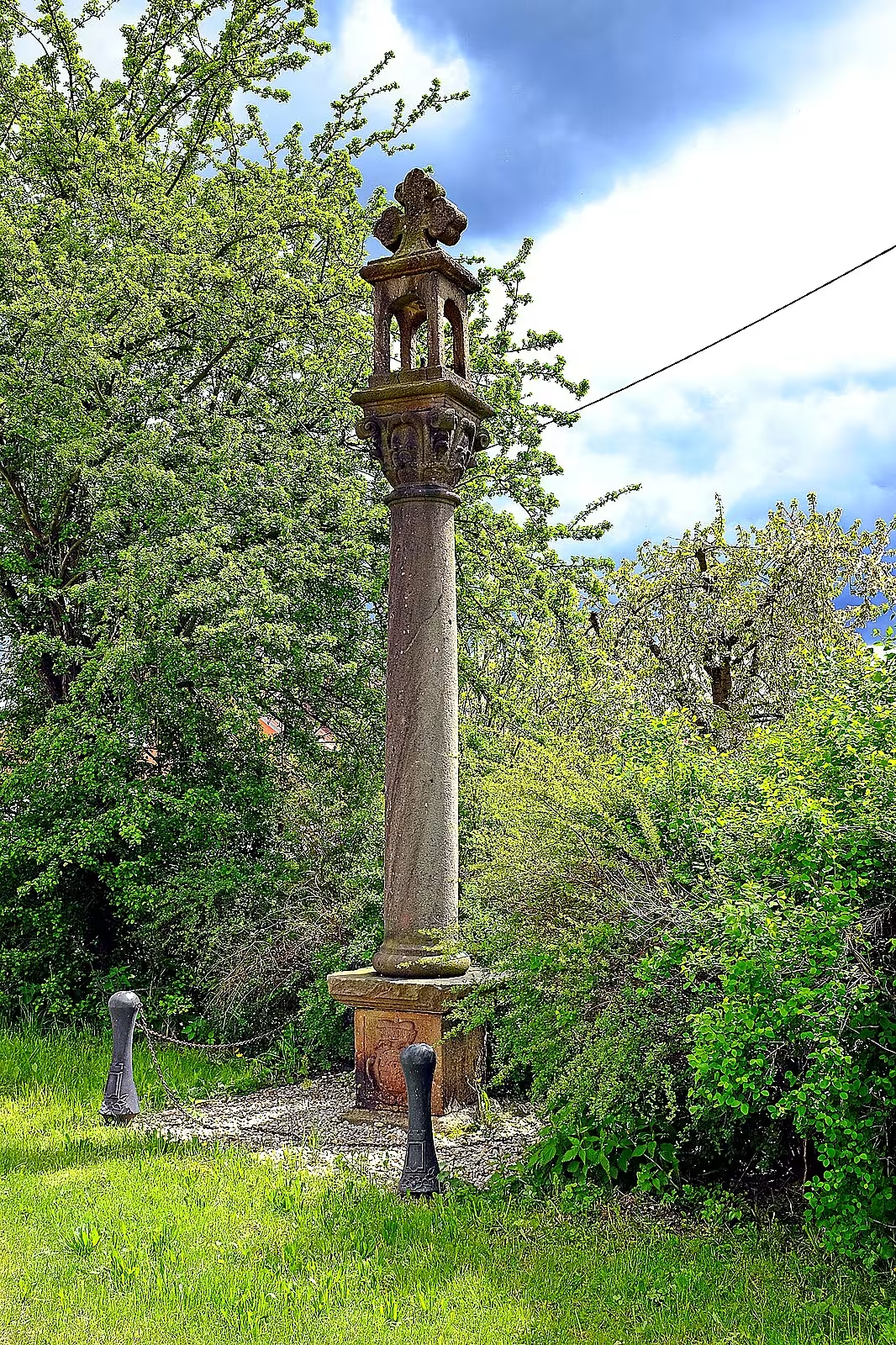
God's torture in Lower Žďár is a baroque monument located on the southern edge of the village in Karlovy Vary district. It was declared a cultural monument of the Czech Republic and is of historical importance as part of a border system which distributed the property between the island estate and the thermal monastery. Its architecture reflects Baroque style using stone as the main material.
The monument was built on July 1, 1658 by Duke Julius Henry Sasko-Launebury on the border of the island estate on the road to the sailing court in Lower Zdar. This was part of the process of stabilising and marking the borders between the various assets, which was common in the mid-17th century, when the reCatholics and the strengthening of aristocratic estates in Central Europe took place. In 1686, his son Julius František continued to plant borders with boundary stones and God's torment, which further strengthened their function as fixed signs of property distribution.
The architecture of God's torture is characteristic of the Baroque era. It stands on a single-stage base and consists of a plinth with a heel, a graduated ledge and a Corinthian pillar head. On the cubic body of the plinth is placed the character of the dukes of the Saxo-lauenburg and relief with the text from 1658, which highlights its historical origin. A cylindrical column with an open chapel ending with a veneer cross gives the monument a religious character, while a modern element is added around the column placed with the metal chain.
The ownership and management of the monument have passed through several phases. After the end of World War II, German citizens were forced to be displaced, which led to the fact that no one should have cared for small monuments like God's torment. In 1995 the Ministry of Culture of the Czech Republic was declared a cultural monument and in 2021 it was repaired, which ensures its preservation for future generations.
The key events in relation to God's torture are its position in 1658 and its establishment in 1686. These events were important for strengthening the border marks between the estate and the monastery, reflecting the historical context of the stabilisation of the property at that time.
Today, God's torment is at the center of attention not only for its history, but also for its location on the southern edge of the Lower Zdar. Its repair in 2021 ensures that it is accessible and preserved in very good condition. For visitors, it offers not only a view of the historical memory, but also an opportunity to learn more about the past and its importance.
The torture of God in the Lower Zdar is a reminder of an important historical period when the boundaries between the assets were carefully defined. It is preserved and repaired by the company's value to the memory of the past. For those who want to know more about the history of the region and its architectural monuments, a visit to God's torture in the Lower Zdar is necessary.
Then and now
Drag the slider to compare how the landmark may have looked when it was built with the view today.
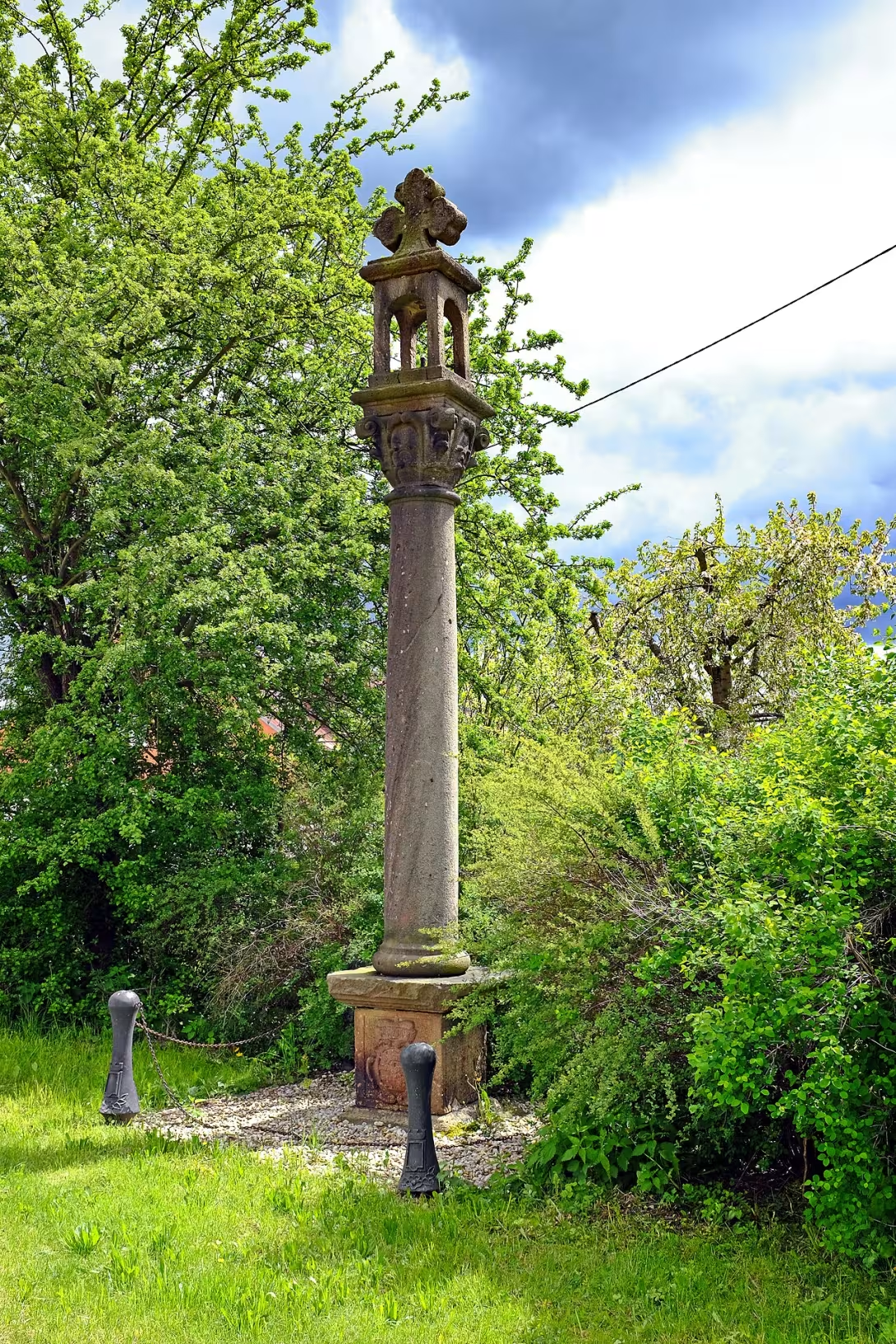

The historical appearance on the left is an AI-generated visualisation and serves as inspiration only.
Historical milestones
- 1658
- The position of God's torments by Duke Julius Henry Sasko-Laueneburg
- 1686
- The planting of border stones and anguish by Duke Julius František's son
- 1995
- Statement of the monument by the Ministry of Culture of the Czech Republic for the cultural monument
- 2021
- Reminder correction
Architectural development
It is a stone Baroque building built on a single-stage base. Part of it is a plinth with a graduated ledge and Corinthian head of the column. The whole object forms a column with an open chapel.
Historical events
On July 1, 1658, the monument was built by Duke Julius Henry. In 1686 his son Julius František continued to settle the borders. In 1995 it was declared a cultural monument of the Czech Republic. It was repaired in 2021.
Owners
Duke of Saxo-Laueneburg
Points of interest
- God's torture in the Lower Zdar is a baroque monument with cultural significance. - It was built on July 1, 1658 by Duke Julius Henry Sasko-Launebury as part of the border system between the island estate and the thermal monastery. - Its architecture includes a plinth with a heel, tiered ledge and Corinthians' head, which is characteristic of baroque style. - In 1686, the borders were further planted with boundary stones and God's torment by his son Julius Francis. - The monument was repaired in 2021, which ensures its preservation for future generations.
Guide
Show guide text
This text was created by artificial intelligence and has not been editorially reviewed. It may contain inaccuracies.
Welcome to the Baroque monument of God's torment in the Lower Zdar. You are facing a unique stone structure that boasts rich historical background and architectural features. This monument is located on the southern edge of the village Dolní Žďár, where it is spread out by impressive landscape.
God's torment was built in 1658 by Duke Julius Henry Sasko-Laueneburg. Its purpose was to serve as a border between the island estate and the property of the thermal monastery. This historical context adds another layer of importance to the memory as it was part of the border system at the time.
Look up at the plinth with a heraldic mark. This detail is not only aesthetically attractive, but also bears symbolism and history. The cylindrical column, which leads to an open chapel, invites you to explore architectural elements such as tiered ledge and Corinthian headers. These features contribute to the baroque character of the monument.
The key moment in the history of God's torment was the setting of border stones and tortures in 1686 by Duke Julius František's son. This event has strengthened their function as a border between the empires.
The interesting thing is that God's torture was declared a cultural monument by the Ministry of Culture of the Czech Republic in 1995. This recognition highlights its historical and cultural value.
In 2021, a correction was made to ensure that this valuable monument was preserved for future generations.
We hope that this guide inspired you and the invitation is to continue to explore this fascinating place. God!
Tips for visitors
The best time to visit God's torment in Lower Zdar is early spring or late autumn when the weather is pleasant and the area offers a beautiful view. During these periods there are fewer people and nature is in full bloom.
Transport to the location can be arranged by car or public transport, and you can check the current connection in the online search engine.
When visiting God's torment, we recommend taking with you shoes suitable for walking on stone paths and protective clothing, because the climate can be disproportionate. Remember also the water and sun cream if you plan to spend more time here.
To photograph God's torment is the best place before the monument itself when the sun is in the west. This will provide ideal lighting conditions to capture the details and atmosphere of the monument.
In the vicinity of God's torture in Lower Zdar there is a border with an island estate, which is a suitable place for a short walk or exploring historical borders. This area offers views of the local landscape and the natural environment.
Frequently asked questions
Can the monument be visited?
This is a structure in a public space that can usually be seen from outside free of charge. We have not verified that this particular one is freely accessible.
Where is the monument?
Location: Dolní Žďár, Karlovarský kraj. The map on this page shows the exact spot.
Why is the monument protected?
It is listed in the Central List of Cultural Monuments of the Czech Republic as a cultural monument (register no. 1000119714).
Businesses nearby
Do you run a restaurant, accommodation, shop, museum, rental, wellness or other visitor service near this monument? Show yourself directly to the people heading to it — this is how they will see you in the app and on the web:
Nearby
Jižní okraj obce Dolní Žďár a hranice ostrovského panství.
Accommodation nearby
Trips and activities nearby
Guided tours, tickets and activities nearby from GetYourGuide
Affiliate link: if you buy from the partner, we may receive a commission. The price for you does not change.
Search tours and activities →Themed route
Thematic cruise route: Boží muka (Dolní Žďár)
1.Boží muka (Dolní Žďár) - Type: Monument - Why is it worth visiting: This richly decorated statue is one of the most important and best preserved torments in the Czech Republic. It is located on the southern edge of the village Dolní Žďár, where it reminds of historical events from 1623.
2. Island Manor - Type: Historical area - Why it is worth a visit: Despite the fact that the border of the island estate is now visible only in the landscape and history, it provides an interesting view of the past of this area. In the vicinity you can walk through the landscape garden with a beautiful view.
3. St Jilji Chapel - Type: Chapel - Why is it worth visiting: This chapel is close to God's torment and is a significant part of the spiritual and cultural heritage of the village. Its simple but impressive position attracts visitors interested in history and architecture.
4. Dolní Žďár - center of the village - Type: City area - Why is it worth a visit: After exploring the monuments it is advisable to return to the centre of Lower Zdar, where you can enjoy a quiet view of the streets and architectural elements of the village. The centre offers the possibility of visiting traditional houses and buying local goods.
This short but rich path history allows you to explore not only God's torment, but also other attractions surrounding the Lower Zdar.
Seasonal recommendations
Spring: In the spring season, God's torment in the Lower Zdar appears in the light that increases its beauty. Sun rays illuminate stone architecture and highlight the details of the monument. Flowers in the area are beginning to bloom, which adds a color contrast to the black and white shape of the torture. It is recommended to visit the morning or evening for milder temperatures and smaller crowds of tourists. It is advisable to wear clothes with several layers because spring weather can be variable.
Summer: In the summer, God's torment in the Lower Zdar gains life under strong sunlight. The atmosphere is full of heat and light, which contributes to feeling disconnected and calm. In the main summer season there can be enough visitors, therefore it is recommended to visit early dawn time or later in the day. It is advisable to wear light clothes and a sun helmet.
Autumn: In autumn, God's torment in the Lower ŽDěr becomes melancholic tone, when the leaves of the trees turn into golden and brown shades. The sun is lower in the sky, which creates long shadows and interesting lighting monuments. In this period, fewer people approach these historic places, so it is advisable to visit at any time of the day. It is recommended to wear warmer clothes for colder weather.
Winter: In the winter months, God's torment in the Lower Zdar turns into snow beauty. The snow covering the trees and the road adds a magical touch, while the icy rays illuminate the stone details of the monument. The atmosphere of the Christmas market in the surrounding area may appear in advent time. It is necessary to wear warm clothes and protective shoes for snow.
Visualizations and artistic views


The visualisations are generated by artificial intelligence and serve as inspiration.
Photos from the area
Real photos taken near the monument


Zdroj a licence jsou uvedeny u každého snímku.
Tips from visitors
No tips yet. Be the first!
Log in and add your tip.
Sources and literature
Photos: Lubor Ferenc / CC BY-SA 4.0 — Wikimedia Commons. The author and licence also appear when you hover over the image.
Faktickým podkladem tohoto textu byl článek na Wikipedii, jehož autory jsou přispěvatelé Wikipedie. Článek je dostupný pod licencí CC BY-SA 4.0.
Location on the map
More monuments – Dolní Žďár
Show all in the municipality
Příběhy a pověsti
Legendy, pověsti a příběhy spjaté s touto památkou
Fotografie návštěvníků
Zatím žádné fotografie. Buďte první, kdo přidá fotografii z návštěvy!
Log in a přidejte svou fotografii nebo hodnoťte.
Za ověřenou návštěvu v aplikaci získáte víc bodů — poznáme podle GPS, že jste na místě.
Reviews and comments