



Boží muka jižně od Černic Wayside shrine
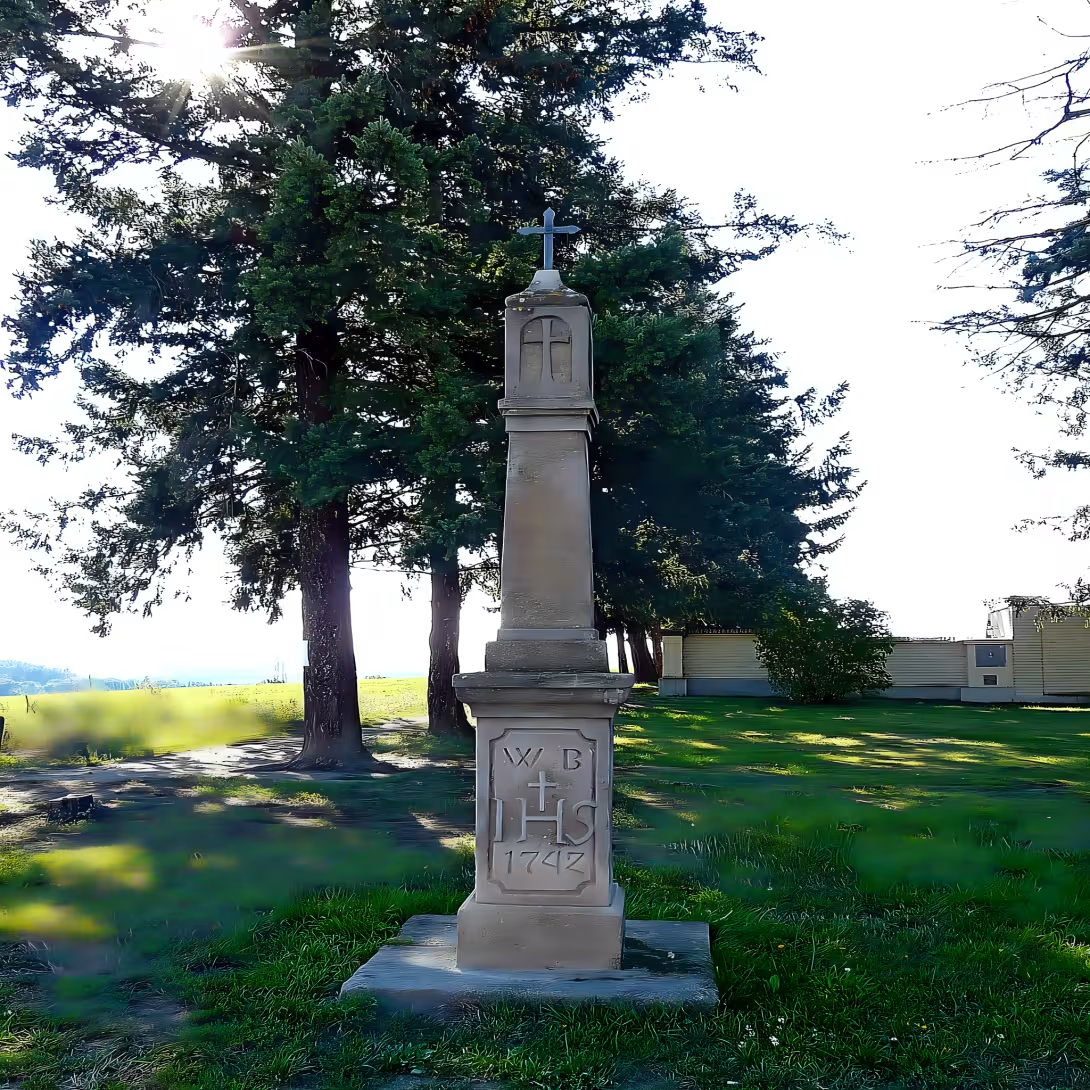
Boží muka jižně od Černic is a small monument to folk construction from the middle of the 18th century. They are located in the village Černice in the Pilsen region (district Plzeň-město). Their historical and cultural value is underlined by the baroque style and unique architecture of the four-sided conical blade. The building is protected as a cultural monument and attracts attention from its history and location.
God's torment in Cernice was built at the beginning of the 18th century; The base is specifically dated 1742. It served as a place of prayer and a reminder of tragic events or accidents. That was a common function of similar structures at the time. The creation of these objects often resulted from the need to express faith and embody the social and religious values of the village.
The architecture of God's torture is characteristic of the baroque, which is reflected primarily in the execution of the blade. Its quadrilateral and conical shape differs from other similar monuments, which increases its historical value. The material used and the details of the decoration are typical of the Baroque period, when the stone structure with rich ornament was often used.
Despite the small size of God's torture in Cernice, the region is an important cultural and historical element. The status of the cultural monument ensures that the object is preserved for future generations. The monument is currently accessible to visitors. It is worth visiting not only because of its value, but also because it offers a view of the past and helps to better understand local culture.
Visit God's torment in Cernice and appreciate its historical significance. This building is not only a witness to the past, but also a reminder of the lasting values that shaped the life of our ancestors. Its preservation and protection ensure that we can continue to recognise and appreciate these important aspects of Czech history.
Then and now
Drag the slider to compare how the landmark may have looked when it was built with the view today.
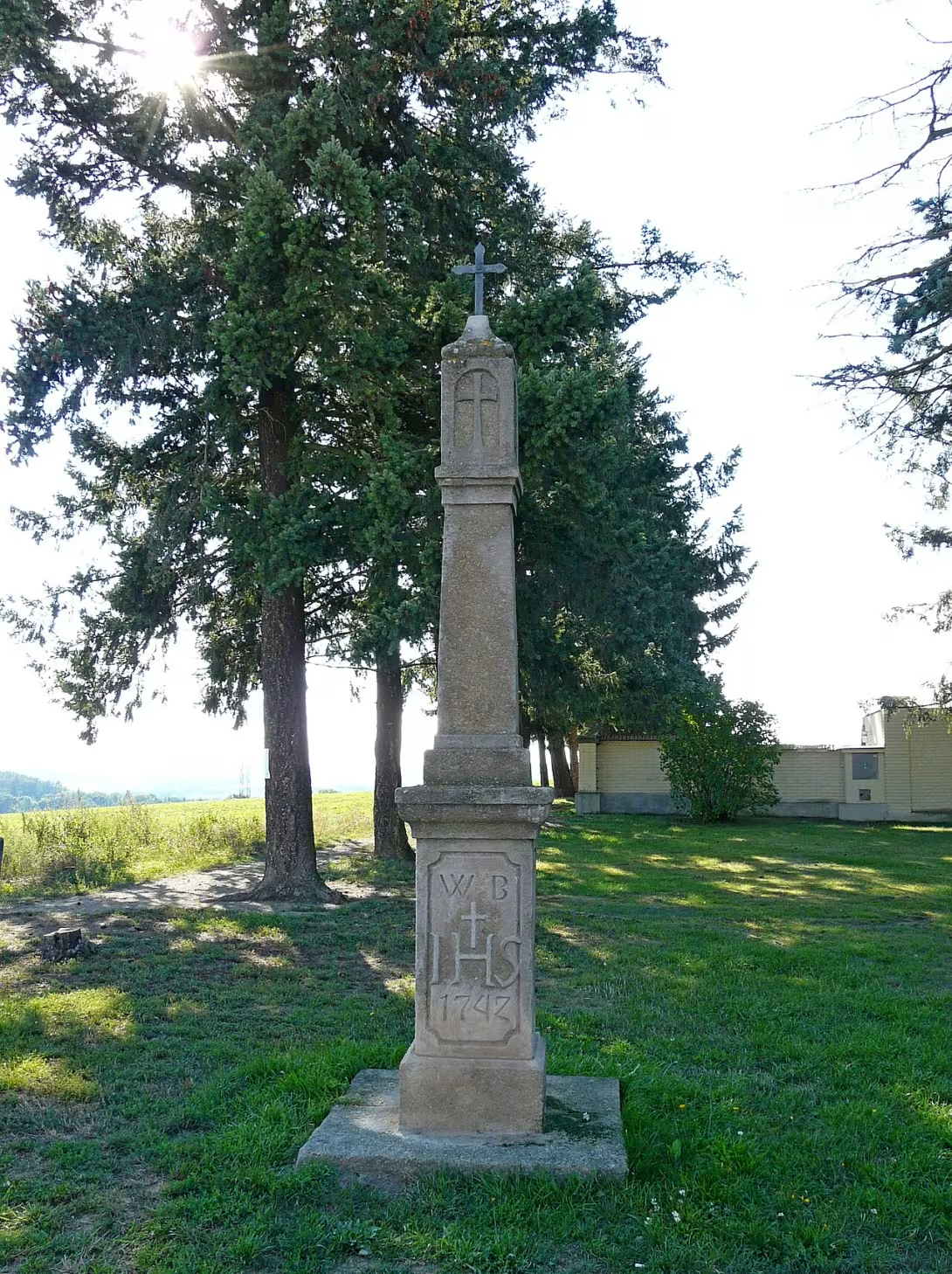
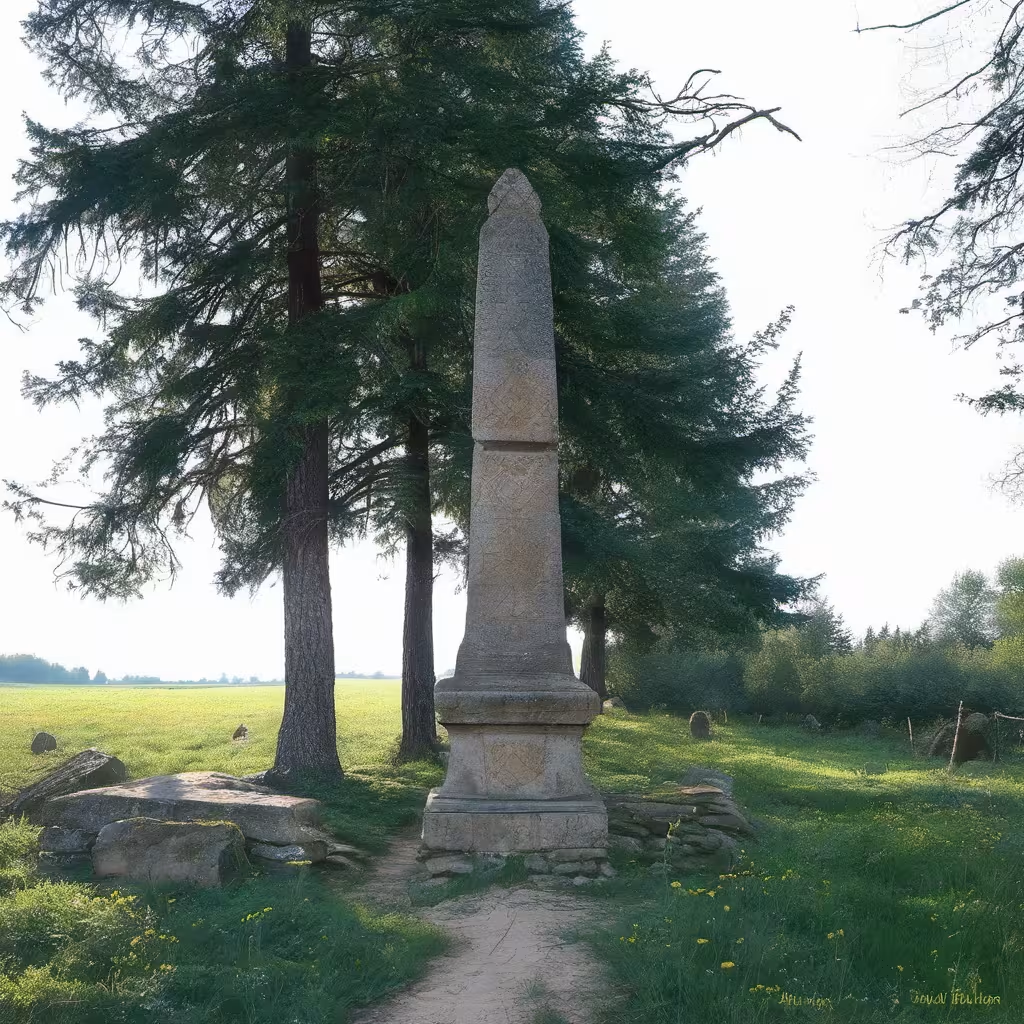
The historical appearance on the left is an AI-generated visualisation and serves as inspiration only.
Historical milestones
- 1742
- Dated on a plinth
Points of interest
- They have a unique architecture with a four-sided conical blade. The Sokl is specifically dated 1742. They served as a place of prayer and a reminder of tragic events or accidents. - The object is protected as a cultural monument. - The construction uses a stone construction with a rich ornament.
Guide
This guide is narrated by a synthetic voice generated by artificial intelligence.
Show guide text
This text was created by artificial intelligence and has not been editorially reviewed. It may contain inaccuracies.
Welcome to God's torment south of Chernic! You stand before this peaceful and deeply engaging testimony of the past that will invite you into the world of folk construction. Look up - you can see a simple but fascinating building from the mid-eighteenth century, which reminds you of the spirit of the time and its folk architecture. This little monument is like a reference to a time when every building was full of intent and personal expression.
Let's immerse ourselves in the history of God's torment. It's dated 1742 on a plinth, which allows us to approach its beginnings. Although specific architects and personalities associated with its creation have remained unknown, we can realise that it was built as part of a wider popular movement. This type of monuments appeared throughout the region and served to express the religious and social values of the then inhabitants.
Now pay attention to her architectural features. Note the simplicity and elegance that characterizes the whole structure. Even if we don't have specific details about materials or decorative elements, you can feel the atmosphere of a place that brings you back to the past. This torture of God is like a stone in time, retaining the memories and traditions of the people of Cernik.
Key stories associated with this monument are largely drowned in mystery, which only motivates more to explore. Although unknown personalities and events behind its creation have remained hidden in history, it may be interesting to imagine the lives of the people who built this God torture. What motivation led them? What did they wish to express or preserve for future generations?
The interesting thing about this place is that although specific mysterious details are missing, God's torture itself represents an interesting element of cultural heritage. It is protected as a cultural monument and this highlights its importance for the region. This fact tells us that even without famous personalities or dramatic events, everyday architecture can be fully valuable and engaging.
Now that you have fallen somewhat in love with this God's torment, I invite you to explore the surrounding areas of Cernik. Every place has a story and every alley reveals something new. Whether you look at local architecture, explore historical records or just talk to local residents - you will find something new in every step.
Thank you for your visit to God's torment. I hope you enjoyed exploring her history and architecture. Whether you return here or continue your journey, I wish you still new discoveries and interesting experiences. God!
Tips for visitors
The best time to visit is spring and summer, when the landscape around Cernik is green and the weather usually favourable for short walks.
Traffic to the monument is the easiest car. Since God's torment is located south of the village, it is advisable to stop in Cernice and then continue on foot or by bike on local roads towards the south.
Take plenty of drinking water and light refreshments into your backpack because there are no refreshments or toilets available in the immediate vicinity of the monument. Dress up in comfortable shoes suitable for uneven terrain, as the path to the monument can lead along the field paths or forest paths that can be slippery after rain.
For photography is the best light in the morning or late afternoon, when the sun shines at an angle and creates interesting shadows on the stone structure. Since this is a minor monument, there are no specific 'hidden' angles, but the best shots are obtained from a slight distance to capture the surrounding landscape and the context in which the monument is located.
Since there is no other specific place in the area within 30 minutes in the background, I recommend you take a visit to walk around the village Černice and surroundings where you can admire other elements of folk architecture or simply enjoy the quiet rural environment. For families with children, this monument is ideal as a short stop during a long trip, because the journey is not difficult and children can enjoy their outdoor stay.
Frequently asked questions
Can the monument be visited?
This is a structure in a public space that can usually be seen from outside free of charge. We have not verified that this particular one is freely accessible.
Where is the monument?
Location: K Pomníku padlých, Černice, Plzeň, Plzeňský kraj. The map on this page shows the exact spot.
Why is the monument protected?
It is listed in the Central List of Cultural Monuments of the Czech Republic as a cultural monument (register no. 100188).
For kids
Imagine going back to the past, when there were no cities, no roads, and there were woods and meadows everywhere. This place where God's torment stands today was once the home of a village. The villagers lived on the crops of the land and the animals that were grazing on them.
It was like in a game where they all helped each other and enjoyed living in nature together. Everyone knew all their neighbors and they were talking about the fire. The villagers were also good smiths and each house had its own fireplace.
Businesses nearby
Do you run a restaurant, accommodation, shop, museum, rental, wellness or other visitor service near this monument? Show yourself directly to the people heading to it — this is how they will see you in the app and on the web:
Events nearby


Zdroj akcí: otevřená data měst a obcí ČR (Národní katalog otevřených dat) a kalendář akcí Národního památkového ústavu.
Nearby
➜ Zobrazit interaktivní přehled okolí – restaurace, ubytování, půjčovny a další místa v okruhu 15 km.
Data: OpenStreetMap contributors, okruh 15 km.
🏰 Historické památky
- Památník obětem zla (3.4 km)
- Pomník obětem (4.3 km)
- památník obětí I. a II. sv. války (4.7 km)
- památník Stanko Vodičky (5.3 km)
- Josef Skupa (6.1 km)
- Pomník purkmistra Martina Kopeckého (6.3 km)
- Pomník Josefa Františka Smetany (6.4 km)
- Katedrála svatého Bartoloměje (6.5 km)
🍽️ Restaurace a stravování
- Hostinec Sokolovna Radobyčice (1.3 km – Zářivá 133/10)
- U Motlíků (4.4 km)
- Caffe Lobzy (4.7 km – Na Vyhlídce 242)
- Sport Bar Astra (5.5 km – Dlouhá 964/57)
- Restaurace Alfa (6.3 km – Americká 663/17)
- Restaurace Cardinál Club (6.5 km – Kardinála Berana 1027/10)
- Jazz rock café (6.7 km – Sedláčkova 226/18)
- Archa (6.7 km – Veleslavínova 51/20)
🏨 Ubytování
- Parkhotel (4.4 km)
- Astory (6.1 km)
- Hotel Victoria (6.1 km – Borská 1155/19)
- Hotel Rango (6.6 km)
- Emma (6.7 km – Husova 430/22)
- Wallis (6.8 km – Palackého 74/11)
- Hotel Stella Garni (6.9 km – Mohylová 871/18)
- Hotel Roudná (7.1 km)
🚲 Půjčovny a sport
- Intersport (1.1 km)
- Scoobike sharing (4.9 km)
- Lezecká stěna Hannah (5.3 km)
- Scoobike sharing (5.8 km)
- Fitnes centre (6.4 km)
- Sportisimo (6.6 km)
- Cykloservis a Autodíly Malík (6.7 km – Náves republiky 71)
- Specialized Concept Store Plzeň (6.7 km)
🥾 Turistika a příroda
- Radyně (3.9 km)
- Plzeň-Doubravka (MHD) (7.3 km)
- Plzeň-Doubravka (u trati) (7.7 km)
- Chlum (8.3 km)
- Chlum (8.3 km)
- Plzeň-Bílá Hora (Host.) (8.8 km)
- Maršál (8.9 km)
- Plzeň-Bílá Hora (Rozc.) (9.3 km)
Accommodation nearby
Trips and activities nearby
Guided tours, tickets and activities nearby from GetYourGuide
Affiliate link: if you buy from the partner, we may receive a commission. The price for you does not change.
Search tours and activities →Themed route
1. The immediate area (Type: Rural area) - This part serves for a peaceful arrival to the main monument. 2. Boží muka jižně od Černic (Type: Sacral monument) - It's the main destination of the trip and the historical object. 3. The surroundings of the monuments (Type: Outdoor area) - Here you can see the details of the construction in silence.
Seasonal recommendations
Spring: In the spring season, God's torture at Chernic appears in a new light when the sunlight lights up its stone shapes and surrounding green nature. Flowers are beginning to bloom, giving the landscape a lively color and an attractive atmosphere for pedestrians. It is recommended to visit at an early spring time when there are fewer visitors, and bring a light coat or plaid on the chills.
Summer: Summer brings long sunny days and warm air, making a visit to God's torment an ideal leisure activity. The natural beauty of the surrounding forest is in full bloom and sunlight increases the aesthetic value of the monument. It is recommended to arrive early in the morning or late in the afternoon in order to avoid the peak giving, and to wear bright, practical clothes suitable for warm soil.
Autumn: In autumn, God's torture at Cernic offers a unique atmosphere with a colorful forest background. Leaves are colored and fallen, giving the landscape melancholy but impressive looks. The sunny season is still present, so the visit will be illuminated by beautiful rays. It is recommended to put on a warm shirt and bring with you coffee or tea for a cool winter that may occur this season.
Winter: In winter, God's torment at Cernik is covered in snow and offers a quiet rest away from the crowd. Sunlight creates magical shadows on snowy terrain, adding a mystical atmosphere to the memory.
Visualizations and artistic views


The visualisations are generated by artificial intelligence and serve as inspiration.
Photos from the area
Real photos taken near the monument

Zdroj a licence jsou uvedeny u každého snímku.
Tips from visitors
No tips yet. Be the first!
Log in and add your tip.
Sources and literature
Photos: Josef Špiller / CC BY-SA 3.0, rozlišení zvýšeno umělou inteligencí — Wikimedia Commons. The author and licence also appear when you hover over the image.
Location on the map
More monuments – Černice
Show all in the municipality



Příběhy a pověsti
Legendy, pověsti a příběhy spjaté s touto památkou
Fotografie návštěvníků
Zatím žádné fotografie. Buďte první, kdo přidá fotografii z návštěvy!
Log in a přidejte svou fotografii nebo hodnoťte.
Za ověřenou návštěvu v aplikaci získáte víc bodů — poznáme podle GPS, že jste na místě.
Reviews and comments