



Boží muka - Markův morový sloup Monument
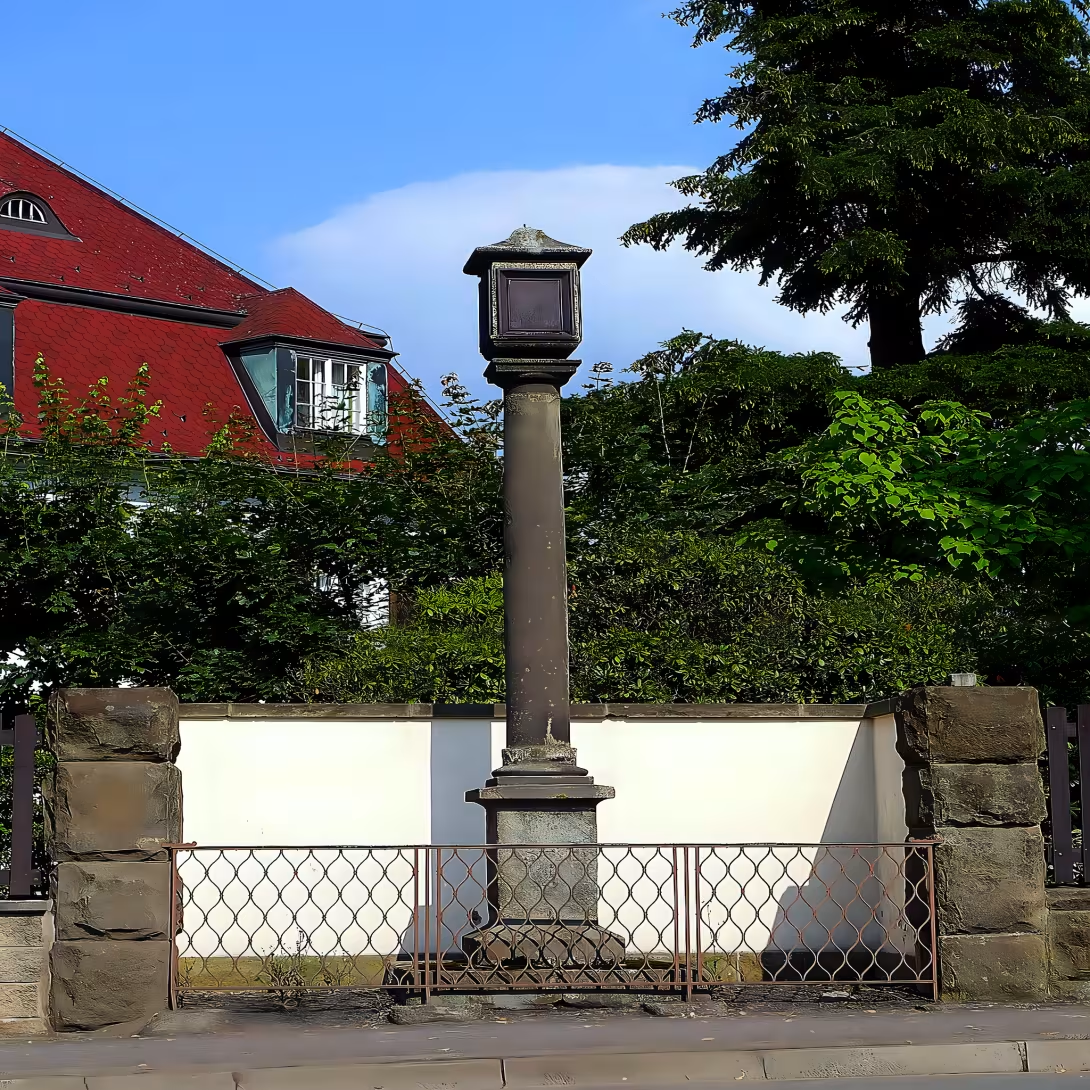
Mark's pestilence is a Baroque monument from 1700 in the village Nové Město (Praha 2) in the district of Náchod in the Králové Hradec region. This stony-sculpted object resembles a plague epidemic.
The construction was built at the turn of the 17th and 18th centuries, namely in 1700. Its formation is linked to the disease that was then erupted, causing the need to ignite similar monuments.
From the point of view of art processing, it is a baroque work. It is stated in the professional records that it was originally probably a pestilence column or God's torment.
The landscape around the monument has changed significantly over time. The building originally stood in the open space before Broumov, but is currently being absorbed by a new installation. The monument is registered in the register of cultural monuments under the number 40308 / 6-1543.
Today, the memorial represents a concrete clue to the Baroque era in the district of Nacho. Despite the change of surroundings, it remains an important testimony about historical events and then society.
Visiting this place offers a meeting with an authentic stonework from the beginning of the 18th century. It is a suitable stop for anyone interested in baroque monuments in the landscape.
Then and now
Drag the slider to compare how the landmark may have looked when it was built with the view today.
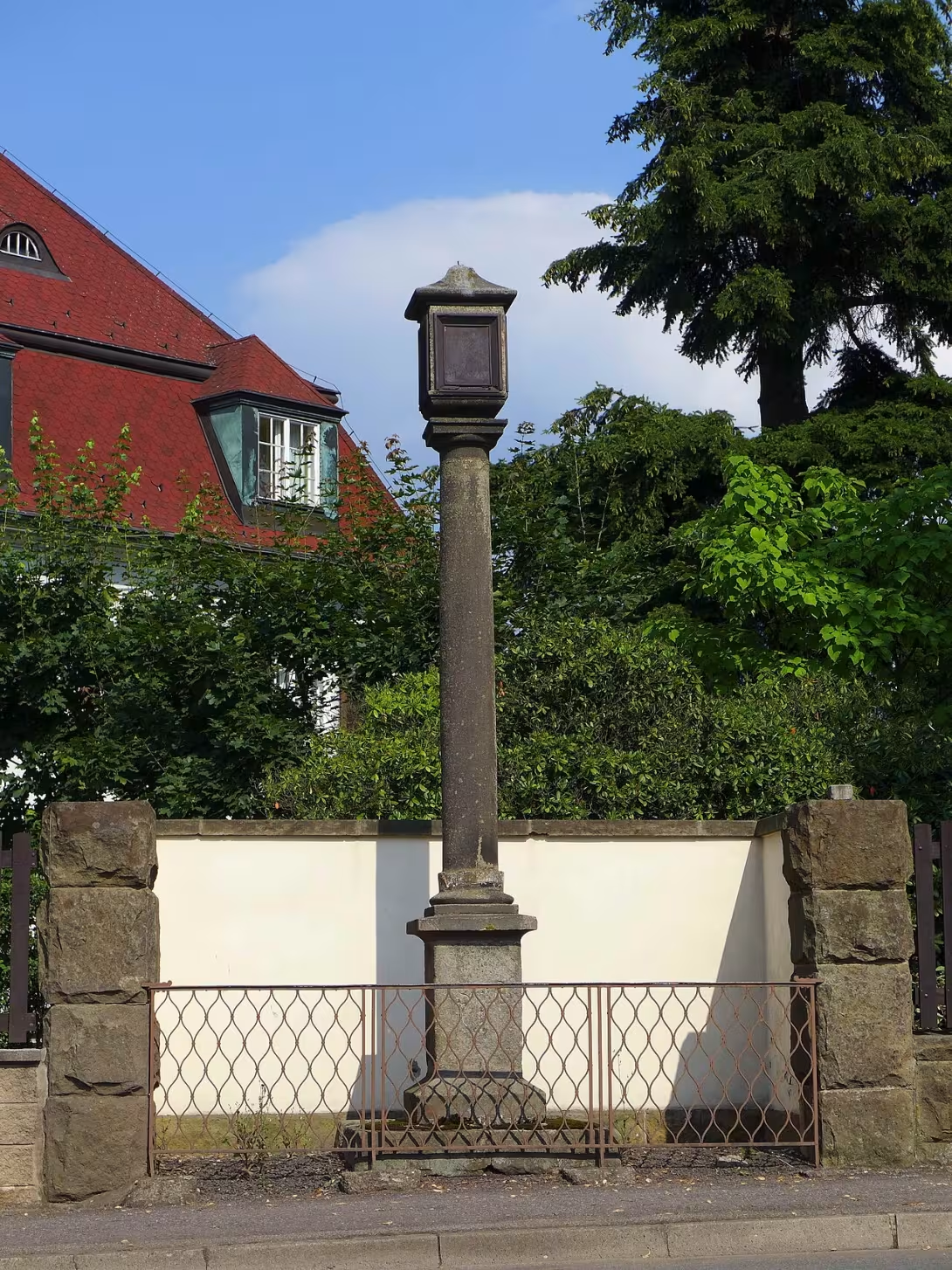

The historical appearance on the left is an AI-generated visualisation and serves as inspiration only.
Architectural development
The memorial was built in 1700 as a reminder of the plague epidemic.
Historical events
- 1700
- Status of Baroque monument
Points of interest
- It's a Baroque monument from 1700, which resembles a plague epidemic. - Originally, it was probably a plague column or God's torment. - The building was originally in the open space before Broumov, but now it's being absorbed by a new installation. - The monument is registered in the register of cultural monuments under the number 40308 / 6-1543.
Guide
This guide is narrated by a synthetic voice generated by artificial intelligence.
Show guide text
This text was created by artificial intelligence and has not been editorially reviewed. It may contain inaccuracies.
Welcome to this silent and mysterious monument that is now standing before you. Stop for a moment, take a breath, and just observe the object right in front of your eyes. You see before you a stonemason's work that carries a trail of ancient times and tells a story that has gone deep into the landscape. It's a place where faith, memory and history meet. You are standing in front of an object known as Mark's pestilence column, or you can see it as God's torment. It's kind of a small but significant testimony about the people who lived here centuries ago.
Now, when we think about why this monument came into being, we have to go back to when the greatest threat to humans was an invisible enemy in the form of an epidemic. The pestilence and the torment of God at that time was built as an expression of gratitude for the end of the epidemic, or as a request for protection from a disease that could erase entire villages within a short period of time. Although the exact date of the creation of this particular work remained in oblivion and we do not know who the creator was, the very existence of such a pillar in the village of Nové Město in the Náchod district tells us about the difficult trials that the locals had to pass. It is a symbol of hope in a time of despair and a reminder of how fragile human life was.
Now pay attention to the very appearance of this stone-sculpting object. Look closely at it and perceive its overall form. Notice how this element is raised above the surrounding terrain and how it works in space. Even though time with a stone doesn't fly and leaves its marks on it, you still feel a craft precision in it. Look at its shapes and see the details that are captured in the stone. Watch how light hits the surface of the monument and how it creates shadows that divide the object into lights and shadows. It is a simple but also strong religion that carries the seriousness of its purpose.
When you look at this column, you might think who were the people who built it and who were the ones who sought comfort from it. Although the names of the particular persons associated with this place are not clearly mentioned in the records, we can imagine thousands of nameless people walking around this monument. Imagine people in period clothing who stopped their steps here to pray quietly for their loved ones or to thank them for returning from the disease. It is this collective memory that gives memory its true value. It's not just a piece of worked stone, it's a place of deep human experience.
And now we come to the part that is perhaps most fascinating. This entire object is surrounded by a secret. Note that there are no exact dates, names of architects or specific stories from the time of its construction. It is in this ignorance that there is a special spell. It's like an open book from which pages of data were ripped out, but the image itself remained. The mystery remains whether it was a pestilence column from the beginning, or whether it was God's torment that was meant to serve another spiritual purpose. This uncertainty makes us think more and perceive the atmosphere of the place more than rely on dry facts. It is an invitation to try to figure out what talks have been made here and what dreams and fears people have put into their prayers.
When you look at this monument today, see it as a bridge between the past and the present. It is registered as a cultural monument, which means that the state recognises its value and wants to protect it for future generations. It is proof that even small villages have a great history that is worth being discovered. This column in New Town is a silent witness to a history that has survived generations, wars and regime changes so that it can stand before you today and tell its invisible story.
Now let's slowly say goodbye to this particular place. I hope you've felt peace and respect for this stony work. Before you leave here, I suggest you go around the monument again, try to perceive it from different angles, and let your thoughts float freely in the space of this historic place. Feel the silence of the surroundings and try to connect with the energy that this space emits.
We now invite you to further explore the area. The history of this region is full of other interesting places that await your discovery. Let your curiosity guide you and search for more traces of ancient times left in the landscape. Thank you for spending some time with us at Mark's Pestilence. We wish you a pleasant continuing journey and many new, fascinating experiences in discovering our cultural monuments. Goodbye.
Tips for visitors
The best time to visit is early morning or late afternoon, when the sun hits the stone surface of the monument at an angle, which will better highlight the details of sculptures. Transport to the village Nové Město in the district Náchod is possible by car and public transport; Check the current connection in the search engine.
For the best photos, we recommend looking for angles that capture the entire height of the column against the sky, with the most significant light for images being obtained during the golden hour.
Families with children can use a visit to tell about the history of plague columns and why these monuments were built in the past. Since there are no other mentioned monuments in the area, we recommend focusing on detailed observation of the stoneware elements of this particular object.
Frequently asked questions
Can the monument be visited?
This is a structure in a public space that can usually be seen from outside free of charge. We have not verified that this particular one is freely accessible.
Where is the monument?
Location: Nové Město (Praha 2), Královéhradecký kraj. The map on this page shows the exact spot.
Why is the monument protected?
It is listed in the Central List of Cultural Monuments of the Czech Republic as a cultural monument (register no. 40308/6-1543).
For kids
Imagine going back to a time when Hradec Králové was not yet a desirable place. It was a large forest area where hunters and zodiacs roamed.
But time passed and the city grew. People settled near the Elbe River and began to build their houses and temples. The city has become an important center of trade and culture.
But one day something happened that hurt the city. The plague hit Europe and Hradec Králové was no exception. People died one by one.
Businesses nearby
Do you run a restaurant, accommodation, shop, museum, rental, wellness or other visitor service near this monument? Show yourself directly to the people heading to it — this is how they will see you in the app and on the web:
Nearby
➜ Zobrazit interaktivní přehled okolí – restaurace, ubytování, půjčovny a další místa v okruhu 15 km.
Data: OpenStreetMap contributors, okruh 15 km.
🏰 Historické památky
- Muzeum stavebnice MERKUR (8.7 km – Tyršova 341)
- Vlčinec (10.9 km)
- J. W. Goethe 28 VIII 1790 (10.9 km)
- Pamięci Franciszka Pabla (10.9 km)
- Ochota Magdaleńska (11.2 km)
- St. Florian (11.3 km)
- Turistická trasa Franciszka Pabla (11.4 km)
- Osówka II Wejście (11.8 km)
🍽️ Restaurace a stravování
- Sudetka (0.3 km – Stanislava Opočenského 90)
- Restaurant Gritz (0.6 km)
- U Markéty (0.9 km – Pionýrská 350)
- Motorest Lucky Luck (8.1 km – 28)
- Jídelna Pellyho domy (8.6 km – U Damiánky 268)
- Hostinec U Lidmanů (9.9 km – Machovská Lhota 40)
- Restauracja "Graniczna" (10.1 km – Rynek 18)
- Szczelinka (10.2 km)
🏨 Ubytování
- Hotel Manor House (0.3 km – Vančurova 67)
- Hotel Praha (0.4 km – Mírové náměstí 49)
- Winterswijk (0.5 km – U Horní brány 25)
- Penzion Benešov (3.4 km – 41)
- Dom Gościnny Radków (10.1 km – Rynek 19)
- Leśny Dwór (10.6 km)
- Złoty Kłos (10.6 km)
- Siedem Łanów (10.7 km)
🚲 Půjčovny a sport
- JM Sport (0.3 km)
- Cyklodům Broumov (0.5 km)
- Střelnice (7.9 km)
- Bowling bar (7.9 km)
- Horolezecká stěna (7.9 km)
- Pítrs bikes (8.5 km)
- Doldy (10.2 km)
- Redpoint (11.3 km – Horní 13)
🥾 Turistika a příroda
- Supí hnízdo - vyhl., odb. (4.3 km)
- Nad Kovářovou roklí (4.4 km)
- Zaječí rokle (5.3 km)
- Nad Slavným (5.5 km)
- Chata pod Korunou (odb.) (5.6 km)
- Kamenná brána (5.9 km)
- Kamenná brána (6.0 km)
- Pod Kamennou branou (6.1 km)
Accommodation nearby
Themed route
Boží muka - Markův morový sloup (memorial) Walk in the area of the monument: 1. The foundation of the monument - The lower part of the building, which carries the whole structure and anchors it in the landscape. 2. The central part of the column - The main body of the monument, where you can see details of the carving and material. 3. The peak of the monument - The highest point of the building, which serves as a symbolic conclusion of the entire work.
Seasonal recommendations
In spring the surroundings of the monument awaken to life and the fresh green creates a gentle contrast to the historical stone. The light is soft in this period, which is ideal for observing details from the outside. We recommend light but laminated clothing and a visit in the morning when the air is the cleanest.
In the summer months, the clear sun and hot air dominates the space, which highlights the texture of the column. The atmosphere is full of energy, although there may be more people around. The best is to leave at dawn or late evening to avoid heat, and not forget the cap or hat for sun protection.
Autumn brings golden colors and melancholy mood to the landscape, which matches the elevation of this plague monument. The lighting is full and the depth of the shadows creates a dramatic look. Practical is shoes suitable for wet terrain and warm sweater, the most distinctive colors of nature you will see in October.
Zimą acts the object in silence and cold, with any layer of snow highlighting its appearance and white purity. The atmosphere is cramped and quiet, which encourages thought. It is necessary to choose warm and waterproof clothes and to visit the place at times when daylight is longest.
Visualizations and artistic views


The visualisations are generated by artificial intelligence and serve as inspiration.
Photos from the area
Real photos taken near the monument


Zdroj a licence jsou uvedeny u každého snímku.
Tips from visitors
No tips yet. Be the first!
Log in and add your tip.
Sources and literature
Photos: Koutne1 / CC BY-SA 4.0, rozlišení zvýšeno umělou inteligencí — Wikimedia Commons. The author and licence also appear when you hover over the image.
Location on the map


Příběhy a pověsti
Legendy, pověsti a příběhy spjaté s touto památkou
Fotografie návštěvníků
Zatím žádné fotografie. Buďte první, kdo přidá fotografii z návštěvy!
Log in a přidejte svou fotografii nebo hodnoťte.
Za ověřenou návštěvu v aplikaci získáte víc bodů — poznáme podle GPS, že jste na místě.
Reviews and comments