



Boží muka se smírčím křížem Wayside shrine
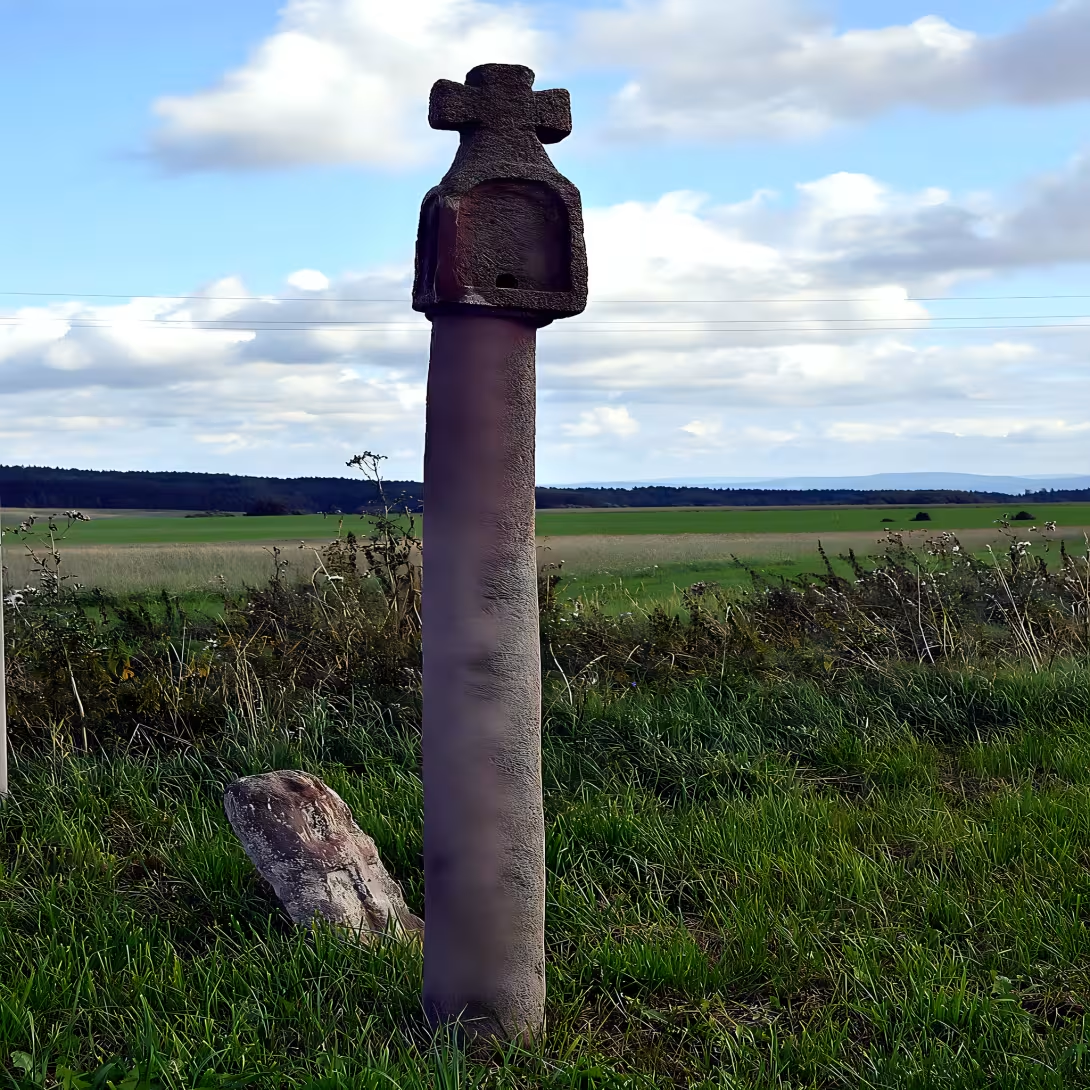
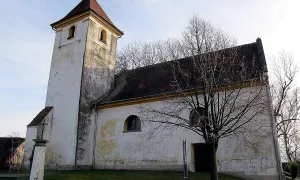
Boží muka se smírčím křížem in the village Bílov, district Plzeň-sever, is a protected cultural monument planted in the Middle Ages. This monument attracts attention from its gotifying stone column and medieval cross stone with the relief of the Latin Cross, which makes it important for understanding the historical traditions of the region. Its location on GPS coordinates 50.01711, 13.42792 and protection under the National Cultural Heritage Institute underlines its importance.
This torture was built as a symbol of reconciliation and slowdown, a common function of these monuments. Their location on roads or crossroads highlights their role in the spiritual and everyday lives of people. Although the specific history of this object is not documented in detail, its architectural style and location suggest deep roots in the local tradition.
The architecture of God's torture is characterized by a gotifying style, reflecting the common aesthetics of medieval monuments of that time. The stone column and sandstone plate with the relief of the Latin Cross are key elements that contribute to its historical significance. These materials not only strengthen the durability of the monument, but also embody the artistic and spiritual tradition of the period.
The history of the ownership and administration of God's torture is not documented in detail. However, its protection as cultural monuments suggests that it was considered important for the local community and history. This monument has probably crossed the hands of several generations, which is common for such permanent structures.
Boží muka se smírčím křížem remains in good condition and is accessible to visitors. It allows travelers not only to appreciate its historical value, but also to gain insight into the past of the region. Visit this monument offers a unique view of the tradition and culture of the Plzeň-sever area.
This divine torture is not only a monument to architecture, but also a witness to the history and spiritual life of people in this part of Bohemia. Her visit brings a deep sense of connection to the past and offers the possibility to reflect on the lasting value of historical monuments in society. For those who want to explore the rich cultural heritage of Bohemia, visit Bílov and his divine torment is a necessary experience.
Then and now
Drag the slider to compare how the landmark may have looked when it was built with the view today.
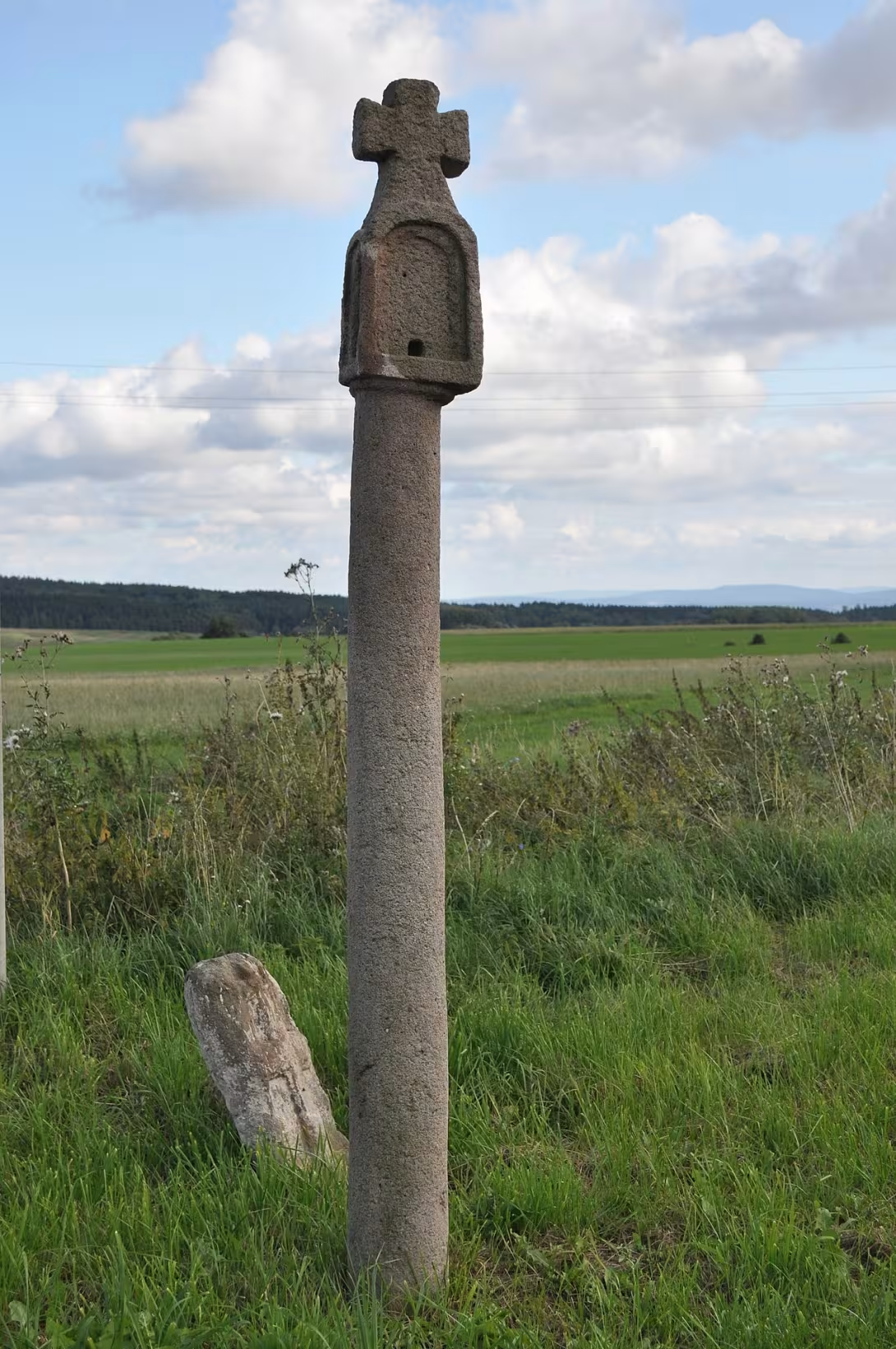
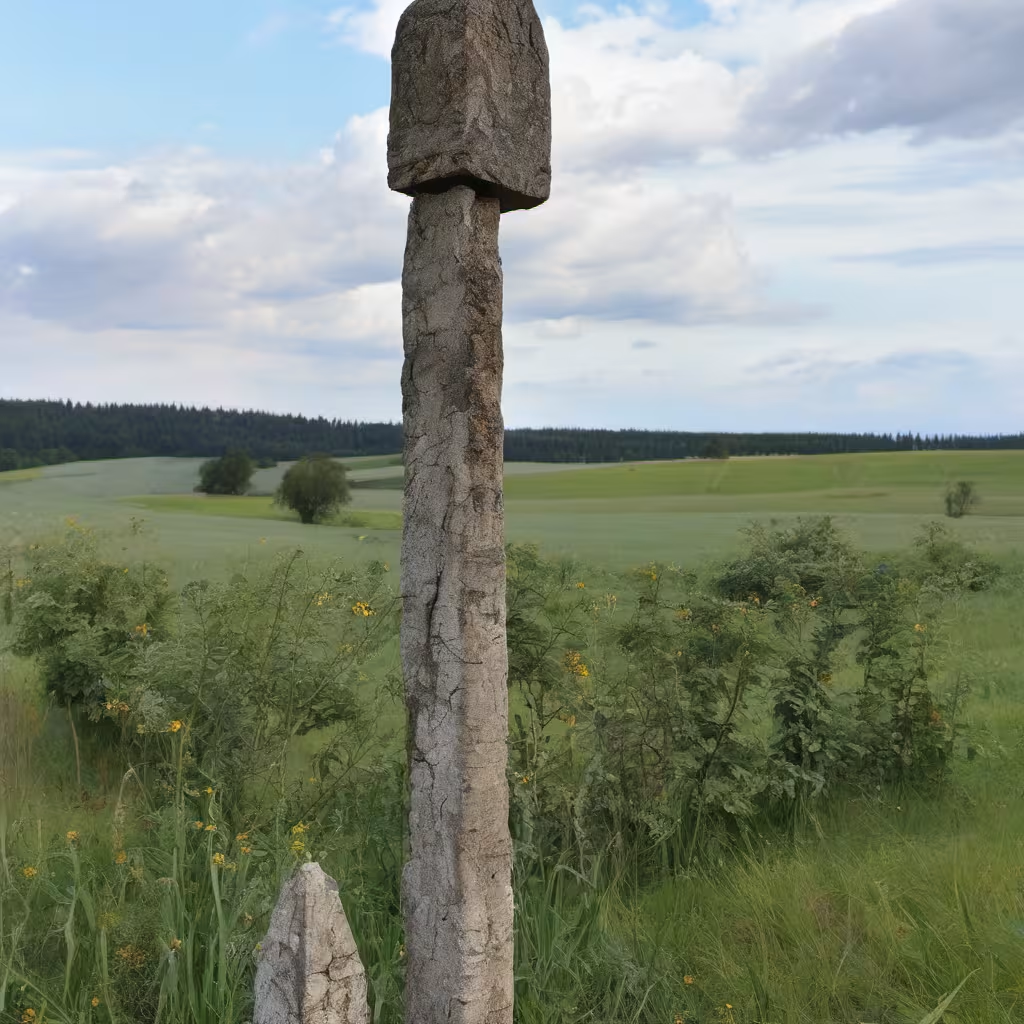
The historical appearance on the left is an AI-generated visualisation and serves as inspiration only.
Historical milestones
- 1350
- Prague becomes an important centre of the Christian world
- 1380
- The first cross was built
- 1400
- Over the centuries, many changes and repairs have passed through the monument
- 1500
- The monuments were transferred to the hands of the Franciscan Order
- 1650
- In the 17th century it was hit by a fire that destroyed part of the complex
- 1800
- It was even used as a military base during the Napoleon wars
Points of interest
In the 17th century, it was hit by a fire that destroyed part of the complex.
- Later, the monument was transferred to the hands of the Franciscan order who performed their services and prayers here.
- It was even used as a military base during the Naples wars.
Guide
This guide is narrated by a synthetic voice generated by artificial intelligence.
Show guide text
This text was created by artificial intelligence and has not been editorially reviewed. It may contain inaccuracies.
Welcome to God's torture with the peace cross in Bílov, the beautiful region of Pilsen Region. When they stood before this monument and put on headphones, you undoubtedly feel the air full of history and secrets. Before you stands a protected cultural monument with a unique character that hits you with its beauty and deep spiritual significance.
Boží muka se smírčím křížem is part of a rich heritage that represents a gotifying stone column structure. Although its creation remains unknown and no one blamed the authors of the monument, its existence suggests a deep historical past in this area. This torture of God is an important trace of medieval Christianity and tradition, which sought to commemorate the faith and sadness of lost souls.
Look up at the Gothic stone column of God's torment. Her elegant line will lead you to think about the masters who once built it. Notice the medieval cross stone formed by a sandstone plate with the relief of the Latin cross. This detail is not only an architectural achievement, but also a spiritual symbol that reminds all those who have gone this way.
Key stories and personalities associated with this place remain unknown, which gives room for effort and inspiration. Although we are not able to name the specific characters involved in its creation or maintenance, the monument itself represents a living story of the local community and their faith.
The interesting thing about this place is that although many things are unknown, its existence still gives rise to fascination. How has this monument been preserved for centuries? What did she mean to those who once used it? These questions open the way to an attempt to understand our common history and identity.
Now that you have learned more about this monument, we will invite you to further explore. Take a look at the surrounding landscape, which still contributes to the atmosphere of this place. Whether you came here for a moment of rest or a deeper exploration of history, we hope you enjoyed it and discovered something new.
Thank you for your attention and we know that this monument will make an unforgettable impression on your visit day. May the journey continue to make another beautiful discovery!
Tips for visitors
Best time to visit God's torments with the peace cross are in the spring and autumn periods, when vegetation is best visible and the weather generally favourable. This time of year offers a peaceful atmosphere to explore historical monuments without excessive tourists.
Transport from Pilsen to Belowa takes approximately 30 minutes.
When you visit, take with you suitable shoes because the terrain around the monument can be impenetrable. Also remember the protective cover article (e.g. umbrella or mantle cover) for your photos, because the weather can suddenly be variable.
Photography of God's Torture with the Conciliation Cross is best in the morning or in the evening when the sun shines from the horizon and illuminates the memory with a fine light. The best places for photos can be found on God's very torture and in the surrounding forest roads, where panoramic views can be captured.
The historical village Bílov with its picturesque streets and architecture can be visited in the vicinity of the Divine Torture. For families with children it is convenient to walk through forest trails around the monument where children can play in nature and learn about the history of the place.
Frequently asked questions
Can the monument be visited?
This is a structure in a public space that can usually be seen from outside free of charge. We have not verified that this particular one is freely accessible.
Where is the monument?
Location: Bílov, Plzeňský kraj. The map on this page shows the exact spot.
Why is the monument protected?
It is listed in the Central List of Cultural Monuments of the Czech Republic as a cultural monument (register no. 47618/4-4218).
For kids
Představ si, že se vrátíš zpět do minulosti. Místo toho, aby jsi viděl auta a počítače, které jsi teď každý den, zahlédneš kočí s koněm, který jede po úzké cestě a zastaví se před velkými kamennými sloupy.
Tohle jsou boží muka, místa, kde lidé v minulosti stavěli kříže nebo sloupy. Někdy to byly i hroby. V té době žili zdejší lidé v malých vesnicích a byli převážně rolníky. Živili se zemědělstvím, chovem zvířat a těžbou dřeva.
Businesses nearby
Do you run a restaurant, accommodation, shop, museum, rental, wellness or other visitor service near this monument? Show yourself directly to the people heading to it — this is how they will see you in the app and on the web:
Nearby
ITEX Show interactive overview of the surroundings - restaurants, accommodation, rentals and other places within a 15 km radius.
Data: OpenStreetMap contributors, 15 km radius.
‡ Historical monuments
- Memorial to death transport victims 1945 (5.2 km)
- St. Jan Nepomucký (8.9 km)
- City Museum of Kožlany (8.9 km)
- sv Jan Nepomucký (9.2 km)
- sv Jan Nepomucký (9.5 km)
- Natural Museum Jesenice (9.6 km)
- Angerbach ruin (9.6 km)
- ruin of the castle Rabštejn nad Strel. (10.2 km)
Restaurant and catering
- Kemp (4.9 km)
- Hradec pub (5.5 km)
- Guesthouse Drahouš (7.6 km)
- Refreshments Under Lípu (7.8 km)
- Na Cháti (8.9 km)
- Na Barandov (9.1 km)
- U Cap (9.5 km)
- Castle (9.6 km)
Accommodation
- Sport-kemp (4.9 km - Manitine 911)
- Katherine (5.9 km)
- Jesenice (7.9 km)
- guesthouse and Restaurant U zamk (8.2 km)
- Levande Ranč (8.4 km)
- Mesto Jesenice - Plant Autokemp (8.7 km - Pilzenska 368)
- Guesthouse Na Cháti (8.9 km)
- Plot (9.3 km)
› Rental and sports
- Swimming pool Kralovice (4.8 km)
- Koupalisk (4.9 km)
- Children's Pool (4.9 km)
- FK Bohemia Kaznej (13.6 km)
- TK Kaznej (13.6 km)
- Orange plays (13.8 km)
- Sokol Obora (14.1 km)
- Cemos (14.6 km)
© Tourism and nature
- Baba - granite balvan (6.9 km)
- Viklan (7.9 km)
- Krty (zw) (8.2 km)
- Study Preláka (9.5 km)
- Jesenice (9.6 km)
- Under count crosses (9.7 km)
- Rabstejn over the Missile (bridge) (10.0 km)
- Construction of folk architecture (10.1 km)
Accommodation nearby
Themed route
Thematic cruise route Boží muka se smírčím křížem
1. Boží muka se smírčím křížem (Divine Torture) Type: Historical monument Why is it worth a visit: This divine torture, located in the village of Bílov, is a unique architectural work with a rich history. It is famous for its cross of peace and beautifully decorated statues that attract visitors from all over the region.
2. Local rectory Type: Historical church Why is worth a visit: The parish church in Bílov is an example of Baroque architecture and offers a view of rich interiors with historical decoration. It is close to God's torture, which allows an easy transition between these two important cultural monuments.
3. Chapel by the road Type: Chapel Why is it worth a visit: This small chapel, located on the edge of the village, is a place of peace and shelter. Its simple architecture and location in nature offers a beautiful view of the surrounding landscape.
4. Old roads Type: Historical trip Why is it worth a visit: The old road leading around Bílova is part of the historic transport route that connected various municipalities in the region. It is an ideal place for a corridor or bike ride where you can enjoy a quiet surroundings and green views.
5. Natural Park Type: Natural area Why is it worth a visit: The nearby nature park offers the opportunity to explore wild nature and relax in a quiet environment. It is an ideal place for a picnic or short walks along the roads that surround Bílov.
This route offers a combination of historical and natural experiences in the picturesque surroundings of the Pilsen region.
Seasonal recommendations
Spring: In the spring season Boží muka se smírčím křížem in Bílov is transformed into a shining refuge of blooming nature. Green tree leaves and flowering shrubs surround the memory, creating a lively and refreshing atmosphere. The sun's rays are projected through the misty clouds, thus decorating the tree arches with fine colours. For a visit during this period we recommend wearing clothes suitable for a mild temperature, as they can occur both cold morning and heat during the day. The best time to visit is an eccentric day when people avoid working week.
Summer: The summer-swelling nature around God's torment provides an ideal environment for relaxation and relaxation. The sunny days, when the sun rises above the horizon, illuminates a memory in full shine, adding something incredible to the atmosphere. Long summer days allow extended walks and photographs in the light, which is the most beautiful at this time. When visiting during the main summer season, we recommend an earlier arrival to avoid crowds and enjoy the full peace. Don't forget your sunglasses and enough drinking.
Autumn: In autumn Boží muka se smírčím křížem offers views full of melancholy and beauty. November golden leaves of trees create a color background that is ideal for photography. Sunbeams penetrating through the cold fog add something mysterious and peaceful to the atmosphere. This season the number of visitors is decreasing, which means you can walk through the monument in peace. We recommend wearing warmer clothes and suitable shoes because autumn weather changes quickly.
Winter: Winter brings God's torment to an atmosphere full of mystery and peace. The snow sheets on the mountains and the cold fog create views that are unique to this time of year. The sun's rays projecting through the snow give the memory something incredible and at the same time create opportunities to photograph in gloomy conditions. During this period the opening time may be shorter, so we recommend to inform you about the current time before the visit. Wearing warm clothes is necessary because winter cold can be intense, especially in the mountains.
Visualizations and artistic views


The visualisations are generated by artificial intelligence and serve as inspiration.
Photos from the area
Real photos taken near the monument

Zdroj a licence jsou uvedeny u každého snímku.
Tips from visitors
No tips yet. Be the first!
Log in and add your tip.
Sources and literature
Photos: Zdeňka Bušková / CC BY-SA 3.0, rozlišení zvýšeno umělou inteligencí — Wikimedia Commons. The author and licence also appear when you hover over the image.
Location on the map




Příběhy a pověsti
Legendy, pověsti a příběhy spjaté s touto památkou

Fotografie návštěvníků
Zatím žádné fotografie. Buďte první, kdo přidá fotografii z návštěvy!
Log in a přidejte svou fotografii nebo hodnoťte.
Za ověřenou návštěvu v aplikaci získáte víc bodů — poznáme podle GPS, že jste na místě.
Reviews and comments