



Bývalý hřbitov v Kralicích nad Oslavou Cemetery
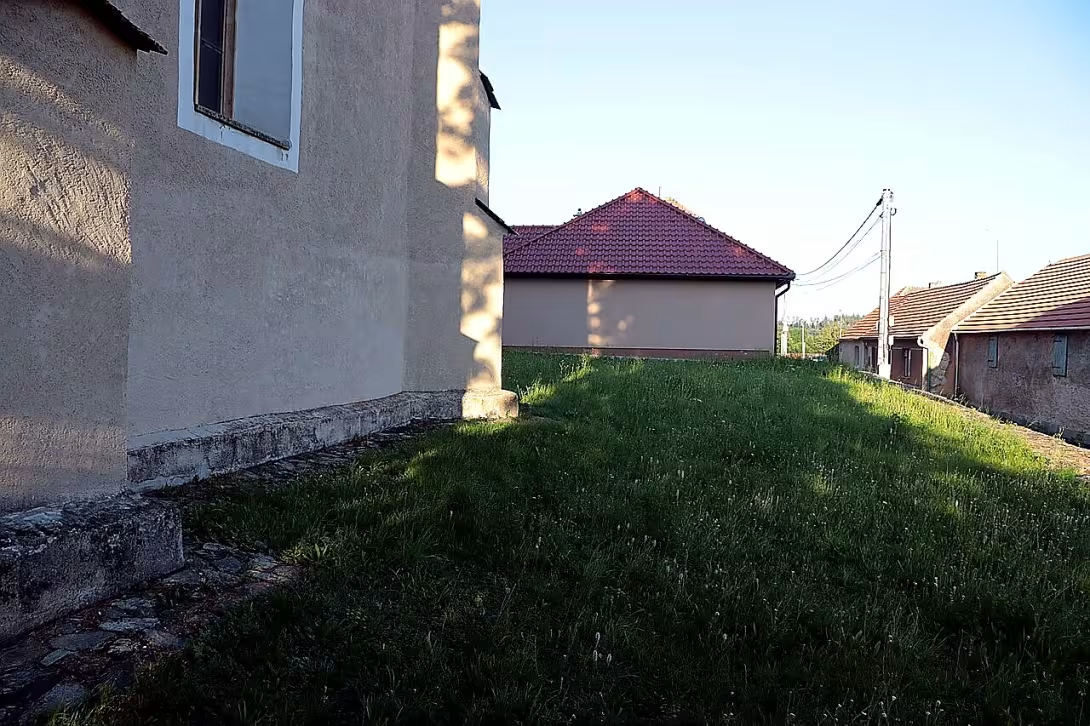
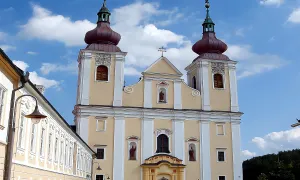
Bývalý hřbitov v Kralicích nad Oslavou is a protected cultural monument in the Třebíč district of Vysočina. A characteristic is the highest Gothic sacral architecture from the 14th century with a later Renaissance reconstruction. The group forms an impressive dominant part of the municipality; a single-boat church with a prism tower and an outdoor medieval stone baptizer give it historical significance.
The origin of the complex dates back to the 14th century, the era of gothic flowering. Although concrete details of the founding or the first owners are not documented, the cemetery was clearly the centre of the spiritual and community life of the then residents. Later Renaissance modifications then enriched the architectural form of the site.
The whole complex combines elements of Gothic and Renaissance. The first of them, from the 14th century, represents the peak of period artistic expression, particularly seen in the available church and its tower. The Renaissance changes then brought a new dimension to the overall appearance of the monument.
The importance of this place lies in its architectural value and cultural context. The cemetery served as a centre of spiritual and social activities of local residents. Despite the lack of detailed records of specific events, the existence of the complex is a testament to the historical development of the village.
The present state of the former cemetery reflects its long history. As a protected cultural monument it is accessible to visitors interested in regional history. The combination of Gothic and Renaissance elements makes this place an attractive destination for every lover of art and history.
The visit to the cemetery in Krovice nad Záslavou offers a unique opportunity to explore the rich history of the region. The monument is not only a witness to the past, but also an inspiration to reflect on the development of communities and their heritage. It's a place worth visiting to anyone who wants to understand the deeper layers of the history of the village.
Historical milestones
- 14th century
- Top Gothic sacral architecture
Points of interest
- Bývalý hřbitov v Kralicích nad Oslavou is a protected cultural monument. - A characteristic top-gothic sacral architecture from the 14th century with a later Renaissance reconstruction. - The ensemble forms an impressive dominance of the municipality; a single-boat church with a prism tower and an outdoor medieval stone baptizer give it historical significance. The origin of the complex dates back to the 14th century, the era of gothic flourishing. - The whole complex connects elements of Gothic and Renaissance.
Guide
Show guide text
This text was created by artificial intelligence and has not been editorially reviewed. It may contain inaccuracies.
Welcome to the village Kralice nad Oslavou, in the heart of the beautiful region Vysočina. Right now, you're standing in front of a place that carries deep peace and thousands of years of silence. In front of you is a former cemetery that no longer serves its original purpose, but remains as a rare witness of ancient times. Feel this atmosphere. It is a space where the memory of local people meets the great history of Czech architecture. It is a place that has been chosen to protect itself as a cultural monument, because it keeps traces of epoch that have long since disappeared, but their legacy is still tangible here.
Stop for a moment and just feel the surroundings. You see the remains of sacral architecture before you, which defines the character of this entire space. In order to understand what is really extraordinary here, we have to move far back in our minds until the 14th century. Imagine a time when this landscape was completely different, where there were different rhythms of life, and faith was the center of everything. It was at this time, during the period of the ultimate Gothic, that the basic essence of this place arose. Gothic was not only a building style, it was the desire of man to give his thoughts and his prayers above, to heaven. Now when you look at the shapes and lines in front of you, feel in them this desire for ascension and spiritual purity.
This sacral architecture from the 14th century forms the core of the monument. It's fascinating to think how many generations of people have come here, how much escape has been sought and how much has found their last rest. The highest Gothic style you will find here is very valuable in our regions because it represents the peak of medieval art. It's an architecture that works with light and shadow, vertical and a sense of grandeur. Although time has done its work and many things have changed, the basic spirit of this time is still there.
Let us now move forward in time several centuries. But history never stands in place. With the advent of the new era, the advent of the Renaissance, the perception of the world has changed. People began to seek more harmony, balance and humanity. That is why this monument was subjected to Renaissance reconstruction in the later period. Notice how these two different worlds intertwine here. The Gothic rigour and spiritual take-off meet here with Renaissance finesse and a new approach to space. This layery is precisely what makes the former cemetery in Kralice nad Sladou so unique. It's not just a building from one period, but a vivid record of how taste, faith, and the needs of people have changed over the centuries.
Now pay attention to the details in front of you. Take a look at the overall design and see how architecture is inscribed in the Highlands landscape. Even if we don't know the names of the architects who raised these walls, their work speaks for them. There's something humble about it, but it's also very strong. Imagine those unknown masters who, in the 14th century with a stone in their hand, formed something that would last forever. We don't know who they were, where they came from or what they thought, but their craft skills and visions are still present here before you. This anonymity creates certain charm and mystery for the place. It is a reminder that great history is not only made up of famous textbooks, but, above all, by thousands of unknown hands, which with love and patience built our cultural heritage.
When we think about the personalities associated with this place, we have to turn to those who have rested here. Although we do not have to read specific names today, this country is saturated with the stories of the inhabitants of the Třebíč district and its surroundings. Each meter of this former cemetery tells the story of life, love, loss and hope. It's a place that makes us stop in today's rush world and think about the passing of time. Who stood here five hundred years ago? What was he thinking? What did he see when he was looking at the same horizon that you're looking at right now?
You may be interested in one fundamental mystery that accompanies this place. It's a mystery of silence and oblivion. Why did the cemetery become an ex? How did he become a protected cultural monument from an active burial site? The answer lies in the natural cycle of time. Cities grow, needs change, and old places retreat. But it is in this retreat that there is room for reflection. The fact that this place is protected today means that as a society, we have recognised its value. Not only as a building element, but as a spiritual anchor that connects us to our ancestors. This ignorance of the particular names of architects or significant personalities buried here does not make the monument an empty place. On the contrary, it makes her a universal symbol. It's a place for each of us, a place for self-reflection on the meaning of existence and what we leave behind.
Look around you again. Feel the sun leaning on the old walls and the wind whispering in the surrounding vegetation. This harmony between man and nature is very strong in Kralice nad Celebra. Sacral architecture is not contrary to the landscape, but it becomes a natural part of it. It is a reminder that everything we build will eventually return to earth, but what was created with respect and art remains an inspiration to us.
I suggest you now slowly bypass the memory from different sides. Try changing your perspective. Watch how the shadows on the surface of the buildings change and how, depending on your movement, the perception of space changes. Notice the transitions between the Gothic elements and the Renaissance modifications. Try to imagine what this place looked like at the time of its greatest glory, when there were prayers and bells, and then compare it to today's deep calm.
This former cemetery is not just a collection of stones and layers of plaster. It's an open book in which there are chapters about faith, about art and about human destiny. It's a place that teaches us humility. They teach us that even if names fade and details fade, the nature of beauty and spiritual values persist.
Now that you've met this place in first contact, I give you a moment of solitude. Let your thoughts float freely and perceive the energy of this space. Go through the surrounding roads, draw deep air from the Highlands, and let the history that surrounds you now engulf you.
Thank you for coming a short way through time with me. I hope this visit has brought you peace and new knowledge. This space is now completely entrusted to you. Explore it at your own pace and perceive its silent narrative. I wish you a pleasant rest of the day in Krovice nad Záslavou and many other beautiful experiences while exploring our cultural monuments. Goodbye.
Tips for visitors
The best time to visit is late afternoon or early morning when soft light hits the Gothic elements of the monument. The autumn season then gives the place an appropriate melancholic atmosphere.
We recommend that you take with you comfortable shoes suitable for the field, because the surface around the cemetery can be uneven. Don't forget to drink too.
For the best photos, focus on the details of top Gothic architecture. Ideal is light shortly before sunset, which highlights the structure of the stone.
For families with children, there are opportunities to familiarize with history and architecture, but we recommend that children be supervised for old stone elements.
Frequently asked questions
Can the monument be visited?
Cemeteries and graves are usually accessible; please respect the dignity of the place. We have not verified the opening hours of this cemetery.
Where is the monument?
Location: Martinská, Kralice nad Oslavou, Kraj Vysočina. The map on this page shows the exact spot.
Why is the monument protected?
It is listed in the Central List of Cultural Monuments of the Czech Republic as a cultural monument (register no. 19274/7-2811). It is protected as part of a larger listed ensemble.
Businesses nearby
Do you run a restaurant, accommodation, shop, museum, rental, wellness or other visitor service near this monument? Show yourself directly to the people heading to it — this is how they will see you in the app and on the web:
Events nearby
Zdroj akcí: otevřená data měst a obcí ČR (Národní katalog otevřených dat) a kalendář akcí Národního památkového ústavu.
Nearby
➜ Zobrazit interaktivní přehled okolí – restaurace, ubytování, půjčovny a další místa v okruhu 15 km.
Data: OpenStreetMap contributors, okruh 15 km.
🏰 Historické památky
- Obětem války (4.0 km)
- Sedlecký hrad (4.3 km)
- Karl Czepl (4.4 km)
- Jan Svoboda (6.3 km)
- Arnošt Dusík (6.5 km)
- Osvoboditelům (7.0 km)
- Obětem války (7.1 km)
- Devět křížů (10.2 km)
🍽️ Restaurace a stravování
- U Rambousků (3.9 km)
- SK Vysoké Popovice (6.4 km)
- U Hudeců (6.6 km)
- Příbramská hospoda (7.3 km)
- Cukrárna u Zdubů (10.0 km – Masarykovo náměstí 10)
- U Němců (11.5 km)
- Dělnický dům (11.7 km)
- Harmonie (12.0 km)
🏨 Ubytování
- Na statku (3.0 km)
- Zámecký penzion (3.0 km)
- Zlatá podkova (4.0 km)
- Penzion Nautilus (4.1 km – Vícenický žleb 25)
- Údolí Klondike (4.2 km)
- Penzion Hájenka (8.8 km)
- Penzion U Hostince (8.9 km)
- Pension Lesacka (10.0 km – Masarykovo náměstí 6)
🚲 Půjčovny a sport
- Kola Rohovský (4.4 km)
- Airsoftpark Ketkovice (5.5 km)
- Koupaliště Lhánice (10.1 km)
- sportovní hala (11.6 km)
- Permoník (11.7 km)
- BínaBikes (12.1 km)
- Sokolovna Padochov (12.9 km)
- Dětský bazén (13.4 km)
🥾 Turistika a příroda
- Jindřichov (7.5 km)
- Wilsonova skála (9.2 km)
- Prostřední mlýn (11.1 km)
- Pod Horkou (11.6 km)
- Oslavany - Nový svět (12.1 km)
- Křoví (12.1 km)
- Přední Pojihlaví (12.3 km)
- Pod Templštejnem (12.3 km)
Accommodation nearby
Trips and activities nearby
Guided tours, tickets and activities nearby from GetYourGuide
Affiliate link: if you buy from the partner, we may receive a commission. The price for you does not change.
Search tours and activities →Themed route
1. Entry to the cemetery grounds - Entry gate. The beginning of the journey and the first encounter with the atmosphere of the place. 2. Information boards - Exposure. Here you will get basic knowledge of the history of the cemetery. 3. Old tombstones - Monuments. Testimonies of the past and craftsmanship of stones. 4. Walking trails - Park section. The possibility of peaceful reflection and circumvention of the entire area.
Seasonal recommendations
Spring: In the spring period, wonderful lighting appears in the former cemetery in Kralice nad Záslavou, when the sun rays penetrate between tree leaves and increase the life of the view of the cemetery. Flowers are beginning to bloom, which adds a new beginning to the atmosphere. It is recommended to visit the morning or evening when the site is quieter and less humane. In this season, it is advisable to wear clothes with different layers, because the temperature during the day can fluctuate significantly.
Summer: Summer brings full green to the cemetery and beautiful flowering flowers. The sunny days are ideal for a treat in peace, but there can also be many people, especially in the main summer season. It is recommended to arrive early in the morning or late in the afternoon to be able to use a place without overcrowding and with less risk of solar fires. Don't forget the protective sunglasses and plenty of drinking water.
Autumn: In the autumn, the cemetery becomes soft, golden shades of leaves, adding a touch of melancholy to the atmosphere. Sunshine this season is specific and dazzling, making autumn an ideal time for photography. Due to the possible cold, it is advisable to wear warmer clothes and shoes with good grip. Visiting can also be on quiet days, because people often focus on other autumn activities.
Winter: Winter visit to the cemetery offers completely different views. In winter snow and ice balls there is a mild quiet beauty that can be enjoyed in peace. Visitors should be prepared for cold weather conditions with warm clothes and suitable shoes.
Visualizations and artistic views


The visualisations are generated by artificial intelligence and serve as inspiration.
Photos from the area
Real photos taken near the monument

Zdroj a licence jsou uvedeny u každého snímku.
Tips from visitors
No tips yet. Be the first!
Log in and add your tip.
Sources and literature
Photos: Jiří Sedláček / CC BY-SA 4.0 — Wikimedia Commons. The author and licence also appear when you hover over the image.
Location on the map


Příběhy a pověsti
Legendy, pověsti a příběhy spjaté s touto památkou
Fotografie návštěvníků
Zatím žádné fotografie. Buďte první, kdo přidá fotografii z návštěvy!
Log in a přidejte svou fotografii nebo hodnoťte.
Za ověřenou návštěvu v aplikaci získáte víc bodů — poznáme podle GPS, že jste na místě.
Reviews and comments