






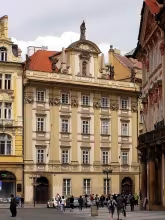
The former Pauline monastery near St. Salvator in Prague's Old Town is a historically significant site that served as a vibrant religious center from 1626 until its demolition at the turn of the 19th and 20th centuries. Situated on Staroměstské náměstí, this Baroque-style complex was initially established for German evangelicals before becoming associated with the Pauline order following their victory at the Battle of White Mountain. Today, only the church remains as part of the Czech Brethren Church, serving as a testament to its architectural and cultural legacy.
The site's history dates back to medieval times when it comprised several Romanesque structures. By 1405, Jošt Moravský owned the land, which later passed through various hands including Václav IV., Protiv z Vchynic, and Jiří z Poděbrad. In the early 17th century, Jáchym Ondřej Šlik acquired the property in 1610 for German evangelicals, commissioning Johann Bartholomeus zu Christoffen to design a church and school. However, following the Battle of White Mountain in 1626, the site was transferred to the Pauline order, marking a significant shift in its religious affiliation.
Architecturally, the monastery evolved from Romanesque origins into a unified Baroque complex by the late 17th century. Johann Bartholomeus zu Christoffen's early designs laid the foundation for this transformation, which continued under the Paulines who expanded their holdings with an additional house purchase in 1684. The site underwent further modifications until its dissolution in 1784.
Ownership of the monastery changed hands several times throughout its history. After being dissolved, it was acquired by the Mint Office in 1796 and later sold to Czech evangelicals in 1863. In 1897, the City of Prague purchased the convent buildings, which were eventually demolished during urban renewal efforts between 1902 and 1903.
Key events at this site include its initial purchase by Jáchym Ondřej Šlik for German evangelicals in 1610 and its subsequent transfer to the Pauline order in 1626. The expansion of the monastery's holdings in 1684 further underscores its historical importance. Despite its demolition, the legacy of the monastery endures through the surviving church, which features sculptures by Václav Matěj Jäckl on its attic.
Today, visitors can explore the remnants of this once-grand complex at Staroměstské náměstí in Prague's Old Town. The site offers a glimpse into the rich tapestry of Bohemian history and religious evolution. Its enduring church serves as a cultural landmark, inviting those interested in architectural heritage and historical narratives to appreciate its significance.
The former Pauline monastery near St. Salvator remains an invaluable piece of Prague's historical landscape. Its story reflects broader themes of religious conflict and transformation within the Holy Roman Empire during the early 17th century. Visitors are encouraged to explore this site, where history continues to resonate through the surviving church and its artistic treasures.
Historical milestones
- 1626
- The monastery was officially transferred to the Pauline order.
- 1684
- The Paulines expanded their holdings by purchasing an additional house.
Architectural development
The site evolved from medieval Romanesque structures into a Baroque monastery complex. Initially comprising several houses, it underwent significant transformation in the early 17th century under Johann Bartholomeus zu Christoffen's design for evangelicals. The Pauline order later expanded and unified the buildings, with further modifications until its dissolution in 1784.
Historical events
1610: Purchased by Jáchym Ondřej Šlik for German evangelicals.
1626: Transferred to the Pauline order after the Battle of White Mountain.
1684: Expansion with an additional house purchase.
1784: Monastery dissolved.
Owners
1405: Jošt Moravský
1411: Václav IV.
1438: Protiv z Vchynic
1448: Jiří z Poděbrad
16th century: Vartenberkové, Pernštejnové
1601: Berkové z Dubé
1610: Jáchym Ondřej Šlik
1626: Pauline order
1796: Mincovní úřad (Mint Office)
1863: Czech evangelicals
1897: City of Prague
Points of interest
- The former Pauline monastery was initially established for German evangelicals in 1610 by Jáchym Ondřej Šlik, highlighting its early role as a center of Protestant activity before the Catholic Counter-Reformation took hold.
- In an intriguing twist of ownership, the site transitioned from being part of the Czech Brethren Church to being acquired by the Mint Office in 1796, reflecting its changing significance and use over time.
Guide
Show guide text
Welcome to the site of the former Pauline monastery near St. Salvator in Prague's Old Town. As you stand here, imagine yourself stepping back into a world where history whispers through the stones and stories linger in the air. This place, once a vibrant hub of religious life, holds centuries of tales waiting to be discovered.
The origins of this site trace back to 1610 when it was established for German evangelicals by Jáchym Ondřej Šlik, marking its early significance as a center of Protestant activity. However, the winds of history shifted dramatically after the Battle of White Mountain in 1620. The victory led to the monastery's transfer to the Pauline order in 1626, embedding it deeply into Catholic tradition during a time when the Counter-Reformation was reshaping religious landscapes across Europe.
As you take in your surroundings, notice the architectural remnants that speak volumes about its storied past. Although much has changed over the centuries, the church that remains today stands as a testament to the monastery's enduring legacy. The design reflects influences from the period it flourished, crafted with an eye for both function and spiritual symbolism.
This site is intertwined with numerous historical figures whose lives left indelible marks on its history. Among them were Jošt Moravský, Václav IV., Žofie Bavorská, Protiv z Vchynic, Hanuš z Kolovrat, and Jiří z Poděbrad—each contributing to the rich tapestry of stories that define this place. These individuals were pivotal in shaping not only the monastery's destiny but also the broader historical narrative of Prague.
One intriguing aspect of this site is its transformation from a Protestant establishment to a Catholic stronghold—a reflection of the era's turbulent religious shifts. This twist in ownership and purpose encapsulates the complex interplay between faith, politics, and power that characterized much of European history during these centuries.
As you continue your exploration, feel free to delve deeper into the layers of history that this site offers. Each step is an opportunity to connect with the past, understanding not just the events but also the human experiences behind them. Thank you for joining us on this journey through time. May it inspire a lasting curiosity and appreciation for the stories embedded in the very stones beneath your feet.
We hope you enjoyed this auditory guide, and we invite you to continue exploring Prague's rich historical landscape. Until next time, farewell!
Tips for visitors
The best time to visit the site of the former Pauline monastery near St. Salvator is during spring or early autumn when the weather is mild, making it pleasant for walking around Prague's Old Town. These seasons also offer beautiful natural lighting for photography and fewer crowds compared to summer, allowing you to explore the area more comfortably.
For transportation, the site is easily accessible by both car and public transport. If driving, there are parking options available in the vicinity of Staroměstské náměstí, though it's advisable to check for availability as spaces can be limited due to the popularity of the area. Public transport users will find several tram and bus lines that connect to the Old Town, making it convenient to reach the site without needing a car.
When visiting, consider bringing comfortable walking shoes as you'll likely explore on foot, especially if you plan to see other nearby attractions within 30 minutes' walk. A camera or smartphone is recommended for capturing the rich historical architecture and cultural heritage of the area. Don't forget water and perhaps an umbrella or raincoat, depending on the season.
For photography enthusiasts, while the monastery itself no longer stands, its former location near significant landmarks offers unique vantage points to capture Prague's Old Town charm. Early morning light provides a soft glow that beautifully highlights the historical architecture surrounding the site. Additionally, visiting during less busy hours can help avoid crowds in your photos.
Families with children will find plenty to enjoy nearby. Within 30 minutes' walk, you can explore Staroměstské náměstí and its surroundings, which are rich in history and culture. The area is pedestrian-friendly, making it easy for families to navigate. Look out for interactive exhibits or historical reenactments that often take place around the Old Town, providing both educational and entertaining experiences for children.
Businesses nearby
Nearby
Located in Prague's Old Town, the site was near significant landmarks like Staroměstské náměstí. The area is rich with historical architecture and cultural heritage sites.
Accommodation nearby
Trips and activities nearby
Guided tours, tickets and activities nearby from GetYourGuide
Search tours and activities →Themed route
Thematic Walking Tour: The Legacy of the Pauline Monastery and Prague's Old Town
1. Bývalý klášter pavlánů u svatého Salvátora (Pauline Monastery) - Type: Historical Site - Why Visit: This former monastery, located in the heart of Prague’s Old Town, offers a glimpse into the city's rich monastic history. Once home to the Pauline Order, its ruins and remnants tell stories of religious life and architectural evolution through centuries.
2. Staroměstské náměstí (Old Town Square) - Type: Historic Square - Why Visit: Just a short walk from the monastery, this iconic square is one of Prague's most famous landmarks. Known for its stunning Astronomical Clock and the Gothic Church of Our Lady before Týn, it provides an immersive experience into medieval urban life.
3. Staroměstská radnice (Old Town Hall) - Type: Historic Building - Why Visit: Adjacent to Old Town Square, this historic town hall is renowned for its ornate Gothic architecture and the Astronomical Clock, a masterpiece of medieval engineering. It’s a must-see for those interested in Prague's civic history.
4. Týn Church (Church of Our Lady before Týn) - Type: Historic Church - Why Visit: Situated on the eastern side of Old Town Square, this Gothic church is famous for its impressive twin spires and intricate façade. It offers a fascinating insight into Prague’s religious architecture and history.
5. Kostel svatého Mikuláše (Church of St. Nicholas) - Type: Historic Church - Why Visit: Located just a short distance from the Old Town Square, this church is known for its stunning Baroque interior and historical significance as one of Prague’s oldest churches. Its richly decorated interiors provide a captivating contrast to its more austere exterior.
This tour takes you through some of Prague's most historically significant sites, offering a deep dive into the city's monastic past and architectural heritage within just a few steps in the Old Town area.
Seasonal recommendations
Spring: Visiting the site of the former Pauline Monastery of St. Saviour during spring offers a unique experience as nature begins to awaken around the ruins. The blooming flowers and budding trees create a picturesque setting that contrasts beautifully with the historical remnants, enhancing the atmosphere with a sense of renewal and growth. This season is ideal for photography enthusiasts who wish to capture the interplay between nature and history. As the weather can be unpredictable, it's advisable to wear layers and bring an umbrella or raincoat in case of showers. The earlier part of the day tends to be quieter, providing a more serene environment to explore.
Summer: Summer at the site is characterized by long daylight hours that illuminate the historical remnants with vibrant light, making it perfect for photography and exploration. The lush greenery surrounding the ruins provides a stunning backdrop, while warmer temperatures make outdoor activities more enjoyable. However, this season also attracts larger crowds, especially during peak tourist months. To avoid the hustle and bustle, consider visiting early in the morning or later in the afternoon. Lightweight clothing is recommended to stay comfortable in the heat, along with sunscreen and plenty of water.
Autumn: Autumn brings a magical transformation to the site of the former Pauline Monastery, as the surrounding landscape turns into a tapestry of warm colors. The crisp air and golden hues create an atmospheric setting that enhances the historical ambiance. This is an excellent time for those who appreciate nature's beauty alongside cultural heritage. As temperatures begin to drop, it's wise to wear warmer layers and perhaps bring a light jacket or sweater. While crowds are generally smaller than in summer, visiting on weekdays can provide an even more tranquil experience.
Winter: Winter at the site offers a serene and introspective atmosphere as snow may blanket the ruins, adding a mystical quality to the historical remnants. The shorter days mean that visits should be planned earlier in the day to make the most of the available light. While the open-air nature of the site means it remains accessible year-round, visitors should dress warmly with coats, hats, and gloves to stay comfortable in the cold. The winter season typically sees fewer tourists, allowing for a more peaceful exploration of the area's historical significance amidst the quiet beauty of the season.
Visualizations and artistic views


Vizualizace jsou generovány umělou inteligencí a slouží jako inspirace.

Tips from visitors
No tips yet. Be the first!
Log in and add your tip.



Reviews and comments