



Černá Street
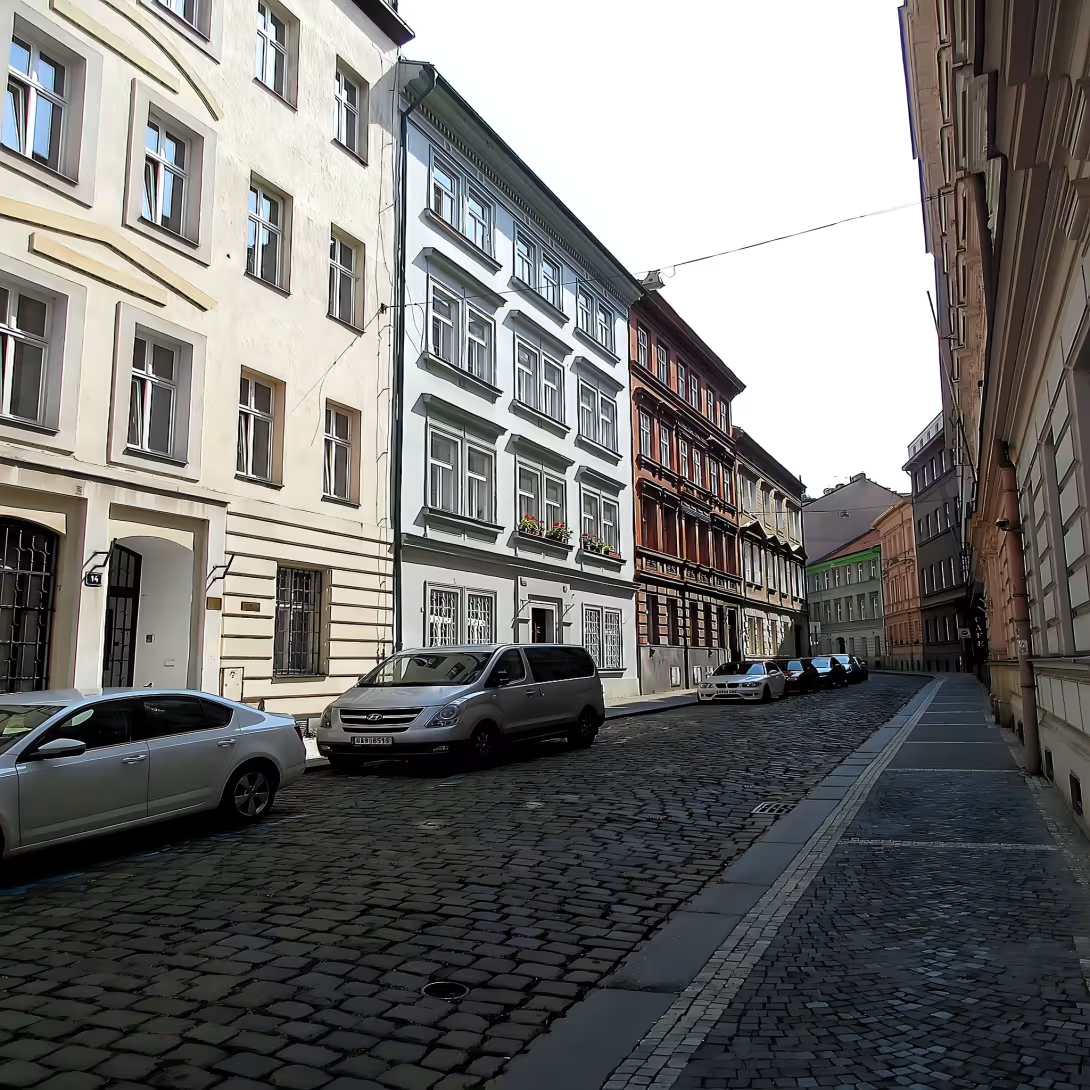
Černá street is a historical location in the Prague part of Nové Město, a situation between the streets Mysíkova and Opatovická. It is remarkable from the medieval village to the purist architecture of the 20th century. Today, the Evangelical Theological Faculty of Charles University is based here.
This area originally fell under the village of Opatovice, which in 1115 was founded at the church of St. Michael by the Kladrub Benedict. In 1348 the village and the church under Charles IV were incorporated into the New Town of Prague. Until the 18th century, the name in Opatovice was used for this place. The origin of the later name Černá street is not clearly defined. It is generally assumed that it refers to the character of a narrow and dark street, but alternatively Herain states that he is named after one of the locals.
Marathon Building 646 / II is a significant dominant feature. It was built in 1928 by František X. for the Plicht Physical Institute. In the basement there was originally a gym with gallery and sports reliefs from Ladislav Šaloun, which are today located in the premises of the faculty library. The original wooden two-arm staircase is preserved in the building with a corresponding barrier, on which an image of V. Silver from 1928 is hung. Some original doors were also preserved on the ground floor and on the first floor.
Another important object is the house No. 1610 / II, which he built in 1882 in the neo-Renaissance spirit of František Buldra for the parents of Karl Teige. Next to him stood the house No. 170, which in 1909 purchased the Children's Asylum of the Love of Prague Jesulina under the direction of the Dominicans sisters. In 1927 Karel Teige moved here with his wife. Jaromír Krejcar then added two Mansard floors with terrace on the fifth floor. As part of this reconstruction, the facade was purified by removing the Neo-Renaissance elements and the interiors were adapted to the ideal of living in the form of two-room garsons.
The fate of the Teigs' house was dramatic in the decades ahead. After the departure of the family in 1938, the building was definitively connected to Children's Asylum. With the establishment of the communist regime, nationalization took place, the sisters of the Dominican women were transferred to the concentration camps and a boarding school for children with speech defects was established in the building, and later a boy's youth home and a girl's boarding school. After 1990, the house was returned to the Dominicans' sisters. In the subsequent reconstruction of the pension in the years 1992- 1994, the Purist facade was disrupted by adding stone plates and pseudo-cubist ornaments. At present, nurses run a Catholic home for students.
The Marathon Building changed its owner in 1995, when it was purchased by the Czech Brotherhood Evangelical Church. Since then, the Evangelical Theological Faculty of Charles University has been based here.
Černá street in Prague offers visitors the opportunity to monitor the changes in urban space from the Benedict foundation to modern architecture. It's a place where the ideals of purism collide with a neo-Renaissance tradition and religious history. For people interested in the architecture and history of the city, this location is a valuable destination for visiting.
Then and now
Drag the slider to compare how the landmark may have looked when it was built with the view today.
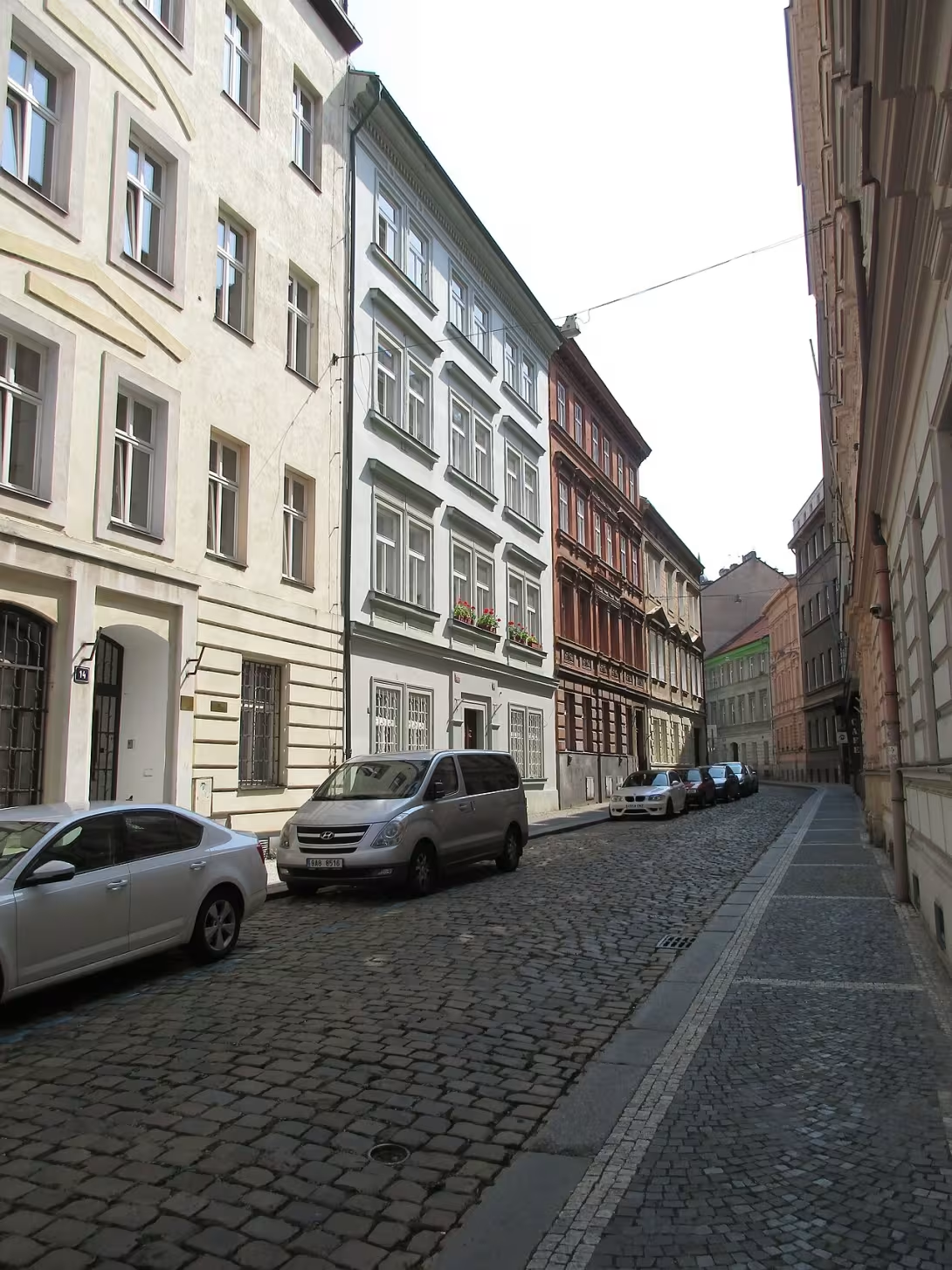

The historical appearance on the left is an AI-generated visualisation and serves as inspiration only.
Historical milestones
- 1115
- The establishment of the village of Opatovice by the Kladubian Benedict.
- 1348
- Integration of Opatovice in the New Town of Prague under the reign of Charles IV.
- 1882
- Position of Neo-Renaissance House No. 1610 / II for the Teigs family.
- 1928
- Building a purist Marathon building for a physical institution.
Architectural development
The architecture of the street includes neo-Renaissance elements, purist reconstructions from 1927-1928 and later pseudo-cubist ornaments. The Marathon building was built in a puristic style, while the Teigs' home came from a medieval background to a neo-Renaissance appearance and subsequent purging.
Historical events
In 1115 the village of Opatovice was founded, in 1348 this area was incorporated into the New Town of Prague, in 1928 the Marathon building was built.
Owners
In 1928 the Plichta Physical Institute, in 1995 the Czech Brotherly Evangelical Church, after 1990 the Congregation of Dominikani Sisters.
Points of interest
- The area originally fell under the village of Opatovice, which was founded in 1115 by Kladrub benedictini. - The street name may refer to its dark character or to one of the locals. - The Marathon building from 1928 had a gym in the basement with sports reliefs from Ladislav Šaloun. - House No. 1610 / II built František Buldra for the parents of Karl Teige in 1882. - In the Teigs' building, there was a boarding school for children with speech defects during the communist regime.
Guide
This guide is narrated by a synthetic voice generated by artificial intelligence.
Show guide text
This text was created by artificial intelligence and has not been editorially reviewed. It may contain inaccuracies.
Welcome to the heart of Prague's New Town. You are standing right on the street that carries its interesting and somewhat mysterious name Černá. Now, if you look around you, you may feel a strange connection between the busy heart rate of the modern metropolis and the deep shadows of ancient history. This street is not just an ordinary path for pedestrians, it's a living time entry, which here consists layer by layer, as if every building and every stone told its own story. Feel this atmosphere in which the echoes of medieval peace mingle with the architectural diversity of the later centuries. In front of your eyes, there is a space where what was here a long time ago meets what shaped the city over the centuries.
In order to really understand what you are seeing and why this place is so special, we need to go back very far together. This area was not always one of these densely populated and urban districts. Its roots date back to the year of a thousand and fifteenth, when a village called Opatovice was founded here. Its creators were the Kladrub benedictines, the proper monks, who settled their activities here and created the basis for the future settlement. More than nine centuries ago there was not a city, but just a quiet settlement near nature. However, the turning point for this space was in the year three hundred forty-eight. Then, under the reign of the famous ruler Charles the fourth, the village of Opatovice was incorporated into the newly emerging New Town of Prague. This move turned a quiet rural area into part of an ambitious urban project that was meant to define Prague's face for centuries. Since then, many things have changed, but the basic structure of the site remained in the memory of the country as a reference to its origin.
Now pay attention to the buildings that surround you right now. Feel how architecture has constantly changed and adapted to new needs and sensations. This whole space represents a fascinating layered architecture, where the works of various epoch stand next to each other. One of the most important points in this area is the seat of the Evangelical Theological Faculty of Charles University. This building brings seriousness and intellectual depth to the street. But if you look at other houses, you'll see a much wider range of styles. Note the building number one thousand six hundred and ten, which was built in the year one thousand eight hundred eighty-two for the Teigs family. It's a Neo-Renaissance-style house that reflects the desire for elegance and historical patterns back then. On the other hand, there is also a building called Maraton, built in the year one thousand nine hundred twenty-eight. This construction represents a completely different approach to space - it is built in a puristic style that emphasizes the cleanliness and simplicity of forms. This building was originally designed for a gym. If you have a chance to look at its lower floors, you can find traces of the work of an important artist. Ladislav Šaloun created sports reliefs here, which were located in the basement gym. These details show us how the priorities of the people who lived and worked here have changed over time.
The place where you're standing right now was home to a lot of prominent personalities who influenced culture and society. One of the most famous names associated with this street is the writer Karel Teige. This is where he was born and his family, for example Josef Teiga or Aloisie Teigová, had its fixed place. His life and work are deeply rooted in this urban environment that shaped him. In addition to writers, there were also other people who shaped the history of this place. Here we can name František X. 14th or Jaromír Krejcar. Each of these people has left an invisible clue in this space, which is now manifested in the atmosphere of the entire area. When you walk past these houses, remember that behind every facade lies the story of the man who lived here, worked and dreamed.
Before leaving, however, I want to invite you to reflect on a little secret that lies right under your nose. Why is this street called Černá? There are several ways to explain this name and it's one of those mysteries that you find in every old Prague street. Some people believe the name refers to her dark, perhaps gloomy character in the past. Others in turn suggest that the name may be associated with one of the local residents whose name or nickname was closely associated with this color. It's a question that can make you look at the surroundings a little differently and look for hidden meanings in every detail.
I hope that this short parade has been of use to you and that you have rested on your street Černá while learning something new about this piece of Prague. Let yourself be carried away by the beauty of New Town and continue to discover the hidden treasures of this city. Every other journey can welcome you with a new story and a new view of history. Thank you for a moment together and I wish you a pleasant rest of your journey around Prague. Goodbye.
Tips for visitors
The best time to visit is early morning or late afternoon, when the streets are quiet and you can enjoy the architecture of the buildings. Transportation to the centre of New Town is possible by car and public connections; Check the specific routes and connections in the maps.
For a walk we recommend you take comfortable shoes because you will move on the historic street surface. The best places for photo lovers are the facades of buildings in the morning or evening light, which highlight the details of buildings.
In the vicinity there are Mylik Street and Opatovická Street, which are worth a short circumvention. The whole area is part of the New Town, which offers a pleasant atmosphere for a short walk.
Families with children will appreciate the fact that the monument is located in a public area, which allows free movement without the need for quiet behaviour in enclosed areas. Children can observe old houses and explore the streets.
Frequently asked questions
Can the monument be visited?
This is a structure in a public space that can usually be seen from outside free of charge. We have not verified that this particular one is freely accessible.
Where is the monument?
Location: Nové Město, Hlavní město Praha. The map on this page shows the exact spot.
For kids
Imagine going back to the past, until our country became a place of dangerous fighting between Czech princes and Hungarian king. This place was their headquarters - Black Castle.
It was like a town built on a rock where thousands of people could gather. There used to be a lot of buildings, including a big church that was so massive that they could see it from a distance. In the castle lived not only princes and their family, but also warriors and servants.
Businesses nearby
Do you run a restaurant, accommodation, shop, museum, rental, wellness or other visitor service near this monument? Show yourself directly to the people heading to it — this is how they will see you in the app and on the web:
Events nearby


Zdroj akcí: otevřená data měst a obcí ČR (Národní katalog otevřených dat) a kalendář akcí Národního památkového ústavu.
Nearby
Myslíkova ulice, Opatovická ulice, Nové Město.
Accommodation nearby
Trips and activities nearby
Guided tours, tickets and activities nearby from GetYourGuide
Affiliate link: if you buy from the partner, we may receive a commission. The price for you does not change.
Search tours and activities →Themed route
1. Nové Město, city area. Start your journey by exploring this historic area. 2. Mystery Street, Street. This path will lead you to the main point of your tour. 3. Černá, main target. Here is the main point of your visit. 4. Opatovice street, street. Walk this street as the end of your route.
Seasonal recommendations
In spring, the surroundings flourish and fresh green creates a pleasant contrast to the dark appearance of the building. The light is fine in the morning, which is ideal for shooting details from the street. We recommend a light layering of clothes and a visit on working days when traffic is quieter in the city centre.
In the summer months, it dominates the steep sun, which sharply highlights the texture of the surface of the monument. The atmosphere is playful and full of life, but in the morning heat can be unpleasant in the surroundings. It is best to come early in the morning or at sunset, enter the shadow of nearby buildings and have plenty of water with you.
Autumn brings golden leaves and more frequent fogs to the New Town area, which give the place a mysterious touch. The lighting is more suppressed and saturated. It is advisable to choose waterproof shoes and a warm sweater, with morning walks offering the cleanest air and fewer people in the streets.
Zimą acts in the freezing air more harshly and minimally, especially if the surface is covered with snow or frost. Evening lighting at advent time creates a cozy mood in contrast to the cold. Hot winter clothes, hats and gloves are essential to make the external tour a pleasant experience.
Visualizations and artistic views


The visualisations are generated by artificial intelligence and serve as inspiration.
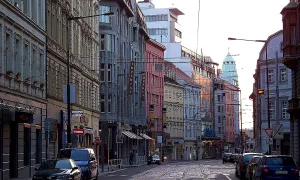
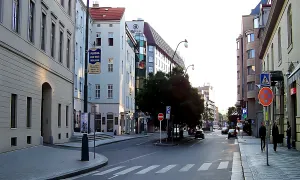
Photos from the area
Real photos taken near the monument


Zdroj a licence jsou uvedeny u každého snímku.
Atmosphere of the place
This atmospheric visualisation of the place and period was generated by artificial intelligence. It is not real footage of the location.
Tips from visitors
No tips yet. Be the first!
Log in and add your tip.
Sources and literature
Photos: Alena Pokorná / CC BY-SA 4.0, rozlišení zvýšeno umělou inteligencí — Wikimedia Commons. The author and licence also appear when you hover over the image.
Faktickým podkladem tohoto textu byl článek na Wikipedii, jehož autory jsou přispěvatelé Wikipedie. Článek je dostupný pod licencí CC BY-SA 4.0.
Location on the map
More monuments – Nové Město
Show all in the municipality


Příběhy a pověsti
Legendy, pověsti a příběhy spjaté s touto památkou
Fotografie návštěvníků
Zatím žádné fotografie. Buďte první, kdo přidá fotografii z návštěvy!
Log in a přidejte svou fotografii nebo hodnoťte.
Za ověřenou návštěvu v aplikaci získáte víc bodů — poznáme podle GPS, že jste na místě.
Reviews and comments