






Černá mohyla Memorial
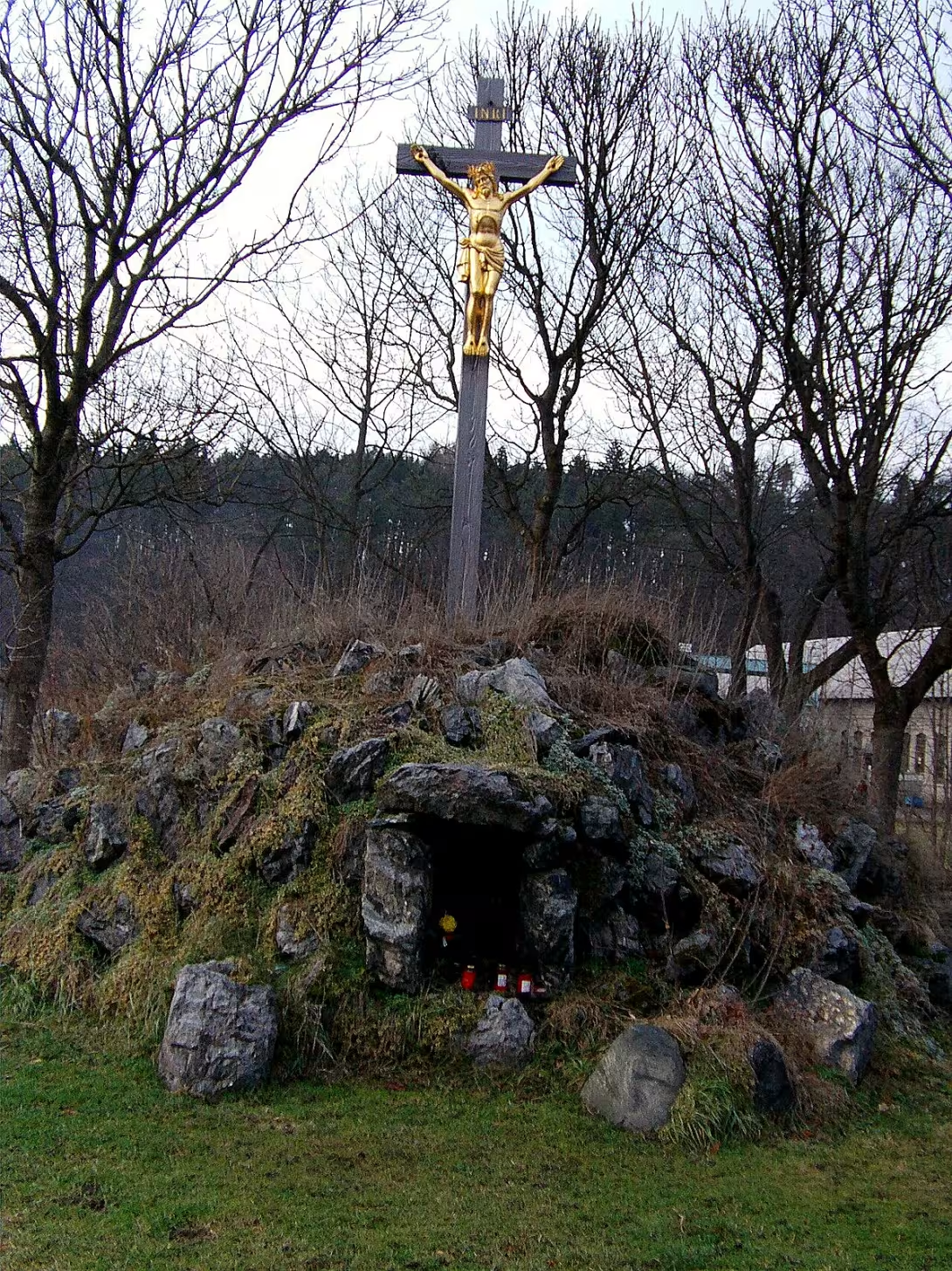
Černá mohyla is a memorial commemorating a tragic event in 1642 in Rokycan near Pilsen. It is located at the crossroads of the streets of Litohlská and Madlon and is protected as a cultural monument of the Czech Republic. The memorial dedicated to the victims of the decimation of the Madlon Regiment as a result of deserts in the Battle of Breitenfeld during the Thirty Years' War. This event is an important part of the history of the region and reminds us of the dramatic moments that shaped the fate of many people.
The creation of the Black Mound is closely linked to the Thirty Years' War, namely the desertion of Madlon's regiment in 1642. After the Battle of Breitenfeld, when the Imperial Army was defeated, Madlon's regiment was tried and, by order of Archduke Leopold, punished by decimation. This sentence included the execution of every tenth soldier as an exemplary measure. The exact execution time is unknown, but the historical sources indicate two possible dates: 14 or 28 November 1642. On the first day, the cords were broken and the banners were destroyed, and then the draw of those who were to be executed followed.
The architectural elements of the Black Mound form a cross and commemorative plate, which was designed in the 19th century in the place where the original tomb of the decimation victims was probably located. The monument is a simple but significant symbol of the tragedy that took place here.
Historical events associated with the Black Mound dramatically illustrate executions carried out under the supervision of executioners such as Jan Mydlář mladší. On 27 November 1642, 42 people were hanged, most of whom were simple riders and several officers. Two more people were shot while the other criminals were pardoned and imprisoned.
Today, Černá mohyla stands as a peaceful monument in the landscape. It is part of the tourist path to Klabava, which makes it an accessible and interesting place for visitors. Near is the Neo-Renaissance Hirsch villa, which provides another historical dimension.
A visit to the Black Mound is an opportunity to explore one of the many tragic pages of the Thirty Years' War. The memorial not only keeps a memory of the victims, but also serves as a warning against the consequences of desertions and military penalties. Visitors can enjoy a quiet environment, which evokes the important events of the past and their influence on the present.
Then and now
Drag the slider to compare how the landmark may have looked when it was built with the view today.
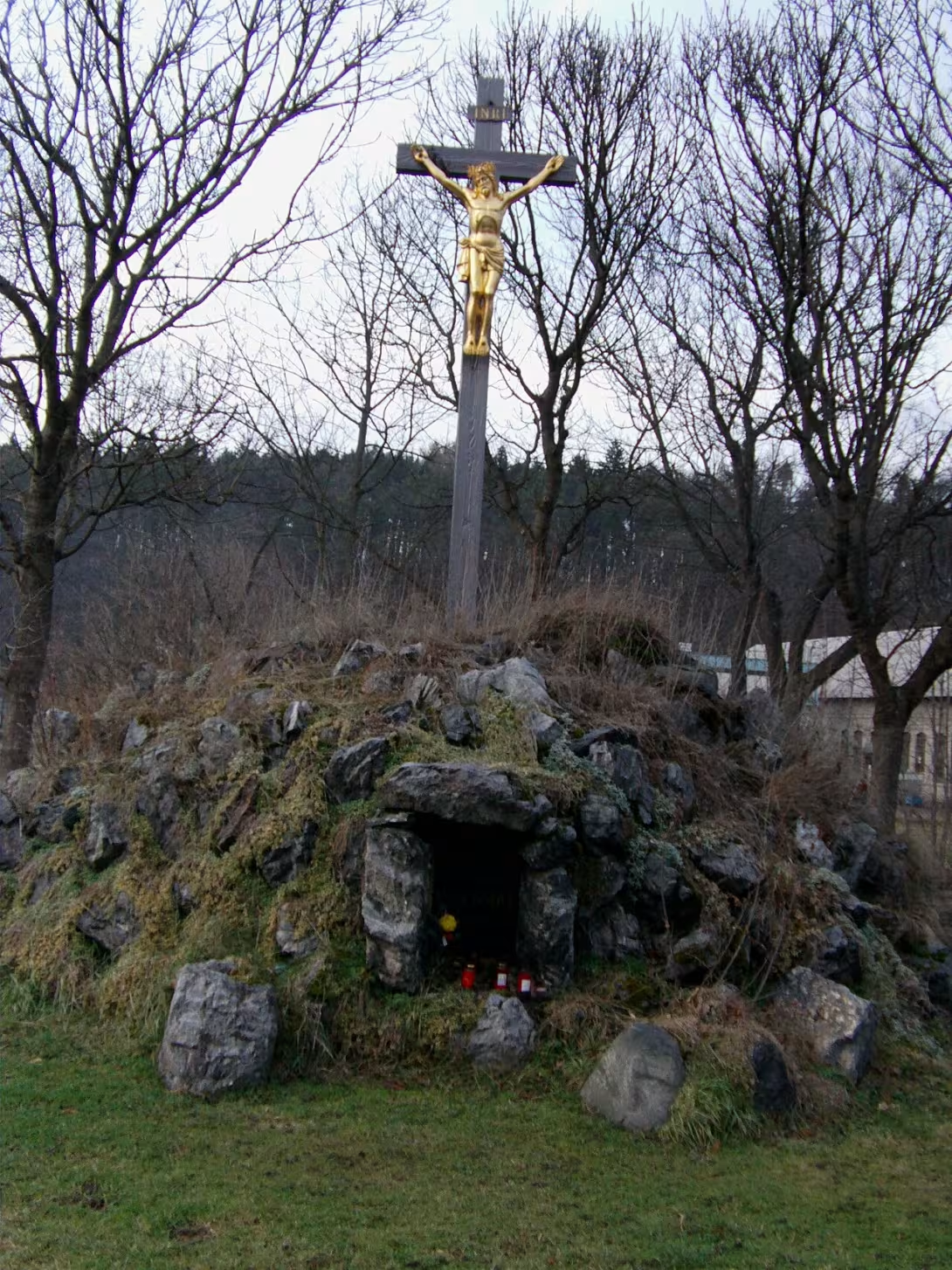
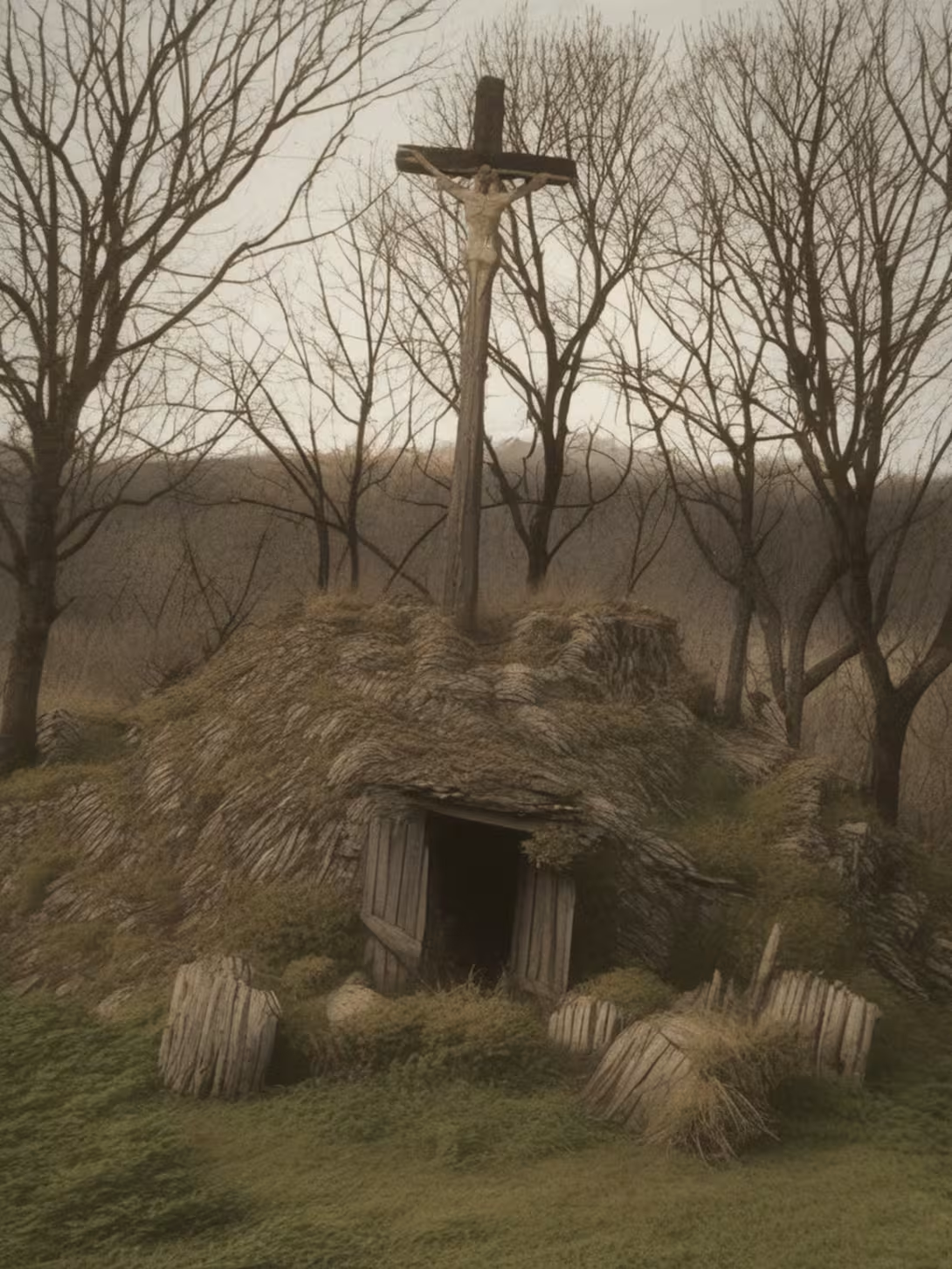
The historical appearance on the left is an AI-generated visualisation and serves as inspiration only.
Historical milestones
- 1642
- On November 14 or 28, the Madlon regiment was decimated.
- 1642
- on november 27, there were executions in which 42 people were hanged and others shot.
Historical events
- 1642
- Decimation of Madlon's regiment after desertion at the Battle of Breitenfeld.
- 1642
- Execution of soldiers as ordered by Archduke Leopold.
Points of interest
- The memorial commemorates the decimation of Madlon's regiment of 1642 when every tenth soldier was executed at the order of Archduke Leopold. - Historical sources are listed as possible dates of events on 14 or 28 November 1642. - On 27 November 1642, 42 people were hanged under the supervision of the executioners, such as Jan Mydlár, younger. - Architectural elements form a cross and commemorative plate from the 19th century, probably located at the site of the original victims' tombs. - The monument is part of the tourist path to Klabavu and near it there is a non-Renaissance Hirsch villa.
Guide
Show guide text
This text was created by artificial intelligence and has not been editorially reviewed. It may contain inaccuracies.
We welcome you to a place full of historical excitement and seriousness - you are standing before the Black Mound, a monument that carries deep traces of the past. This monument is located at the intersection of the streets of Litohlská and Madlon in Rokycany, near Pilsen. His black color resembles the dark moments of 1642.
They built a black mound as a monument to the victims of a tragic event known as the decimation of Madlon's regiment. This cruel execution took place in November 1642, when, at the order of Archduke Leopold, every tenth soldier in the Mallon regiment was executed. Historical sources indicate two possible dates for events: November 14 or 28, but are safely known on November 27, when 42 people were hanged and others were killed under the supervision of the executioners, including Jan Mydlár Jr.
Let's move closer and look up at the monument. Yet its simple design emits the seriousness and memory that you will notice as soon as you approach it. If you want to take a look at the details, look at the facade - even if the particular architectural elements are not known, the feeling of history here is indisputable.
Among the key personalities associated with this place is Jan Mydlář mladší. His participation in the 1642 executions attributed him a black chapter in history. This act is inextricably linked to a monument that bears witness to the tragedy and futility of war.
The interesting thing about this place is its ability to recall the effects of lost lives and historic events that happened more than 380 years before. Černá mohyla calls us to reflect on the humanity and tragedy the war carries with it.
We wish you to spend a moment here in peace and realize the importance of remembering those who died. This place is not only a monument to history, but also a cry for peace and understanding.
Thank you for your visit to the Black Mound. We hope this guide inspired you to explore the history and monuments of Pilsen Suburb. When we meet again, be healthy!
Tips for visitors
For the best experience we recommend a visit during bright days when natural light highlights the details of the monument. For photography is the most suitable position right at the crossroads, which allows to capture the monument in its historical environment.
You can reach the place by car or use public transport. Please check the current traffic connections and parking possibilities in the surrounding area in internet search engines or on the official website of transport operations.
When visiting, we recommend taking drinking water and choosing comfortable shoes to move in the urban environment.
In the vicinity of the monument there is a Neo-Renaissance Hirsch villa, which can be seen during a short walk.
For families with children this area is suitable for a simple urban trip within the surrounding streets.
Businesses nearby
Do you run a restaurant, accommodation, shop, museum, rental, wellness or other visitor service near this monument? Show yourself directly to the people heading to it — this is how they will see you in the app and on the web:
Events nearby

Zdroj akcí: otevřená data měst a obcí ČR (Národní katalog otevřených dat) a kalendář akcí Národního památkového ústavu.
Nearby
The Neo-Renaissance Hirsch villa stands near the monument.
Accommodation nearby
Trips and activities nearby
Guided tours, tickets and activities nearby from GetYourGuide
Affiliate link: if you buy from the partner, we may receive a commission. The price for you does not change.
Search tours and activities →Themed route
1.Černá mohyla (memorial) - The main destination of the trip, which serves as an important monument in the village Plzeňské Předměstí. 2. Black Mound Area (surrounding area) - A place for a peaceful walk and contemplation in the immediate surroundings of the monument. 3. Hirsch Villa (Neo-Renaissance building) - Architectural Jewel, which stands near the monument and captures its style.
Seasonal recommendations
Spring: In spring, the surroundings of the mound awaken to life and the fresh green creates a pleasant contrast to the dark stone. The morning sun is fine in this period and creates soft shadows, which is ideal for photography. We recommend taking layered clothes because the weather can be variable, and taking advantage of the calmer time before the arrival of summer visitors.
Summer: In the summer months there is a strong presence of the sun and surrounding vegetation is in full bloom. The atmosphere is alive, but due to high temperatures, a visit can be difficult. It's best to come first thing in the morning to avoid the biggest crowds and the most intense heat. Don't forget enough fluids and headgear.
Autumn: Autumn brings a melancholy mood to the place and colors turn into golden and brown shades. The morning mist around the monument gives the place mystery and depth. For a walk we recommend choosing stronger shoes for wet terrain and wearing a warmer jacket. The best time to visit is in the afternoon when the sun shines low and highlights the texture of the monument.
Winter: Winter can be very lonely and monumental, especially if the surrounding area is covered with snow or frost. The day is short and the light is cold, which underlines the historical character of the place. Due to low temperatures it is necessary to wear very warm clothes, including gloves and hat. Visit the memory in clear days to use as much daylight as possible.
Visualizations and artistic views


The visualisations are generated by artificial intelligence and serve as inspiration.
Photos from the area
Real photos taken near the monument

Zdroj a licence jsou uvedeny u každého snímku.
Tips from visitors
No tips yet. Be the first!
Log in and add your tip.
Sources and literature
Fotografie: Hadonos / CC BY-SA 3.0 — Wikimedia Commons. The author and licence also appear when you hover over the image.
Faktickým podkladem tohoto textu byl článek na Wikipedii, jehož autory jsou přispěvatelé Wikipedie. Článek je dostupný pod licencí CC BY-SA 4.0.
Location on the map
More monuments – Plzeňské Předměstí
Show all in the municipality
Příběhy a pověsti
Legendy, pověsti a příběhy spjaté s touto památkou

Fotografie návštěvníků
Zatím žádné fotografie. Buďte první, kdo přidá fotografii z návštěvy!
Přihlaste se a přidejte svou fotografii nebo hodnoťte.
Za ověřenou návštěvu v aplikaci získáte víc bodů — poznáme podle GPS, že jste na místě.
Reviews and comments